
News and Announcements
Jack Dongarra: SC Perennial

The upcoming SC15 conference will be the 28th in the series, having made its debut in 1988. It is hard to believe that—way back in 1988—$20 million could only get you a couple of GFLOPS from a Cray Y-MP, and a gallon of gasoline was around $1. Setting all that aside, the inaugural SC conference was significant for being the first of its kind to bring so many experts in High Performance Computing together under one roof.
This significance has grown, not waned, in the nearly 3 decades since Jack Dongarra attended his first SC meeting. In fact, Jack has attended every SC meeting since 1988, making him an “SC Perennial.” Jack says that, “attending the SC conference each year is like a family reunion—a homecoming—with the added benefit of connecting with so many old friends.” Here’s to the continued success of SC, and to Jack attending many more iterations of the SC conference!
Read more about the “SC Perennials” at the SC15 Official Blog.
2015 ICL Retreat
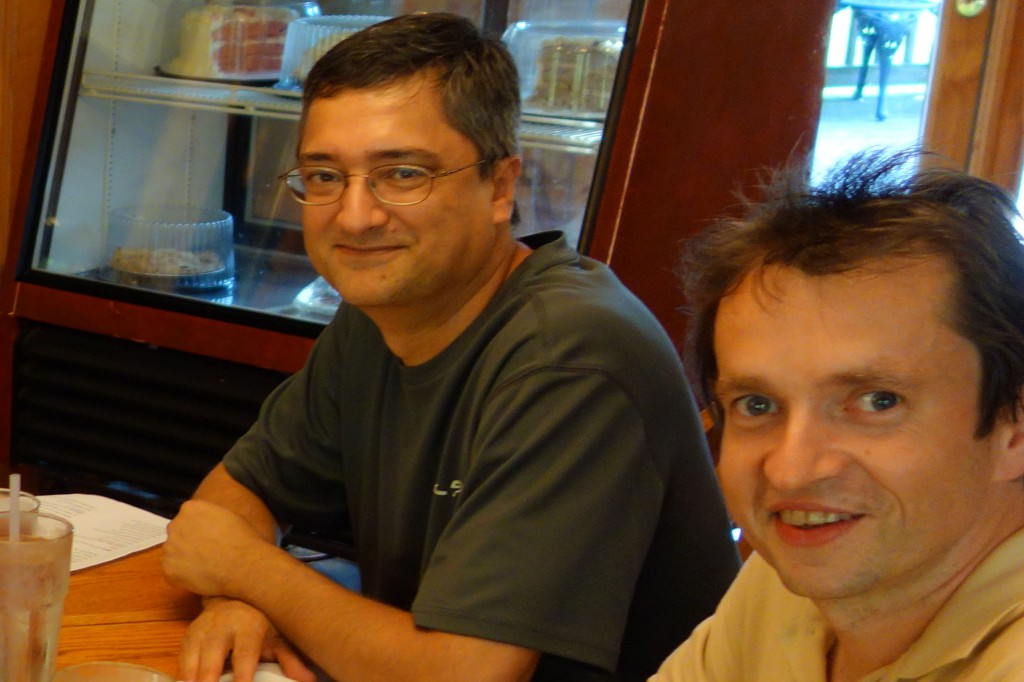
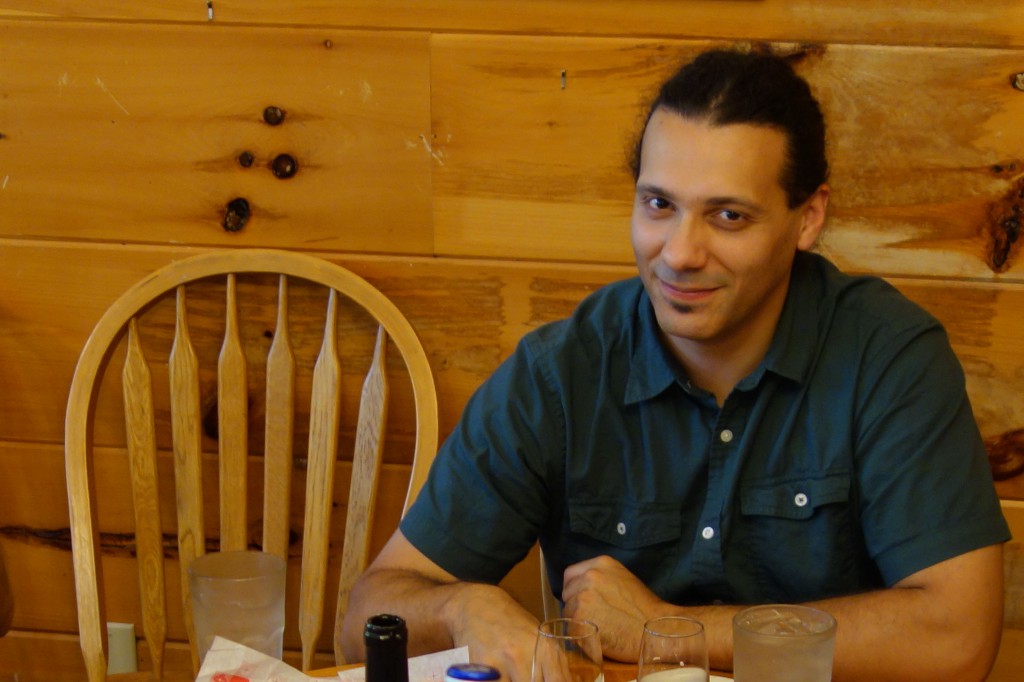


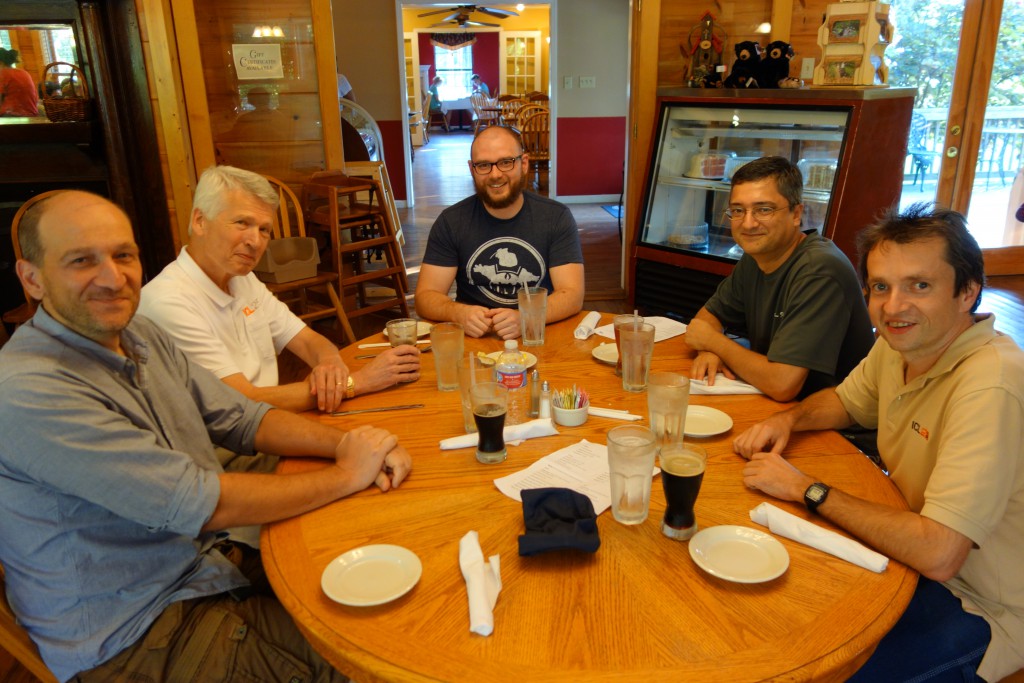


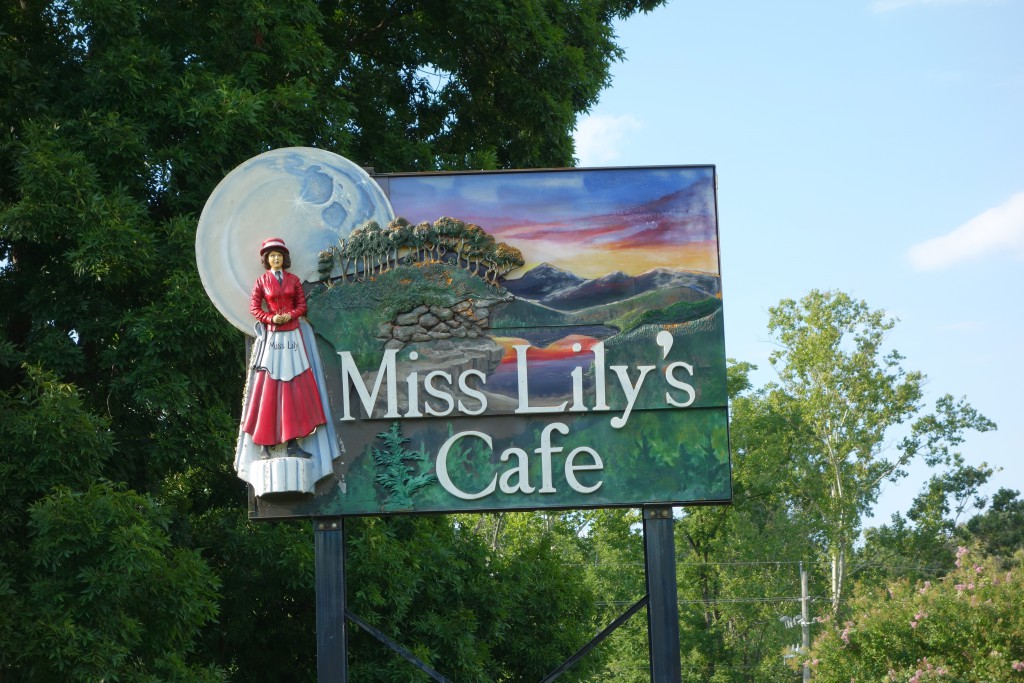


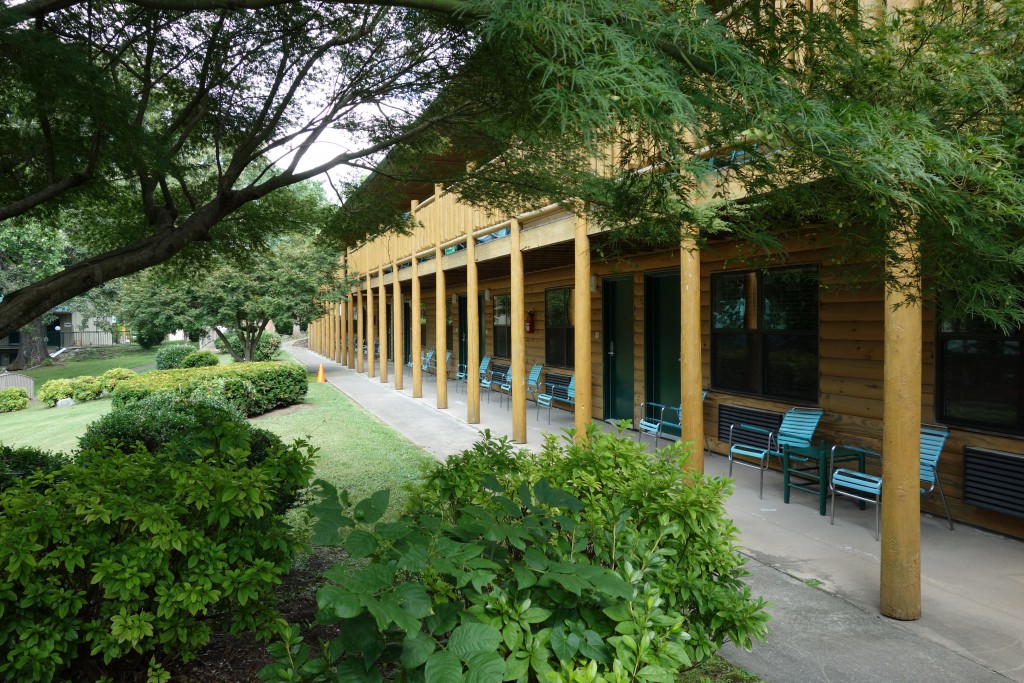
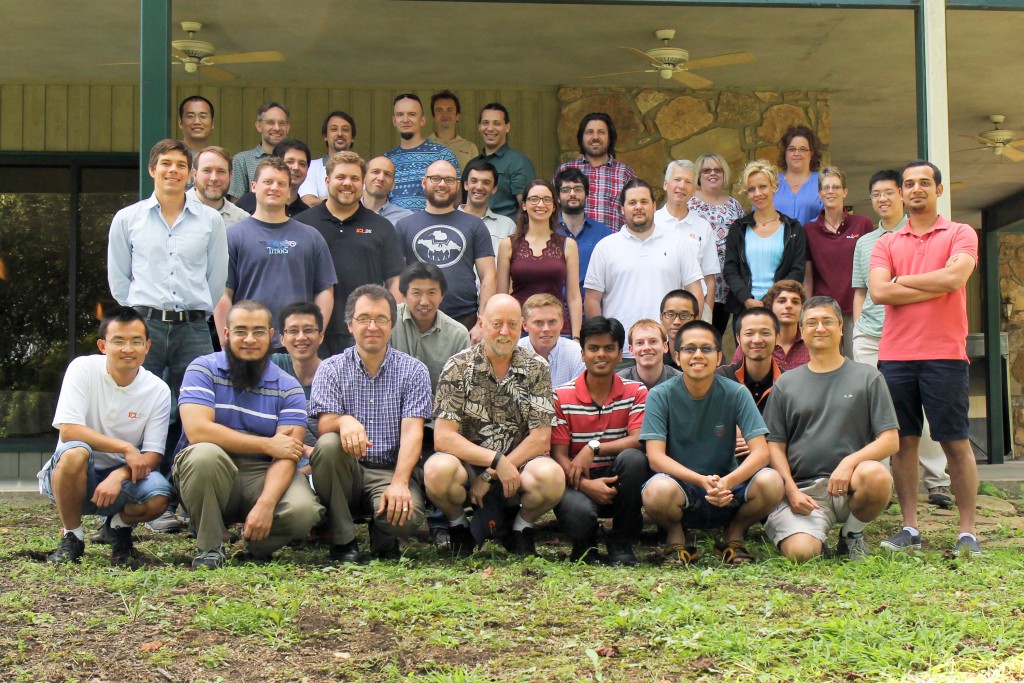
This year’s ICL retreat moved to the Tremont Lodge & Resort in Townsend, Tennessee. This newly renovated venue provided a good platform for 2 days of talks, which covered student projects and summer internships, the lab’s progress in the areas of linear algebra, distributed computing, benchmarking, and performance analysis, along with recaps of administrative procedures.
There was some fun to be had as well, and the Tremont’s pool was the perfect place to cool down in the August heat after partaking in some delicious food and libations at Miss Lilly’s Cafe. Serving as a kickoff to the fall semester, the retreat encourages us to keep our focus sharp, our determination strong, and to have another great year at ICL!
Memristor Funded
The Memristive Accelerator for Extreme Scale Linear Solvers project was recently funded as part of the NSF EAGER program. The project, part of a 1-year award and collaboration between the University of Tennessee (ICL) and the University of Rochester, will investigate the feasibility of using the new electronic element—the memristor—for solving systems of linear equations. The solver is based on Kirchoff’s law and the physical feature of the memristor that allows it to compute in analog fashion. Congratulations to the Linear Algebra Group for landing this award!
EMBRACE Funded
The Evolvable Methods for Benchmarking Realism through Application and Community Engagement (EMBRACE) project is part of the NSF BRAP call to engage a broad community in producing benchmarks that inform hardware makers and users about the feasibility of supercomputing platforms for scientific applications. Even though there are many benchmarks available for testing and evaluating computer systems, EMBRACE aims to evaluate their value for the community at large and assess how these benchmarks might or should evolve for future systems and infrastructure. EMBRACE is a collaborative project between the University of Tennessee (ICL) and Georgia Tech. Congratulations to the Performance Analysis and Benchmarking Group for landing this award!
SparseKaffe Funded
The SparseKaffe project (Sparse direct methods via Run-time Scheduling and Execution of Kernels with Auto-tunable and Frequency-scaling Features for Energy-aware computing on heterogeneous architectures) was recently funded! As part of this 3-year NSF CSR award, the SparseKaffe team—consisting of PIs from the University of Tennessee (ICL), Texas A&M, and the University of Florida—will develop high-performance parallel sparse direct methods (multifrontal QR, Cholesky, and LU factorization) with irregular and hierarchical structure that can exploit Multiple Hybrid Multicore Processors to achieve orders of magnitude gains in computational performance, while also paying careful attention to energy constraints. Such algorithms will enable the team to create a robust suite of open-source, high-performance software that others can use to solve their applications. Congratulations to the Linear Algebra Group for their success!
PAPI-EX Funded
PAPI-EX, the next iteration of the Performance API, was recently funded by a 4-year NSF SI2 grant. PAPI-EX will enhance and extend PAPI to measure a wide range of new hardware and software events on extreme scale computing platforms. The upcoming improvements to PAPI will allow it to continue its essential role in enabling HPC performance analysis and optimization. This holds especially true for the large and diverse collection of PAPI-based performance tools on which many users now depend, including TAU, HPCToolkit, Open|SpeedShop, Vampir, Scalasca, CrayPat, and others. Congratulations to the Performance Analysis and Benchmarking Group for this award!
Conference Reports
HPCC 2015
The 17th IEEE International Conference on High Performance Computing and Communications (HPCC 2015) attracted dozens of attendees and speakers this year, including ICL’s own Jack Dongarra and Piotr Luszczek. HPCC 2015, held at the Newark Airport Hilton on August 24th through 26th, provided a forum for engineers and scientists in academia, industry, and government to discuss new ideas, research results, applications, and experience on all aspects of high performance computing and communications.
Jack gave a keynote talk on “Architecture-aware Algorithms and Software for Peta and Exascale Computing” on Monday, August 24th. On Tuesday, Piotr presented a paper, “Flexible Linear Algebra Development and Scheduling with Cholesky Factorization.” Notably, HPCC 2015 was actually in Newark, which sounds kind of like New York, but decidedly isn’t.
Euro-Par 2015

ICL’s Hartwig Anzt made his way to Euro-Par 2015, which was held at the Vienna University of Technology on August 24th through 28th. Euro-Par, organized by the Research Group for Parallel Computing, is billed as Europe’s premier conference for all aspects of parallel and distributed processing.
Hartwig presented a paper, “Iterative Sparse Triangular Solves for Preconditioning,” on Wednesday, but he certainly wasn’t the only ICLer in attendance. As pictured above, ICL alumni Emmanuel Jeannot, Hatem Ltaief, Karl Fuerlinger, and Felix Wolf were also at Euro-Par.
The conference’s formal reception was held in Vienna’s City Hall. The minister for communication and technology gave a short speech, and finger food and champaign were available for everyone. There was more than one corridor in City Hall, however, and if one were to take a “wrong turn” (or “better turn” as it so happens), then one might have ended up in a gala dinner with the mayor and governor of Vienna. We suspect Hartwig et al. represented ICL well and were at ease rubbing elbows with the local government.
Interview

Joe Dorris
Where are you from, originally?
I am from Chattanooga, Tennessee.
Can you summarize your educational background?
I received my B.S. in Computer Engineering from UT and am currently working on a Master’s in Computer Science as part of the 5 year BS/MS program.
Tell us how you first learned about ICL.
I first heard about ICL while attending SC14 as part of the UT/NICS Student Cluster Competition Team. When we were not competing, we spent some time exploring the conference and attending talks. One of the presentations I attended was the TOP500 Supercomputers presentation by Dr. Dongarra.
What made you want to work for ICL?
After attending SC14 and seeing all of the exicting opportunities available in high performance computing, I decided that I wanted to continue working in this area. ICL was a great opportunity for me to work on some interesting research topics with some of the leaders in the field.
What are you working on while at ICL?
I am working with the Linear Algebra group and helping out with the DARE and RaPyDLI projects.
If you weren’t working at ICL, where would you like to be working and why?
I really enjoy trying to come up with business ideas and new products. I think it would be exciting to attempt entrepreneurship. I worked on a social network app with some other students at UT for a while, but we eventually realized that the project would require more work than we were able to commit to during school.
What are your interests/hobbies outside of work?
Some friends from Chattanooga and I formed an intramural team called Chatt-Town’s Finest that competes in many of the intramural sports offered at UT. We have been growing and adding members for the past 4 years, and we won the All-Points Competition last year. I also like watching sports, especially the Tennessee Titans and the Vols.
Tell us something about yourself that might surprise people.
I own two sugar gliders (Rosco and Felix) that I bought from a flea market.


