Loading...
Searching...
No Matches
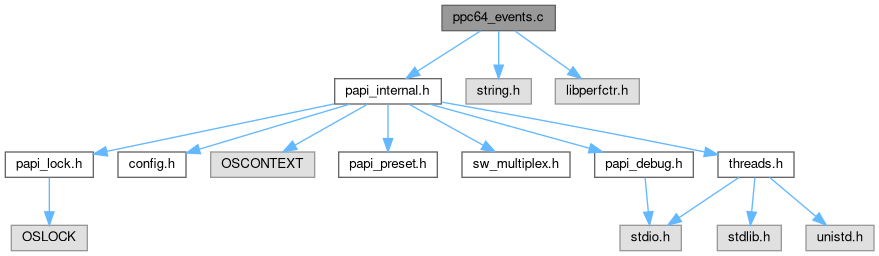
Include dependency graph for ppc64_events.c:
Go to the source code of this file.
Functions | |
| void | perfctr_initialize_native_table () |
| void | perfctr_ppc64_setup_gps (int total, ntv_event_group_info_t *group_info) |
| int | perfctr_ppc64_setup_native_table () |
| int | check_native_name () |
| static FILE * | open_file (const char *fname) |
| static ntv_event_t * | copy_buffer (ntv_event_t events[], int maxevents) |
| static ntv_event_info_t * | parse_eventfile (FILE *evfile) |
| static int | any_counter_invalid (int event_id[], int size) |
| static ntv_event_group_info_t * | parse_groupfile (FILE *grp_file) |
| ntv_event_info_t * | perfctr_get_native_evt_info (void) |
| ntv_event_group_info_t * | perfctr_get_native_group_info (void) |
Variables | |
| hwd_groups_t | group_map [MAX_GROUPS] |
| native_event_entry_t | native_table [PAPI_MAX_NATIVE_EVENTS] |
Function Documentation
◆ any_counter_invalid()
Definition at line 395 of file ppc64_events.c.
396{
397 int j;
398 for ( j = 0; j < size; j++ ) {
400 return 1;
401 }
402 return 0;
403}
#define PAPI_MAX_NATIVE_EVENTS
Definition: components/perfctr_ppc/power5+_events.h:25
Here is the caller graph for this function:

◆ check_native_name()
| int check_native_name | ( | ) |
Definition at line 168 of file ppc64_events.c.
169{
171 int itemCount = 0;
173
174 /* This should ensure that the cardinality of native_name is the same
175 as that of native_name_map which may be true iff native_name
176 expresses the same data as native_name_map and there is a 1:1
177 mapping from one onto the other, though there is no guarantee of
178 order. */
181 "but really should be %i, according to native_name_map.\n",
183 PAPIERROR
184 ( "Inconsistent cardinality between native_name and native_name_map "
185 "detected in preliminary check\n" );
187 }
188
189 /* The following is sanity checking only. It attempts to verify some level
190 of consistency between native_name and native_name_map and native_table.
191 This should imply that native_name is a subset of native_name_map. */
194 /* Now, if the event we are on is the native event we seek... */
196 itemCount++;
197 break;
198 }
199 }
200 }
203 "%i events matched, but really should be %i\n", itemCount,
204 MAX_NATNAME_MAP_INDEX );
205 PAPIERROR
206 ( "Inconsistent cardinality between native_name and native_name_map\n" );
208 }
209
211}
#define MAX_NATNAME_MAP_INDEX
Definition: components/perfctr_ppc/power5+_events.h:27
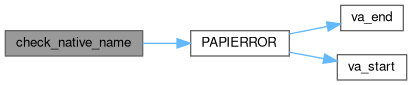
Here is the call graph for this function:
Here is the caller graph for this function:

◆ copy_buffer()
|
static |
Definition at line 279 of file ppc64_events.c.
280{
281 ntv_event_t *cur_wev, *start_wev;
283 cur_wev = start_wev;
284
285 int cnt;
286 for ( cnt = 0; cnt < maxevents; cnt++, cur_wev++ ) {
289 cur_wev->short_description =
292 cur_wev->description =
295 }
296 return start_wev;
297}
Definition: perfctr-ppc64.h:165
Here is the caller graph for this function:

◆ open_file()
|
static |
Definition at line 214 of file ppc64_events.c.
215{
216 char *cpu;
217 char *dot = ".";
218 char *dot_dot = "..";
219#ifdef _POWER5p
220 cpu = "power5+";
221#elif defined(_POWER5)
222 cpu = "power5";
223#elif defined(_PPC970)
224 cpu = "ppc970";
225#else
226 cpu = "";
227#endif
228 char *dir = ( char * ) getenv( "PAPI_EVENTFILE_PATH" );
229#ifdef PAPI_DATADIR
230 if ( dir == NULL ) {
231 dir = PAPI_DATADIR;
232 }
233#endif
234 /* If dir is still NULL, assume current dir holds event_data dir */
235 if ( dir == NULL )
236 dir = dot;
237
238 char *relative_pathname = ( char * ) malloc( strlen( "/" ) +
239 strlen( "event_data" ) +
240 strlen( "/" ) + strlen( cpu ) +
241 strlen( "/" ) +
242 strlen( fname ) + 1 );
243 strcpy( relative_pathname, "/" );
244 strcat( relative_pathname, "event_data" );
245 strcat( relative_pathname, "/" );
246 strcat( relative_pathname, cpu );
247 strcat( relative_pathname, "/" );
248 strcat( relative_pathname, fname );
249 /* Add a little extra space to the malloc for the case where dir = "." since
250 * we may be trying dir = ".." later on. */
251 char *pathname =
252 ( char * ) malloc( strlen( dir ) + strlen( relative_pathname ) + 4 );
253 int keep_trying;
254 if ( strcmp( dir, dot ) == 0 )
255 keep_trying = 2;
256 else
257 keep_trying = 3;
258 FILE *file = NULL;
260 strcpy( pathname, dir );
261 strcat( pathname, relative_pathname );
263 if ( strcmp( dir, dot ) == 0 ) {
264 dir = dot_dot;
265 } else {
266 dir = dot;
267 }
270 memset( pathname, '\0', sizeof ( pathname ) );
271 }
272
273 free( pathname );
274 free( relative_pathname );
276}
Here is the caller graph for this function:

◆ parse_eventfile()
|
static |
Definition at line 300 of file ppc64_events.c.
301{
304 int event;
305 int line_counter_flag = 0;
306 char line_data[1024];
308 ntv_event_info_t *ntv_evt_info =
310 ntv_evt_info->maxpmcs = 0;
311 char data[1024];
312 while ( fgets( data, 1022, evfile ) ) {
313 if ( feof( evfile ) )
314 continue;
315 if ( strlen( data ) < 2 )
316 continue;
317
318 if ( strncmp( data, "$$$$", 4 ) == 0 ) {
319 line_counter_flag = 0;
323 temp++;
324 }
325 switch ( line_counter_flag ) {
326 case 0:
327 if ( sscanf( data, "{ counter %u", &counter ) == 1 ) {
328 line_counter_flag = 1;
329 num_events = 0;
330 ntv_evt_info->maxpmcs++;
331 }
332 break;
333 case 1:
334 if ( sscanf( data, "#%u", &event ) != 1 ) {
336 return NULL;
337 }
340 return NULL;
341 }
343 len = strlen( data );
344 int symb_found = 0;
347 cc++;
348 if ( cc == 5 && !symb_found ) {
349 strcpy( line_data, &data[i + 1] );
350 int j = 0;
351 while ( line_data[j] != ',' )
352 j++;
355 symb_found = 1;
356 i += j;
357 } else if ( cc == 6 ) {
358 len = strlen( &data[i + 1] );
360 ( char * ) malloc( len );
362 &data[i + 1] );
364 break;
365 }
366 }
367 line_counter_flag = 2;
368 break;
369 case 2:
370 line_counter_flag = 3;
371 break;
372 case 3:
373 len = strlen( data );
377 line_counter_flag = 1;
378 num_events++;
379 break;
380 }
381 }
382 if ( counter == 0 ) {
383 free( ntv_evt_info );
384 ntv_evt_info = NULL;
385 }
389 }
390 fclose( evfile );
391 return ntv_evt_info;
392}
FILE * stderr
int fclose(FILE *__stream)
static ntv_event_t * copy_buffer(ntv_event_t events[], int maxevents)
Definition: ppc64_events.c:279
Definition: perfctr-ppc64.h:173
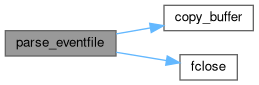
Here is the call graph for this function:
Here is the caller graph for this function:

◆ parse_groupfile()
|
static |
Definition at line 406 of file ppc64_events.c.
407{
408 char data[1024];
409 unsigned int mmcr0, mmcr1H, mmcr1L, mmcra;
411 ntv_event_group_info_t *group_info =
412 ( ntv_event_group_info_t * )
414 group_info->maxgroups = 0;
416 while ( fgets( data, 1022, grp_file ) ) {
417 if ( feof( grp_file ) || ( strlen( data ) < 2 ) )
418 continue;
419
421 case 0:
422#if defined(_POWER5) || defined(_POWER5p)
423 if ( sscanf
424 ( data, "#%u,%u,%u,%u,%u,%u,%u", &g, &event_num[0],
425 &event_num[1], &event_num[2], &event_num[3], &event_num[4],
426 &event_num[5] ) == 7 ) {
427 state = 1;
430 return NULL;
431 }
432 }
433#else
434 if ( sscanf
435 ( data, "#%u,%u,%u,%u,%u,%u,%u,%u,%u", &g, &event_num[0],
436 &event_num[1], &event_num[2], &event_num[3], &event_num[4],
437 &event_num[5], &event_num[6], &event_num[7] ) == 9 ) {
438 state = 1;
441 return NULL;
442 }
443 }
444#endif
449 int j = 0;
452 event_num[j];
453 }
454 break;
455 case 1:
456 // unused hex event codes
457 state = 2;
458 break;
459 case 2:
460 /* get mmcr values */
461 if ( sscanf( data, "%#x,%#x,%#x,%#x", &mmcr0, &mmcr1H, &mmcr1L, &mmcra )
462 != 4 ) {
464 return NULL;
465 }
466 state = 3;
471 group_info->maxgroups++;
472 break;
473 case 3:
474 // unused group name
475 state = 0;
476 }
477 }
478 fclose( grp_file );
479 return group_info;
480}
static int any_counter_invalid(int event_id[], int size)
Definition: ppc64_events.c:395
Definition: perfctr-ppc64.h:181
Definition: perfctr-ppc64.h:191
event_group_t * event_groups[MAX_GROUPS]
Definition: perfctr-ppc64.h:193
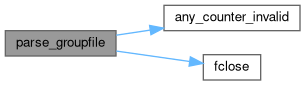
Here is the call graph for this function:
Here is the caller graph for this function:

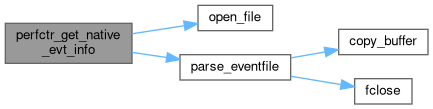
◆ perfctr_get_native_evt_info()
| ntv_event_info_t * perfctr_get_native_evt_info | ( | void | ) |
Definition at line 483 of file ppc64_events.c.
484{
485 ntv_event_info_t *evt_info = NULL;
487 if ( evt_file != NULL ) {
488 evt_info = parse_eventfile( evt_file );
489 }
490 return evt_info;
491
492}
static ntv_event_info_t * parse_eventfile(FILE *evfile)
Definition: ppc64_events.c:300
Here is the call graph for this function:
Here is the caller graph for this function:

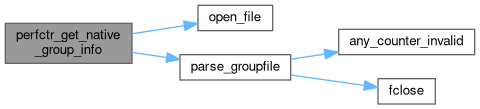
◆ perfctr_get_native_group_info()
| ntv_event_group_info_t * perfctr_get_native_group_info | ( | void | ) |
Definition at line 495 of file ppc64_events.c.
496{
498 FILE *grp_file = NULL;
501 }
503}
static ntv_event_group_info_t * parse_groupfile(FILE *grp_file)
Definition: ppc64_events.c:406
Here is the call graph for this function:
Here is the caller graph for this function:

◆ perfctr_initialize_native_table()
| void perfctr_initialize_native_table | ( | ) |
Definition at line 27 of file ppc64_events.c.
Here is the caller graph for this function:

◆ perfctr_ppc64_setup_gps()
| void perfctr_ppc64_setup_gps | ( | int | total, |
| ntv_event_group_info_t * | group_info | ||
| ) |
Definition at line 41 of file ppc64_events.c.
42{
44
52 1 << ( gnum % 32 );
53 }
54 }
55 }
56 }
57 }
58
67 }
68}
Here is the caller graph for this function:

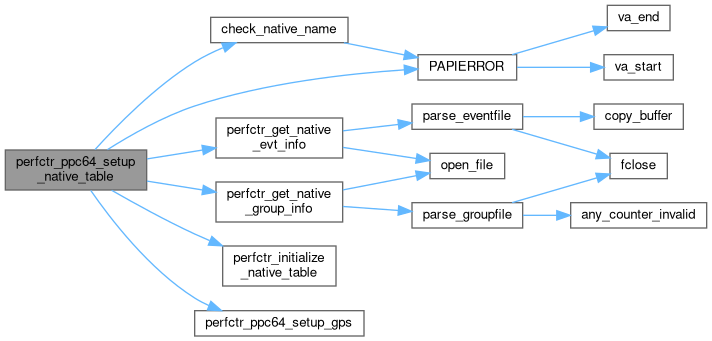
◆ perfctr_ppc64_setup_native_table()
| int perfctr_ppc64_setup_native_table | ( | ) |
Definition at line 73 of file ppc64_events.c.
74{
76 /* This is for initialisation-testing of consistency between
77 native_name_map and our events file */
78 int itemCount = 0;
79 index = 0;
82 if ( info == NULL ) {
85 }
86 ntv_event_t *wevp;
88 wevp = info->wev[pmc];
94 wevp->event_num;
95 break;
96 }
97 }
99 //native_table[i].index=i;
106 index++;
108 /* It appears that here, if I'm right, that the events
109 file entry matches the event from native_name_map, */
110 /* This here check is to ensure that native_name_map in fact
111 has MAX_NATNAME_MAP_INDEX elements, or rather that it never
112 tries to access one that has not been initialised. */
115 j );
116 PAPIERROR
117 ( "Inconsistency between events_map file and events header." );
119 }
121 == 0 ) {
123 itemCount++;
124 break;
125 }
126 }
127 /* If we never set native_name_map[j], then there is an
128 inconsistency between native_name_map and native_table */
131 SUBDBG
132 ( "No match found between native_name_map and native_table. "
133 "Values was %s at position %i in native_table.\n",
135 PAPIERROR
136 ( "Inconsistency between native_name_map and events file." );
138 }
139 }
140 }
141 }
142 /* given the previous evidence that native_name_map is a superset of
143 native_table, ensuring this match in their cardinality shows them to
144 be equivalent. */
147 itemCount, MAX_NATNAME_MAP_INDEX );
148 PAPIERROR
149 ( "Inconsistent cardinality between native_name_map and events file",
150 itemCount, MAX_NATNAME_MAP_INDEX );
152 }
153
155 if ( gp_info == NULL ) {
156 perfctr_initialize_native_table( );
159 }
160
161 perfctr_ppc64_setup_gps( index, gp_info );
162 _papi_hwi_system_info.sub_info.num_native_events = index;
163
165}
void perfctr_ppc64_setup_gps(int total, ntv_event_group_info_t *group_info)
Definition: ppc64_events.c:41
ntv_event_group_info_t * perfctr_get_native_group_info(void)
Definition: ppc64_events.c:495
ntv_event_info_t * perfctr_get_native_evt_info(void)
Definition: ppc64_events.c:483
Here is the call graph for this function:
Here is the caller graph for this function:

Variable Documentation
◆ group_map
| hwd_groups_t group_map[MAX_GROUPS] |
Initial value:
= { {0}
, {0}
, {0}
, {0}
, {0}
}
Definition at line 17 of file ppc64_events.c.
◆ native_table
| native_event_entry_t native_table[PAPI_MAX_NATIVE_EVENTS] |
Definition at line 23 of file ppc64_events.c.