News and Announcements
Tracy Rafferty

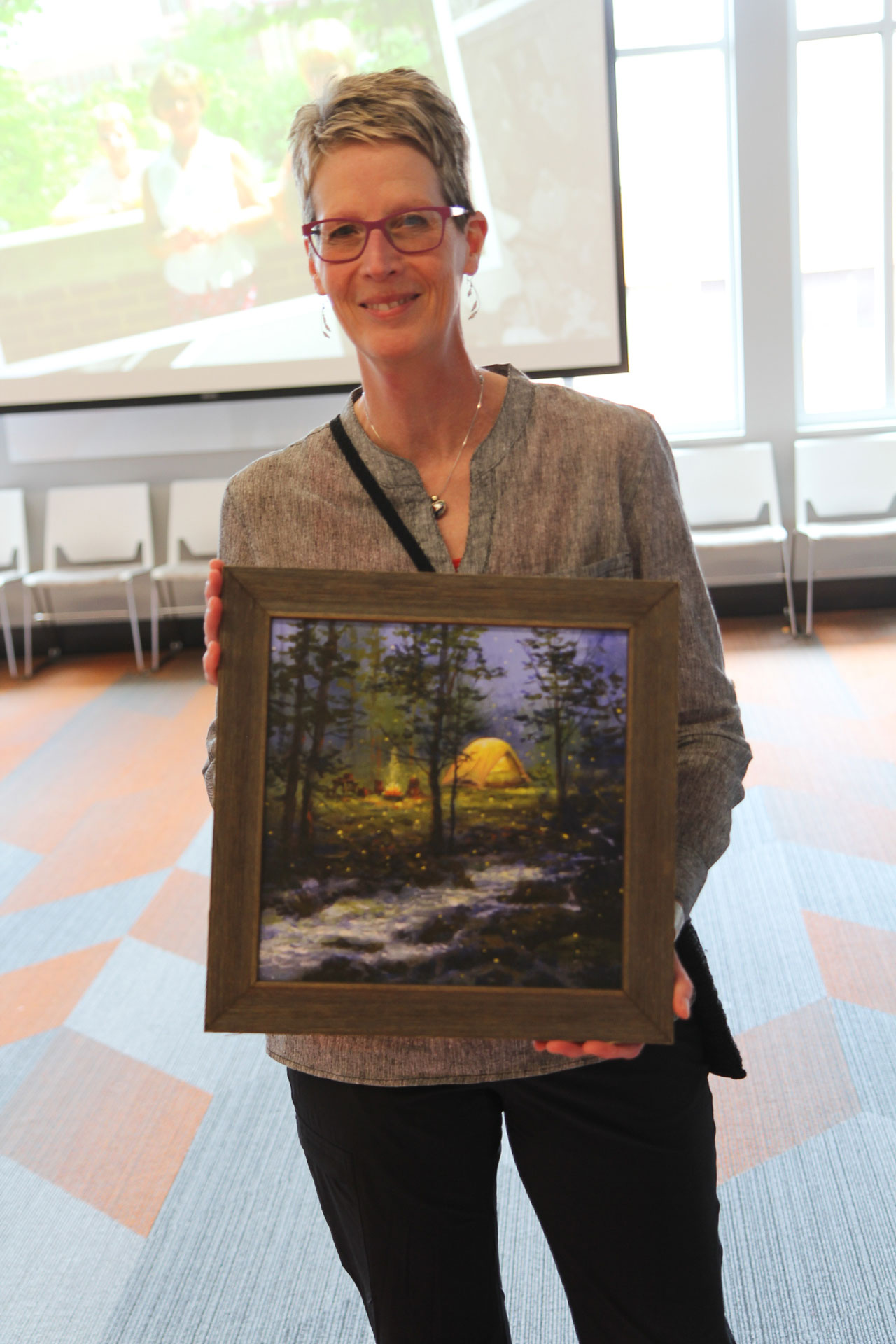
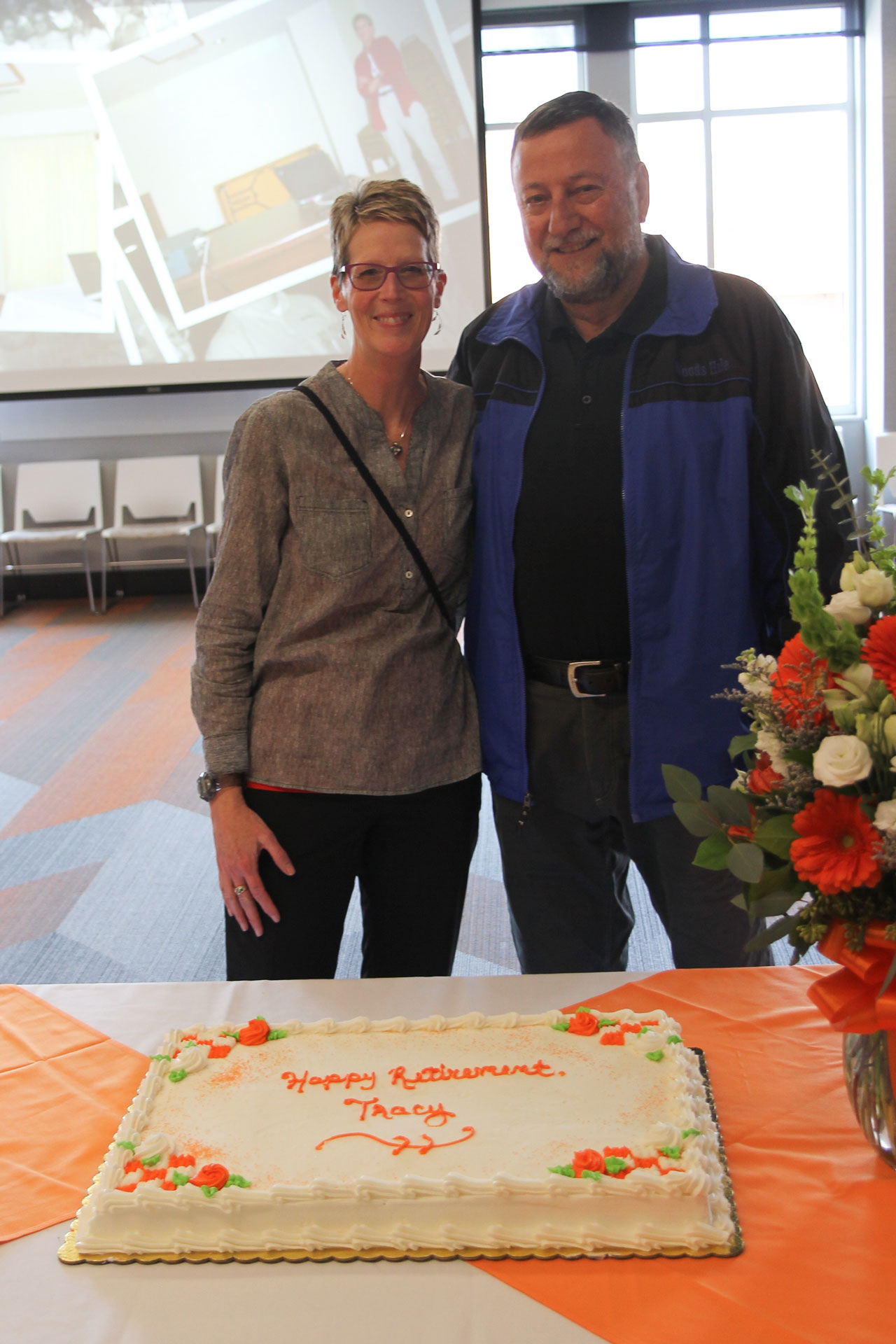


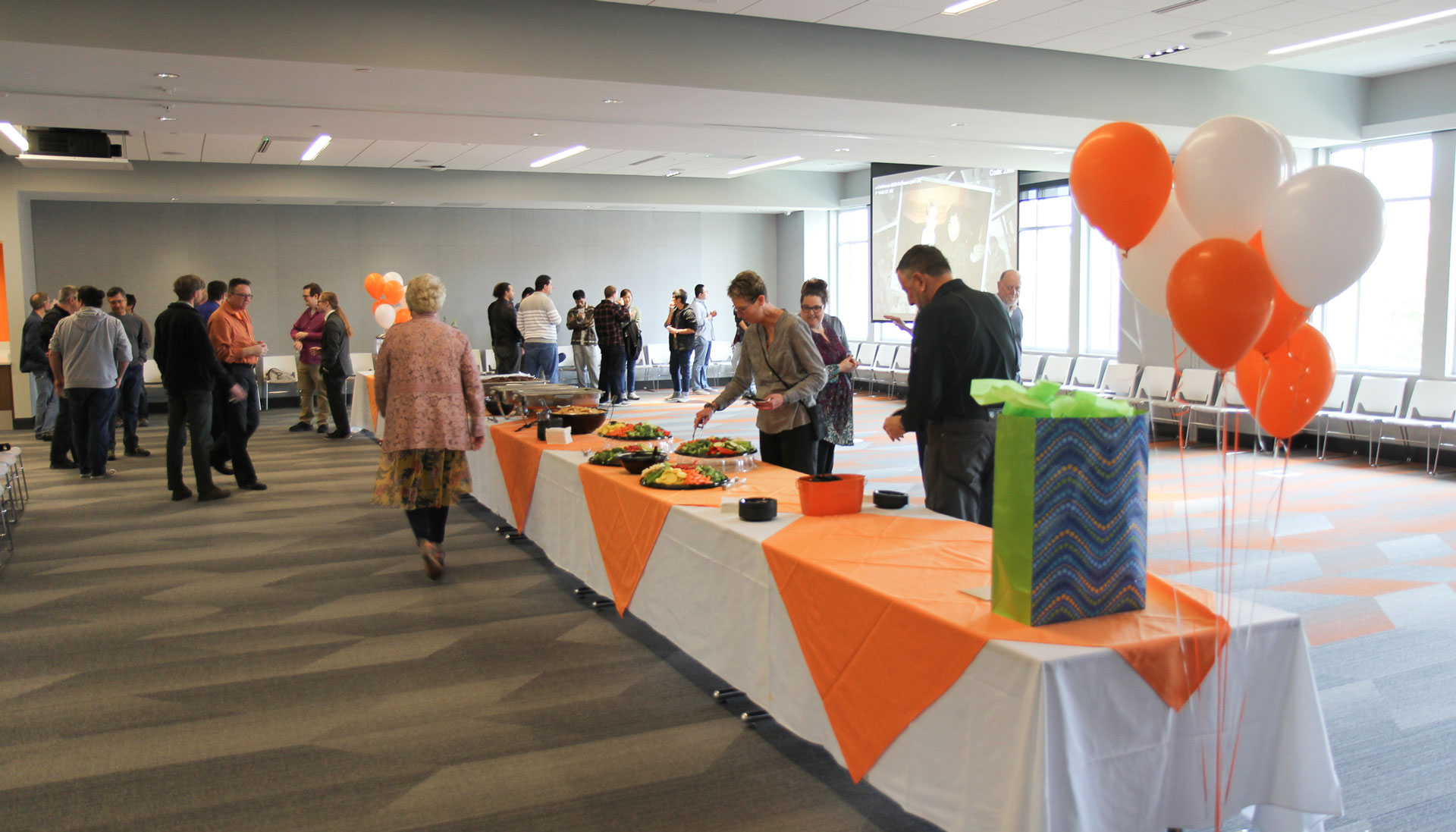
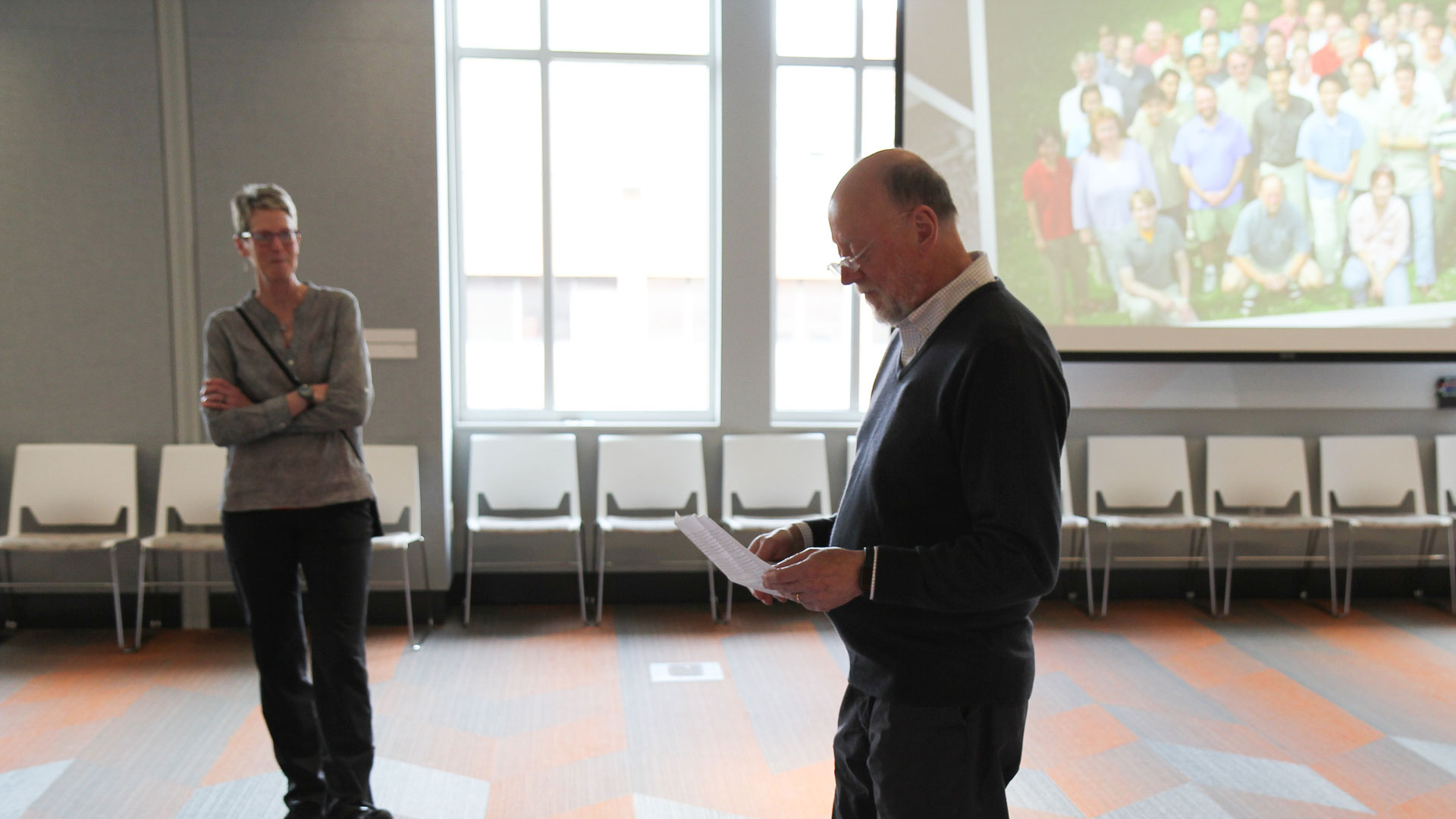
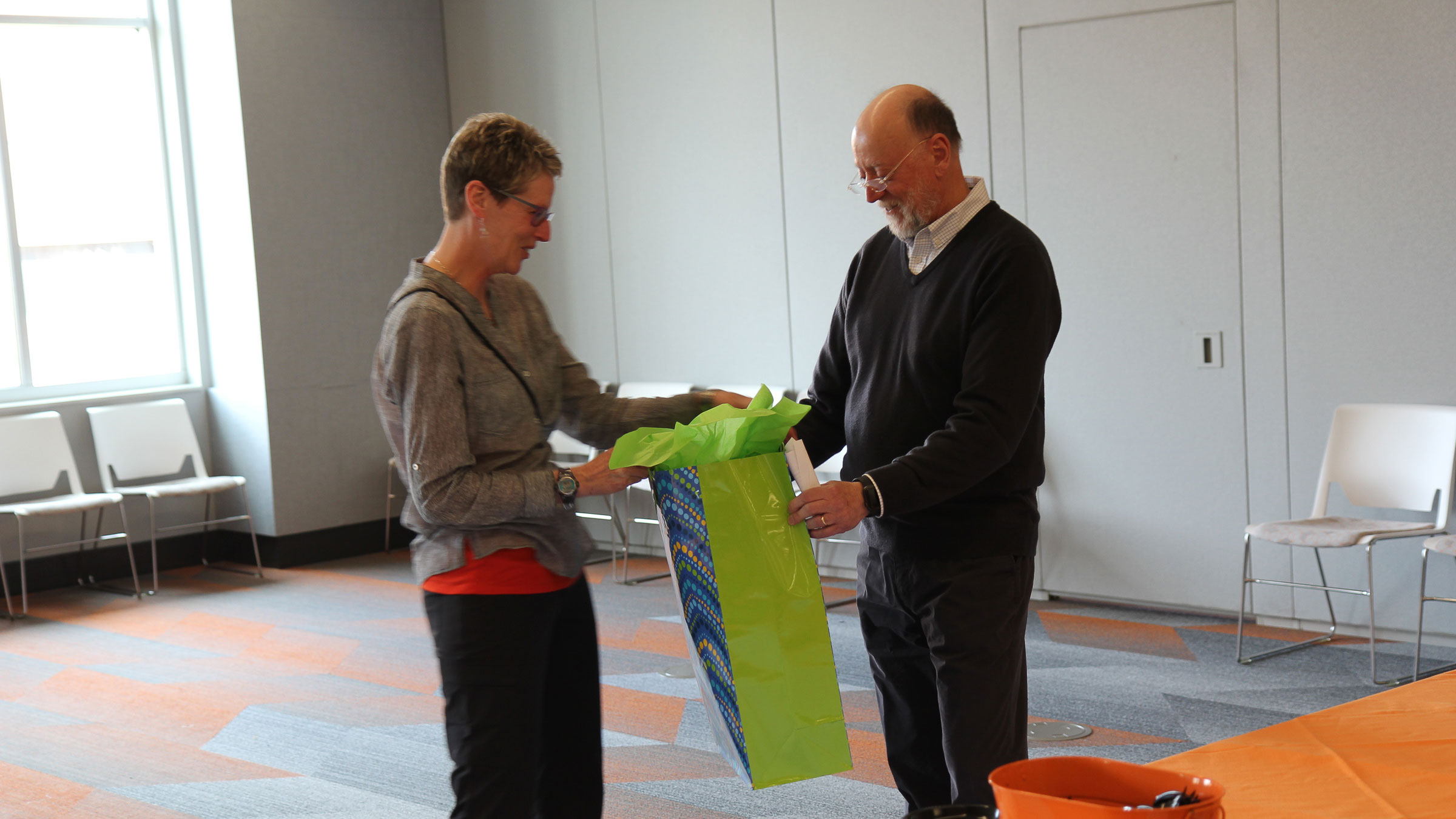
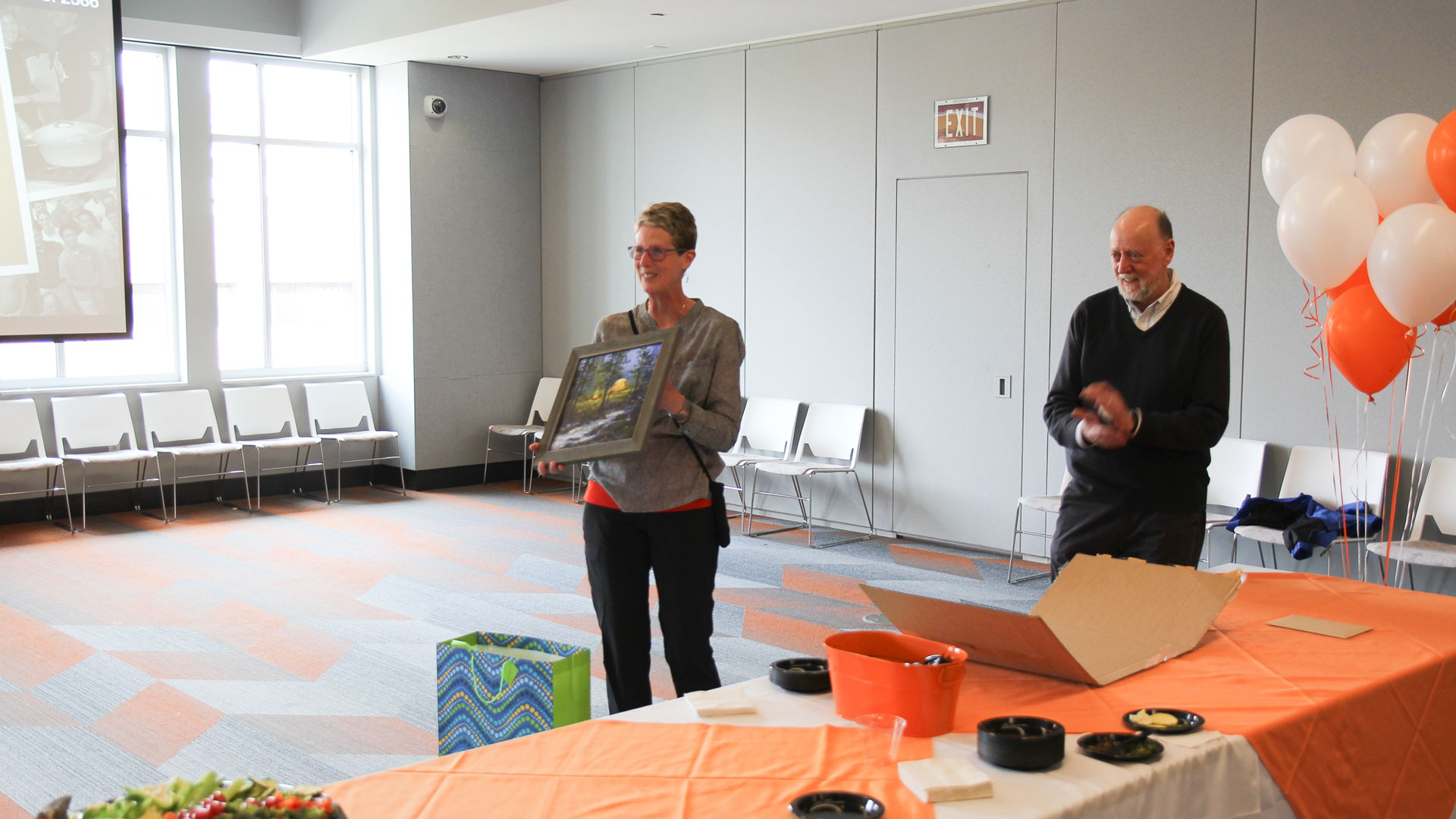
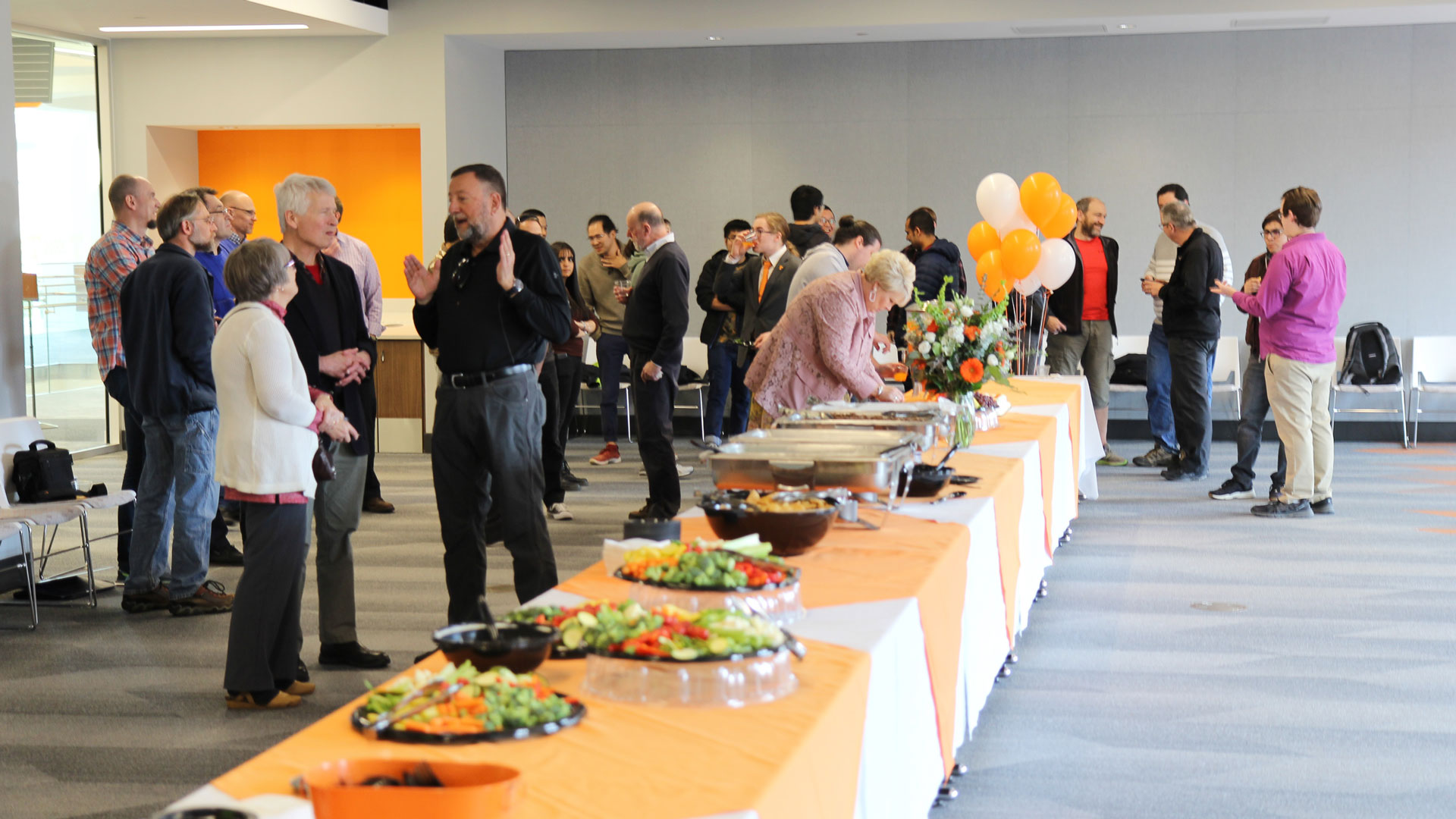
ICL’s longest-tenured employee announced her retirement earlier this year. Tracy Rafferty, who has been with the lab for a quarter of a century (also spanning [in part] two millennia) gathered with colleagues and friends on April 1st to celebrate her time at ICL and lament her leaving. Tracy has been a leader, a manager, and a mentor, and is a pillar of the ICL culture. Good luck, Tracy—we’ll miss you.
Conference Reports
Future of Information and Communication Conference
On March 5–6 ICL’s Terry Moore and ICL alum Micah Beck traveled to San Francisco for the Future of Information and Communication Conference (FICC). FICC provides a forum for researchers from both academia and industry to share their latest research contributions and exchange knowledge with the common goal of shaping the future of information and communication.
For their part, Micah and Terry presented their paper—coauthored by Piotr Luszczek and Anthony Danalis—called, “Interoperable Convergence of Storage, Networking, and Computation.” Terry was also interviewed about the concepts outlined in the paper. You can watch the full interview in the clip above.
The editor would like to thank Terry Moore for his contributions to this article.
9th JLESC Workshop

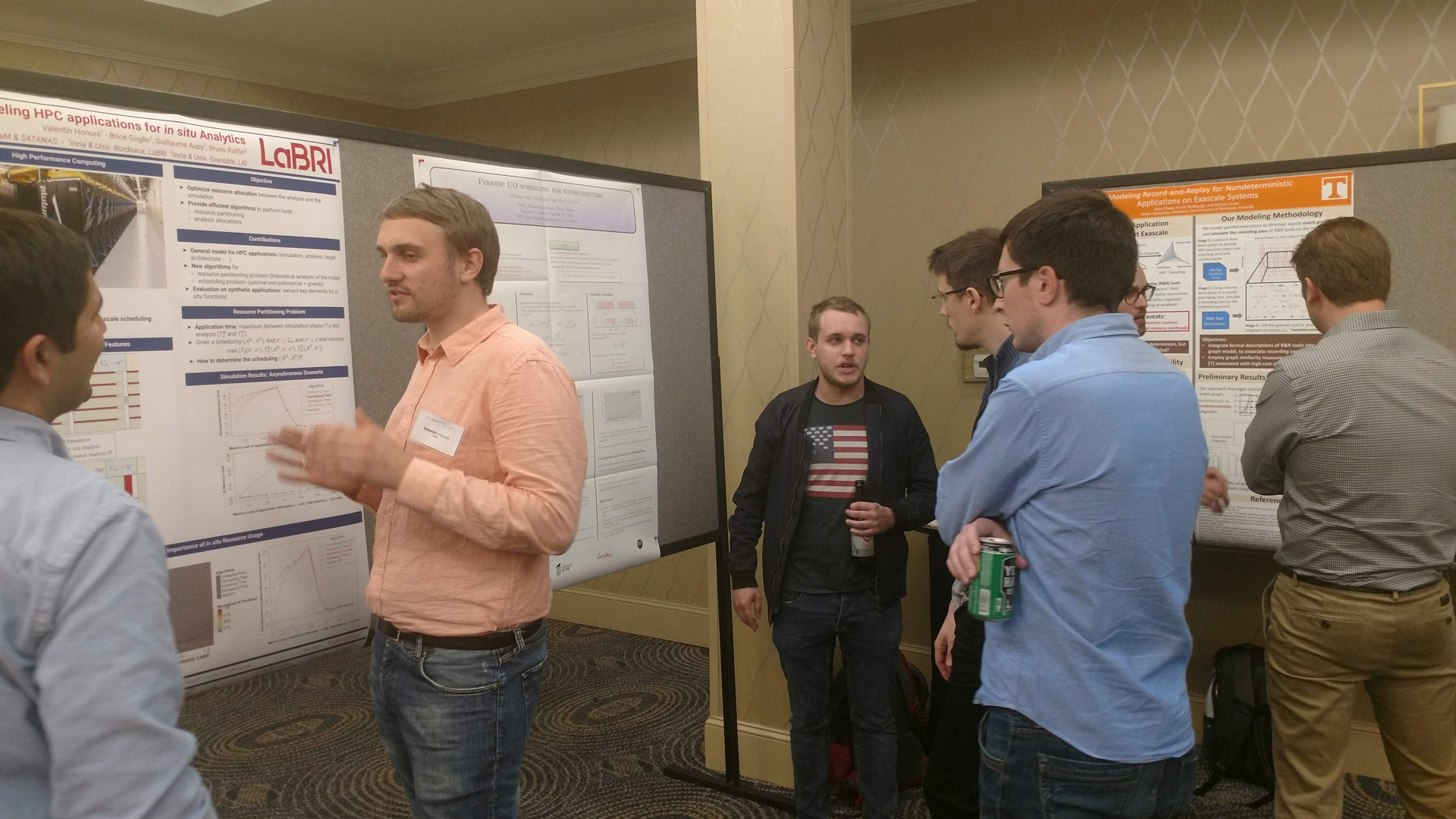
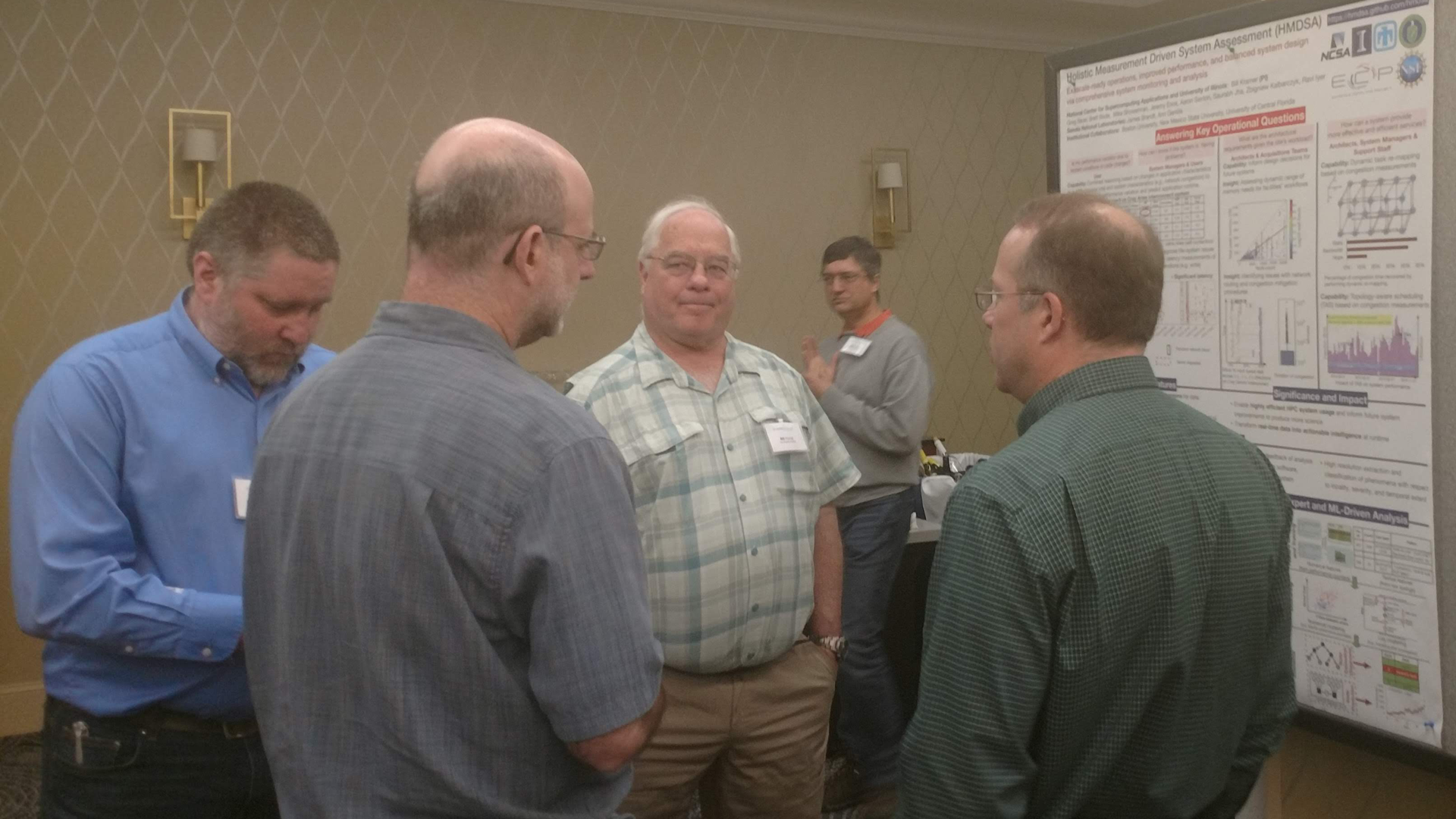
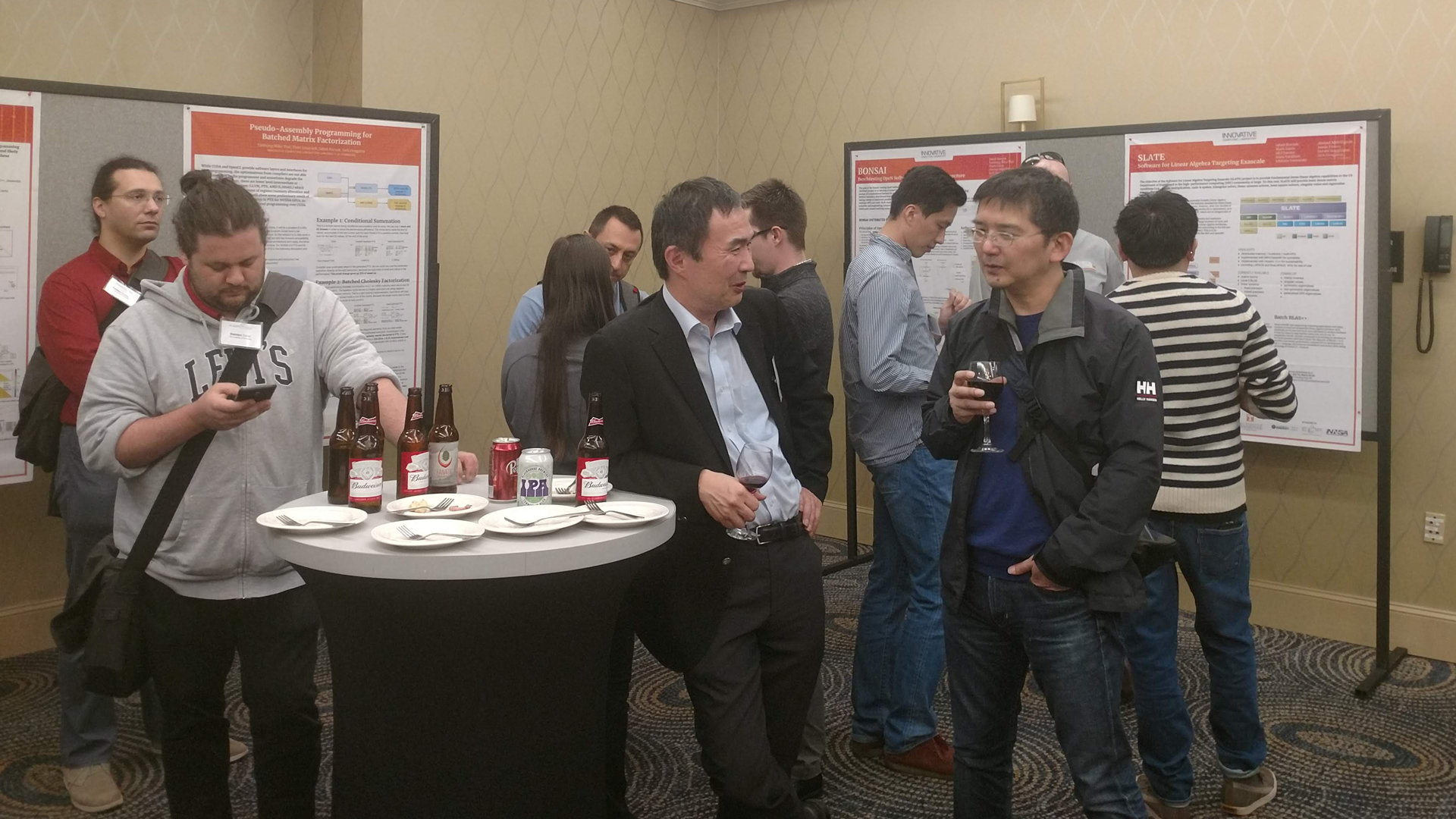

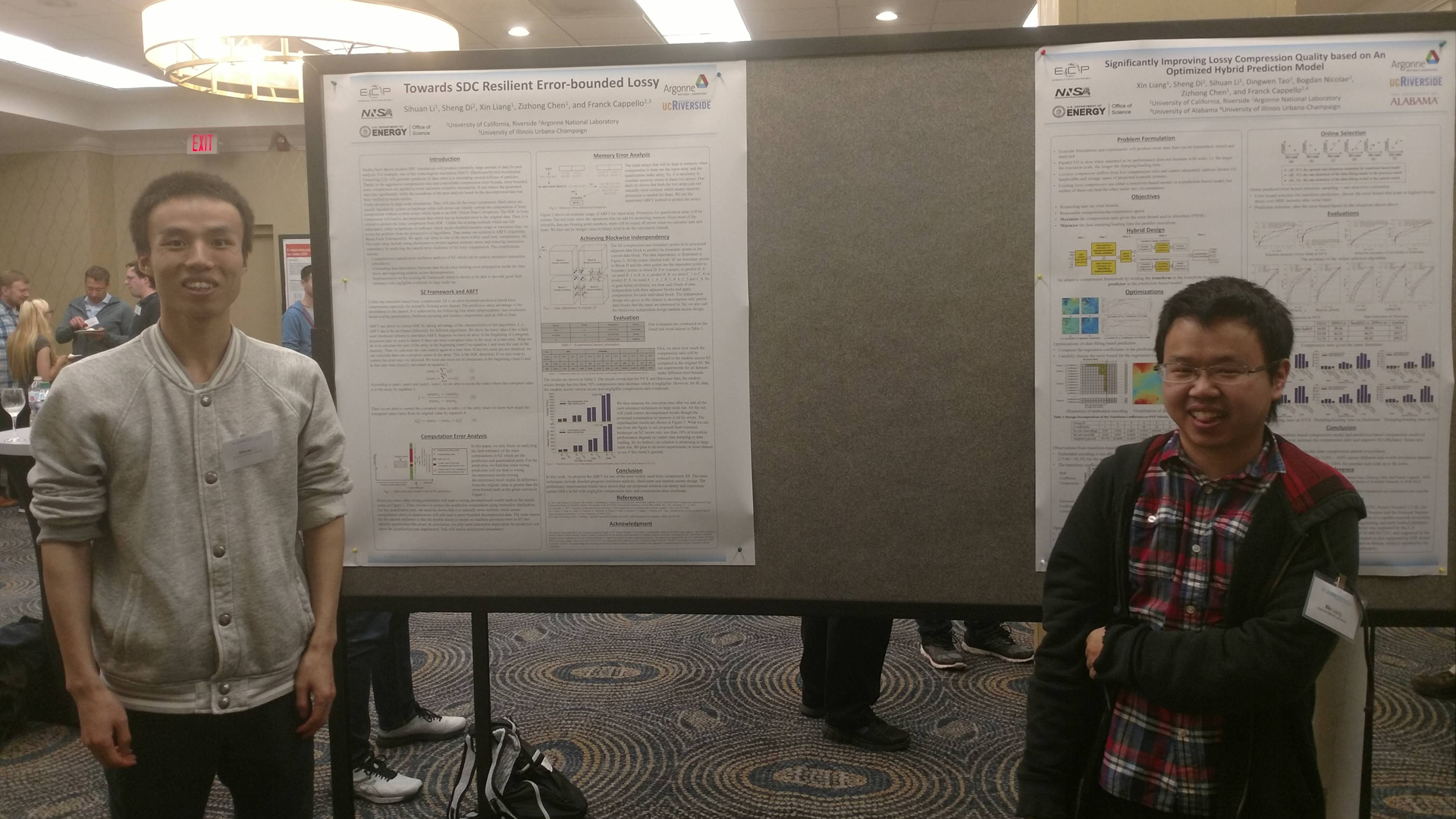
On April 15–17, the University of Tennessee, Knoxville (UTK) hosted the 9th Workshop for the Joint Laboratory for Extreme-Scale Computing (JLESC). JLESC is an international, virtual organization working to enhance the ability of member organizations and investigators to bridge the gap between petascale and extreme-scale computing. INRIA and the University of Illinois at Urbana-Champaign are the founding members of JLESC, and additional partner institutions have been added over the years, including: Argonne National Laboratory, the Barcelona Supercomputing Center, the Jülich Supercomputing Centre at Forschungszentrum Jülich, and the RIKEN Center for Computational Science. UTK/ICL is an associate member.
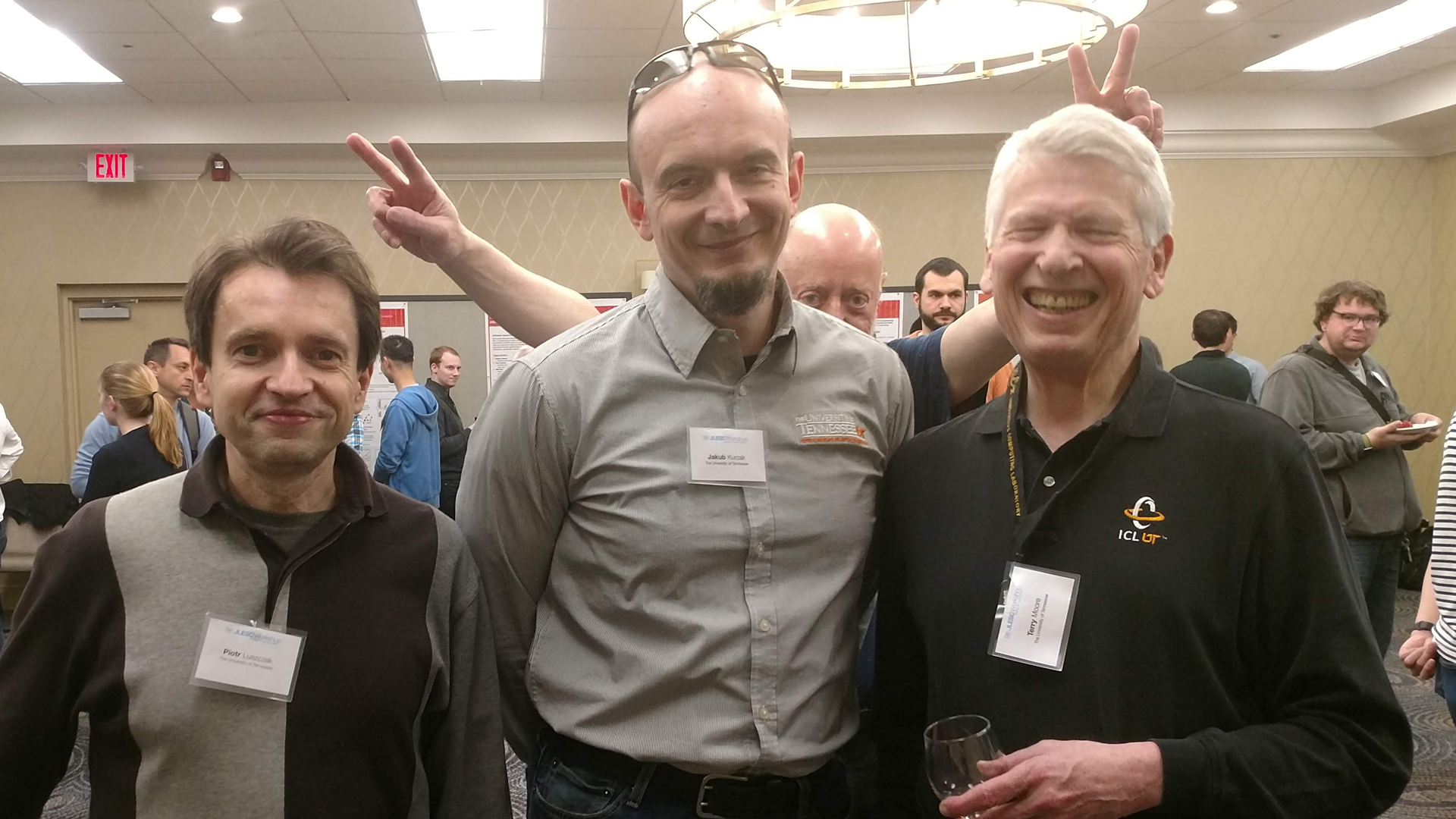
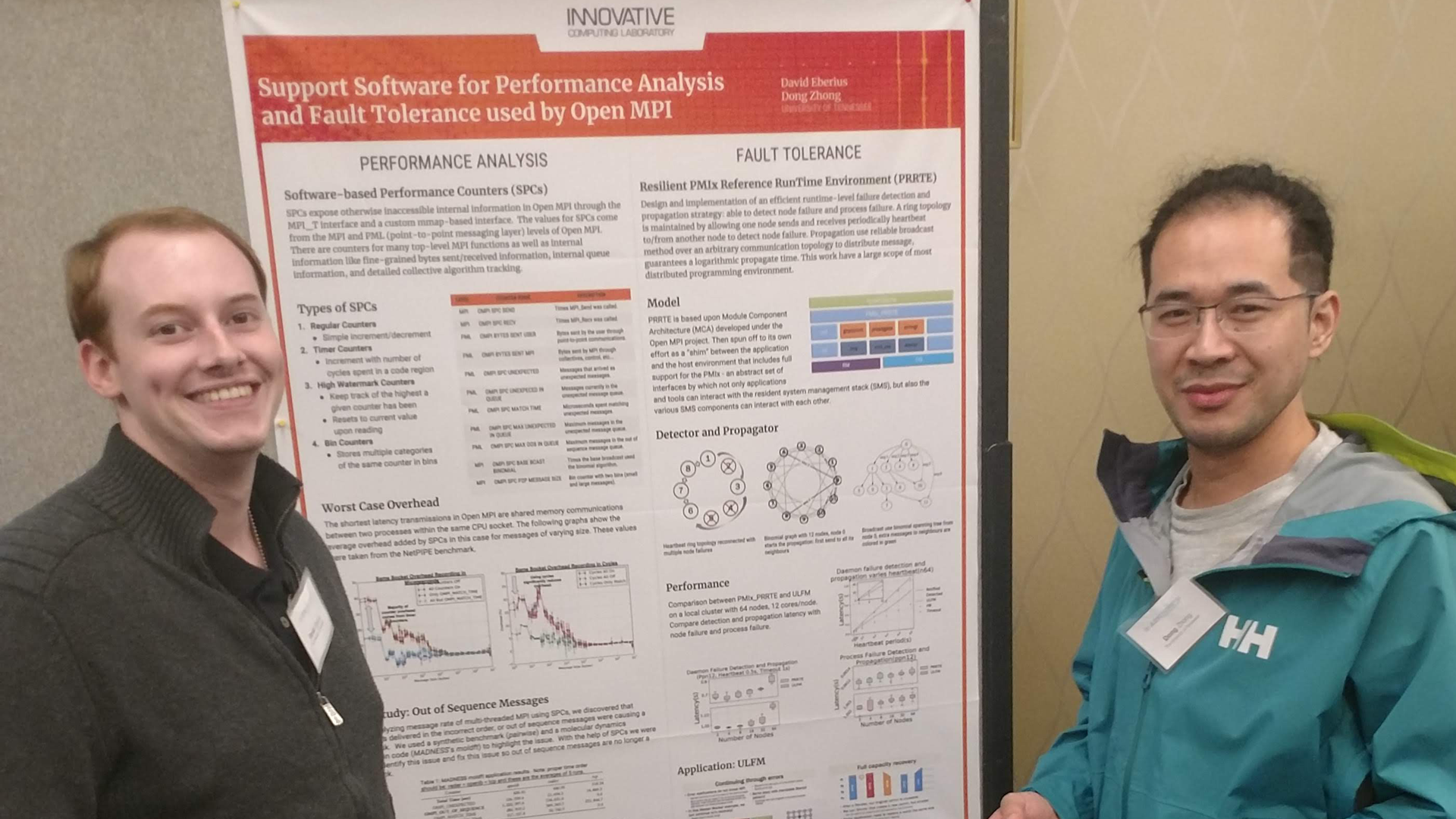
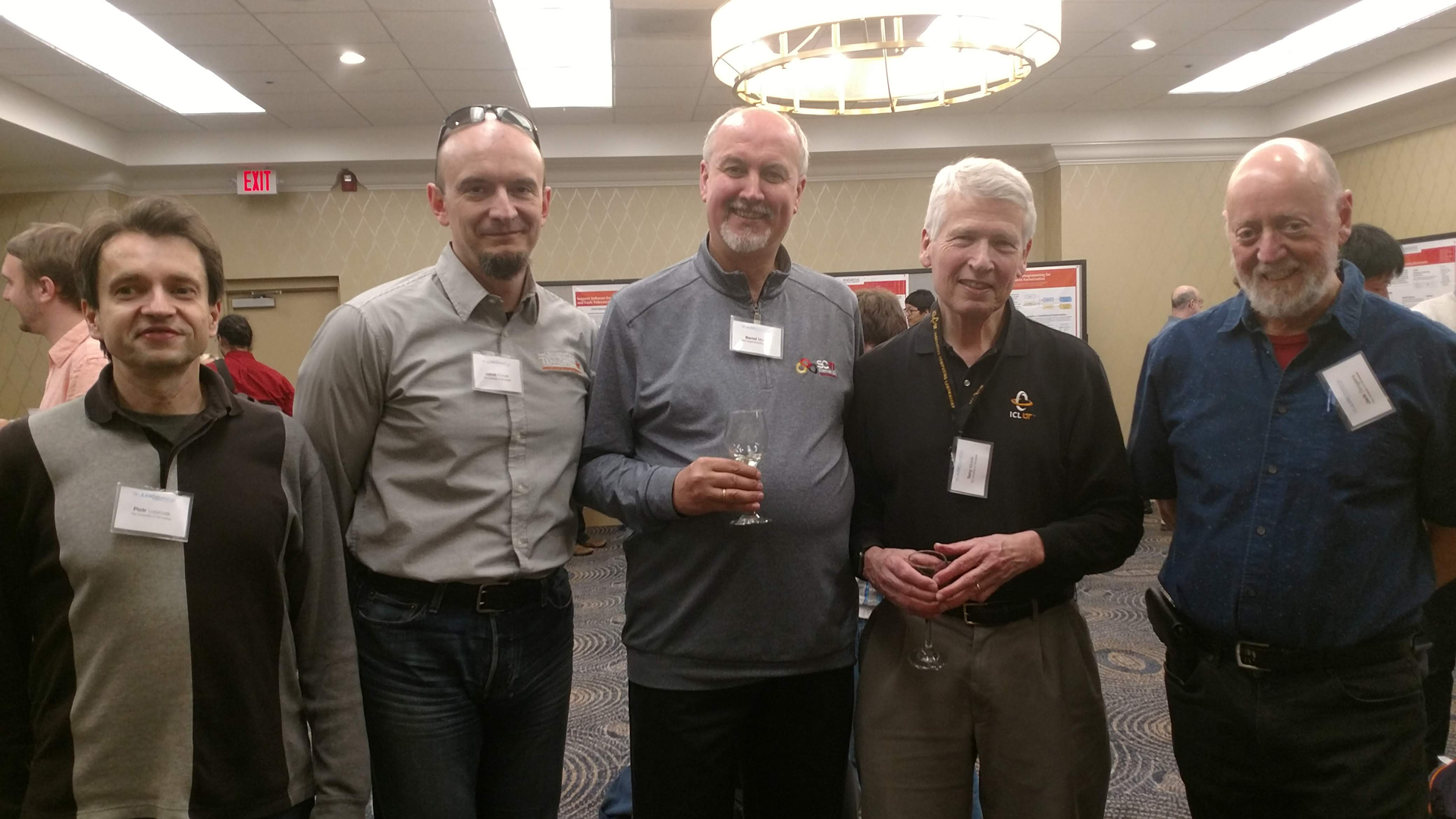
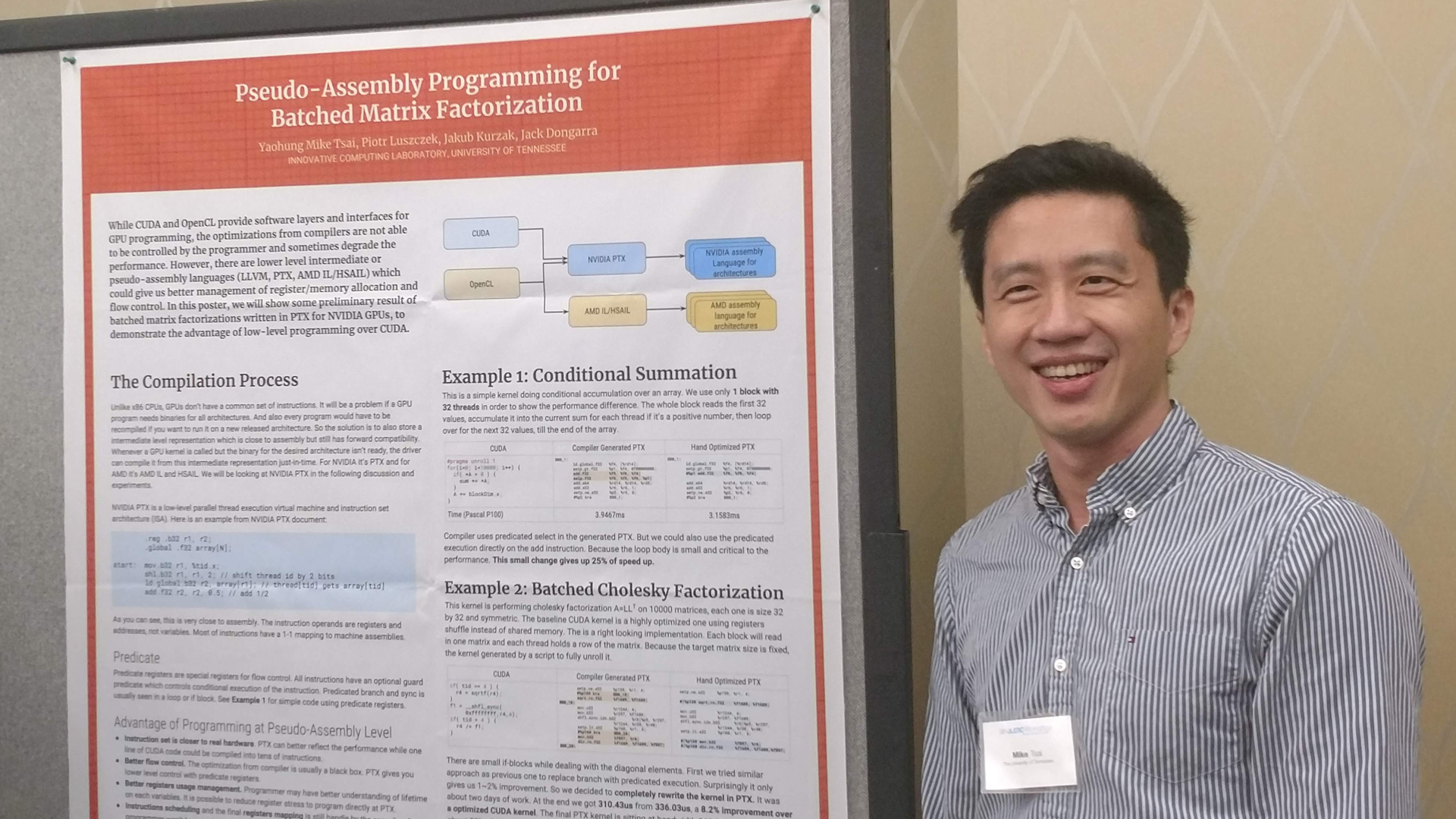
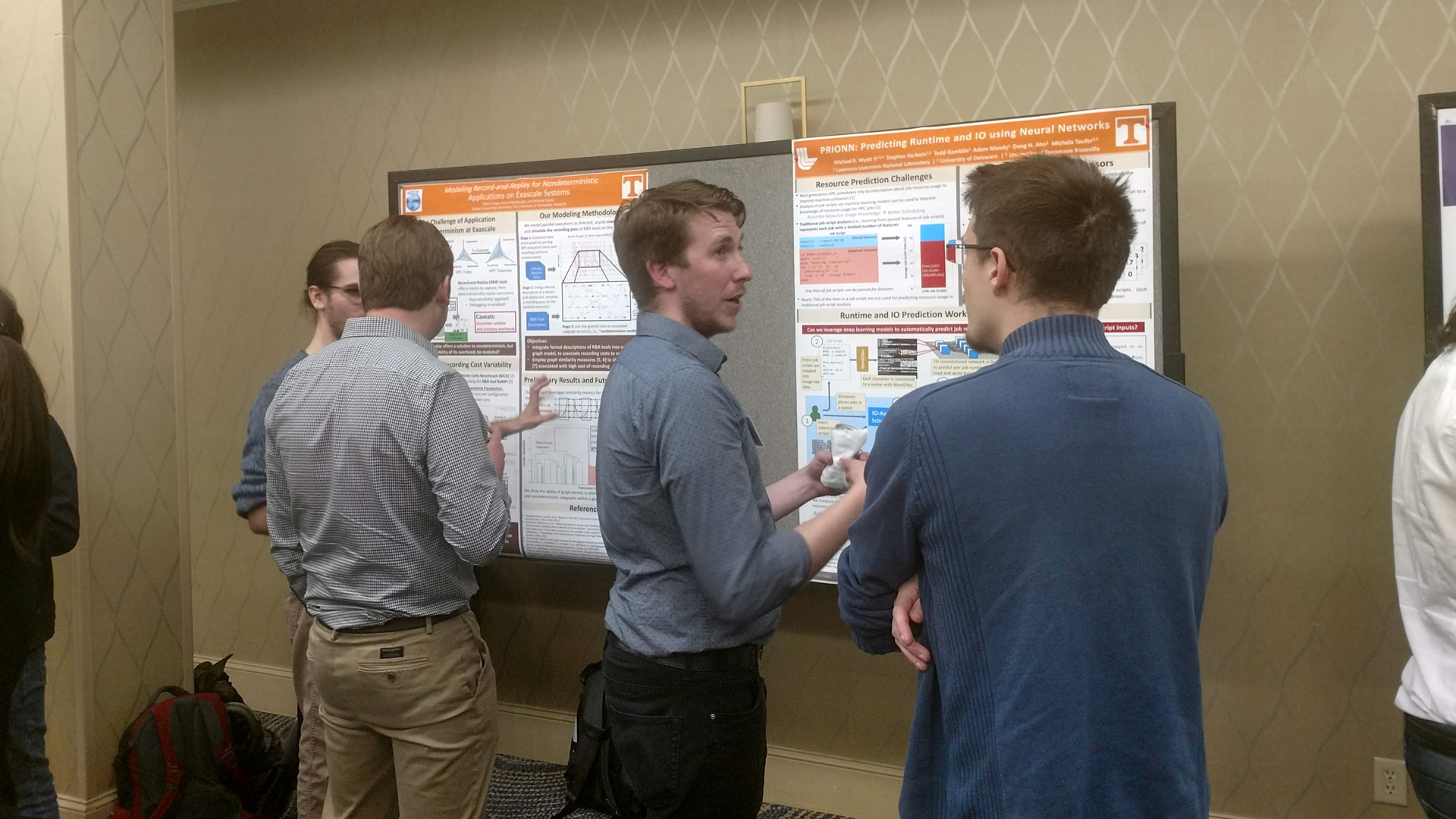
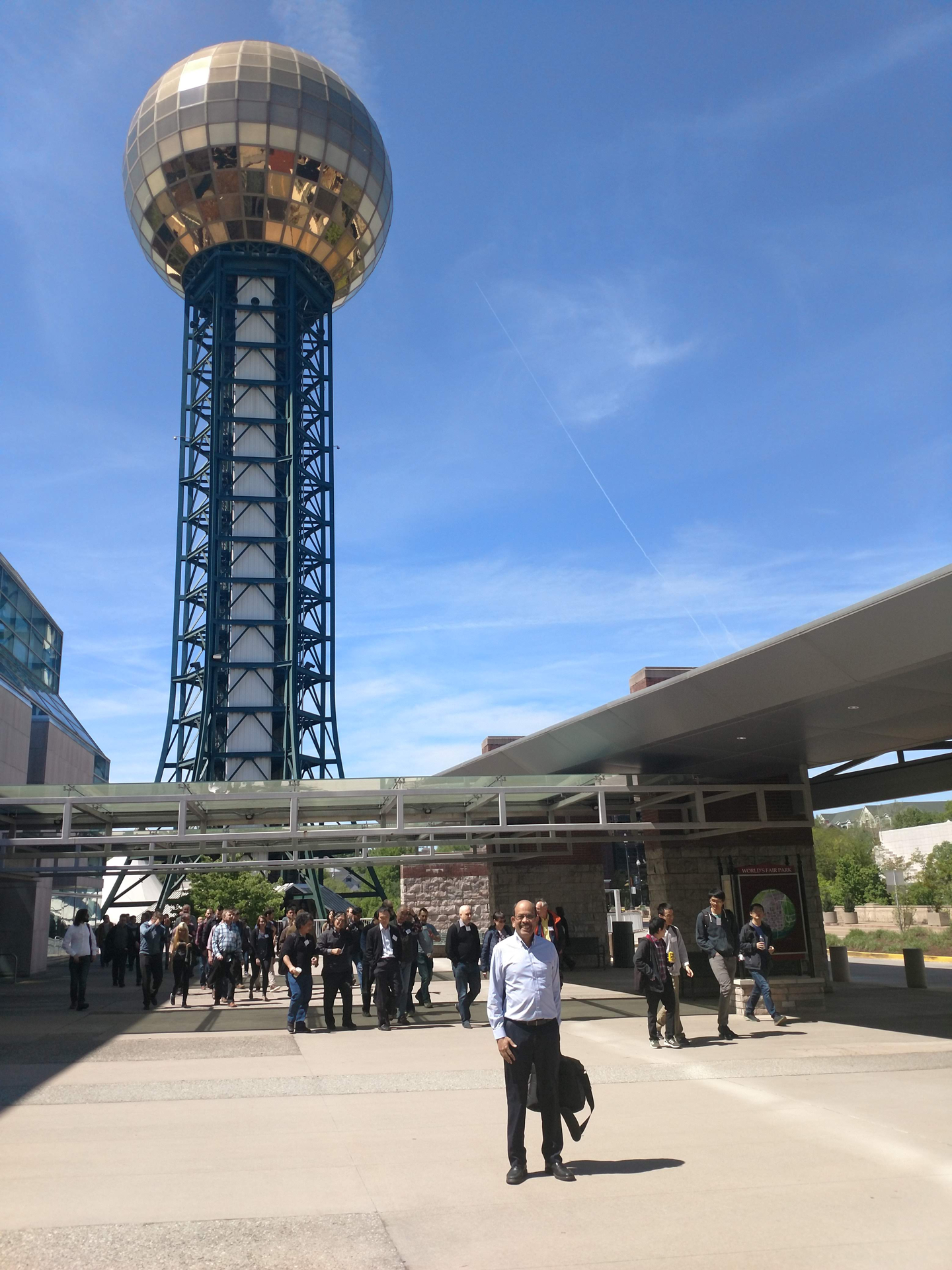
The 9th JLESC workshop gathered leading researchers in high-performance computing from these partner institutions, including 20 members of ICL. This JLESC workshop featured sessions on seven central topics: applications and mini-apps; parallel programming models and runtimes; performance tools; resilience; big data, I/O, and in-situ visualization; numerical methods and algorithms; and advanced architectures.
There were also dedicated sessions on computational fluid dynamics, computational biology, and climate/weather research, with a key objective being to identify new research collaborations and establish a roadmap for their implementation.
The editor would like to thank Tracy Rafferty for her contributions to this article.
Recent Releases
Ginkgo 1.0 Released
The Ginkgo team is proud to announce the first release of Ginkgo, the next-generation high-performance, on-node, sparse linear algebra library. Part of the Production-ready, Exascale-enabled Krylov Solvers for Exascale Computing (PEEKS) effort, Ginkgo leverages the features of modern C++ to give you a tool for the iterative solution of linear systems that is:
- Easy to use. Interfaces with cryptic naming schemes and dozens of parameters are a thing of the past. Ginkgo was built with good software design in mind, making simple things simple to express.
- High performance. Our optimized CUDA kernels ensure you are reaching the potential of today’s GPU-accelerated high-end systems, while Ginkgo’s open design allows extension to future hardware architectures.
- Controllable. While Ginkgo can automatically move your data when needed, you remain in control by optionally specifying when the data is moved and its ownership scheme.
- Composable. Iterative solution of linear systems is an extremely versatile field, where effective methods are built by mixing and matching various components. Need a GMRES solver preconditioned with a block-Jacobi enhanced BiCGSTAB? Thanks to its novel linear operator abstraction, Ginkgo can do it!
- Extensible. Did not find a component you were looking for? Ginkgo is designed to be easily extended in various ways. You can provide your own loggers, stopping criteria, matrix formats, preconditioners and solvers to Ginkgo and have them integrate as well as the natively supported ones, without the need to modify or recompile the library.
Click here to download the source tarball or clone the source.
Interview
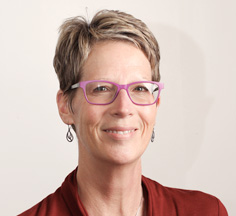
Tracy Rafferty
OK, Tracy, this is your exit interview. Are you ready for this?
Is this where I air my grievances?
Where are you from, originally?
I am from right here in Knoxville. I was born at St. Mary’s (later renamed Tennova North), and I attended West High School just a few miles from campus.
You are the longest-tenured ICL employee, full stop. The only person who has been in this place longer than you is Jack. With that in mind, what are your top 3 (or 5) moments at ICL?
It is difficult to reduce 26 years into a few moments, here are some highlights in no particular order:
Getting stranded with Teresa in England for a week due to the Eyjafjallajökull volcano in Iceland erupting and closing air traffic. We were organizing a BDEC workshop in Oxford and had spent the final night with our friends, Pam and Sven Hammarling, who lived in the Oxford countryside. Sven was driving us to the airport in London, and we heard a report on the radio that all flights were canceled. Jack was on a slightly earlier flight, and he made it, but we did not. The Hammarlings went out of their way looking after us, and after a couple days waiting in London with no timeline on returning home, they took us back to their home and put us to work! The ongoing joke is that we became their staff (must use British accent). In the meantime, Jack was working fervently with travel agents trying to find flights for us, and we ended up convincing UT that the next available first-class flight was worth paying extra to bring us home sooner.
Organizing an IESP workshop in Maui. Need I say more?
Assisting with the EuroMPI conference in Santorini Greece. Tracy Lee and I volunteered to go and assist the local team with the conference, but when we arrived, there was nothing really to do. So, we took advantage of the opportunity and saw the sights, ate great food, and worked from our hotel rooms, which each had a small private pool on the patio. The Island is so small that we could walk just about everywhere. We walked to the caldera to watch the sunset and watched the sunrise from the hotel rooftop.
Being recognized by ICL on a few occasions for my work and dedication to the Lab. Thank you. I am humbled.
The opportunity to go to Japan—4 times. Again, former ICLers such as the Hasegawas and Hiroyasus have been so kind and hosted Terry and me on extended trips.
Traveling with Jack and Terry—we’ve been so many places, but aside from those I already mentioned, one highlight was landing in Detroit on the way to China, and Jack was waiting on Terry and me just outside the plane in the jetbridge. He told a lady “that’s all of us,” and we went out the door, onto the tarmac, and hopped in a car. The lady, our driver, drove us to the gate. You could tell this was not the first time Jack did this, but Terry and I got a kick out of it. Jack is great to travel with, and he knows where every airport lounge is, where the amenities are, and the process for everything.
As far as I am concerned, you’ve always been at ICL—you came with the building—but I suppose there was some time before that, right? Where did you work before joining ICL?
Immediately prior to joining ICL, I worked in the University Payroll Office. Prior to that, I worked for Miller’s Department Store (now the UT Conference Center) and for my dad, who was a remodeling contractor. I kept his books, helped with estimates, and learned how to hang wallpaper.
How did you first hear about the lab, and what made you want to switch jobs?
While working in the UT Payroll Office, I handled the Computer Science Department payroll accounts and met Mary Drake. At some point, Mary told me she was leaving, and I thought that this lab might be a cool place to work, so I applied for her job. Unfortunately, I didn’t get it. After a few months, the person who did get the job didn’t work out, so Jack told HR to “call the other person who applied,” and that was me! It was near the end of October, and the Payroll Office employees would dress in costumes to hand out the “Halloween” payroll (OK, this was over 20 years ago), and I was dressed as the androgynous “Pat” from SNL. I went to my supervisor’s office and quit—as Pat.
Is there a photo of this costume—for the archives?

Looking back on 25+ years of running this show, what would you say is the most valuable thing you learned? Or, the biggest takeaway that you think might help someone taking on a new role?
Sometimes people can make unreasonable requests, but I learned early on (thanks to Susan Blackford) to be realistic and honest with the person, which earns respect in the end and causes less worry trying to do the impossible. Thank you, Susan!
You aren’t the first person to retire from ICL, I think that would be Dan Terpstra—but your tenure far exceeds his (sorry, Dan)—how do you reconcile a new chapter without this place? Is it easy to imagine? Are you excited?
I have a lot of things I have been putting off that I’m looking forward to doing, and many of you know about our recent motorhome purchase, the “Bago.” We will do lots of camping the rest of this year and think about travel later.
I cannot imagine not coming to work, checking email at all hours, seeing my coworkers, going to the retreat…I’ll have an easier time getting past that last one! I still say “we” when talking about future ICL events or happenings. However, I am excited to spend more time doing something else with Joe, and I plan to stay in touch with those of you at ICL.
You’ve set the tone for us for so many years, and you hired most of the support staff personally—including your replacement—what can we do to preserve and continue to cultivate this tone/culture?
For the longest time, I didn’t feel like I fit into the Computer Science world, but by getting to know the research staff, I found out that we have more in common than I realized. I would suggest joining the coffee room conversations to find out how you are alike instead of how you are different from one another. I think doing so in a quiet voice and maybe limiting this to less than 30-minute sessions will be equally beneficial.
Also, be more selfless.
What do you think your first post-retirement adventure will be? Have a destination in mind?
Yes, on my first day of retirement I will be traveling to Atlanta for a Supercomputing 2019 meeting. I committed to serving on the Executive Committee for the conference this November, and this is one of the several planning meetings. I hope to see many of you in Denver! The following week, we will be camping in the ‘Bago.
Finally, do you need help removing the ICL email account from your phone?
I am surprised you have to ask. Of course I need help.