News and Announcements
UT is Full Speed at SC Conference

Four computational science research centers from the University of Tennessee—the Bredesen Center, the Global Computing Laboratory, the Innovative Computing Laboratory, and the SimCenter—will represent the university with their own booth (#4113) at this year’s International Conference for High Performance Computing, Networking, Storage, and Analysis (SC18) on November 11–16 in Dallas, Texas. Drop by and say “hello!”
Read the full press release here: https://www.eecs.utk.edu/news/.
ISC 2019 Workshops

Submitted workshop proposals will be reviewed by the ISC 2019 Workshops Committee, which is headed by Dr. Sadaf Alam, Swiss National Supercomputing Center (CSCS), with Dr. Heike Jagode, University of Tennessee–Knoxville, as Deputy Chair.
The workshops will be held on Thursday, June 20, 2019 and will be either half-day (9:00 a.m. to 1:00 p.m. or 2:00 p.m. to 6:00 p.m.) or full-day (9:00 a.m. to 6:00 p.m.). Attendance will require a Workshop Pass.
Workshop proposals should be submitted via the ISC 2019 submission site by Wednesday, November 28, 2018. Check out the ISC-HPC workshops site for more information.
ICL @ SC18 Dinner
The ICL @ SC18 dinner is set for Wednesday, November 14th at 7:00 p.m.
RJ Mexican Cuisine (map)
1701 N Market St. #102
Dallas, TX 75202
214-594-9617
Respond to Tracy Rafferty (rafferty@icl.utk.edu) by November 9th if you wish to attend.
Conference Reports
Workshop on Clusters, Clouds, and Data for Scientific Computing

On September 4–7, the Châteauform’ La Maison des Contes hosted this year’s workshop on Clusters, Clouds, and Data for Scientific Computing (CCDSC). CCDSC 2018 is a continuation of a series of workshops that started in 1992. Held every two years and alternating between the United States and France—mostly France these days—the purpose of this meeting is to evaluate the state-of-the-art and future trends for cluster computing, big data, and the use of computational clouds for scientific computing.
ICL’s Jack Dongarra and former ICLer Bernard Tourancheau (now a Professor at the Université Grenoble Alpes) co-chaired the workshop.
George Bosilca gave a talk where he presented the results of a survey designed to obtain a more useful and thorough understanding of how other Exascale Computing Project (ECP) efforts are using and planning to use MPI. The presented results, and George’s commentary and interpretation of those results, provided CCDSC attendees with a better understanding of what users actually think about MPI and its capabilities in the realm of ECP.
Heike Jagode presented one of the most recent developments of the Performance API (PAPI)—the addition of Software-Defined Events (SDEs). SDEs extend PAPI’s current role as a hardware counter library by adding novel, performance-critical events that originate from the software layers (e.g., communication libraries, math libraries, task runtime systems).
Hartwig Anzt presented a new strategy for storing and processing data in scientific applications with the goals of decoupling the data storage format from the processing format; designing a “modular precision ecosystem” that allows for more flexibility in terms of customized data access; and developing algorithms and applications that dynamically adapt data access accuracy to the numerical requirements.
EECS faculty member and ICL collaborator Michela Taufer talked about the harmful aspects of non-determinism in HPC applications and the insufficient understanding and lack of analysis and modeling tools, which—ultimately—resulted in the pursuit of a collaborative research proposal with ICL’s performance group (PICL).
The editor would like to thank George Bosilca, Heike Jagode, and Hartwig Anzt for their contributions to this article.
GPU Hackathon at Brookhaven
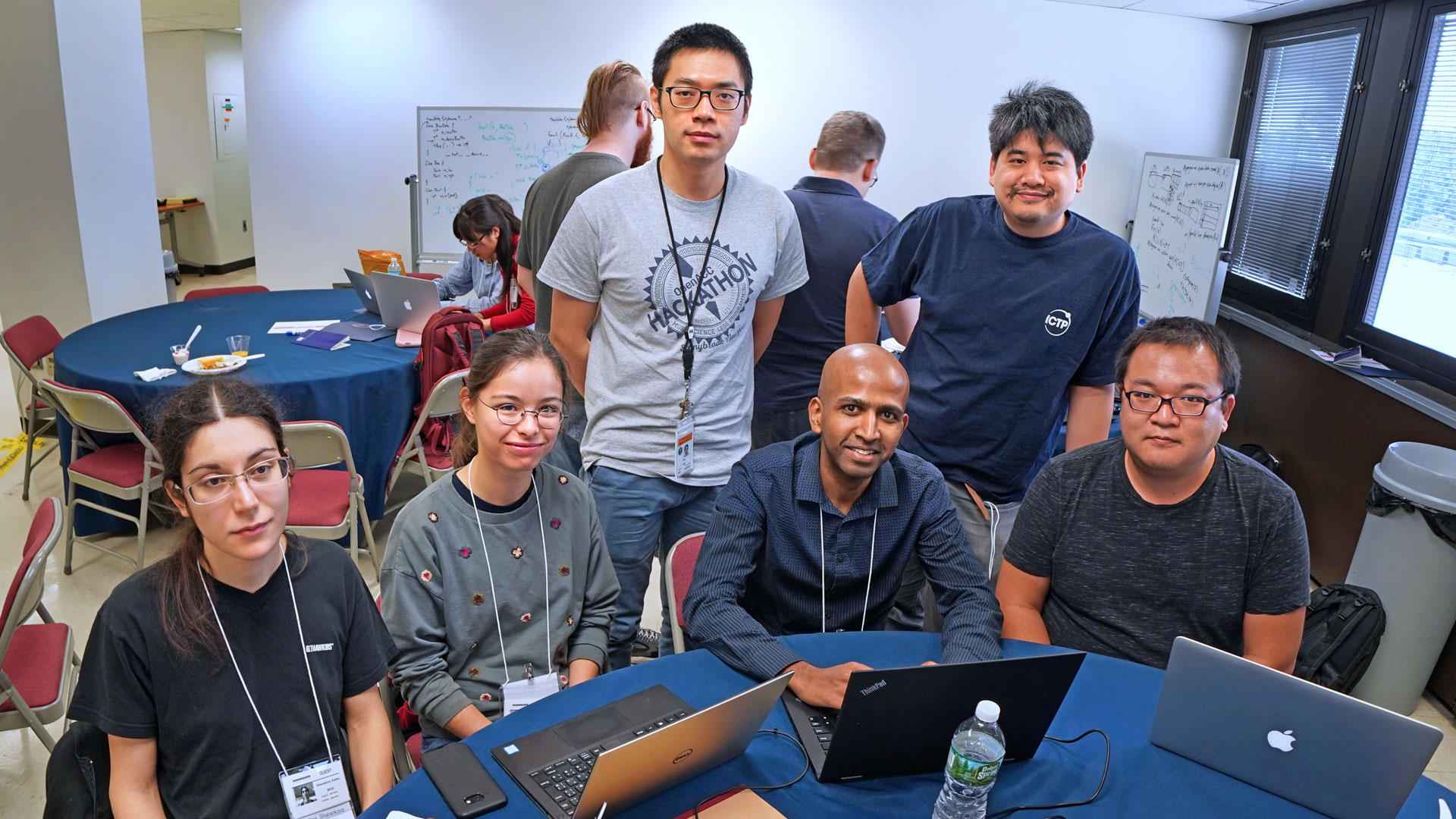

On September 17–21, ICL’s Piotr Luszczek was at Brookhaven National Laboratory for the 2018 Brookhaven GPU Hackathon. The Hackathon consisted of around 50 people split into teams of developers who were carefully paired with mentors who specialize in HPC, appropriate software languages, and GPU programming APIs.
Over five days, each team worked through a coding sprint with daily stand-ups. Daily stand-ups promote cross-team collaboration, enhance knowledge sharing, and ensure quick roadblock resolution.
The editor would like to thank Piotr Luszczek for his contributions to this article.
Interview
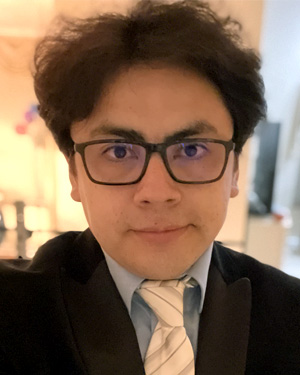
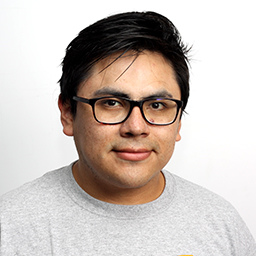
Alan Ayala
Where are you from, originally?
I was born in Huaraz, Peru—a beautiful city with an elevation of approximately 3,000 meters above sea level.
Can you summarize your educational background?
I was educated in France, where I earned a Master’s degree and a PhD in applied mathematics at Sorbonne University in Paris. My thesis deals with theoretical and practical subjects. On one side, I made contributions to a formulation for integral equations that arise while modeling wave propagation phenomena, such as in acoustics and electromagnetism. On the other side, I developed algorithms and techniques to accelerate the solution of large linear systems by using fast, low-rank approximations. One of my algorithms was tailored for an exascale HPC project.
Where did you work before joining ICL?
The post doc position at ICL is my first official “job,” just a continuation of my PhD program. Although, I was a teaching assistant in France and also actively participated at engineering laboratories back in my home country.
How did you first hear about the lab, and what made you want to work here?
I worked a lot with numerical libraries, and ICL is one of the institutions providing stat-of-the-art software for this field. Back in France, ICL is quite known at my institution, since many French researchers work at ICL. During my PhD thesis I met some ICL members and also worked with professor Jack Dongarra as part of a project. Wishing to work with all of them, I decided to apply to ICL.
What is your focus here at ICL? What are you working on?
I am working on developing numerical software as part of the SLATE project. I currently work on the ECP-FFT effort, where we aim to provide an efficient, GPU-powered API for applications that require FFT computations.
What are your interests/hobbies outside of work?
I am passionate about technology, machine learning, and artificial intelligence. When I am out of work, I enjoy reading, watching comedy and sci-fi shows or movies, and I also practice soccer and tennis.
Tell us something about yourself that might surprise people.
Although my research career has been focussed on applied mathematics and computer science, my Bachelor’s degree is in civil engineering, a degree that I earned from the National University of Engineering in Peru. I graduated as a prominent student and was offered the opportunity to continue my graduate studies in something closely related to civil engineering. However, I decided to go for computational mathematics, since I believe that to solve large and important real-life problems, it is essential to have solid mathematical foundations, which—when combined with engineering knowledge—create efficient models; using computational skills, optimal software can then be developed to solve these problems. In the future, I would like to participate in solving civil engineering problems like earthquake prediction and modeling. As a matter of fact, I also earned a Master’s in pure mathematics in parallel with my civil engineering career.
If you weren’t working at ICL, where would you like to be working and why?
Most likely I would be working for another university as a post doc scholar in computer science or in a research capacity at a technology company. My long-term goal is to become a professor, and I want to increase my knowledge and produce technology that can be useful not only for academia but also for industry.