
News and Announcements
Jack Visits Russian HPC Sites

During a trip to Russia in early April, ICL’s Jack Dongarra visited two HPC installations that feature RSC’s new Tornado HPC. These machines, installed at South Ural State University (SUSU) in Chelyabinsk and at the Joint Supercomputer Center of the Russian Academy of Sciences (JSCC RAS) in Moscow, utilize RSC’s direct liquid cooling to maximize space and heat dissipation, and are among the most powerful computers in Europe to deploy Intel Xeon Phi co-processors.
On April 2nd, Jack toured the RSC Tornado machine installed at SUSU, which was built on existing infrastructure previously deployed by RSC. This machine is Europe’s largest university supercomputing system with Intel Xeon Phi co-processors. The peak performance of the SUSU machine, which includes 192 computing nodes with direct liquid cooling, is 236.8 TFLOPS. The SUSU RSC Tornado system is currently ranked 170th on the TOP500 list and 40th on the Green500 list.
On April 5th, Jack made his way to Moscow where he visited JSCC RAS. There, he was able to tour another RSC Tornado installation deployed at the end of 2012. This prototype 10 PFLOPS-range MVS-10P supercomputer has a peak performance of 523.8 TFLOPS, and is currently ranked 59th on the TOP500 list and 30th on the Green500 list. The machine installed at JSCC RAS also holds Russia’s energy efficiency record of more than 1,949 MFLOPS/W, which is 5.5 times more efficient than the previous record holder for the region (also achieved by an RSC Tornado-based system with liquid cooling).
Jack Receives IIT Achievement Award
On April 19th, the Illinois Institute of Technology (IIT) awarded Jack Dongarra with the university’s Professional Achievement Award. Jack was among four winners of this year’s IIT Professional Achievement Award, which honors IIT alumni whose achievements in their fields have brought distinction to themselves as well as credit to IIT. Congratulations, Jack!
Conference Reports
Big Data and Extreme Scale Computing

The first Big Data and Extreme Scale Computing (BDEC) workshop was held in Charleston, SC on April 30 – May 1st at the Renaissance Charleston Historic District Hotel. This workshop, the first in a series sponsored by the NSF, is premised on the idea that we must begin to systematically map out and account for the ways in which the major issues associated with Big Data intersect with, impinge upon, and potentially change the national (and international) plans that are now being laid for achieving Exascale computing.
ICL’s Jack Dongarra teamed up with Pete Beckman, Jean-Yves Berthou, Yutaka Ishikawa, Satoshi Matsuoka, and Philippe Ricoux to host the 2-day workshop designed to garner help from the international community for planning and building a partnership that can provide the next generation of HPC software necessary to support big data and extreme computing, which are essential for aiding future scientific discovery.
Overall, the workshop was a great success with 20 individual talks and panel discussions and over 40 participants from all over the world.
EASC 2013: Solving Software Challenges for Exascale
On April 10, ICL’s Jack Dongarra was invited to give a talk at the Exascale Applications and Software Conference (EASC 2013) in Edinburgh, Scotland. The aim of EASC is to bring together all of the stakeholders involved in solving the software challenges of Exascale—from application developers, through numerical library experts, programming model developers and integrators, to tools designers.
Jack gave the first talk on Day 2, called Algorithmic and Software Challenges when Moving Towards Exascale, where he examines how high performance computing has changed over the last 10 years and looks toward the future in terms of trends. Jack further explains that these changes have had and will continue to have a major impact on our software, and that some of the software and algorithm challenges have already been encountered, such as management of communication and memory hierarchies through a combination of compile-time and run-time techniques, but that the increased scale of computation, depth of memory hierarchies, range of latencies, and increased run-time environment variability will make these problems much harder.
Recent Releases
Open MPI 1.7 Released
The Open MPI team has released Open MPI 1.7. This new “feature release” represents over a year’s worth of research development and testing.
Below are just some of the updates included in Open MPI 1.7. A more complete list of changes is available here.
- Added MPI-3 functionality:
- MPI_GET_LIBRARY_VERSION
- Matched probe
- MPI_TYPE_CREATE_HINDEXED_BLOCK
- Non-blocking collectives
- MPI_INFO_ENV support
- Fortran ’08 bindings (see below)
- Dropped support for checkpoint/restart due to loss of maintainer
- Enabled compile-time warning of deprecated MPI functions by default (in supported compilers).
- Revamped Fortran MPI bindings (see the README for details):
- “mpifort” is now the preferred wrapper compiler for Fortran
- Added “use mpi_f08” bindings (for compilers that support it)
- Added better “use mpi” support (for compilers that support it)
- Removed incorrect MPI_SCATTERV interface from “mpi” module that was added in the 1.5.x series for ABI reasons.
Open MPI 1.7.1 can be downloaded here.
Interview
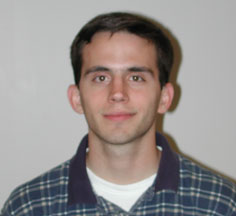
Hunter Hagewood
Where are you from, originally?
I’m originally from Gallatin, TN, but spent almost all my time before college living in Campinas, Brazil.
Can you summarize your educational background?
Highly international primary and secondary education in Brazil, undergraduate in Computer Information Systems and a master’s in Information Science in the USA.
How did you get introduced to ICL?
I came to ICL by way of LoCI lab. Back in 2000 ICL and CITR were going strong and Dr. Beck had received a grant from Internet2 and 5 large RS\6000 IBM servers with (of all things) tape libraries for a distributed storage project. I saw the ad for a systems administrator position in the Knoxville News Sentinel. Since the position was on campus and I was working on my degree it seemed like a good fit. Got called in for the interview and was asked if I had any experience with AIX to which I answered “No”. Then I was asked if I had worked with Linux and to what degree. I answered that I had and the most advanced thing I had done was to recompile the kernel. Little did they know that I had installed Linux 3 days earlier and recompiled the kernel the night before. I was offered the position, and like all good information science students, made a beeline for the library and checked out the only book on AIX Hodges had.
What did you work on during your time at ICL?
The first project was the Internet2 Distributed Storage Infrastructure where we would mirror very high-traffic websites hosted on college campuses. Part of the objective was to avoid hotspots. For example, the UNC website ibiblio.org was responsible for 80% of UNC bandwidth consumption at the time. We also got into mirroring popular Linux distros which was really fun because of the size of the files (600MBs was a huge file back then).
After that we set up the National Logistical Networking Backbone with 340 storage nodes spread across 30 different countries. We ended up using this for Linux distros also, and cut the download time of an ISO from 55 to 7 minutes. At this time LoCI had its own focus and my interaction with ICL folks diminished.
What are some of your favorite memories from your time at ICL/LoCI?
It’s hard to beat working in an environment with really cool gear, tools and ideas.
During this time I also fell in love with the SuperComputing conference. Another big highlight was setting up and recording the first ever HD quality webcast at Sura/Vide in Atlanta in partnership with a research lab from Brazil.
Tell us where you are and what you’re doing now.
Right now I’m back in Brazil. In 2005 I started a company called Nevoa Networks. The name Nevoa is Portuguese for mist. At the time we wanted to use the idea of the largest cloud as part of the company name, but Nebula Networks sounded terrible in Portuguese. So we set out to build a massively scalable storage system, and by the time we finished there was actually a marketing name for it. Today Nevoa has one of the few commercially available cloud storage platforms.
In what ways did working at ICL/LoCI and UTK prepare you for what you do now, if at all?
Everything my company does is a direct result of applying what I learned during that time. That ranges from motivating our software development group to writing grants and presenting pitches to investors and clients. During that time I also learned how to bridge the (very large) gap between academia and the market.
Tell us something about yourself that might surprise some people.
I acquired my taste for entrepreneurship as a kid on the mission field. At the time, my parents were missionaries in Brazil and I learned from them 1) how to accomplish a lot despite very limited resources and 2) about the fulfillment that comes from living what you believe.


