2022 ICL Retreat
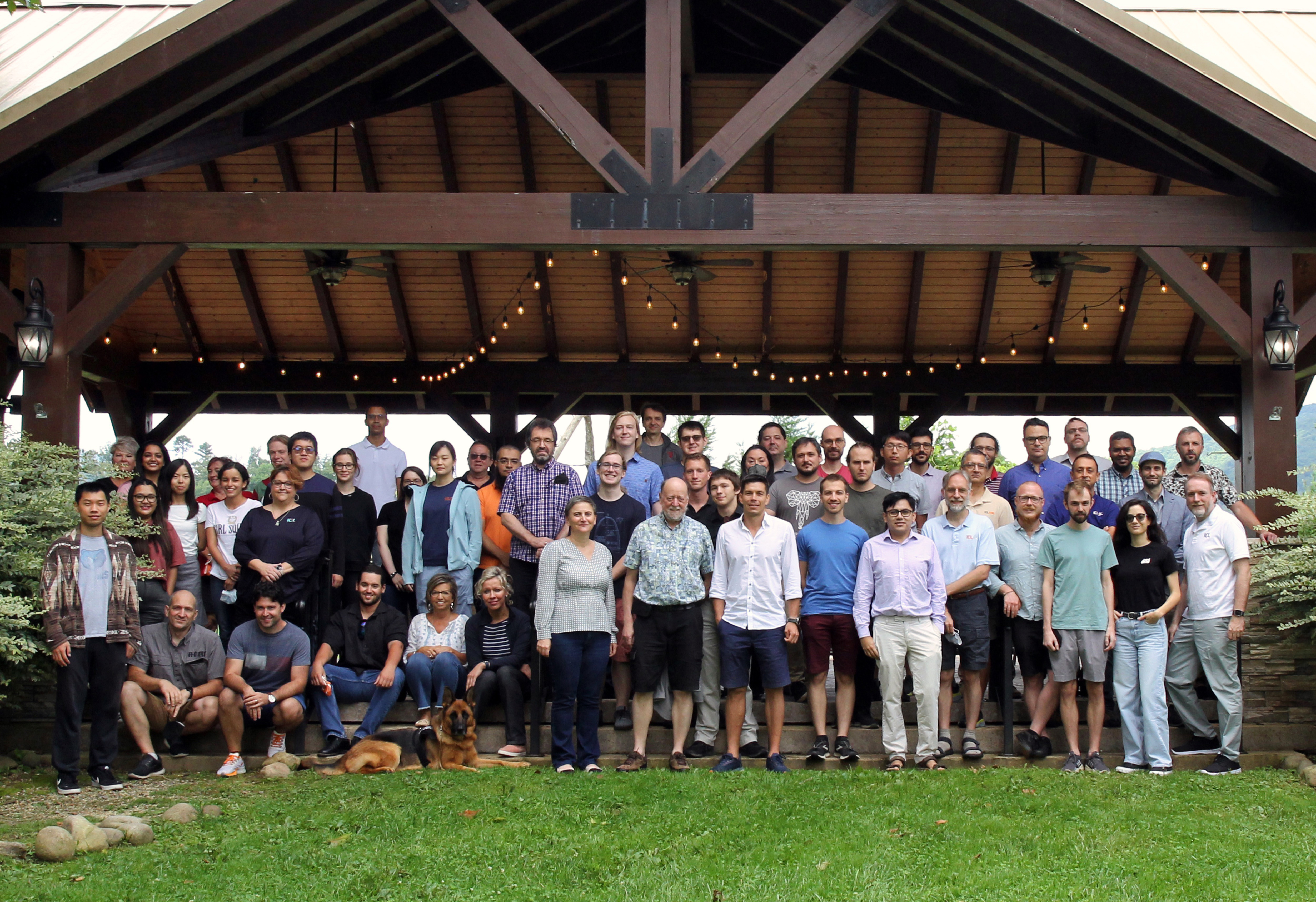
The annual retreat always promises fellowship and foundation, a yearly reconnection to recognize and reconnoiter. Despite the heat of this summer, the retreat was still quite a success. This year the ICL community gathered together, once again, at the Park Vista hotel in Gatlinburg, returning to a full in-person event. Highlights included the first address from the new ICL director, Hartwig Anzt. Each ICL member was afforded the opportunity to share their accomplishments and upcoming endeavors. After two days of presentations, Jack Dongarra and Anzt both gave closing statements, adding a sense of excitement about prospective futures to the event. While Anzt identified areas for improvement, he did so while providing potential solutions and palpable optimism. Perhaps next year’s retreat will feature developments dreamed up during these hot August days.
Summer Graduates
This summer saw the successful PhD defense by two ICL students.
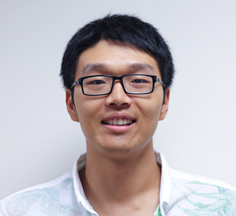 Yu Pei recently passed his PhD defense and will obtain his degree in December, 2022. His dissertation focuses on the task-based programming model as an alternative to the currently dominant MPI+X model. For his plan after graduation, he has accepted an offer from Microsoft Azure cloud, so he will be working in teams that provide HPC systems to cloud customers.
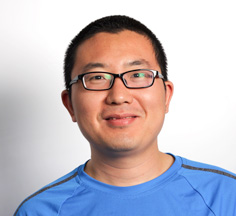 Qinglei Cao also successfully defended for his PhD in computer science. His dissertation is titled, “Task-based Runtime Optimizations Towards High Performance Computing Applications.” His research interests focus on involve linear algebra, high performance computing, and task-based runtime systems. He is joining Cerebras Systems as a new member of their technical staff.
ICL Student Summer Internships
Several ICL students spent this summer working internships. These internships offer professional learning experience that provide meaningful, practical work related to their field of study or career interest. Internships give our students the opportunity for career exploration and development, and to learn new skills. ICL Student Summer Internships for the summer of 2022 included:
- Jiali Li who worked remotely with Cerebras
- Yicheng who worked remotely with ANL
- Cade Brown who worked remotely with NVIDIA
- Neil Lindquist who worked with The MathWorks Inc.
- Max Melnichenko who worked with UC Berkeley
Student Travel Grants for SC22
 Student travel grant submissions are open and will close on September 3rd at midnight AoE. If you are a student who is interested in attending SC22 in Dallas, please apply!
The application is available from the SIGHPC website under the “For Your Career”:
https://www.sighpc.org/for-your-career/student-travel-grants
The grants are for $600 if the student is studying in North America; otherwise, they are for $1200. They are open to full-time students at all levels and the student is not required to have any official role at SC (student volunteer, presenting a paper or poster, etc). Students late in the Ph.D. program are less likely to receive a grant.
Students must be SIGHPC members (student membership is $15). Their advisor must submit a letter of recommendation after the student submits the application, and an email will be sent to the advisor through the system. Both submission and recommendation must be received by the 3rd, there are no extensions.
Thank you Heike for the information.
Summer Visitors
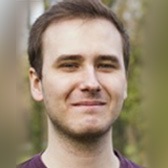
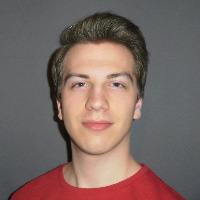
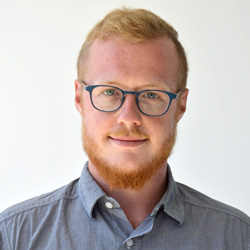
This summer ICL hosts a large visiting group from the Karlsruhe Institute of Technology (KIT). The visitors are part of the Junior Research Group Fixed-Point Methods for Numerics at Exascale and work on the numerical linear algebra package Ginkgo, the EuroHPC project MICROCARD simulating the cardio-electric effects of the human heart, the weather and climate model ICON, and the ECP focus efforts on multiprecision algorithms and batched functionality. The group of visitors includes:


From the Editor
by
Jack in IEEE Spectrum
Jack Dongarra was recently featured in IEEE Spectrum. The article touches on Jack’s retirement, contributions and Turing award. Here is the link. My thoughts are below.
Jack Dongarra and The Lord of the Rings
Imagine it is the year 2003. You have never heard of J.R.R. Tolkien or his novels. Maybe you live under a rock, or just never read a book. You have been hearing all these good things about these “elves and dwarves” movies, so you decide to check it out. You go to the theater a bit late and can only catch the last hour of The Return of the King. You know, that last hour of the whole series that is all bowing and clapping. You notice that everyone in the theater around you is laughing, clapping, and crying along with the characters onscreen. All around you, everyone seems genuinely thrilled by what they are witnessing on the screen. You might think, “is this all they do, bow and clap?” You might walk away from the theater confused and wondering what you missed.
I came to ICL following Jack Dongarra’s retirement announcement. From the moment I joined, the department was abuzz with a whirlwind of congratulations, felicitations, and accolade. Add to that the Turing award, and the whole experience felt a bit surreal, it felt like watching the last hour of The Lord of the Rings without any context. While I began to piece together that this was not the norm, it did feel like this odd celebration that carried on for the better part of my first year was going to be my only initial impression. I, like those unfamiliar with Tolkien’s story, only had the briefest glimpse into what preceded. I wondered what I missed.
Now, a year later, I have read and summarized dozens of articles about Jack and his achievements. I find his retirement came, for me at least, with a silver lining. The IEEE Spectrum article, as with so many others in the last year, uses its platform as a history lesson. Article after article, the writers all seemed to take the same approach, a brief write-up on Jack’s current goings-on, followed by an extended history of his work. By retiring, Jack forced upon me the chronicle of ICL, years-worth of catching up took mere months of newsletter editing.
While I could try to carry the Tolkien metaphor further, (perhaps comparing ICLers to the Fellowship, or major ICL distributions to various events in the novels) I will let it rest instead. I will say, while none of these articles display Tolkien’s penchant for language or clever turn of phrase, the journey presented through these writings was still engaging and endearing. By the end, all the applause, tears, and laughter make sense and feel well-deserved. I won’t end with some line from the books for Jack like, “you bow to no one.” Instead let me just say it was a great read and I would recommend it to others.
Oh, and if you think Jack is the Gandalf of ICL, you’re wrong. He is the Peter Jackson, the director who had the vision to bring something so formidable to life.
Interview
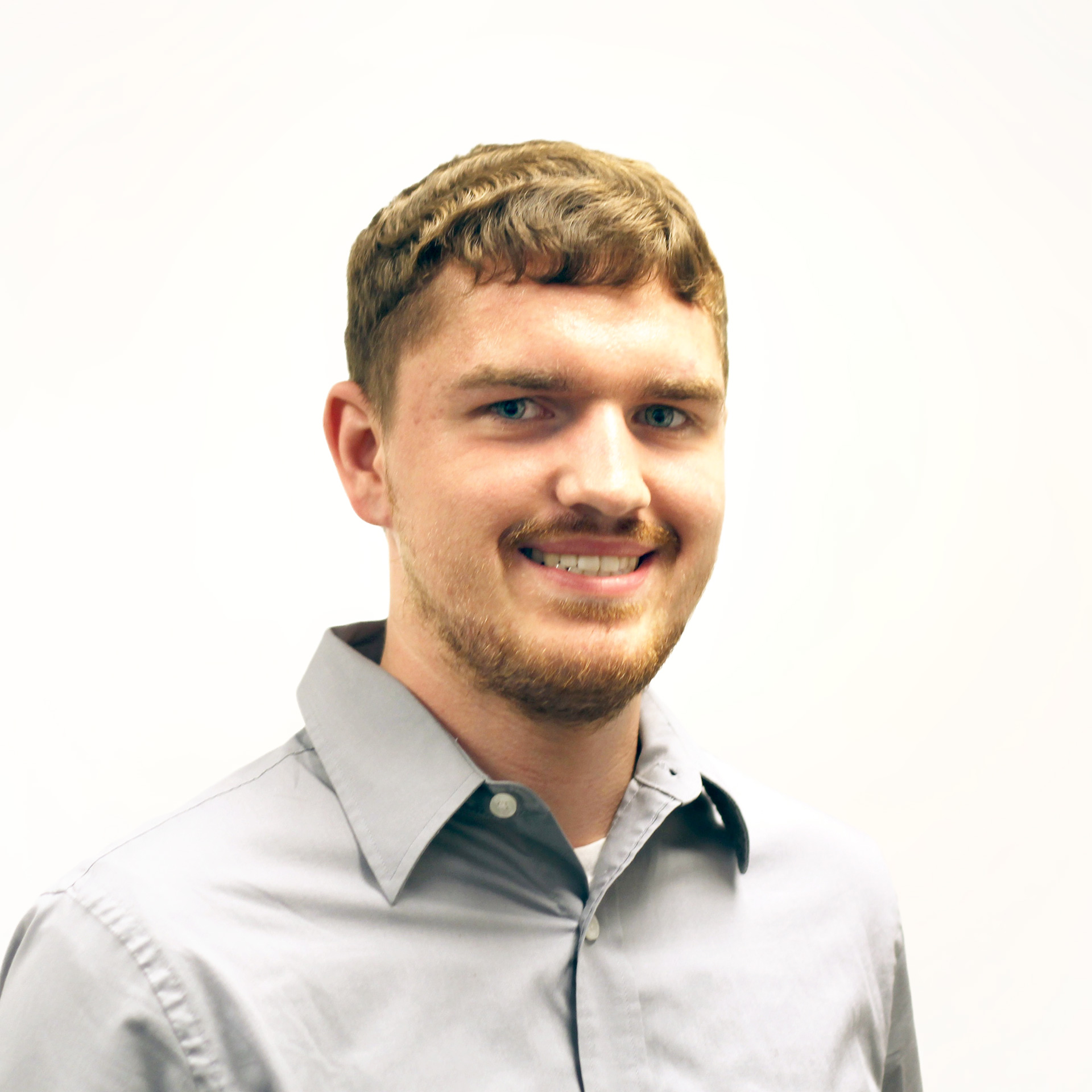
Noah Marks
Where are you from?
I am from Mooresburg, TN. I have lived in Tennessee nearly all my life, particularly East Tennessee in Johnson City.
Can you summarize your educational background?
My first two years of college education were at Northeast State Community College where I received my Associate of Science in pre-mechanical engineering in 2017. I then transferred to UTK into the nuclear engineering program and graduated with a Bachelor of Science in May 2020. Most recently, I have completed all requirements for and will be receiving my Master of Science in nuclear engineering from UTK.
Where did you work before joining ICL?
I have primarily served as a graduate research assistant and a graduate teaching assistant during my most recent years in graduate school. The assistantship was provided by Dr. Guillermo Ivan Maldonado of the Department of Nuclear Engineering. The GRA project was known as “Nuclear Reactor Core Arrangement Optimization”, focusing on creating an optimization framework in Python that attempts to find the best core arrangement for a provided simulated nuclear reactor core design on the basis of reactor power output. GTA positions had been held for NE 402 in Falls 2020 and 2021 and for NE 401 in Springs 2021 and 2022.
How did you first hear about the lab, and what made you want to work here?
The graduate project I had been working on could only sustain a Master’s level program, so I had been looking for another research opportunity at UTK that could assist me in continuing my education into the doctorate program. Dr. Maldonado recommended me to Dr. Deborah Penchoff as one of her projects was said to focus on constructing and optimizing computational models. Her rare earth elements and actinides project sounded quite impressive and revolutionary if enough brainpower and computer power were able to get the project rolling. Plus, having practiced my coding skills during my education in engineering, I feel confident in my ability to work on such a daunting but fascinating project.
What is your focus here at ICL? What are you working on?
As is the pursuit of Dr. Penchoff and Dr. Bosilca’s HPC for rare earth elements (REEs) and actinides research project, my objective is to find a way to develop an optimal method for modeling molecular systems, particularly to address needs in selective separations, which are needed for purposes in nuclear medicine and, potentially, nuclear energy. This requires multi-disciplinary work involving methods optimization, and HPC implementation through tiled-arrays to enable exascale capabilities.
What are your interests/hobbies outside of work?
Beyond my studies and work, when I am cooped up inside, I tend to doze off playing whatever games I have got on my computer or phone. When I am more invigorated to go outside, I would go down to Cherokee Lake and either take pontoon rides or go kayaking. Otherwise, I may try anything new, at least once.
Tell us something about yourself that might surprise people.
I cannot put a finger on what people would consider about me “surprising”, so I will leave it up to them to figure that out for me.
If you weren’t working at ICL, where would you like to be working and why?
My original pursuit has been to work on the research, design, and development of next-generation nuclear reactors, predominantly small modular reactors. The Tennessee Valley Authority has stated an interest in the development of SMRs, so I would be interested in working at any of their facilities. Alternatively, nuclear research laboratories like Oak Ridge National Laboratory are also aspiring areas to work at as they push forward with the advancement of nuclear energy.