News and Announcements
PAPI++ the De Facto Standard
The Exascale Computing Project (ECP) recently recognized the progress of the Exascale Performance Application Programming Interface (Exa-PAPI) subproject and called it the “de facto standard interface for performance event monitoring at exascale.”
Exa-PAPI builds upon ICL’s classic PAPI project and strengthens its path to exascale with a more efficient and flexible software design—one that takes advantage of C++’s object-oriented nature but preserves the low-overhead monitoring of performance counters. In addition to developing a new C++ performance API from the ground up, the Exa-PAPI team extends PAPI with performance counter monitoring capabilities for new and advanced exascale hardware, including CPUs, GPUs and accelerators, interconnects, I/O systems, and power interfaces.
The development of PAPI’s new software-defined events (SDE) API enables ECP software layers to expose SDEs that performance analysts and application scientists can use to form a complete picture of an application’s performance—without the need for expert knowledge of the underlying code and software stack.
Thanks to the valuable feedback from other ECP teams, the Exa-PAPI effort has successfully integrated SDE’s into ECP applications (e.g., NWChemEx), math libraries (e.g., SLATE, MAGMA-Sparse), and runtimes (e.g., PaRSEC) to export important internal behavior, making it an integral part of the ECP software ecosystem.
Congratulations to the PICL team for their hard-earned recognition.
The Hourglass Model
ICL alum and collaborator Micah Beck had his paper, “On the Hourglass Model,” featured on the cover of July 2019’s issue of Communications of the ACM. As described in the video above, the Hourglass Model refers to a way of picturing the architecture of layered systems. It focuses on the design of the common service interface, or “spanning layer,” at the waist of the hourglass, through which applications at higher layers flow work to and from the underlying services of the resources beneath it.
Beck argues that, as illustrated by the architectures of the Internet and Unix, designing a spanning layer that is as minimal as possible while still providing the generic service(s) that applications require tends to maximize both the number and diversity of applications at the top layers and the range of possible implementations and technologies at the base of the hourglass. Successful spanning layers allow applications and underlying technologies to evolve independently while mitigating the effects of the constant technological churn that such evolution brings with it.
Conference Reports
ISC High Performance


The 2019 ISC High Performance Computing conference (ISC-HPC), which brought in 3,573 attendees and contributors, kicked off on June 16th in Frankfurt, Germany. ICL’s Jack Dongarra was on hand for the main conference, and Heike Jagode, Stan Tomov, and Hartwig Anzt participated in the associated workshops.
On Monday, Jack presented the TOP500 awards on the main stage and then served as moderator for the “High Performance Computing in 2029” focus session on Tuesday.
Heike served as Workshops Deputy Chair. From all of the workshops submitted for ISC HPC 2019, the committee selected 12 full-day workshops and 10 half-day workshops to run concurrently on a single day, June 20th. The accepted papers, including those listed below, have been published in post-conference proceedings. Overall, the workshops were very well received, with about 500 attendees on just a single day.
In the HPC Education and Training for Emerging Technologies Workshop, Stan Tomov presented the paper, “Hands-on Research and Training in High-Performance Data Sciences, Data Analytics, and Machine Learning for Emerging Environments,” which describes his experiences and lessons learned in teaching summer students as a co-PI (along with Kwai Wong) of the National Science Foundation-sponsored Research Education for Undergraduates program here at UTK. At the Scalable Data Analytics in Scientific Computing workshop (organized by Piotr Luszczek and Hartwig Anzt), Stan presented, “MagmaDNN: Towards High-Performance Data Analytics and Machine Learning for Data-Driven Scientific Computing.”
In addition to organizing the Scalable Data Analytics in Scientific Computing workshop, Hartwig also presented his paper, “Toward a Modular Precision Ecosystem for High-Performance Computing.”
Interview
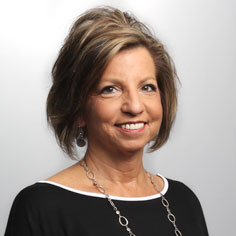
Joan Snoderly
Where are you from, originally?
I am from a small town about 20 miles north of here called Norris. I grew up in one of the many 600 square foot houses that were built as temporary lodging for the families of the Norris Dam builders in the 1930s. So, to answer your question, I grew up in a sweet little town called Norris, in a sweet little house, as a sweet little only child.
Can you summarize your educational background?
I ventured all the way to UT Knoxville to embark on a pre-law degree. After one year, I decided that I hated reading and loved numbers, so I changed my degree to Statistics and began working as an undergraduate assistant in the UT Center for Business and Economic Research (CBER) in the College of Business. Oh, and I was a member of the Pride of the Southland Band—that counts as educational experience!
Where did you work before joining ICL?
Well, that could take some time. I just passed 35 years as an employee of UTK. (I am sure I must have only been 12 when I began.) I spent 23 years in CBER as a Research Associate, filling a number of roles from running econometric models to serving as the business manager. Wanting to concentrate more on the finance side of things, I took a Business Manager position in the Tickle College of Engineering (TCE), eventually migrating to the Dean’s Finance and Administrative Affairs Office serving as a Coordinator. During that time, I served a dual role as Interim Finance Director for the UT Space Institute in Tullahoma, where my role was to oversee the merger of UTSI into UTK EECS. After serving 5 years in Engineering, I was lured back to CBER to serve as the Tennessee State Data Center Director and Business Manager of CBER. I served in this role for 2 years and was recruited to join the Haslam College of Business Dean’s Office as Assistant Director of Finance, where I worked until this May.
How did you first hear about the lab, and what made you want to work here?
During my tenure in Engineering, I served as the Business Manager for EECS. This was during the merger days of EE and CS (2008/9). I spent 2 days per week in Claxton and 3 days per week in Ferris Hall “facilitating” the merger of the two departments. My office in Claxton was in what is now Tracy Lee’s office. I marveled at the productivity of ICL way back when. Tracy (Rafferty) contacted me several months ago to ask if I would share a copy of my Assistant Director Position Description with her to help with formulating an Assistant Director position in ICL to replace her upon her retirement. She sent me the final job posting and asked if I knew anybody that might be interested. Well, here I am! I feel like all of my previous experiences led me to be here in the perfect job. Is that corny?
What is your primary role here at ICL?
As Assistant Director, my primary role is to manage the administrative functions of ICL and to disseminate information between all the folks in ICL. Realistically, I facilitate the flow of bureaucracy to enable folks to do their jobs effectively with minimal hassle.
What are your interests/hobbies outside of work?
I am a VFL! I actually love all sports, and FYI, I am always up for participation in March Madness Brackets and Fantasy Football leagues. I also love crafting—I am a quilter, scrapbooker, stamper, and embroiderer. I love family time by the pool with my husband (of 30 years) Tim (also from Norris) and all the kids. We have two sons and daughters-in-law, and I am Mimi to three fabulous grandkids, including twin 5-year olds. Oh, and there is Nash, my furbaby, who loves to cuddle (he’s a Schnoodle).
Tell us something about yourself that might surprise people.
Toss up—I have over 200 record albums (about 20 unopened Elvis). Or, I sold soft-serve ice cream at the Knoxville World’s Fair in 1982 (again, I was 12).
If you weren’t working at ICL, where would you like to be working and why?
Coaching football for the University of Tennessee. Where else can you get fired, take your millions, and stay home and watch the team on TV?