
News and Announcements
SIAM/ACM Prize in Computational Science and Engineering

ICL founder and director Jack Dongarra has been selected to receive the SIAM/ACM Prize in Computational Science and Engineering. This prestigious accolade is awarded every two years by SIAM and ACM in the area of computational science in recognition of outstanding contributions to the development and use of mathematical and computational tools and methods for the solution of science and engineering problems.
Jack will receive this award for his key role in the development of software and software standards, software repositories, performance and benchmarking software, and in community efforts to prepare for the challenges of exascale computing—especially in adapting linear algebra infrastructure to emerging architectures.
The award will be presented to Jack at the SIAM Conference on Computational Science and Engineering (CSE19) in Spokane, Washington on February 25, 2019.
Conference Reports
Smoky Mountains Computational Sciences & Engineering Conference
On August 29th, ICL’s Stan Tomov attended the annual Smoky Mountains Computational Sciences & Engineering Conference (SMC18) in Gatlinburg, Tennessee. Held at the Park Vista Doubletree hotel, SMC18 had 180 attendees (a record for the conference), including ICL collaborators Michela Taufer and Erich Strohmaier.
Stan, among other things, was an invited speaker and presented current work on the Co-design Center for Efficient Exascale Discretizations (CEED) as part of DOE’s ECP effort. CEED focuses on the development of next-generation discretization software and algorithms to enable a wide range of finite element applications to run efficiently on future architectures.
Currently, more than 30 computational scientists from two US national labs and five universities are working on CEED. ICL’s Matrix Algebra on GPU and Multicore Architectures (MAGMA) project is featured heavily in the CEED effort as Stan and his team develop MAGMA as a backend to the CEED API to provide acceleration on heterogeneous compute systems featuring GPU accelerators.
Other things: as the Editor understands it, Stan was instrumental in ensuring the safety and security of fellow conference goers in that he was seen (photographed) barricading the entrance to the conference and preventing a hungry—and persistent—Smoky Mountain black bear from entering and wreaking havoc. Notably, Stan did this with his bare hands.

The Editor would like to thank Stan Tomov for his contribution to this article. The Editor would also like to acknowledge that homophone-based puns are not as well received in writing.
Workshop on Solving or Circumventing Eigenvalue Problems in Electronic Structure Theory

On August 15–17, Piotr Luszczek attended the Workshop on Solving or Circumventing Eigenvalue Problems in Electronic Structure Theory in Richmond, Virginia, where he presented ICL’s latest work on eigenvalue solvers and singular value solvers.
Of the 40 attendees, most were chemists and physicists, and these application scientists were very interested in the Software for Linear Algebra Targeting Exascale (SLATE) project’s eigenvalue solver, which is currently under development.
The editor would like to thank Piotr Luszczek for his contributions to this article.
2018 ICL Retreat
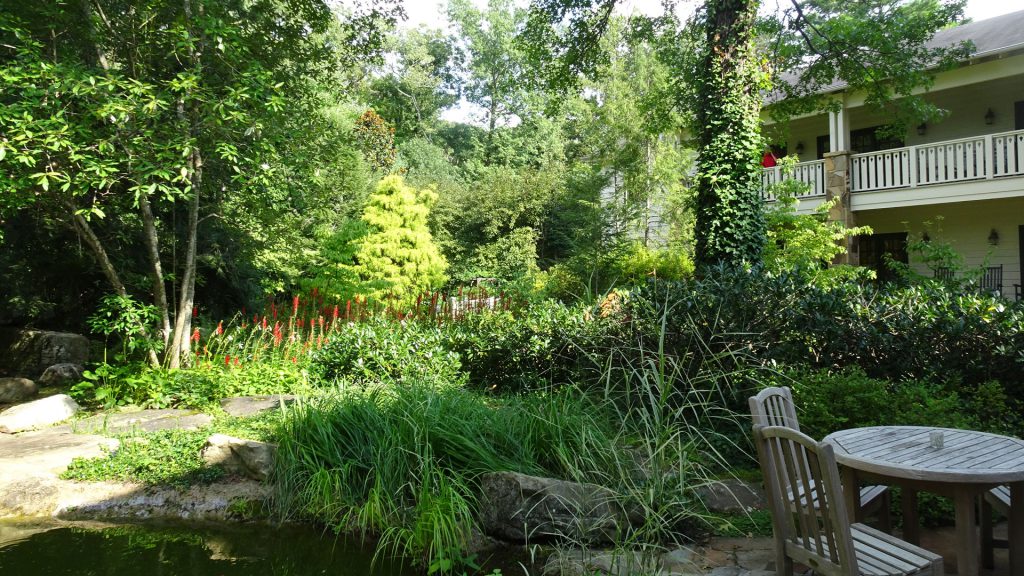

The 2018 ICL retreat moved back to the RT Lodge in Maryville, Tennessee, which provided a good platform for two days of talks that covered student projects and summer internships, the lab’s progress in the areas of linear algebra, distributed computing, benchmarking, and performance analysis, along with recaps of administrative procedures.
Serving as a kickoff to the fall semester, the 2018 retreat offers a platform for ICLers both new and old to get their bearings and hit the ground running for another great year at ICL!
Interview
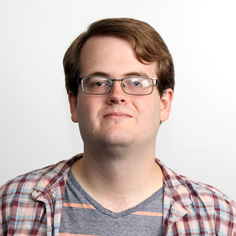
Daniel Schultz
Where are you from, originally?
I was born in Portland, Oregon. However, I grew up in Washington State, so that’s where I actually consider myself to be from. Actually, up until recently I had never lived anywhere besides Washington, so I am still getting used to all the changes—especially the weather.
Can you summarize your educational background?
My journey in computer science began about 6 years ago. I started in 2012 with my undergraduate program.
In 2015, I earned my BS in Computer Science from Eastern Washington University in Cheney, Washington. During that time I was awarded the Washington State Opportunity Scholarship and did relatively well academically and was commended accordingly.
In 2017, I was awarded my MS in Computer Science also from Eastern Washington University. For my thesis, I worked with GPU accelerators to solve the shortest unique substring problem. Working with my advisor, Dr. Bojian Xu, we had a conference paper accepted at the International Symposium on Bioinformatics Research and Applications (ISBRA 2018). Most recently, we submitted an extended journal article to the IEEE/ACM Transactions on Computational Biology and Bioinformatics. During this time I also worked as a teaching assistant for the computer science department.
And of course, I began my computer science PhD here at UTK this fall. In addition to being a graduate research assistant here at the ICL, I also hold the Tickle Graduate Fellowship from the Department of Electrical Engineering and Computer Science (EECS).
Where did you work before joining ICL?
During and after high school I worked various jobs typical of what you’d expect. I worked in IT briefly before determining that while I wanted to work in computing, IT wasn’t for me, and I needed something “more challenging.” So, of course, I went on to computer science at the university level.
During my undergraduate years, I held various positions assisting instructors with their lower-level classes, where I helped grade homework, helped with labs, and occasionally graded parts of tests.
At the graduate level, I asked to specialize in algorithms and was hired as a teaching assistant for the algorithms faculty (being a small university that would just be one professor). Of course, now I was responsible for all of the coursework/tests/office hours/finals for those courses. I was a TA for algorithms until the end of last year.
How did you first hear about the lab, and what made you want to work here?
My interests in computer science have always leaned more toward research instead of the more typical “software engineer” role. So, during my master’s degree, I began looking at DOE national labs.
This is actually how I came across the University of Tennessee, Knoxville (UTK). UTK is listed as one of Oak Ridge National Laboratory’s university partners, and I saw that Jack was listed among the faculty specializing in HPC and that he was the director of the ICL. The ICL itself is also featured on the EECS research page. That’s the primary reason I applied to UTK in the first place—it has an active research presence related to my research interests and background. After applying to UTK, I was encouraged to apply to ICL by several different professors in EECS.
What is your focus here at ICL? What are you working on?
I came on board as part of the numerical linear algebra unit and the MAGMA team. I am currently working with Stan on the FFT project.
What are your interests/hobbies outside of work?
I am an avid homebrewer. My interests were piqued back when I was getting my Master’s degree. Most of the faculty were involved in homebrewing beer or wine. We would have parties where we would get together a couple times a year and invariably various types homebrew or homemade liquor would be brought along. This really is what got me interested in homebrewing, and soon I was trying various types of beers at home. It’s interesting how you can experiment with different ingredients and styles that are niche and not something commercially produced. To date I have tried many styles, including American Wheat, Coffee Stout, Russian Imperial Stout, hard cider, and fruit beer. Aside from the American Wheat beer, I haven’t followed a specific recipe and just experimented with different ingredients. Beer making can be derived from basic styles and known formulas that are followed. It’s actually less of a cooking activity and more of an experimental process that involves a bit of mathematics.
Other than that, I enjoy hiking and camping. When I get the chance to, I love amatuar photography and exploring forgotten places. However, the last couple years have been pretty hectic, so I haven’t been able to engage in that as much.
Tell us something about yourself that might surprise people.
When I was a child, a major stroke left me with approximately 50% of my brain destroyed. My parents were told that there was nothing that could be done and they should “forget” that they ever had a son. Obviously, I can be very thankful that parents don’t always listen to doctors.
If you weren’t working at ICL, where would you like to be working and why?
I would probably be working at one of the national laboratories or related research institutes. The ICL itself is like a small “national lab” in certain aspects. In fact, a national lab or institute is one of the places I could see myself going after graduation.


