
News and Announcements
ICL Spring Graduates


May 11th was graduation day for Chongxiao Cao (PhD), Heike Jagode (PhD), Khairul Kabir (PhD), Sangamesh Ragate (MS), and Wei Wu (PhD).
Chongxiao will begin working for Intel as a software development engineer this month. Heike continues her role as ICL’s Research Lead for the Performance API (PAPI) project. Khairul has joined Nvidia Corporation as a machine learning engineer. Sangamesh starts with Colfax International this month as a research engineer. And Wei is joining Los Alamos National Lab to be a research scientist.
News Post Covers ICL’s Role in the Exascale Computing Project
Jack Dongarra recently discussed with Mike Bernhardt of the US Department of Energy’s Exascale Computing Project information about ICL’s software development projects in a special guest post on the insideHPC site.
Conference Reports
ICLer Assists with Broader Engagement Program at CSE17
During the 2017 SIAM Conference on Computational Science and Engineering (CSE17) in Atlanta, in February, ICL’s Stephen Wood was among the more than fifty members of the CSE community who contributed to the Sustainable Horizons Institute’s Broader Engagement (BE) program efforts to involve students from underrepresented groups and early career scientists in the conference.
Out of gratitude for the sage guidance he himself received in the past from more experienced practitioners, Stephen volunteered to lead a guided affinity group on uncertainty quantification for computational fluid dynamics in sustainable energy applications. Uncertainty quantification is the practice of determining the possible variations in quantities of interest associated with model calculations.
A quote from Stephen is included in an article about the BE program’s presence at CSE17 published in the May issue of SIAM News.
ASC17 Student Supercomputer Challenge
Jack Dongarra served as a member of the Expert Committee and judge of the Asia Supercomputing Community’s 2017 Student Supercomputing Challenge (ASC17), held recently at the National Supercomputing Center in Wuxi, China.
ASC17, the world’s largest supercomputing competition, received applications from 230 universities across the globe; twenty teams made the final round. Emerging from that upper echelon of competitors to capture the title of grand champion was Tsinghua University.
Teams in the final round were required to independently design a supercomputing system under the precondition of a limited 3000W power consumption. In addition, they had to operate and optimize standard international benchmark tests and a variety of leading-edge scientific and engineering applications such as artificial-intelligence-(AI)-based transport prediction, genetic assembly, and materials science.
Tsinghua University completed deep parallel optimization of the high-resolution maritime data simulation mode MASNUM on the Chinese TaihuLight machine. The team’s achievement in expanding the original program up to 10,000 cores and accelerating the program by 392 times earned it the e Prize award.
The competition’s runner-up, Beihang University, distinguished itself through a superlative performance in the popular AI field. And first-time finalist, the team from Weifang University, constructed a highly optimized advanced heterogeneous supercomputing system with Inspur’s supercomputing server and ran the international HPL benchmark test, setting a new world record of 31.7 TFLOPS for floating-point computing speed. That feat gained the team the award for best computing performance.
An article in HPCwire contains a quote from Jack in which he emphasizes how the competition benefits the students by enhancing their scientific knowledge and giving them the unique opportunity to work on the powerful TaihuLight platform.
The Radio Free HPC podcast from insideHPC provides a review of ASC17.
GPU Technology Conference
Approximately 3,000 people—including ICL’s Azzam Haidar, Piotr Luszczek, and Stan Tomov—converged on Silicon Valley May 8–11 for the GPU Technology Conference, the largest and most important event of the year for GPU developers.
Azzam and Stan gave a talk on Magma Tensors and Batched Computing for Accelerating Applications on GPUs, and Piotr on Half Precision Benchmarking for HPC.
The ICLers also met with Nvidia teams to continue our close interaction with them and to discuss how we can help each other.
In addition, Azzam and Stan went to Lawrence Livermore National Laboratory to meet with their collaborators from the Exascale Computing Project co-design Center for Efficient Exascale Discretizations (CEED).
CERFACS 30-Year Conference

Jack Dongarra gave a talk on May 12th at the Centre of Basic and Applied Research (CERFACS) 30-Year Conference in Toulouse, France.
The title of his talk was “A Look at What has Changed in the Last 30 years for Computers and Dense Linear Algebra Software” during the sessions on HPC and Fluid Mechanics.
CERFACS is a basic and applied research center that specializes in modeling and numerical simulation. Using its facilities and expertise in high-performance computing, CERFACS deals with major scientific and technical research problems of public and industrial interest.
The 12th Scheduling for Large Scale Systems Workshop

ICL was host May 24–26 to The 12th Scheduling for Large Scale Systems Workshop. The invitation-only event had twenty-six attendees.

As was the case in previous editions, the workshop was structured as a set of thematic half-day sessions. Brief presentations were complemented by dedicated sessions for information discussions and exchanges aimed at tackling challenging problems.
Hiking on the Cumberland Trail
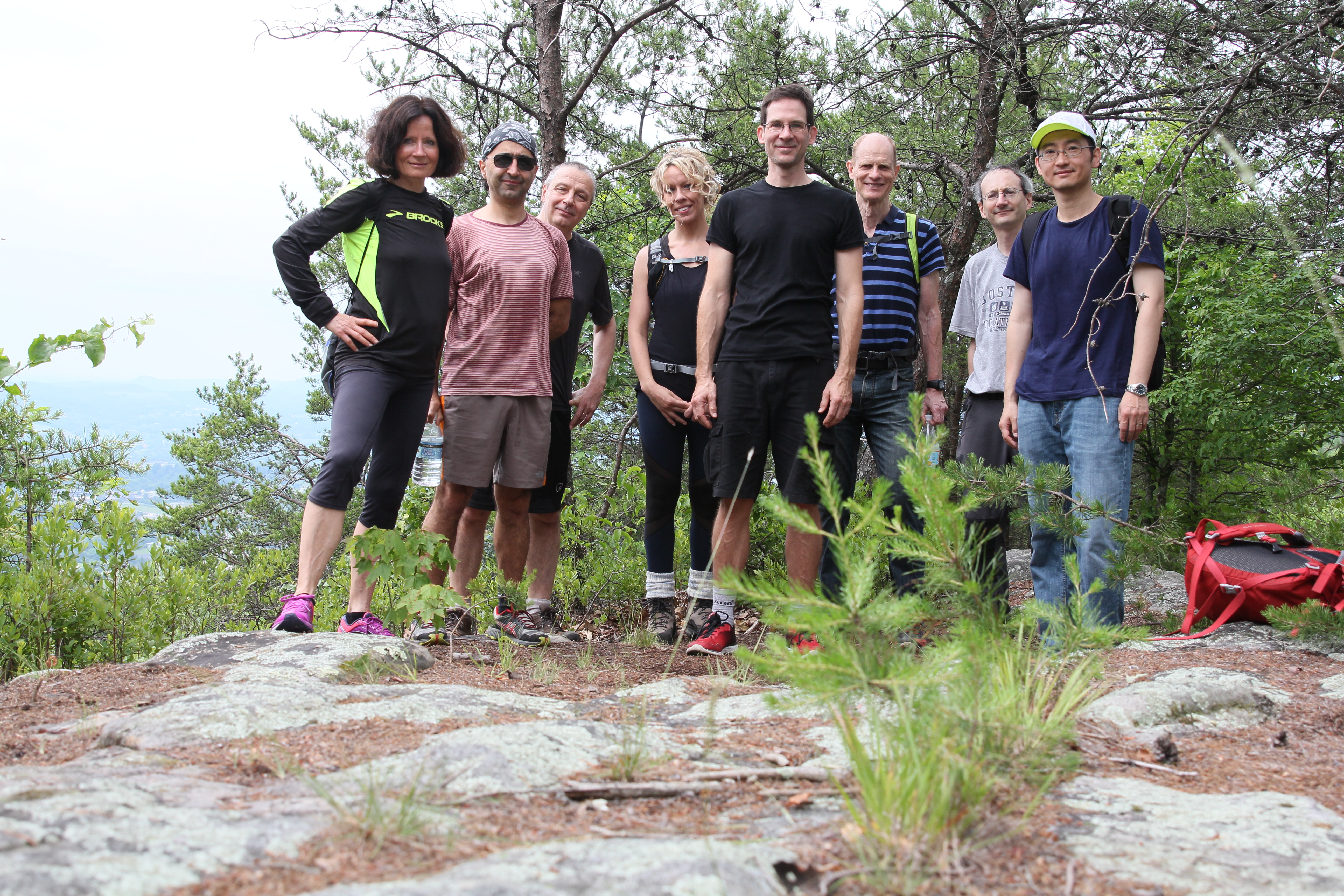

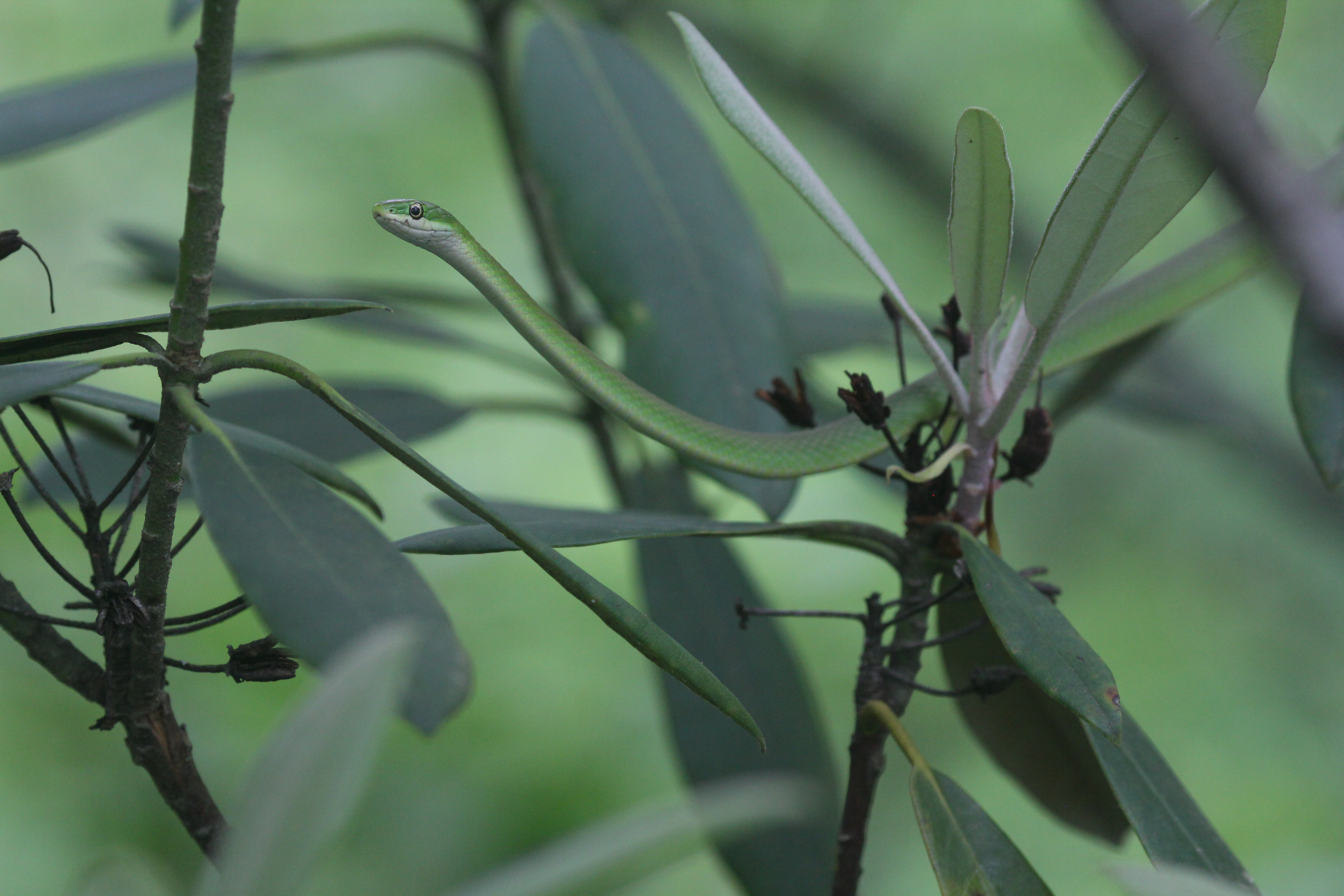
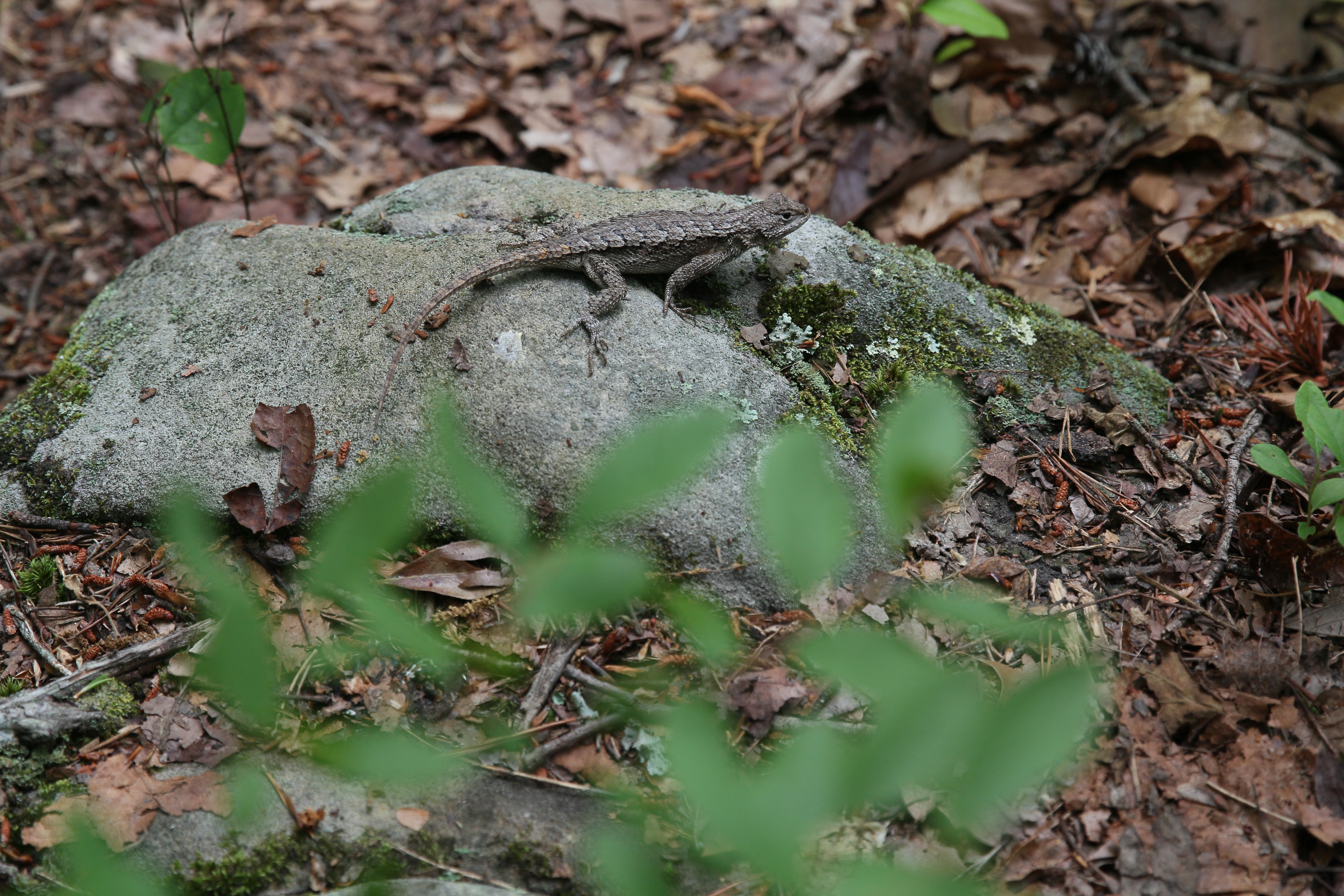



During a social event, some of the participants from the 12th Scheduling for Large-Scale Systems Workshop took the opportunity to hike the Cumberland Mountain segment of the Cumberland Trail above LaFollette. Thanks to Frédéric Vivien for capturing these images and sharing them.
Interview
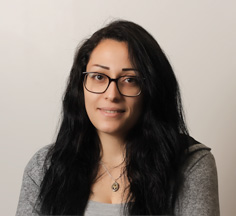
Diana Fayad
Where are you from originally?
I’m from Lebanon. I spent a couple of years in France doing my studies before I came here.
What is your educational background?
My high school major was biology, which I love. But motivated by my curiosity and the challenge, I chose to go into computer science. I got my bachelor’s degree in computer science, and then, after a couple of years of work and gaining experience, I continued my studies, with high-performance computing as my chosen area. Since the University of Versailles had the only HPC master’s degree program in France, I went there. Versailles is a very calm and beautiful place to live.
Where did you work before joining ICL?
After completing my bachelor’s degree, I worked at a software development company as a developer for about a year. And next I spent almost a year doing software and database management at a luxury sanitary ware company.
What drew you to ICL?
After talking with Dr. Dongarra, my master’s program advisor suggested I come here. Of course, Dr. Dongarra is world renowned for his work in HPC, and ICL has an international reputation for creating the packages and interfaces we worked on in school. I thought coming here would be a very good opportunity for me to gain valuable experience and prove myself.
What is your primary role here?
I am a research assistant with Jakub Kurzak, and we are working on the BONSAI project.
What are your interests/hobbies outside of work?
I enjoy reading books, painting, hiking, swimming, working out, discovering new cultures, and traveling.
Tell us something about yourself that might surprise us.
I solved Einstein’s Intelligence Quiz—or as it’s called, Einstein’s Puzzle—in less than 20 minutes. Only 2 percent of people have been able to solve it.


