
News and Announcements
Jack Dongarra named TIAS Faculty Fellow

Texas A&M University’s Institute for Advanced Study (TIAS) recently named ICL’s Jack Dongarra as a TIAS 2014-2015 Faculty Fellow. Jack will work with faculty and students in the Dwight Look College of Engineering’s Department of Computer Science and Engineering at Texas A&M.
Each year—since 2010—TIAS invites internationally prominent Faculty Fellows to pursue advanced study at TIAS, in collaboration with Texas A&M faculty and students, in order to provide an ideal setting for research and scholarship.
Supercomputing ’14
IEEE’s Supercomputing Conference (SC14) is upon us once again, and this year’s conference takes us back to New Orleans, Louisiana on November 16 – 21. As usual, ICL will have a considerable presence at the conference with BoFs, papers, posters, and tutorials. Additionally, the University of Tennessee will again have its own booth where ICL’s research will be featured alongside other UT research centers. Below is a schedule of ICL related activities. For an entire list of activities, visit the SC14 schedule page.
| Sunday, 16th | 8:30AM – 5:00PM – Tutorial: Linear Algebra Libraries for High-Performance Computing: Scientific Computing with Multicore and Accelerators; Rm 391; James Demmel, Michael Heroux, Jakub Kurzak |
| 9:00AM – 5:00PM – Workshop: MTAGS 2014: 7th Workshop on Many-Task Computing on Clouds, Grids, and Supercomputers, Lightweight Superscalar Task Execution in Distributed Memory; Rm 295; Asim YarKhan | |
| 11:15AM – 12:00PM – HPC Interconnections (BE, Undergraduates, Cluster): BE Session IA: Multicore Programming (Advanced); Rm 288-289; Jack Dongarra | |
| 6:00PM – 10:00PM – Exhibitor Reception; Audubon Aquarium | |
| Monday, 17th | 8:30AM – 5:00PM – Tutorial: Fault-Tolerance for HPC: Theory and Practice; Rm 388; Thomas Hérault, Yves Robert, George Bosilca, Aurélien Bouteiller |
| 9:00AM – 5:30PM – Workshop: WOLFHPC14: Fourth International Workshop on Domain-Specific Languages and High-Level Frameworks for High Performance Computing, PTG: An Abstraction for Unhindered Parallelism; Rm 298-299; Anthony Danalis, George Bosilca, Aurelien Bouteiller, Thomas Herault, Jack Dongarra | |
| 9:00AM – 5:30PM – Workshop: Co-HPC: Hardware-Software Co-Design for High Performance Computing; Rm 273; Shirley Moore, Richard Vuduc, Gregory Peterson, Theresa Windus | |
| 7:30PM – 8:00PM – TOP500; Booth 2925 (UTK); Jack Dongarra | |
| Tuesday, 18th | 12:15PM – 1:15PM – BoF: The 2014 HPC Challenge Awards; Rm 273; Piotr Luszczek, Jeremy Kepner |
| 2:00PM – 3:00PM – ICL Group Talk; Booth 2925 (UTK); George Bosilca, Asim YarKhan, Piotr Luszczek | |
| 5:15PM – 7:00PM – Poster Reception: GPU Acceleration of Small Dense Matrix Computation of the One-Sided Factorizations; New Orleans Theater Lobby; Tingxing Dong, Mark Gates, Azzam Haidar, Piotr Luszczek, Stanimire Tomov | |
| Wednesday, 19th | 5:30PM – 7:00PM – BoF: The HPCG Benchmark: Getting and Interpreting Performance from a New Metric for HPC Systems; Rm 273; Michael Heroux, Piotr Luszczek |
| 7:00PM – 9:00PM – ICL Alumni Dinner; Calcasieu, 930 Tchoupitoulas St., New Orleans, LA | |
| Thursday, 20th | 7:00PM – 10:00PM – Technical Program Reception; The Sugar Mill |
NICS HPC Seminar Series
The National Institute for Computational Sciences invites you to a Seminar Series on High Performance Computing, every Tuesday and Thursday from 2:10pm to 3:10pm in the NICS conference room in Claxton 351. This is a joint effort between different leadership organizations (NICS, JICS, OLCF, ICL) to increase HPC awareness within the academic community.
Different topics will be introduced starting with the most basic and building up to more advanced topics in HPC. No registration is required for the seminar.
Calendar of topics to be covered in November:
| Date | Title |
|---|---|
| 4 | Introduction to HPC and Supercomputing |
| 5 | MPI Workshop (Part 1) |
| 6 | MPI Workshop (Part 2) |
| 11 | Use of HPC in Computational Physics |
| 13 | Unix Basics for HPC (Part 1) |
| 18 | Unix Basics for HPC (Part 2) |
| 20 | Compiling Basics for HPC |
| 25 | HPC in Engineering |
Conference Reports
IEEE Conference on Big Data
On October 27 – 30, ICL’s Ichitaro Yamazaki went to Washington, DC to take part in the IEEE Conference on Big Data, which provides a leading forum for disseminating the latest information in Big Data research, development, and application.
For Ichi’s part, he presented his paper on an “Access-averse Framework for Computing Low-rank Matrix Approximations” at the 1st International Workshop on High Performance Big Graph Management, Analysis, and Mining. This workshop, which is part of the larger conference, solicits novel and original research contributions related to big graph data management, analysis, and mining (algorithms, software systems, applications, best practices, performance).
Interview
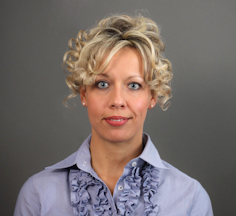

Heike McCraw
Where are you from, originally?
I’m from Meissen, a small town northwest of Dresden, the capital of the free state of Saxony. I was born and raised in a country that doesn’t exist anymore: German Democratic Republic (GDR). Life was very different back then. Meissen—founded in 929—is best known for its antique castle and churches, as well as the famous (and a “little” pricy) Meissen porcelain, which is the first European hard-paste porcelain that was developed.
Can you summarize your educational background?
I went to school at the University of Applied Sciences in Mittweida, Germany, where I studied Mathematics as an undergraduate and earned my MS in Mathematics as well. I went to Scotland to pursue my second MS in High Performance Computing at the University of Edinburgh. In 2010, I began my PhD in Comptuer Science at the University of Tennessee.
Where did you work before joining ICL?
After earning my MS in Mathematics in Germany, I took a job at the Center for HPC (ZIH) at the Dresden University of Technology. There I was part of the development team of Vampir, a powerful set of tools for performance analysis of parallel applications. This was pretty much my first exposure to parallel programming and high performance computing, and I realized that I’d like to learn more about this HPC thing, which is why I pursued my second MS in High Performance Computing at the University of Edinburgh.
Tell us how you first learned about ICL.
I first heard of ICL and Jack Dongarra when I was at the University of Edinburgh, and after graduating and returning to ZIH, it so happened that we were working on a project that Shirley Moore was also involved with. It was only a few months later that I visited ICL and applied for a 1-year position. After joining ICL, this 1-year somehow turned into more, and I am still here!
What do you work on at ICL?
The project that I am mainly working on is called CoDAASH (Co-design Approach for Advances in Software and Hardware). CoDAASH is an Air Force funded research grant with the focus on understanding the relationship between algorithms and hardware platforms, and how to jointly optimize the software and hardware in order to achieve efficient implementations for Computational Chemistry and Physics applications. My main research area for this project focuses on expressing certain computational chemistry algorithms in a dataflow-based form to make them compatible with next generation task scheduling systems, such as PaRSEC.
Additionally, I am part of the development team of PAPI, a performance-monitoring library that provides a clear, portable interface to the hardware performance counters available on all modern CPUs and other components of interest (e.g., GPUs, network, and I/O systems). In order for PAPI to continue playing its well-established role in HPC, we are constantly working on adding new monitoring capabilities for various platforms, including power and energy readings.
What do you like about working at ICL?
It’s the people at ICL who make it such an enjoyable place to work. It wasn’t until Jack asked me to “spread my wings and start collaborating with the other groups at ICL” that I fully appreciated the international team of researchers with various backgrounds that build such a strong foundation of ICL.
Well, and the Friday talks that come with free lunch are very nice, too—especially because the ladies at ICL always make sure that there are vegan options available. THANK YOU!
What are your interests/hobbies outside of work?
I like outdoor activities, hiking, horseback riding, and anything that involves animals of any kind. As a child I loved, Loved, LOVED getting up at 4AM to run to the pigs’ and cows’ stable to feed them, pet them, play with them, take care of them, and clean up their “beds.” They are extremely smart animals and standing up against animal abuse and fighting for the ban of inhumane methods used by pork, beef, poultry, fish, and dairy producers is certainly of high interest to me.
Tell us something about yourself that might surprise people.
I dress like in the picture (“Halloween 2014”) every day at home. 😉
On a more serious note, before pursuing my degree in Mathematics, I worked at an animal clinic as the veterinarian’s assistant. We were responsible not only for small pets but also for the wildlife at a game reserve close to the clinic. Being surrounded by wolves, deer, and wild boar was commonplace—independent of sunny, rainy, or freezing snowy days. I still have close contact with this veterinarian (now in his 70s) who taught me valuable life lessons and certainly shaped my life and aspiration.
If you weren’t working at ICL, where would you like to be working and why?
I enjoy doing research and working in academia, probably more than I would like working in industry (I say “probably” because I can only speculate as I have not held a position in industry to date). I see myself either being a researcher—be it at ICL or another lab or university—or a farmer on a ranch in Montana. 😉


