
News and Announcements
CoDAASH

ICL Alum Shirley Moore, now Associate Professor of computer and computational science at the University of Texas at El Paso, was recently awarded $599,478 by Iowa State University, for the Co-design Approach for Advances in Software and Hardware (CoDAASH) project. Funded by the United States Air Force Office of Scientific Research (AFOSR), CoDAASH’s goal focuses on understanding the relationship between algorithms and hardware platforms and how to optimize software and hardware in order to achieve efficient implementations for materials science applications.
AFOSR will also help fund a team of three graduate students who will have the opportunity to assist and carry out original research, ultimately leading to thesis topics. According to Shirley, these graduate students will not only be exposed to leading-edge research, but will also be part of making significant advances in hardware-software co-design. Other institutions involved in the CoDAASH project include the University of Tennessee and the University of California at San Diego.
Cleve Moler visits UTK
 During a visit to UTK on December 11th, Dr. Cleve Moler—chief mathematician at MathWorks and original author of MATLAB—gave a talk about the evolution of MATLAB over the past 25 years, as part of the MATLAB seminar series presented by the EECS.
What started as a simple “matrix laboratory” has evolved into a full-featured technical computing environment, an evolution which Dr. Moler discussed in detail. Following his talk on the 11th, Dr. Moler was kind enough to join the ICL crew in Claxton 233 to talk about using MATLAB to simulate a game of Blackjack. For more information on Dr. Moler’s latest endeavors, check out Cleve’s Corner.
Jack featured on Science Live
Robert Service, a reporter from Science, invited Jack Dongarra and Horst Simon to participate in a live discussion on January 24th regarding the outlook and challenges of future supercomputers. As part of a weekly series, Science Live is open to questions and comments from Science readers, and last week’s live stream featured several questions leveled at the viability and time frame for Exascale computing, including uncertainties about the software infrastructure, ecological impact of an Exascale machine, and speculation as to who will be first to break the Exaflop barrier.
The entire discussion transcript is available below or on the Live Chat: The Future of Supercomputers web page.
Leon Tolbert Named Head of EECS
Dr. Leon Tolbert was recently named the new head of UTK’s Electrical Engineering and Computer Science Department (EECS). Dr. Wayne Davis, dean of the College of Engineering, made this appointment effective January 1, 2013. Tolbert replaces the current department head, Dr. Kevin Tomsovic, who plans to devote himself full time to his role as director of CURENT.
Specializing in power systems and power electronics, hybrid electric vehicles, renewable energy, and silicon carbide power electronics, Tolbert is an internationally respected researcher who has received many accolades, including the Chancellor’s Multidisciplinary Research Award. He was also named a COE research Fellow in 2012, 2007, and 2003, and was awarded the Min H. Kao Faculty Fellowship in 2006 before being named the Min H. Kao Professor in 2008.
Conference Reports
First Annual ISTC Research Retreat

On January 28-29, ICL’s Jack Dongarra, Piotr Luszczek, and Thomas Herault traveled to Santa Clara, CA for the first annual Intel Science and Technology Center retreat. Big data and the systems required to process said data—database management systems and data analysis software—were the workshop’s main focus, and there were several talks from application users, including talks on topological data extraction from satellite observation, medical applications, and genomics.
In all, around 100 people were in the Santa Clara Hilton for this workshop. For their part, Jack, Piotr, and Thomas presented a poster about Linear Algebra on Co-processors, which was well received, and may or may not make its way back to ICL due to space limitations on the return flight and Piotr’s optimistic efforts to ship the poster without any sort of packaging.
Numerical Methods for PDEs Workshop
ICL’s Stan Tomov made a trip to Texas A&M University on January 25th to attend a workshop dedicated to his PhD advisor, Prof. Raytcho Lazarov. The workshop, called Numerical Methods for PDEs: In Occasion of Raytcho Lazarov’s 70th Birthday spanned 2 days and included 18 presentations.
Since the workshop’s main research focus was numerical methods and PDE discretizations, up to the point where one gets a well conditioned linear system to solve, Stan’s talk, Numerical Linear Algebra for Emerging Architectures: Challenges and Approaches—which discussed how to finally solve a linear system (or eigenproblem) on new architectures—was well received and of high interest.
In total, there were around 50 people who attended, and even though the research focus varied somewhat from that of ICL, there were still numerous users of LAPACK/ScaLAPACK who were quite familiar with ICL’s work. In fact, one attendee, who Stan was chatting with at the conference dinner, even suggested that he should work for Jack Dongarra, given his interest in high-performance linear algebra. Sounds like a solid plan.
SAHPC Users’ Group Conference ’12
On December 1-3, Jack Dongarra was invited to the King Abdullah University of Science and Technology (KAUST) in Thuwal, Saudi Arabia for the third Saudi Arabian HPC Users’ Group Conference (SAHPC). The SAHPC conference emphasizes nurturing local HPC communities in Saudi Arabia to facilitate information exchange, foster new collaborations in business, research, and education, and advance the development of related applications and scholarships.
Topics at this year’s SAHPC included large-scale simulation, large-scale data for Exascale computing, high performance visualization and analytics, exploitation of emerging hardware accelerators, computational science and engineering, and cloud computing. Jack’s talk, titled On the Future of High Performance Computing: How to Think for Peta and Exascale Computing, highlights the challenges of extreme scale computing, and what an Exascale machine might look like—including an overview of hybrid architectures, problems with parallelism and faults, and power requirements and constraints.
Recent Releases
2013 ICL Annual Report
 For twelve years, ICL has produced an annual report to provide a concise profile of our research, including information about the people and external organizations who make it all happen. Please download a copy and check it out.
PAPI 5.1.0 Released
PAPI 5.1.0 is now available for download. For this release, the PAPI team added support for the Intel Xeon Phi processor (a.k.a., MIC, KNC, or Knight’s Corner). PAPI cross-compiles on the host and runs on the MIC. The PAPI team also added a new component to measure power usage on MIC cards. This is a host-based component that provides a selection of power, current, and voltage measurements.
PAPI now supports measuring uncore events on Intel Sandy Bridge processors, which requires support for a new domain: PAPI_DOM_SUPERVISOR to measure events at the system level.
The PAPI team also added a new API, PAPI_get_eventset_component, which returns the component index of a given eventset and is parallel to the PAPI_get_event_component call introduced in PAPI 5.0. Also included in this release is an improved papi_command_line utility to print output in a variety of formats, and to display event units if they are available.
Other changes and enhancements include:
- Various build system fixes.
- NVML component fixes.
- ARM Cortex A15 support.
- Enhanced doxygen formatting for html pages.
- A host of miscellaneous bug fixes.
Visit the PAPI software page to download the PAPI 5.1 tarball, and as always, feel free to contact the PAPI team through the mailing list or User Forum if you have any questions or comments about this release.
Interview
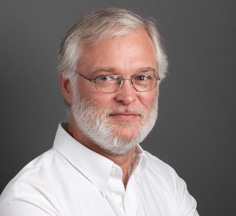
Dan Terpstra
Where are you from, originally?
I was born in the Salvation Army Hospital in Chicago to a single mom who put me up for adoption. I was adopted at two weeks old by a couple who later adopted 3 other kids before having one of their own—my little sister. I was raised in Northern Indiana, just south of Gary. My mom still lives there, a block away from my childhood home.
Can you summarize your educational background?
Because my dad was an electrical contractor, I was able to earn enough to be able to pay my own way through Calvin College, a private undergrad school in Grand Rapids, MI. I struggled with choosing electrical engineering vs. chemistry, and finally majored in chemistry. When I found out I could get paid to go to grad school I applied to several and ended up at Florida State where I got my Ph.D. in analytical chemistry. My graduate work involved applying computers to scientific instrumentation, specifically NMR spectrometers. I wrote a 2-dimensional FFT in Z-80 assembly language. Of course, I had to write the assembler first. In FORTRAN.
Where did you work before joining ICL?
My first job after grad school was at a small company in Houston, computerizing scientific instruments in the oil and chemical industry. I took a job in computers because it was more fun than chemistry and because my wife was also a Ph.D. chemist and I didn’t want to compete with her. I came to Oak Ridge about 30 years ago to work as software lead for one of EG&G ORTEC’s x-ray spectrometer lines. A few years later I went to work for Perceptics, a company founded by Ralph Gonzales, an EE Professor at UT. We did image analysis when doing math on images at frame rates (24 fps) was a really big deal. I developed a 2-dimensional frame rate FFT by programming the ALU directly. Meanwhile, my wife had started a company developing Macintosh software and was doing quite well. She hired me in 1990 as employee #2. By 1999 she had enough of being an entrepreneur and decided she wanted to teach high school. I needed a real job and found one with a former client doing risk analysis.
How did you first hear about the lab and what made you want to work here?
One afternoon while watching our daughters’ soccer game, I struck up a conversation with Shirley Moore about work related stuff. When she found out about my computer background she suggested I apply for a position with ICL. I was tired of risk analysis, so I did a little research and discovered that this Jack Dongarra character had a pretty good reputation and might actually have enough funding to make a transition back to academics worth the risk. I figured why not? I’d probably only be there a couple years anyway. That was almost 12 years ago.
What is your research focus here at ICL? What are you working on?
When I hired into ICL, Shirley mentioned that there was this project called PAPI that was just getting off the ground. Its creator, Phil Mucci, had gotten his degree and was moving on to more exciting venues, but the project needed a manager. I’ve been working on PAPI and performance related software ever since.
What are your interests/hobbies outside of work?
I have 60 acres of forest in Morgan County, just outside Wartburg. It includes a waterfall, 4 streams, and 1000 feet of Emory River frontage. When I can, I work on building a cabin there. It’s got solar power, and I have plans for a rainwater collection system. I love to hike, although I’m slowing down a bit. I spent time during several summers helping to build the Cumberland Trail, planned to stretch from Kentucky to Georgia.
Tell us something about yourself that might surprise people.
When I was in grad school I only had a motorcycle for transportation. One summer I took a leave of absence for 4 months and rode cross-country from Tallahassee to the wedding of a former girlfriend in San Francisco. Peggy says I married her for her car. I didn’t. After she banned the motorcycle (long after), I bought a red Miata convertible. I’ve had it longer than I’ve worked at ICL. It had gotten pretty beat up. This Christmas, my kids surprised me by having it completely restored and repainted from bumper to bumper. It’s beautiful again.
If you weren’t working at ICL, where would you like to be working and why?
I’d probably be in Belize or Haiti or maybe Ghana helping local communities install water treatment systems. Global Climate issues have long been important to me, but they’ve been too big for me to get my hands around. Working with an organization called Living Waters for the World ( https://livingwatersfortheworld.org ) has given me the opportunity to feel that I’m making a difference for at least some community somewhere in providing access to a basic necessity of life. I find it very rewarding.


