PLASMA  2.4.5
PLASMA - Parallel Linear Algebra for Scalable Multi-core Architectures
 All Data Structures Namespaces Files Functions Variables Typedefs Enumerations Enumerator Macros Groups
primes.c File Reference
#include <stdlib.h>
#include <stdio.h>
#include <math.h>
#include "common.h"
#include "primes.h"
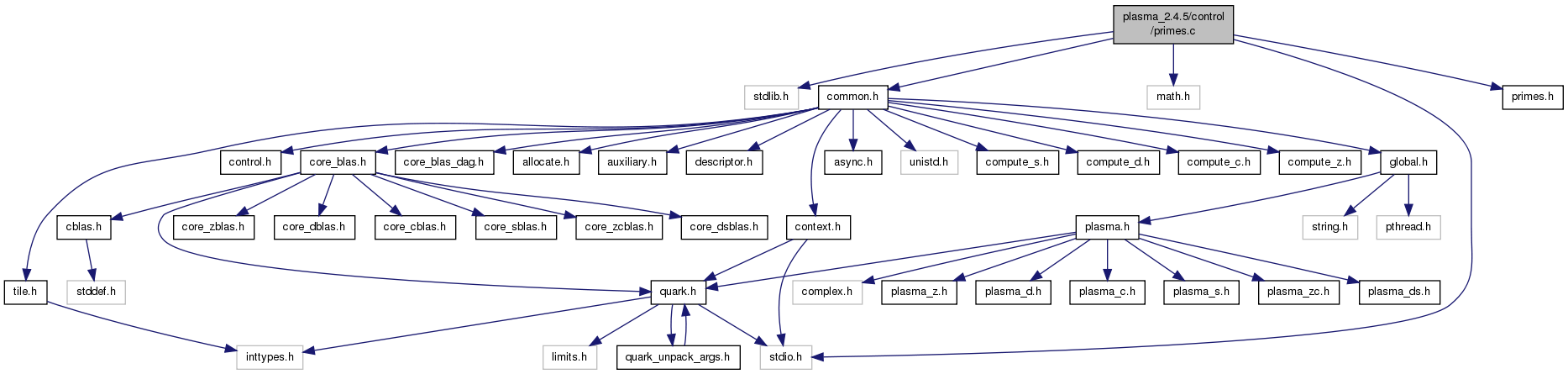
Include dependency graph for primes.c:

Go to the source code of this file.

Macros

#define PRIMESTABLE_SIZE   4792

Functions

int lcm (int a, int b)
int gcd (int a, int b)
int modpow (int x, int n, int m)
void factor (int n, primedec_t *pr, int *nf)
int minloc (int n, int *T)
int64_t maxval (int n, int *T)
int64_t sum (int n, int *T)

Variables

int primes [PRIMESTABLE_SIZE]

Detailed Description

PLASMA InPlaceTransformation module PLASMA is a software package provided by Univ. of Tennessee, Univ. of California Berkeley and Univ. of Colorado Denver

This work is the implementation of an inplace transformation based on the GKK algorithm by Gustavson, Karlsson, Kagstrom and its fortran implementation.

Version:
2.4.5
Author:
Mathieu Faverge
Date:
2010-11-15

Definition in file primes.c.


Macro Definition Documentation

#define PRIMESTABLE_SIZE   4792

Table of all primes less than sqrt(2**31-1) (46341) in ascending order. (This table is not initialized in one go due to an internal compiler error in the PathScale F95 compiler that we use.)

Definition at line 29 of file primes.c.


Function Documentation

void factor ( int  n,
primedec_t pr,
int *  nf 
)

factor Factors an integer into a product of prime powers.

Parameters:
[in]n
[out]prArray of size PRIME_MAXSIZE On exit, contains the prime factor of n modulo m
[out]nfNumber of prime factor in n.

Definition at line 748 of file primes.c.

References primedec::e, lapack_testing::f, primedec::p, primedec::pe, plasma_error(), PRIME_MAXSIZE, primes, and PRIMESTABLE_SIZE.

{
int x, i, f, sqrtx, lnf;
lnf = 0;
x = n;
sqrtx = (int)sqrt((double)x);
i = 0;
f = 1;
while( x > 1 ) {
/* Get a prime f */
f = primes[i];
/* check if x is prime */
if( f > sqrtx ) {
if( lnf > PRIME_MAXSIZE ) {
plasma_error(__func__, "input matrix pr has too few columns");
}
pr[lnf].p = x;
pr[lnf].e = 1;
pr[lnf].pe = x;
lnf++;
break;
}
/* check if f | x */
if( (x % f) == 0 ) {
/* found a new prime factor of x, namely f */
if( lnf > PRIME_MAXSIZE ) {
plasma_error(__func__, "input matrix pr has too few columns");
}
pr[lnf].p = f;
pr[lnf].e = 1;
pr[lnf].pe = f;
x = x / f;
while( (x % f) == 0 ) {
x = x / f;
pr[lnf].e += 1;
pr[lnf].pe *= f;
}
sqrtx = (int)sqrt((double)x);
lnf++;
}
i++;
if( !(i < PRIMESTABLE_SIZE) ) {
plasma_error(__func__, "ran out of table");
}
}
*nf = lnf;
}

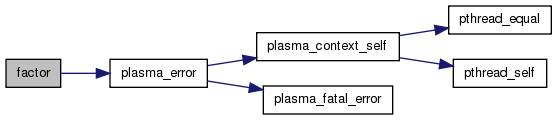
Here is the call graph for this function:

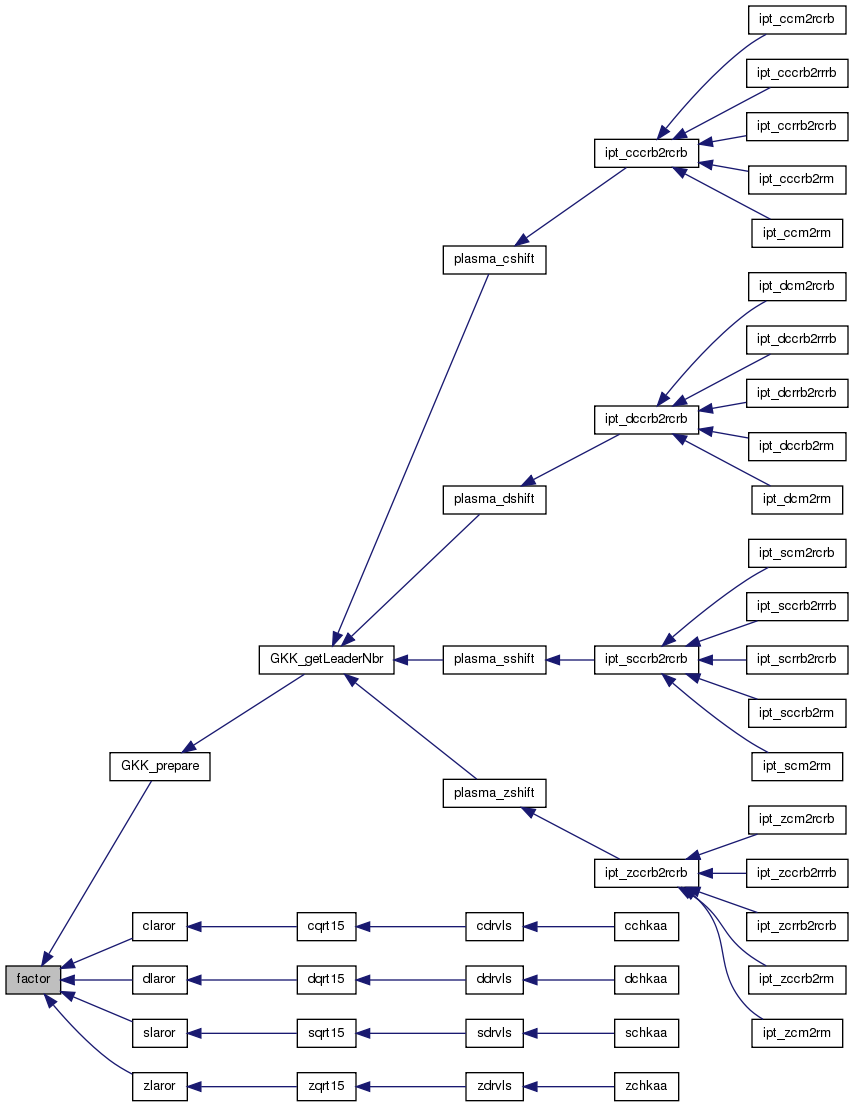
Here is the caller graph for this function:

int gcd ( int  a,
int  b 
)

gcd computes the greatest common divisor of a and b.

Parameters:
[in]a
[in]b
Returns:
Return values:
thegreatest common divisor of a and b.

Definition at line 673 of file primes.c.

{
int x, y, t;
x = a;
y = b;
while( y != 0 ) {
t = y;
y = x%y;
x = t;
}
return x;
}

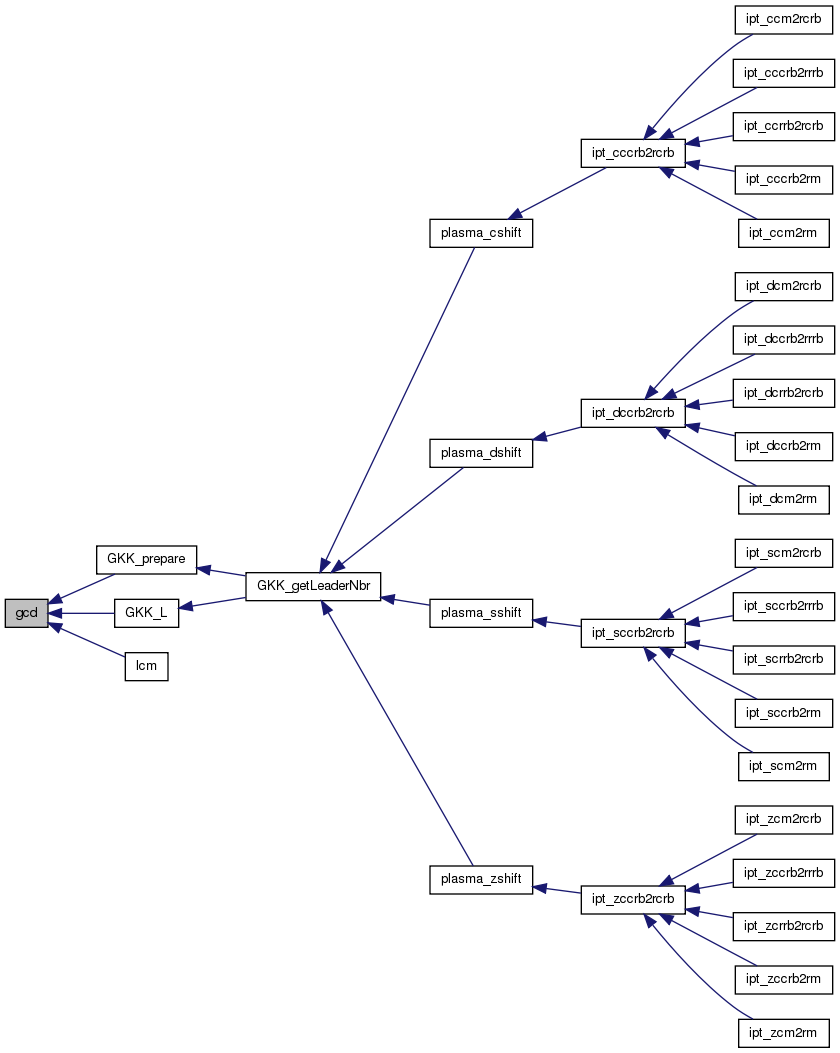
Here is the caller graph for this function:

int lcm ( int  a,
int  b 
)

lcm computes the least common mutliple of a and b

Parameters:
[in]a
[in]b
Returns:
Return values:
theleast common multiple of a and b

Definition at line 651 of file primes.c.

References gcd().

{
return (a / gcd(a, b)) * b;
}

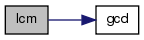
Here is the call graph for this function:

int64_t maxval ( int  n,
int *  T 
)

maxval return the maximum value found in T

Parameters:
[in]nSize of the array T
[in]TArray of integers of size n
Returns:
Return values:
themaximum found in T

Definition at line 857 of file primes.c.

References max.

{
int64_t max = T[0];
int i;
for (i=1; i<n; i++) {
if (T[i] > max)
max = T[i];
}
return max;
}

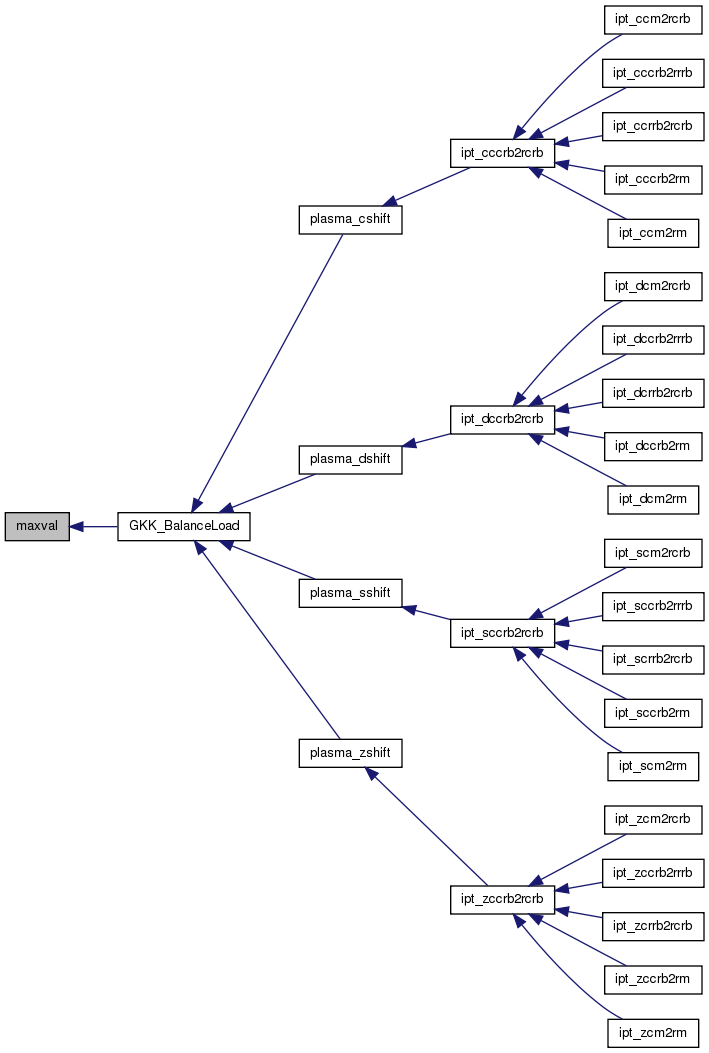
Here is the caller graph for this function:

int minloc ( int  n,
int *  T 
)

minloc return the indice of the minimum in array T

Parameters:
[in]nSize of the array T
[in]TArray of integers of size n
Returns:
Return values:
theindice of the minimum in T

Definition at line 823 of file primes.c.

{
int mini = 0;
int minT = T[0];
int i;
for (i=1; i<n; i++) {
if (T[i] < minT) {
minT = T[i];
mini = i;
}
}
return mini;
}

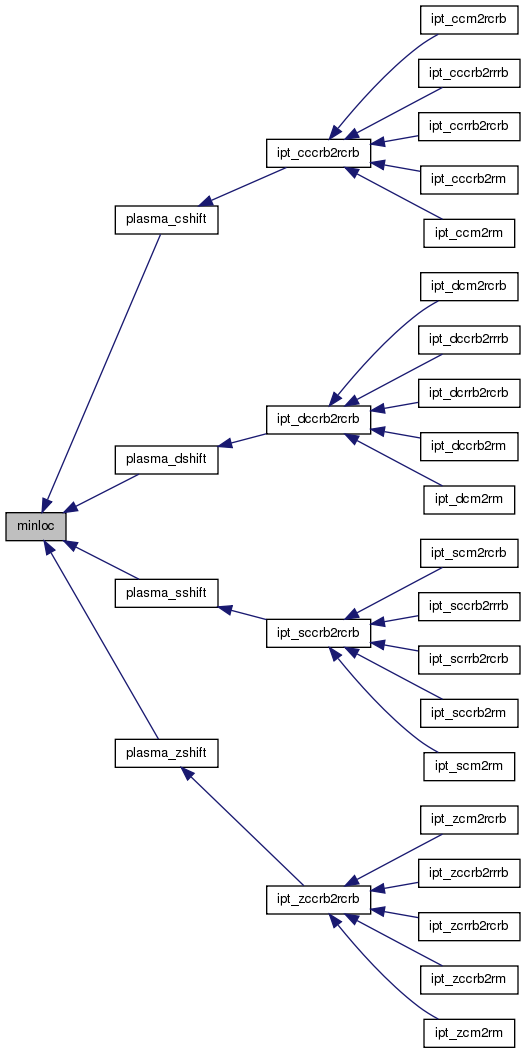
Here is the caller graph for this function:

int modpow ( int  x,
int  n,
int  m 
)

modpow computes the modular power x^n mod m using recursive squaring. The number of operations is proportional to the logarithm of the exponent n.

Parameters:
[in]x
[in]n
[in]m
Returns:
Return values:
themodular power x^n mod m

Definition at line 707 of file primes.c.

{
int64_t Nn, y, z, t;
if( n == 0 )
return 1;
Nn = n;
y = 1;
z = x;
while (1) {
t = Nn % 2;
Nn = Nn / 2;
if( t != 0 ) {
y = (z*y) % m;
if( Nn == 0 )
return y;
}
z = (z * z) % m;
}
}

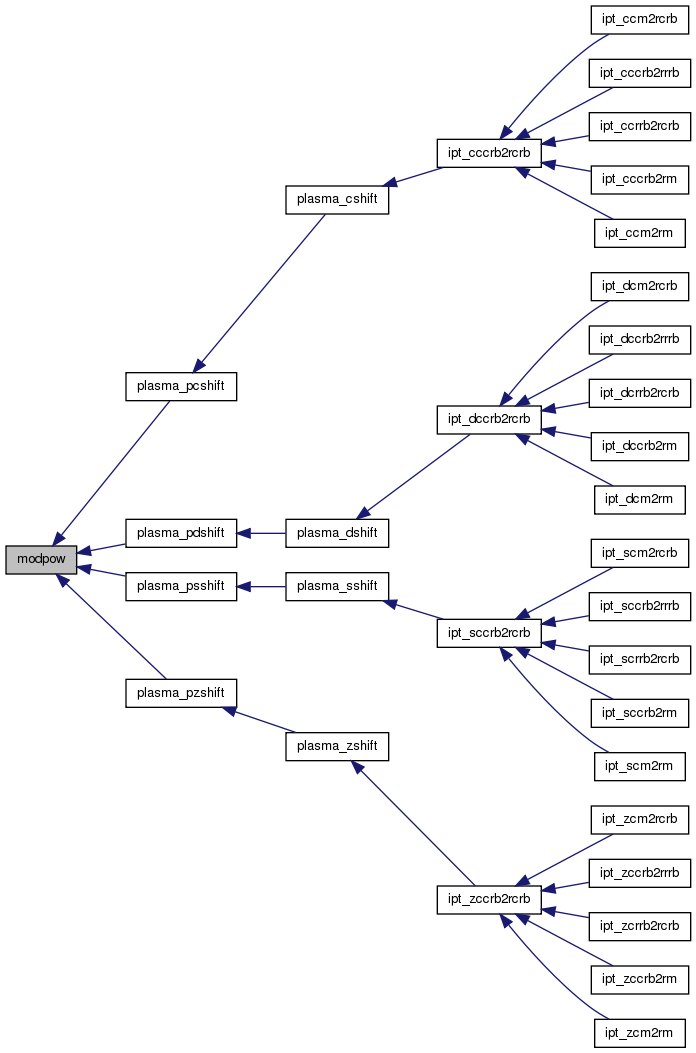
Here is the caller graph for this function:

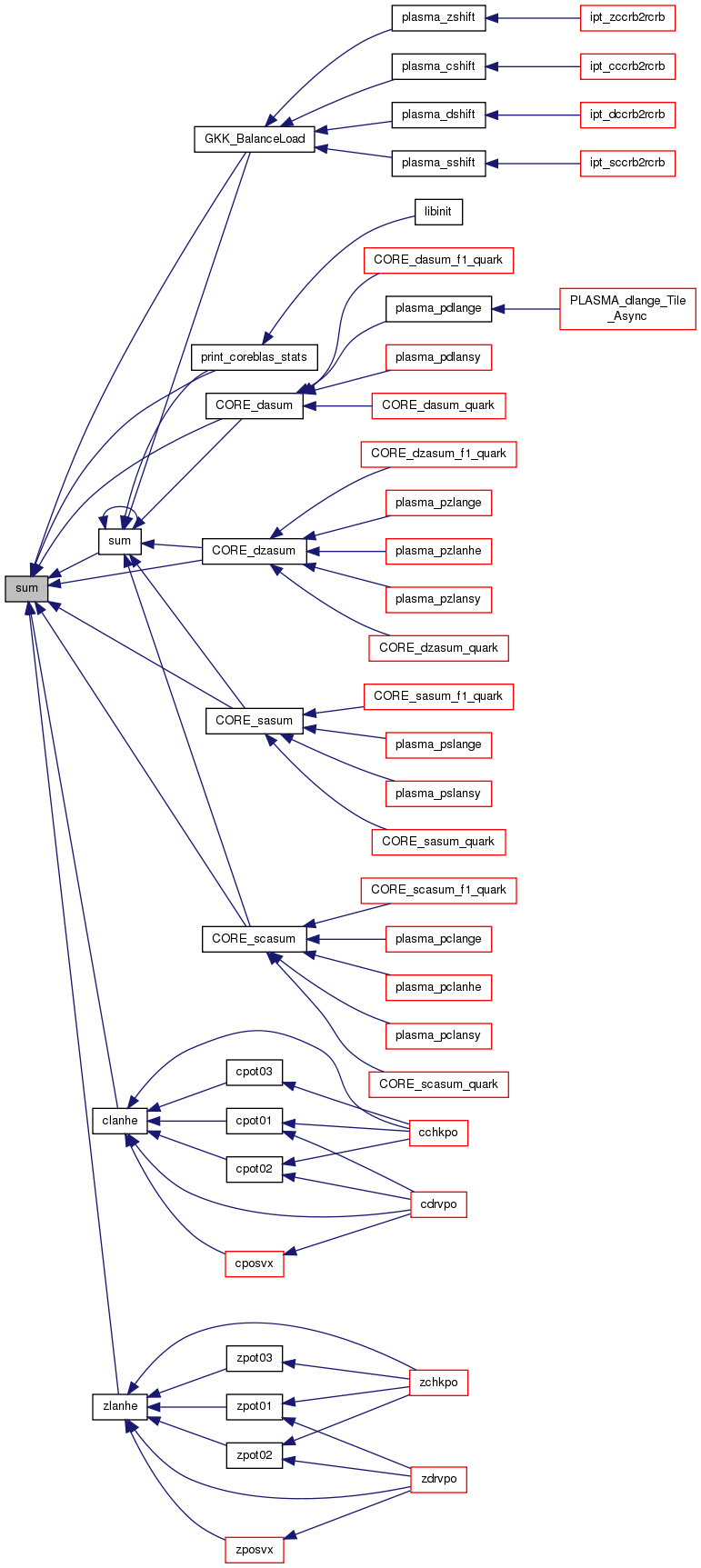
int64_t sum ( int  n,
int *  T 
)

sum return the sum(T[i], i=0..n-1)

Parameters:
[in]nSize of the array T
[in]TArray of integers of size n
Returns:
Return values:
sum(T[i],i=0..n-1)

Definition at line 888 of file primes.c.

References sum().

{
int64_t sum = T[0];
int i;
for (i=1; i<n; i++)
sum += T[i];
return sum;
}

Here is the call graph for this function:

Here is the caller graph for this function:


Variable Documentation

int primes[PRIMESTABLE_SIZE]

Definition at line 30 of file primes.c.