
News and Announcements
iPad 2 vs. Cray 2, Round 2?
As many of you probably remember, the New York Times ran an article last May where Jack Dongarra compared the LINPACK performance of an iPad 2 to that of the Cray 2 supercomputer, the fastest supercomputer in the world from 1985 to 1989.
Well, ICL’s own Piotr Luszczek recently gave a talk at HPEC ’12 about implementing a complete embedded LINPACK benchmark on the iPad 2, and mentioned how it compared to the Cray 2 machine. The talk was based on the same work highlighted in the NYT article, but it managed to rekindle the whole idea of the iPad 2 being as powerful as a Cray supercomputer.
So, back by popular demand, Piotr will be giving a lunch talk on Friday, October 5th, to give ICL’ers the latest on the implementation of LINPACK on the iPad 2, and see how it stacks up against other machines and architectures, past and present. A copy of Piotr’s slides can be downloaded here.
Jack Dongarra Visits Bull Labs

Conference Reports
2012 Smoky Mountains Computational Science and Engineering Conference
ICL’s Heike McCraw, Wei Wu, and Jack Dongarra made their way to the 2012 Smoky Mountains Computational Science and Engineering Conference on September 5 – 7th. The goal of the conference series is to bring experts together from the National Center for Computational Sciences, (NCCS), NCCS users, university partners, industry, and government to focus on, and discuss in depth, the latest advances and challenges in the computational sciences.
Heike presented a poster on hardware performance power measurement on the 5D-Torus network used on Blue Gene/Q. Since performance data is usually collected primarily on the CPU, Heike said PAPI’s expanding capabilities are piquing the interest of HPC professionals who wish to obtain performance data from various components on their machines. For example, some folks from ORNL inquired about obtaining similar counter data from the Gemini network on Jaguar/Titan. Satoshi Matsuoka, from the Tokyo Institute of Technology, was also interested in getting a PAPI network component available on the K-computer, which features a 6D-Torus network.
Wei Wu presented a poster on PaRSEC, giving a brief overview of the project, which also garnered interest among conference attendees. Jack Dongarra was also in attendance and gave a talk about Experience on Multipetaflops Architectures on the first day. Overall, the conference had around 100 people from many different national labs, universities, and industry players.


SPEEDUP Workshop on High-Performance Computing
[youtube=http://www.youtube.com/watch?v=4KUy5aj-D_M]
On September 7th, Jack Dongarra gave a 45 minute invited talk at the SPEEDUP Workshop on High-Performance Computing at ETH Zürich, Switzerland. The talk, On the Future of High Performance Computing: How to Think for Peta and Exascale Computing, was filmed and posted on YouTube for your viewing pleasure.
Clusters, Clouds, and Data for Scientific Computing (CCDSC ’12)
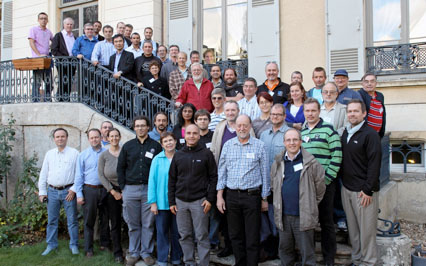

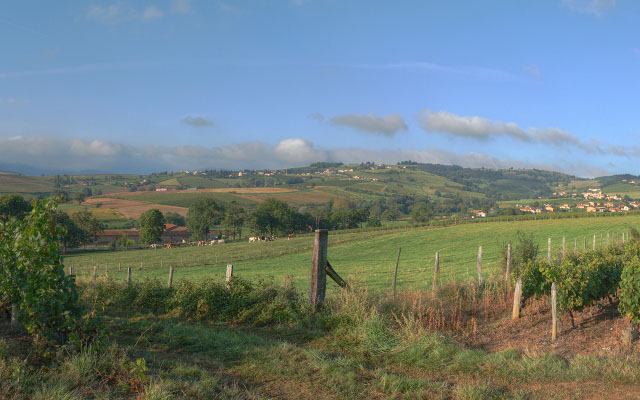




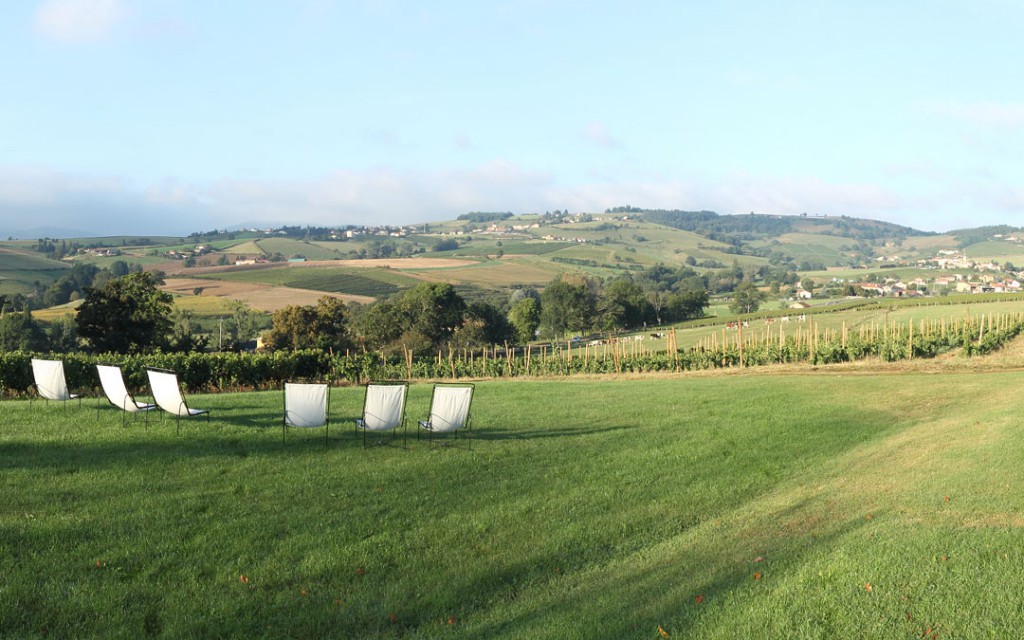
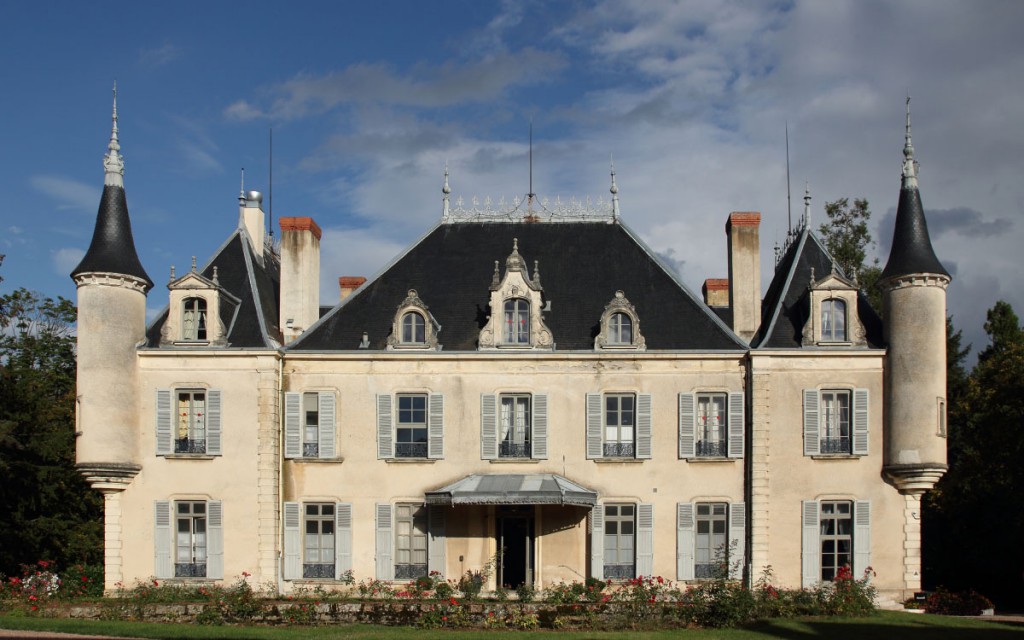
This year’s Clusters, Clouds, and Data for Scientific Computing workshop was held in La Maison des Contes, outside of Lyon, France, on September 11th – 14th. These biennial meetings date back to 1992 and alternate between the U.S. and France. This year’s meeting was designed to evaluate the state-of-the-art and future trends for cluster computing and the use of computational clouds for scientific computing.
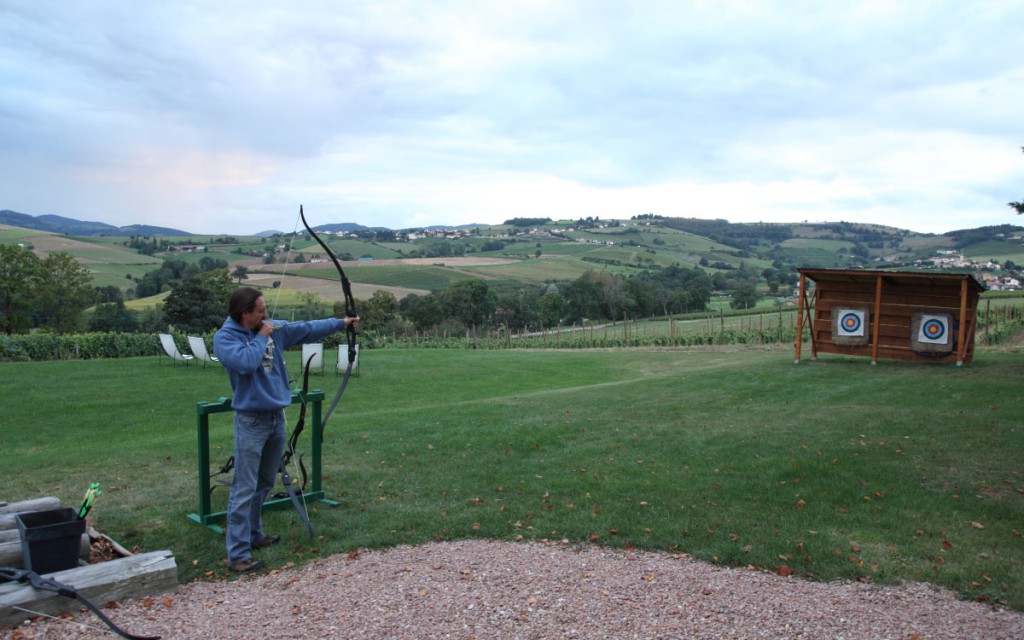
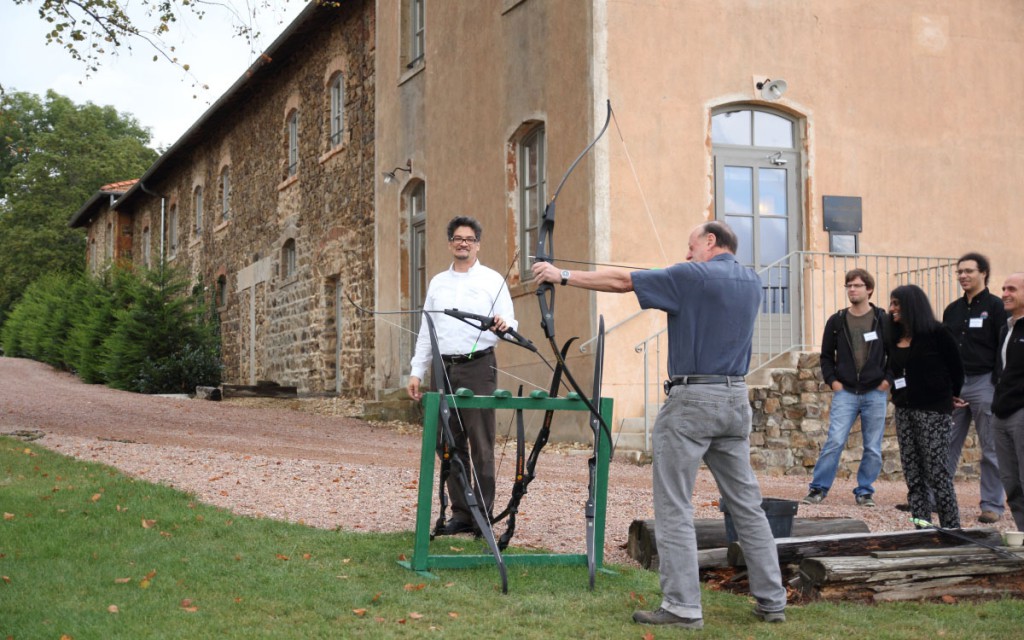
ICL’s Jack Dongarra, George Bosilca, Anthony Danalis, and Aurelien Bouteiller were there, among 44 other attendees—including several ICL alum. Jack was session chair for the morning proceedings on the 12th. George gave a talk describing the latest developments in the PaRSEC project. Anthony gave a talk on Task Data Flow Analysis and Extraction from Serial Input Code, and Aurelien delivered a talk on Options and Challenges for Fault Tolerance the following day. It seems like most everyone enjoyed themselves, and a few folks even took part in some archery, but the lack of a Scheduling talk reportedly put George in a “sorrowful” mood.
EuroMPI 2012
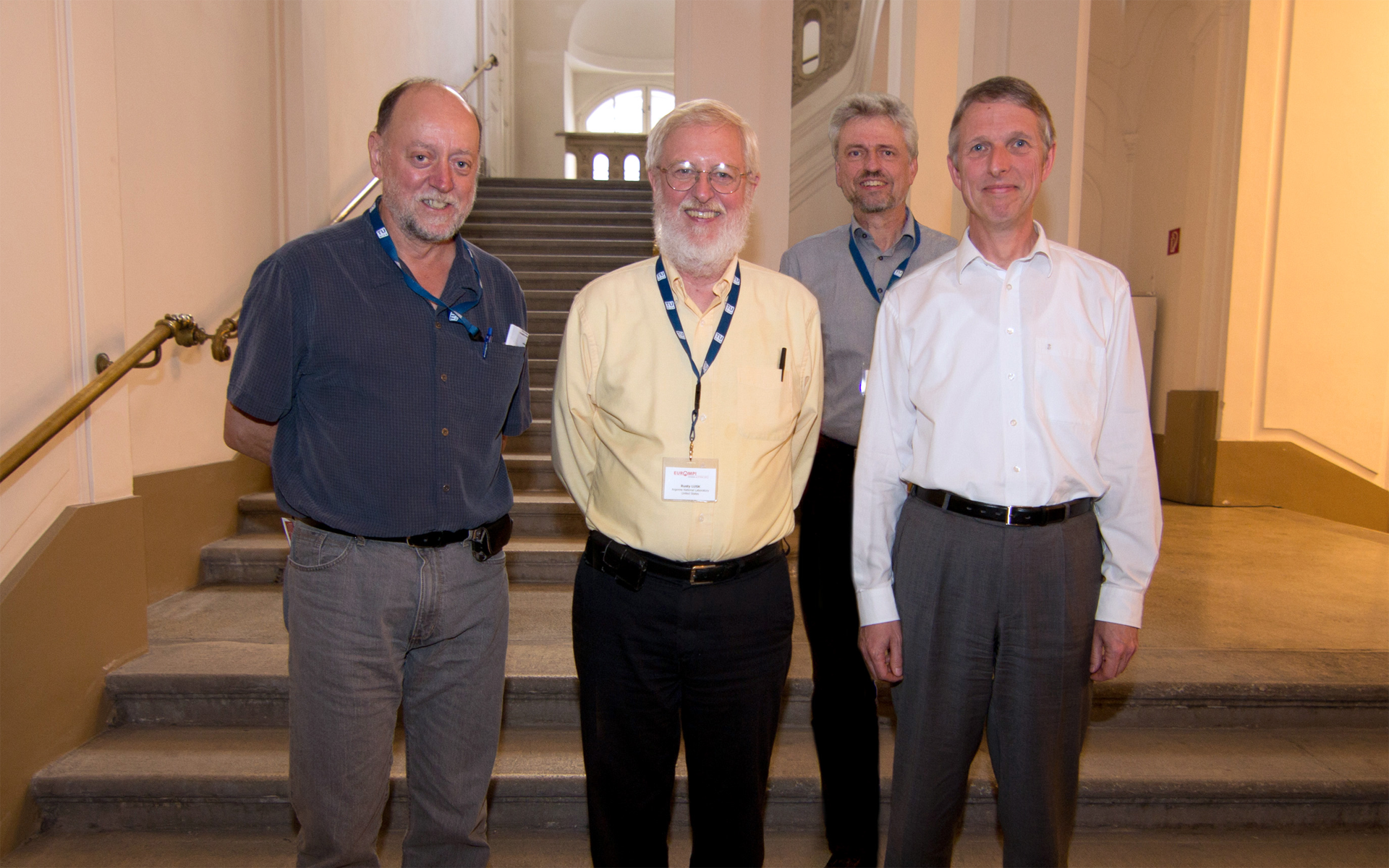
ICL’s European tour continued in Vienna, Austria where Jack Dongarra, George Bosilca, Aurelien Bouteiller, and Anthony Danalis attended the 19th EuroMPI conference on September 23rd – 26th. EuroMPI is the preeminent meeting for all things MPI, and provides an occasion for developers and researchers to interact and discuss new developments and applications of message-passing parallel computing, and MPI in particular.
Jack served as general chair for the meeting, and Aurelien presented the paper An Evaluation of User-Level Failure Mitigation support in MPI. Anthony also gave an invited talk, MPI & Compiler Technology: A love-hate Relationship. Overall, the meeting was a success and Anthony was kind enough to snap some photos (shown below).



Recent Releases
PAPI 5.0.1 Released
PAPI 5.0.1 is now available for download as both a tarball and as a patch to the recent 5.0.0 release. The PAPI team recommends that all users and tools upgrade to this release due to a recently discovered bug that randomly causes derived PRESET events to be computed incorrectly.
This is a small fix with big implications, and was reported by an early PAPI 5.0 user in the PAPI bug reports forum. As always, the PAPI team is grateful for these reports as it helps improve the PAPI package as a whole.
In addition to the bugfix mentioned above, the following updates were added:
- Updated the libpfm4 library with some Sandy Bridge fixes
- Fixed some problems with the build system and external libpfm4 libraries
- Fixed some event definitions for Intel Ivy Bridge processors
- Updated the CUDA component to support CUDA 5 and Kepler
- Added support for RAPL energy measurement on Ivy Bridge
To patch an existing PAPI 5.0.0 install, download the patch here, apply it to your source code, and rebuild the library. Alternatively, you can download and install from a tarball, here.
LAPACK 3.4.2 Released
The LAPACK 3.4.2 release is now available for download.
This package contains:
- Improvements to the CMake build system
- Other bug fixes
For a complete summary of changes, read the LAPACK 3.4.2 release notes and list of bug fixes. Visit the LAPACK website to download the tarball.
Interview
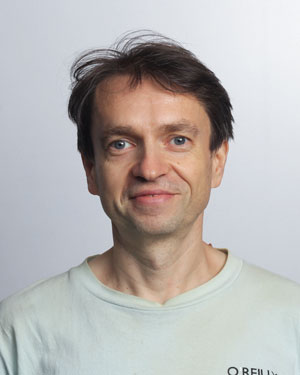

Piotr Luszczek
Where are you from, originally?
I was born in Poland, in the second largest city: Kraków. I lived there my entire life, until about a decade ago, when I came to Knoxville. There are no similarities between Knoxville and Kraków, but to an extent I like both cities because they are so drastically different and I like to explore new places.
Can you summarize your educational background?
I am a recovering student of Jack (wink, wink). For the record – I did enjoy my grad school years in Knoxville. Back in Poland, I received my MSc in…I’m too old to remember. It had to do with sparse matrices, a lot of I/O operations, and a 16 CPU system that was the size of a large furniture piece and had hundreds of people lining up to use it.
Where did you work before joining ICL?
I did work at the MathWorks after I worked at ICL. And I worked at the MathWorks before I worked at ICL. Both sentences are true and the question to the reader is: how is it possible?
How did you first hear about the lab and what made you want to work here?
The first time I heard about what’s happening in Eastern Tennessee was in 1997 when many people from the group and ORNL came to Kraków for the Euro PVMPI meeting. They got me at “performance.”
What is your research focus here at ICL? What are you working on?
The official answer is performance evaluation and modeling through dense linear algebra codes. The unofficial answer is…well, let’s not go there. I do work with the linear algebra group most closely, and for the most part we port new and old algorithms on ever-evolving hardware.
What’s the deal with the iPad 2 vs. Cray 2 attention? As an HPC professional and enthusiast, which machine would you prefer to have in your rec room? Be honest.
Going right to your second question: Cray 2. Hands down! Have you seen the cushioned seating on Crays? It came standard on every model and influences movie décor to this day. Sadly, I cannot afford a Cray so I have to settle for the next best thing. Now, about the iPad; it was amazing how my presentation at HPEC 2012 took on a life of its own. Not to complain, though. I was even contacted by Apple and had a very interesting exchange about it. I think it is amazing that we can do this kind of processing in the palm of our hands. But not to spoil my Friday presentation on the topic: more details after lunch on October 5th in Claxton 233.
What are your interests/hobbies outside of work?
I enjoy skiing and was quite disappointed about the warm winter last season. This led me to pursue my less glamorous year-round hobbies of reading non-fiction and watching documentaries. And there is of course my son, Aylor, who always comes up with new and creative ways of spending his time and I enjoy that immensely.
Tell us something about yourself that might surprise people.
I happen to remember all kinds of trivial information for a surprisingly long time, so be careful what you tell me next time we meet.
If you weren’t working at ICL, where would you like to be working and why?
I am intrigued by a startup culture, but I’m not sure if I’d like to necessarily go to either of the popular startup destinations: the Valley or the Boston area. I hear there are others spread out somewhere in between.


