
News and Announcements
2012 Retreat
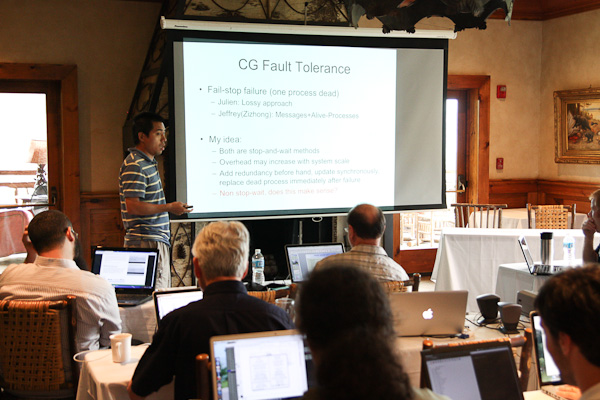
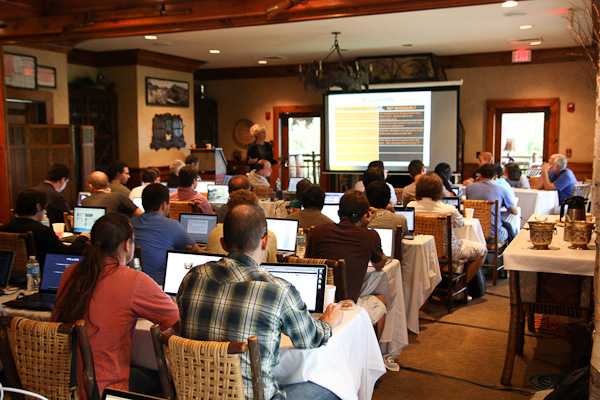
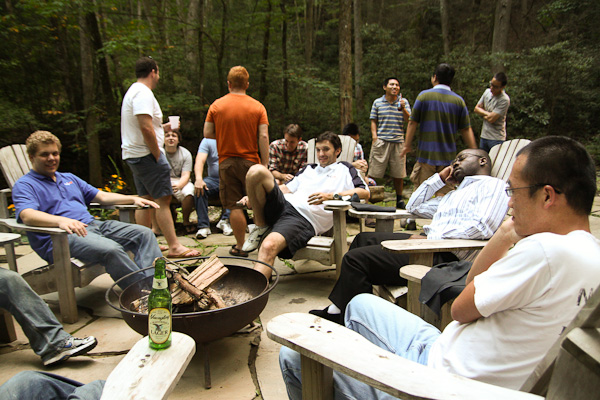
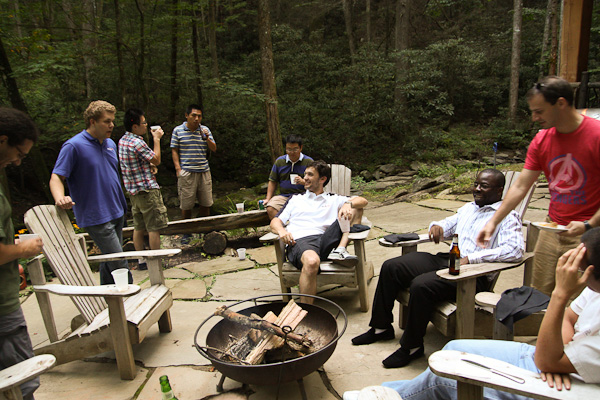
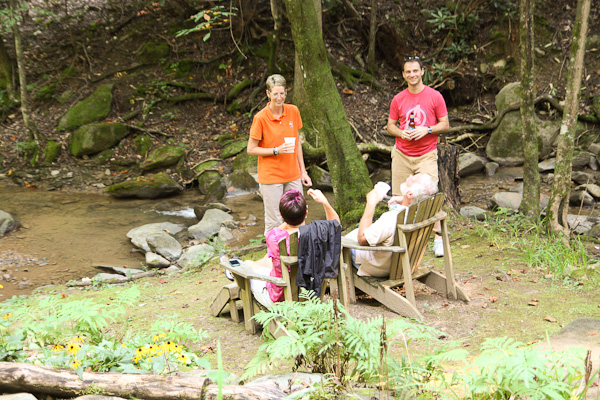
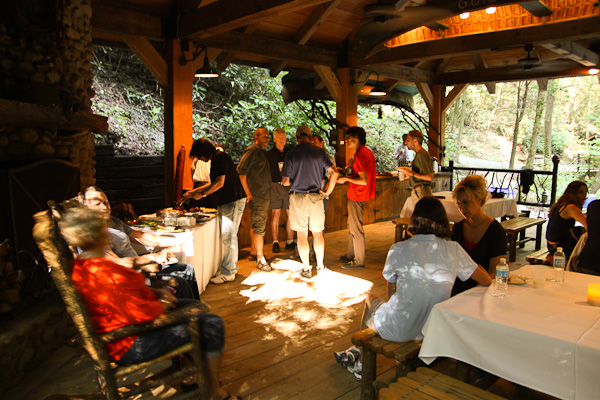
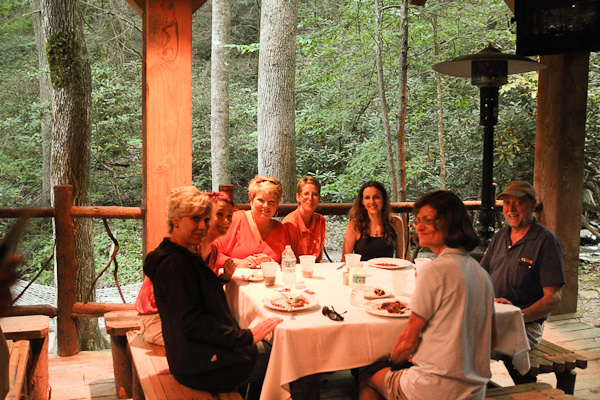
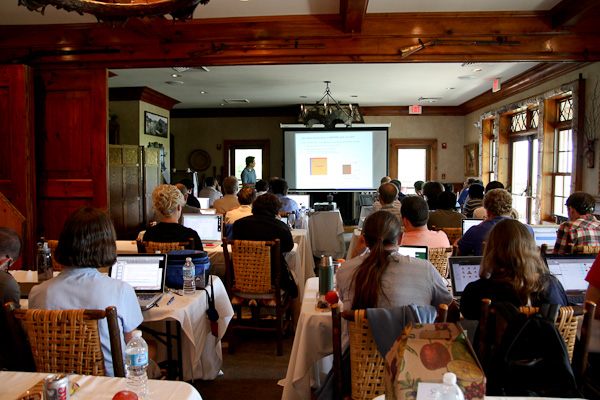
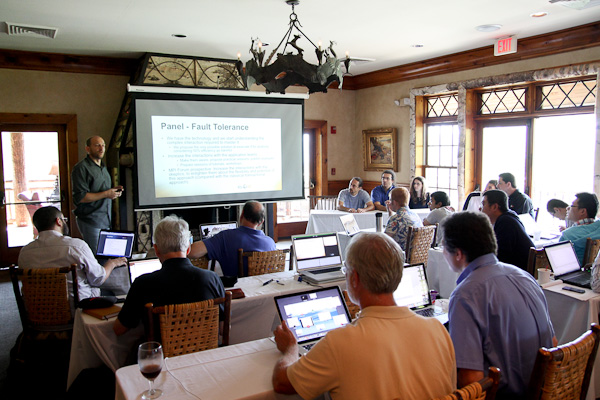
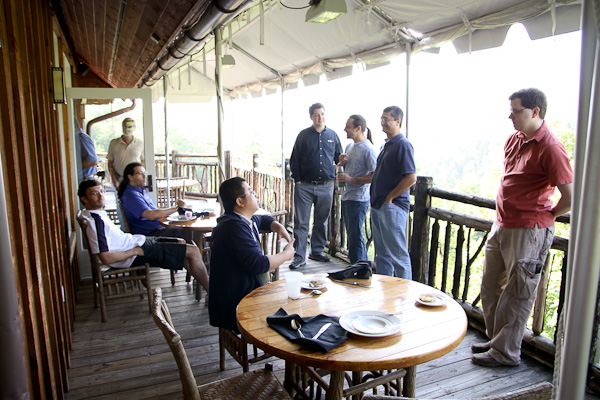
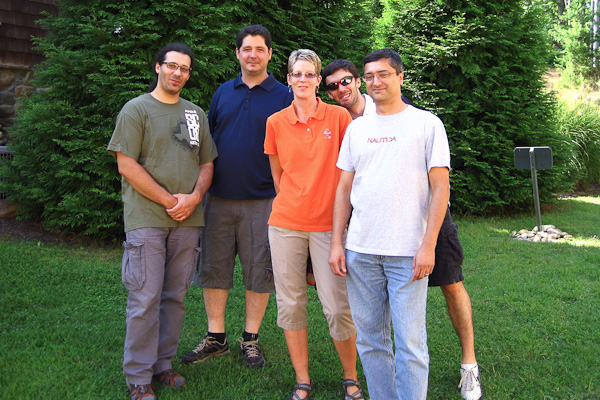
This year’s ICL retreat found the crew back at Buckberry Creek in Gatlinburg, Tennessee. Some 40 ICL’ers were in attendance with more than 30 talks given on August 16th and 17th. These talks ran the gamut and included presentations on Linear Algebra, Distributed Computing, Benchmarking, Performance Analysis, and discussions of the lab’s day-to-day operations. The retreat wasn’t all serious business, of course, and many ICL’ers enjoyed food, drink, and stimulating conversation at the Lodge’s hospitable pavilion.




Francoise Tisseur named Professor of Numerical Analysis
 ICL alum Francoise Tisseur was recently named Professor of Numerical Analysis in the Department of Mathematics at the University of Manchester, UK. Francoise is the first woman to be promoted to a Chair in mathematics at Manchester since the 1970s. Congratulations, Francoise!
Conference Reports
Euro-Par 2012
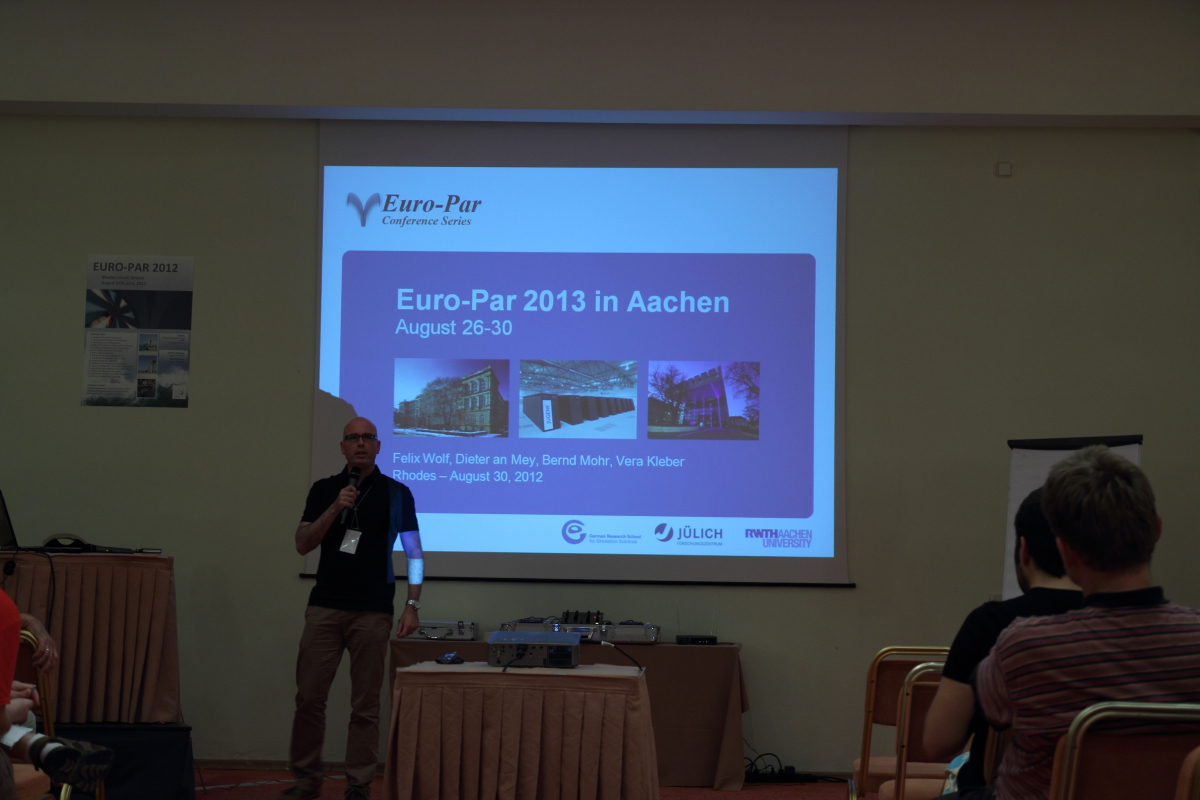
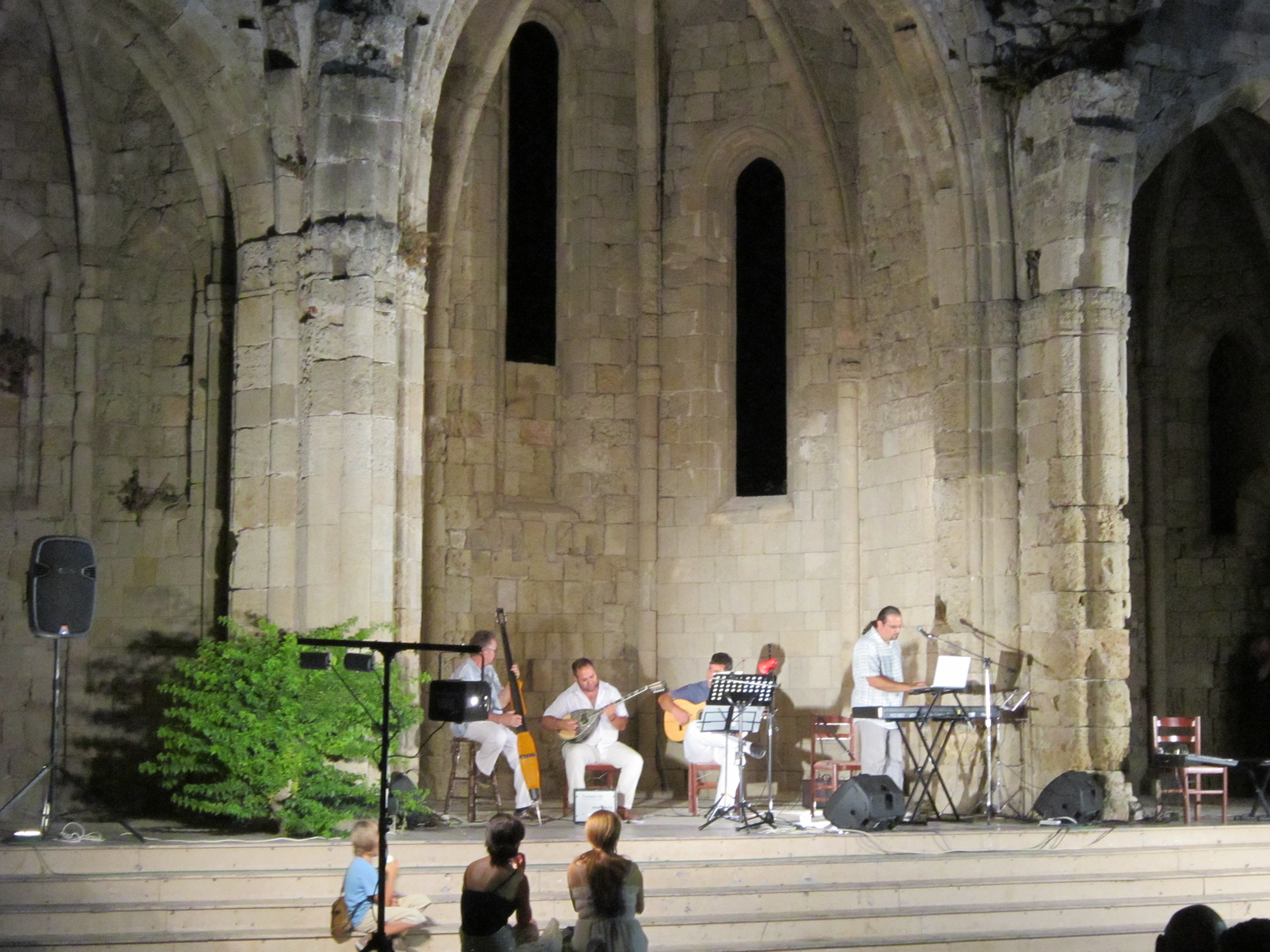
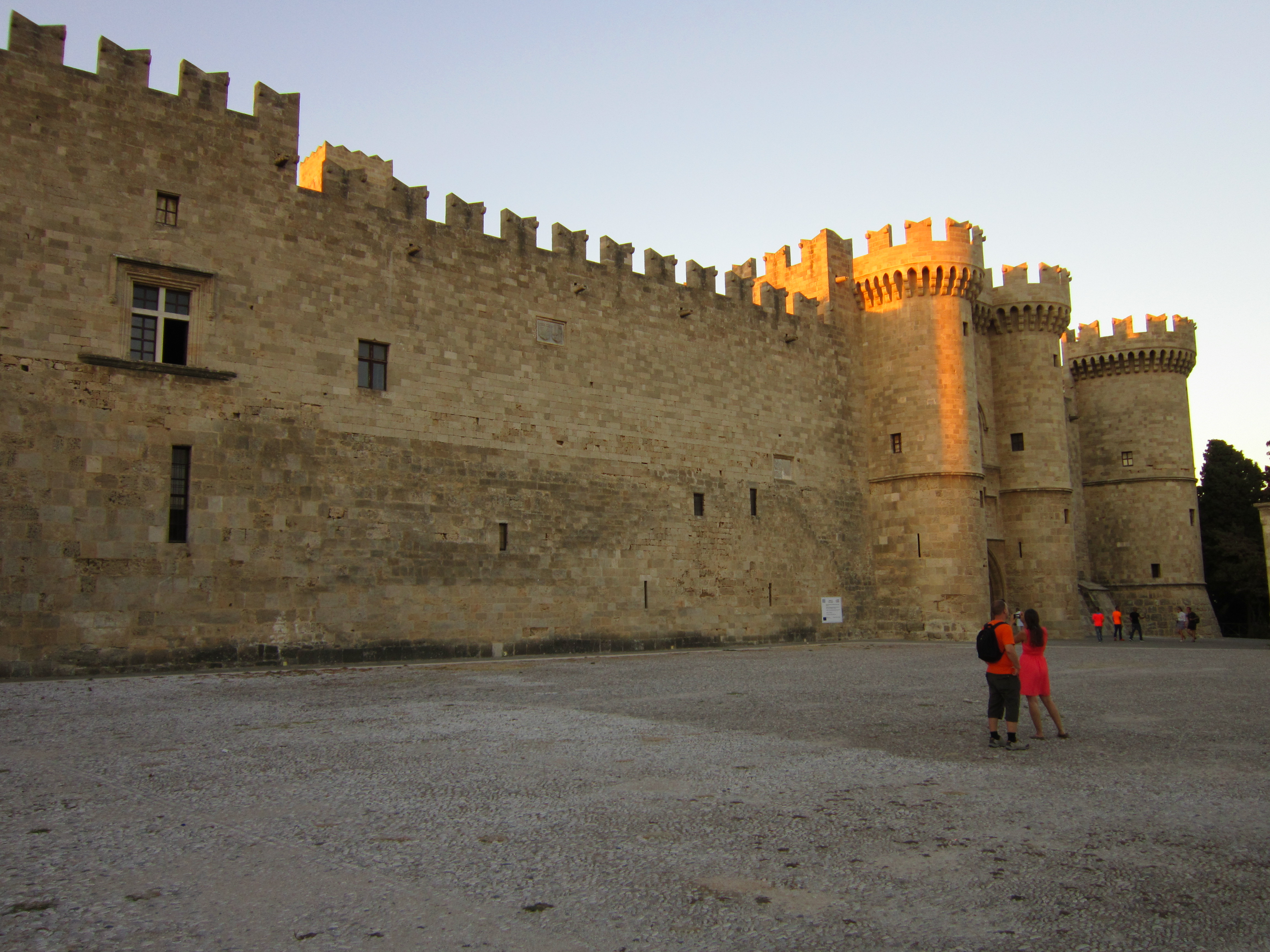
ICL’s Anthony Danalis, Aurelien Bouteiller, and Wesley Bland recently attended Euro-Par 2012 in Rhodes Island, Greece. Euro-Par 2012, which ran from August 27th to August 31st, is an annual series of international conferences dedicated to the promotion and advancement of all aspects of parallel and distributed computing. This year’s meeting was no exception as the conference hosted 10 different workshops in areas of resilience, virtualization, big data, and heterogeneous computing, just to name a few.
Anthony presented the paper From Serial Loops to Parallel Execution on Distributed Systems, and was kind enough to take a few photos. Aurelien also presented a paper, A Checkpoint-on-Failure Protocol for Algorithm-Based Recovery in Standard MPI, which earned the conference’s ‘Distinguished Paper’ award. Not to be outdone, Wesley Bland gave an invited talk at the Resilience 2012 workshop, and snapped a few photos of his own (shown below).




Recent Releases
MPI 3.0 Public Draft Available for Review
The long awaited MPI 3.0 standard is in the very final stages of development and the public draft is now available for review. This draft contains all major components that have been voted into the standard thus far, and the draft will be voted on at the MPI Forum meeting in Vienna, Austria on September 20-21, 2012.
PAPI 5.0 (PAPI-V) Released
The PAPI 5.0 release is now available for download. This is a major release of PAPI, and parts of both the internal component and external low-level interfaces have changed. This will break your 4.4 compliant components and links to shared libraries. Although the PAPI team has tried to keep the impact of these changes to a minimum, they have made changes to the Application Binary Interface, the Application Programming Interface, and the Component Development Interface.
A quick summary of changed APIs:
- PAPI_perror now behaves like its posix cousin. The API has been changed to reflect this.
- Both PAPI_perror and PAPI_strerror can now report errors from components as well as pre-defined PAPI errors.
- The data returned by PAPI_get_component_info has been cleaned up significantly. If you were using esoteric fields, they may no longer be there.
New APIs:
- PAPI add named event, PAPI remove named event, PAPI query named event.
- PAPI get event component, PAPI enum cmp event, PAPI get component index.
- PAPI disable component by name, PAPI disable component.
Other Notes:
- Added detection of operation inside a virtual environment and several virtual machine related components, including one to report stealtime from linux.
- RAPL component for measuring power consumed by SandyBridge chips.
- NVML component for measuring power consumed by NVIDIA cards.
- If you’re using SandyBridge or IvyBridge processors, counting Floating Point operations may be problematic. Floating Point measurements will work on SandyBridge if you’re careful and only count Floating Point; they won’t work at all on IvyBridge.
A full list of changes in PAPI 5.0 can be found here. As always, please feel free to contact the PAPI team through the mailing list or User Forum if you have any questions or complaints about this release.
Visit the PAPI website to download the tarball.
PLASMA 2.4.6 Released
PLASMA 2.4.6 has been released and contains new algorithms to compute eigenvectors in symmetric/hermitian cases as well as in generalized problems.
The package also contains the following updates:
- Add eigenvectors support in eigensolvers for symmetric/hermitian problems and generalized problems.
- Add support of Frobenius norm.
- Release the precision generation script used to generate the precision s, d, and c from z, as well as ds from zc.
- Add all Fortran90 for mixed precision routines.
- Add all Fortran90 wrappers to tile interface and asynchronous interface. Thanks to NAG for providing those wrappers.
- Add 4 examples with Fortran90 interface provided by NAG.
- Add support for all computational functions in F77 wrappers.
- Fix memory leaks related to fake dependencies in dynamically scheduled algorithms.
- Fix interface issues in eigensolvers routines.
- Fixed returned info in PLASMA_zgetrf function.
- Fixed bug with matrices of size 0.
Visit the PLASMA website to download the tarball.
Interview
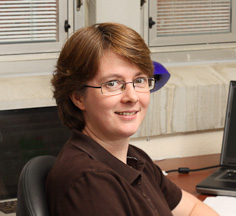
Dulceneia Becker
Where are you from, originally?
I am from Brazil, most specifically from the very south of Brazil. The state is called Rio Grande do Sul and the city Lajeado, which is a small town in the central region of the state. Most of my extended family still lives there. For a couple of years I lived in Porto Alegre, the state’s capital and a wonderful place (not too many people go to Porto Alegre when visiting Brazil). In Brazil, I also lived in São José dos Campos, state of São Paulo, after returning from England, where I lived for about four years.
Can you summarize your educational background?
I hold a PhD in Applied Mathematics and Computing, from Cranfield University, United Kingdom. I also hold a BSc and MSc in Applied Mathematics from UNISC and UFRGS, both in Brazil. The latter is a very prestigious federal university, located in Porto Alegre.
How did you first hear about ICL?
I had known about Jack’s work since I started my MSc. I did not know about ICL until I decided to look more carefully into where Jack was.
What did you work on during your time at ICL?
For the most I worked on symmetric indefinite solvers for PLASMA, which has been extended to DPLASMA (thanks to Anthony and George), and shall also be added to MAGMA. My main contribution for the ICL projects was the introduction of the Random Butterfly Transformation for symmetric systems.
Where are you headed next?
I will be joining the software development group at Concepts NREC to take a Software Engineer position to develop and support new and existing high-performance parallel algorithms for the entire software suite, including the linear algebra matrix solvers. The software consists of a turbomachinery design system that encompasses and integrates the complete engineering process through a complementary suite of tools and programs for computer-aided engineering (CAE) and computer-aided manufacturing (CAM). Integrated elements of the system include preliminary design and detailed design, plus sophisticated analyses that include rapid CFD (Computational Fluid Dynamics) and FEA (Finite Element Analysis).
Any favorite memories of your time at ICL?
Many memories for sure. Having met Jack in person is certainly one of them. I believe my favorite memories are the people I met during this time at ICL. And, of course, the “social events” by the coffee machine.
What are your interests/hobbies outside of work?
A few days ago I decided to invest in my interest for photography. Finally I gave myself a camera that offers more than point-and-shoot, and this shall be my main hobby for some time. I also enjoy hiking, travelling, movies, and music, among other things. The best part is that hiking and traveling are great companions to photography.
Tell us something about yourself that might surprise people.
I was the very first person in my extended family to have a postgraduate degree and one of the very first to have a degree. The odds were against me as a kid, since my parents have very little formal education. Somehow I did it and I am very glad that a few of my cousins and both of my sisters also graduated after me. Last year I “lost” my title of only post-graduated person in the family. My goddaughter and also cousin finished her MSc and is currently enrolled in a PhD program. I have happily lost this title and feel very proud.


