
News and Announcements
IESP Workshop, October 5-7th

The International Exascale Software Project (IESP) will hold its seventh workshop on October 5-7th, 2011 in Cologne, Germany.
The IESP’s guiding purpose is to empower ultrahigh resolution and data intensive science and engineering research through the year 2020 by developing a plan for a common, high quality computational environment for peta/exascale systems, and catalyzing, coordinating, and sustaining the effort of the international open source software community to create that environment as quickly as possible.
Agendas for each workshop are structured to provide progressively greater definition for the components of the IESP plan, with each successive meeting building on the results of the previous meeting. More information about the IESP, including the latest version of the Roadmap, meeting notes, white papers, and presentations, can be found on the IESP website.
QUARK
QUARK (QUeuing And Runtime for Kernels) has been a part of the last few releases of the PLASMA library, but is being promoted into a separate, independent project. QUARK provides a library that enables the dynamic execution of tasks with data dependencies in a multi-core, multi-socket, shared-memory environment.
QUARK is designed to be easy to use, is intended to scale to large numbers of cores, and should enable the efficient expression and implementation of complex algorithms. The driving application behind the development of QUARK is the PLASMA linear algebra library, and the QUARK runtime contains several optimizations inspired by the algorithms in PLASMA.
An early release of QUARK is available, and includes a well-stressed and robust implementation and an initial User’s Guide and Reference Guide. Additional documentation will be provided in future releases.
JICS/IGMCS Seminar Series
This fall, staff from many parts of the University will participate in a series co-hosted by the Joint Institute for Computational Science (JICS) and the Interdisciplinary Graduate Minor in Computational Sciences program (IGMCS). These organizations will offer a series of tutorials and seminars designed to provide UTK students, faculty, and staff with practical information about using UTK’s computational science resources, as well as other associated opportunities for participation and collaboration.
Seminars and tutorials in the series will be given by personnel from the National Institute for Computational Sciences (NICS), the Remote Data Analysis and Visualization Center (RDAV), UTK’s Innovative Computing Laboratory (ICL), and OIT’s Research Computing Support team. The series will be held on Thursdays starting at 2pm, in Claxton 233. All interested students, faculty, and staff are welcome and encouraged to attend. For more information, including a detailed list of speakers, please visit the Seminar Series website.
Conference Reports
EuroMPI


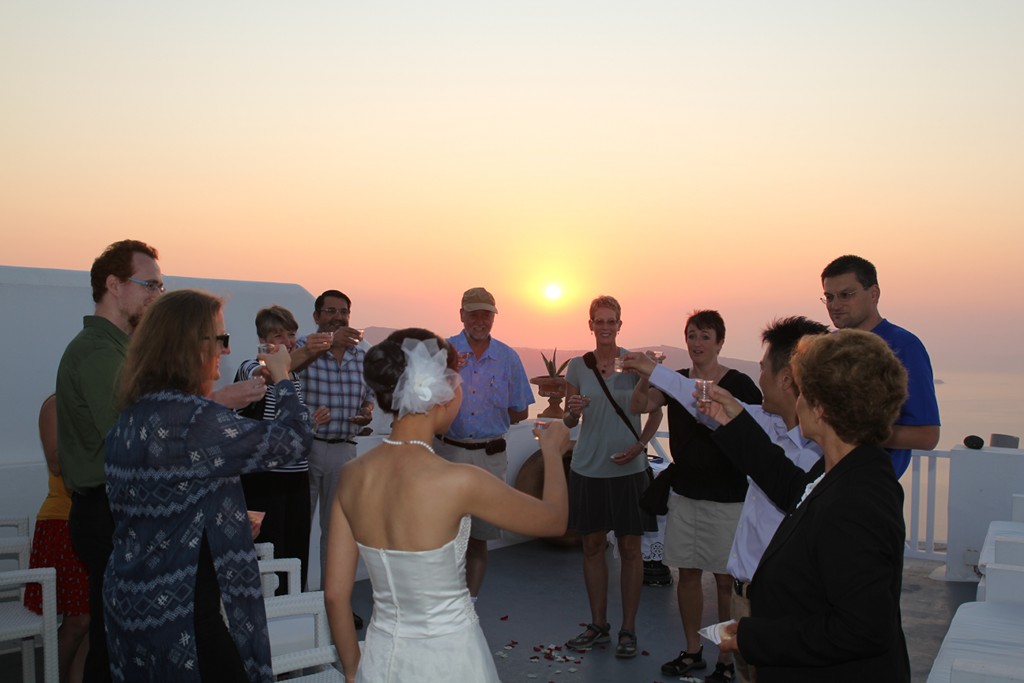
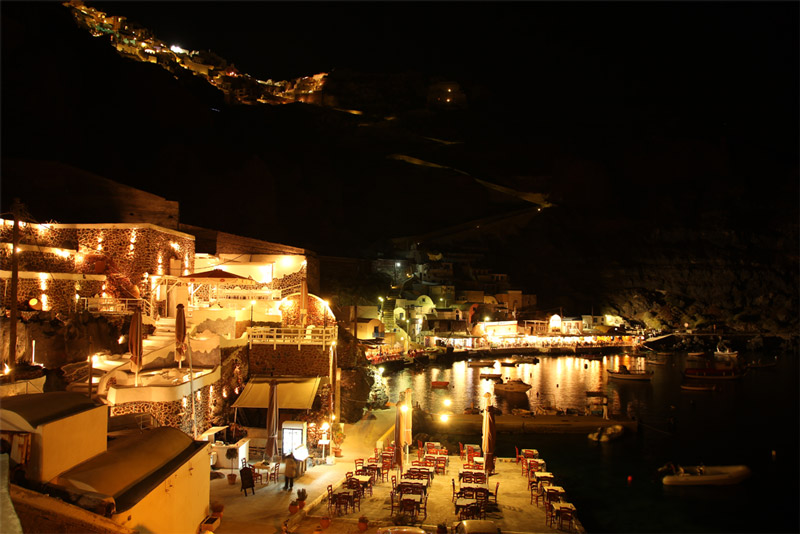
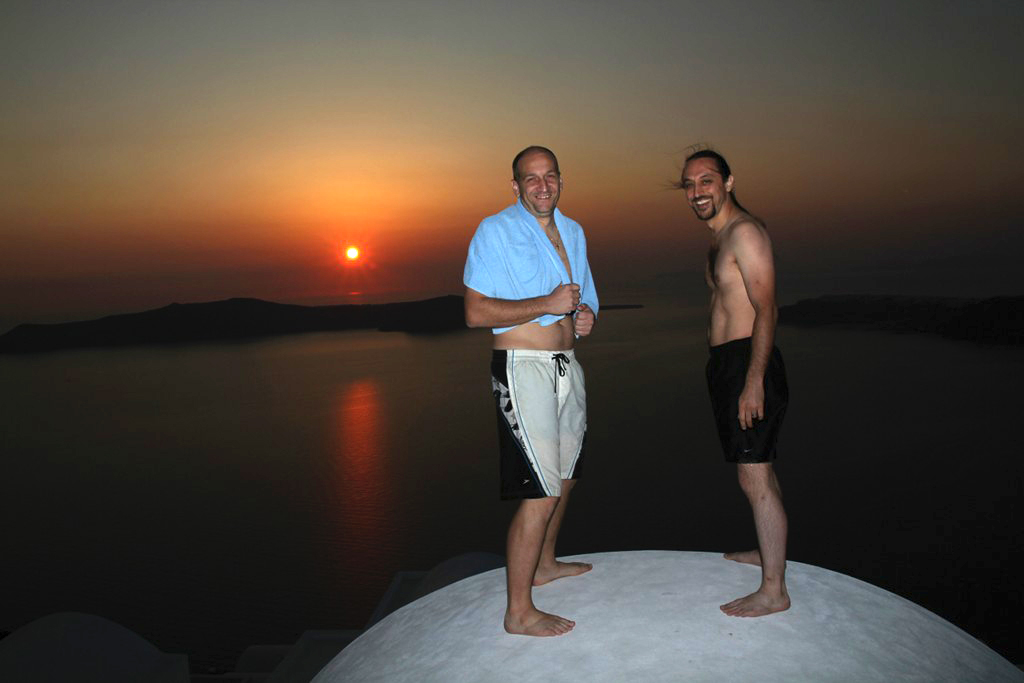
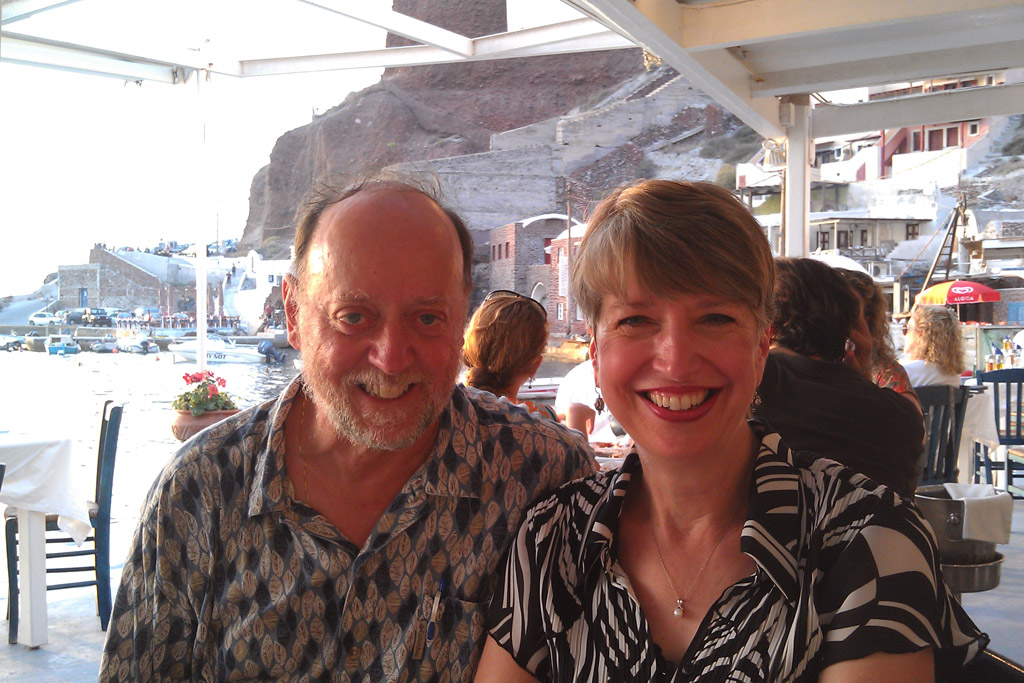


EuroMPI is the primary meeting where the users and developers of MPI and other message-passing programming environments have the opportunity to meet each other and share ideas and experiences. This year’s MPI meeting took place in Santorini, Greece where about 75 attendees from all over the world attended some 32 talks and about 10 paper presentations. The event also featured 6 invited talks by prominent figures of the field such as Pete Beckman, George Bosilca (ICL), Sudip Dosanjh, Michael Resch, Torsten Hoefler, and Michael Kagan.
Other ICL’ers in attendance included Jack Dongarra, Anthony Danalis, Tracy Rafferty, and Tracy Lee.
PPAM ’11
This year’s Parallel Processing and Applied Mathematics (PPAM) conference, the ninth in the biennial series, was held in Torun, Poland on September 11-14th, 2011. The conference covered topics in parallel and distributed processing, including theory and applications, and applied mathematics.

Several ICL folks were invited to give talks at PPAM ‘11. Jack Dongarra delivered a keynote about the importance of fault tolerance and autotuning in petascale and exascale applications, and the need for a new software stack to meet the demands of extreme scale computing. Jakub Kurzak, also a keynote speaker, discussed autotuning CPU kernels for the PLASMA and MAGMA libraries. Piotr Luszczek gave a talk on HPL and reducing the time to tune parallel dense linear algebra routines with partial execution and performance modeling. Du Becker, also in attendance, presented a paper on reducing the amount of pivoting in symmetric indefinite systems.

ICL alumnus Hatem Ltaief co-presented a paper with Piotr Luszczek at PPAM ’11, though Piotr claims that Hatem, “mostly posed for pictures.”
Below are some of the photos of Torun from Du Becker’s Flickr Photo Set:
[slickr-flickr id=”76218094@N00″ search=”sets” set=”72157627637644625″ items=”20″ type=”gallery”]
Fall Creek Falls ’11
ICL’s Kiran Kasichayanula and Matt Johnson recently attended the Fall Creek Falls Conference on Virtualizing Energy in Gatlinburg, TN, hosted by the Oak Ridge National Laboratory. The goal of the conference was to explore key obstacles in defining and shaping a national strategy for a focused virtualizing energy effort as HPC moves towards exascale. To this end, the conference brought together experts from university partners, government, and industry to focus on, and discuss in depth, the latest advances and challenges in the computational sciences.
One of the highlights included a dinner presentation and Q&A session given by IBM’s VP and CTO, Dave McQueeney, on the IBM Watson Project and its future implementations in the medical industry.

Kiran and Matt also presented a poster titled “Power Aware Computing on GPGPUs” on behalf of the MAGMA and PAPI project teams. The poster, which discusses power monitoring for hybrid GPU architectures, was on display during a poster session where numerous university and industry collaborators, including representatives from NVIDIA, were on hand to discuss the various applications of the projects.
Recent Releases
PLASMA 2.4.2 Released
The Parallel Linear Algebra for Scalable Multi-core Architectures (PLASMA) 2.4.2 release is now available for download.
This package contains:
- New version of QUARK, removed active waiting and allowed user to bind tasks to a set of cores.
- Installer: Fixed compatibility issues between PLASMA-installer and PGI compiler reported on Kraken by A. Bouteiller.
- Fixed one memory leak with Hwloc.
- Introduced a new kernel for the recursive LU operation on a tile layout, which reduces cache misses.
- Fixed several bugs and introduced new features thanks to people from Fujitsu and NAG :
- The new LU factorization with partial pivoting introduced in release 2.4 is now working on rectangular matrices.
- Added missing functions to Fortran 77 interface.
- Added a new Fortran 90 interface to all LAPACK and Tile interfaces. Asynchronous interface and mixed precision routines are not available yet.
- Fixed arguments order in header files to fit implementation.
See the software page to download the tarball.
Interview

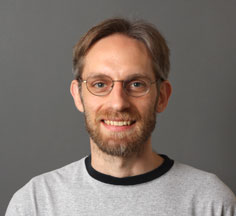
Mark Gates
Where are you from, originally?
I was born in Colorado, among tall mountains. We soon moved to Illinois, in the Chicago suburbs near Argonne, where I grew up among flat corn fields. I’m grateful now to have moved back to the mountains.
Can you summarize your educational background?
I received my B.S. in computer science from the University of Illinois, worked for a few years, then returned to University of Illinois for my M.S. and Ph.D. My graduate work, advised by Professor Mike Heath, focused on scientific computing, specifically with applications in mechanical engineering.
Where did you work before joining ICL?
Besides grad school, I worked for two years at NCSA on high-performance wide-area networking, and a couple internships at Lawrence Livermore National Lab working on a parallel sparse ILUT factorization and a Python interface to ODE solvers. I also worked for several years at IVP, a small book publisher.
Tell us how you first learned about ICL.
From my research, I was familiar with LAPACK, so when looking for jobs last year, I looked up who was developing LAPACK. About the same time I saw Jack’s job posting in the NA Digest.
What made you want to work for ICL?
I appreciate that production quality code is developed here and released, so that the research done here gets widely used and has a positive impact in many other groups. I am impressed by the approaches to achieving high performance and effective parallelism, and look forward to learning more about the techniques and contributing to them.
What are your interests/hobbies outside work?
I enjoy hiking, baking, reading science fiction and fantasy books, road and mountain bicycling, and wood working. Some of these (like wood working) have largely been on hold during grad school due to limited space and availability, so I look forward to doing more now. About half of my furniture I built myself.
Tell us something about yourself that might surprise people.
我會說一點兒中文。(I can speak a little Chinese.) That was my “fun” class in grad school. I’m involved with several international organizations, both at Illinois and here in Tennessee. Just before starting at ICL, I had the great opportunity to teach a course on MPI at U. of I.’s research center in Singapore, and along the way was also able to visit friends in Tokyo and Hong Kong (though my Mandarin was of very little use on that trip).
What will you be working on while at ICL?
I am working with the PLASMA and MAGMA groups. At the moment I’ve started to look at the eigenvalue solvers.
If you weren’t working at ICL, where would you like to be working and why?
One of the national labs, preferably out west like NREL, Sandia, or Los Alamos, for a couple reasons. First, to be able to use my computer skills to advance science. Second, to live in an area with great scenery, outdoor activities, and be close to my family who have returned to Colorado.


