
News and Announcements
Titan Summit at ORNL
The Oak Ridge Leadership Computing Facility (OLCF) hosted a summit on August 15-17th, at Oak Ridge National Laboratory (ORNL), which provided a forum for current and prospective users to meet with OLCF staff and industry vendors to discuss Titan, the next-generation leadership-class computational resource. Titan, built by Cray, will utilize the upcoming “Kepler” GPU co-processor from NVIDIA.
Users were encouraged to present their application plans for exascale computing, and our own Stan Tomov presented ICL’s efforts with the MAGMA project. His talk, “MAGMA: LAPACK for HPC on heterogeneous architectures,” covered what ICL provides, through MAGMA, for the exascale software stack on heterogeneous architectures. In particular, the talk focused on two of MAGMA’s strengths: highly optimized kernels as building blocks of HPC applications, and runtime systems that will take “sequential-like” algorithms, described in terms of computational tasks, and efficiently schedule their execution on large scale parallel systems.
CScADS Workshop ’11

This year’s Center for Scalable Application Development Software (CScADS) workshops were held at Lake Tahoe, in the Granlibakken lodge. Jack Dongarra, Jakub Kurzak, and Dan Terpstra all attended workshops. Jack gave the introduction talk for the Autotunning workshop and Jakub gave a talk about autotuning GEMMs for Fermi (ASTRA). Dan gave a talk about porting PAPI to the cloud, Performance Tools Workshop.
There were many others in attendance, of course, including Clint Whaley from the University of Texas, Jim Demmel from Berkeley, and Rich Vuduc from Georgia Tech. The HPC industry was also well represented with Michael Garland from NVIDIA, John Levesque and Keita Teranishi from Cray, and Greg Henry from Intel. Clint Whaley, Greg Henry and Keita Teranishi are ICL alumni.
ICL Annual Retreat
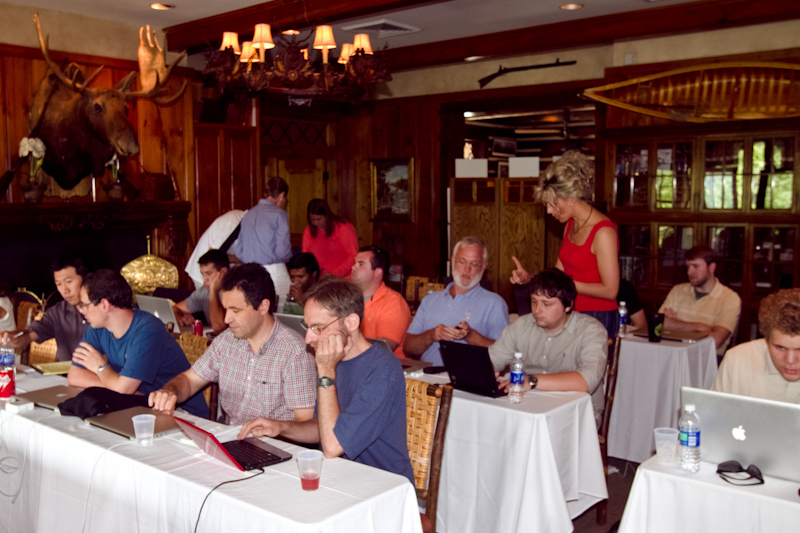
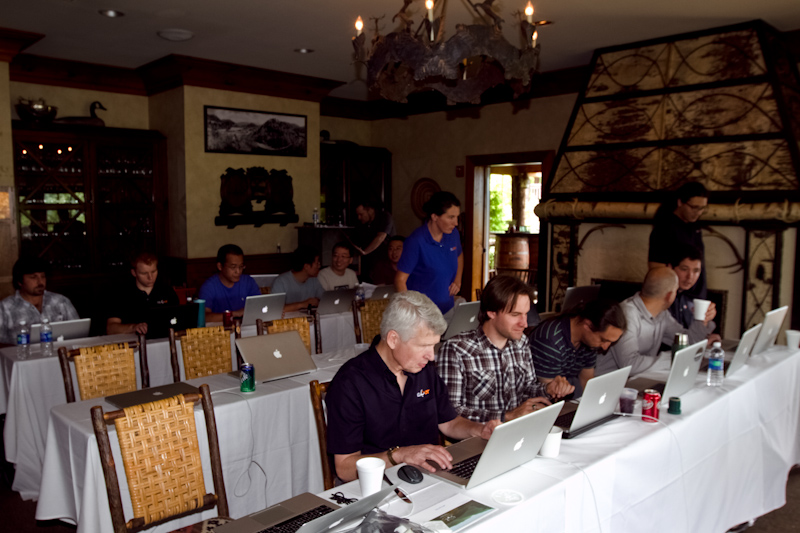
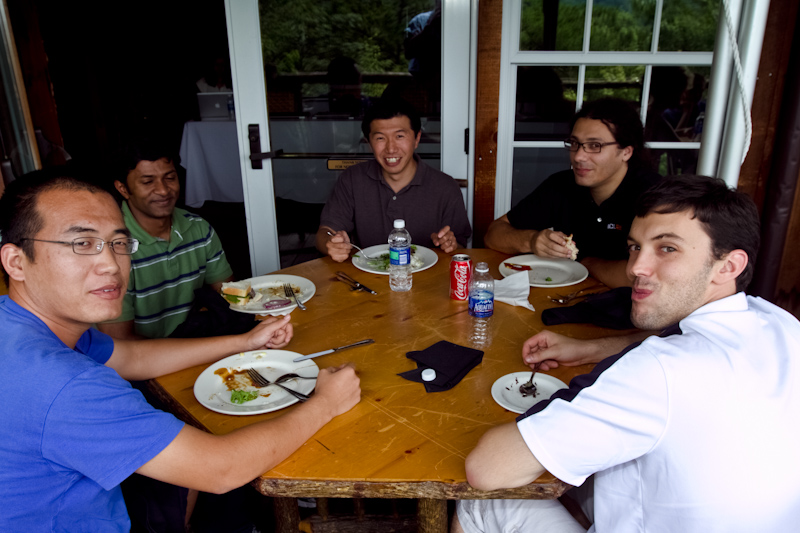
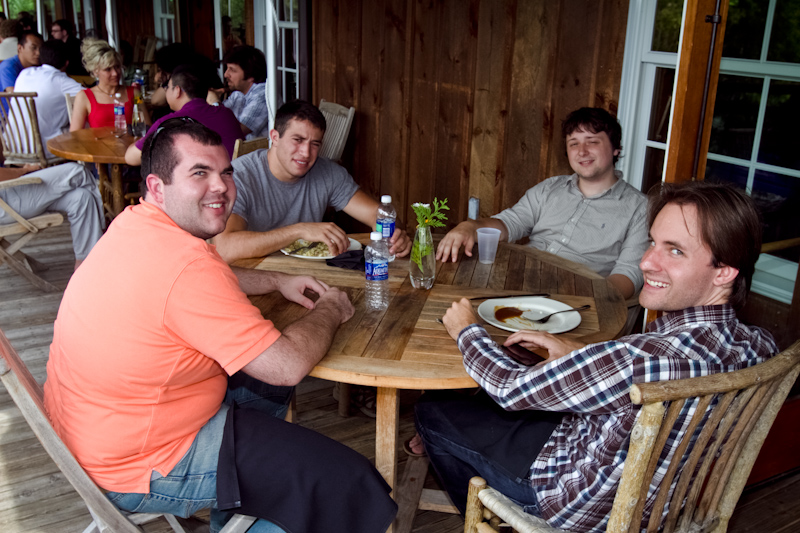
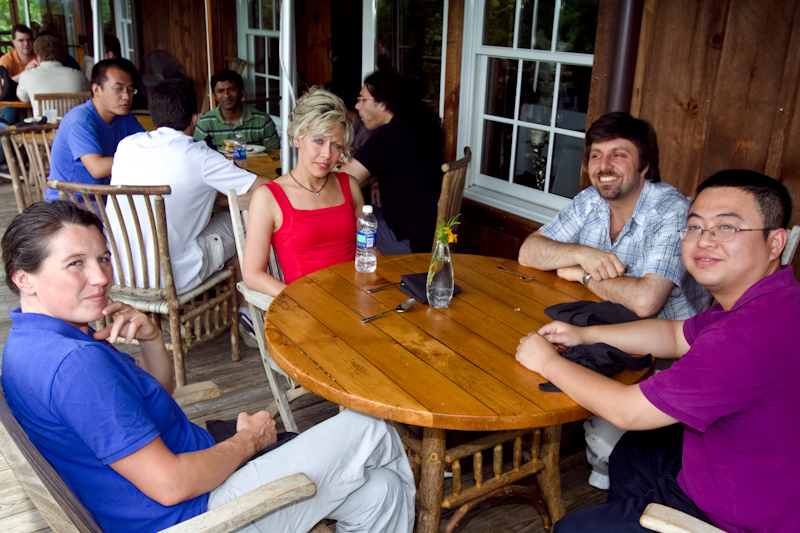
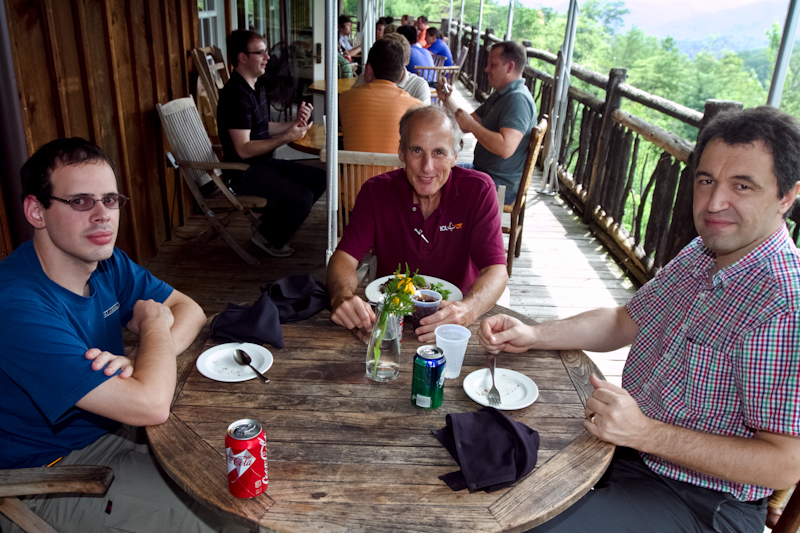
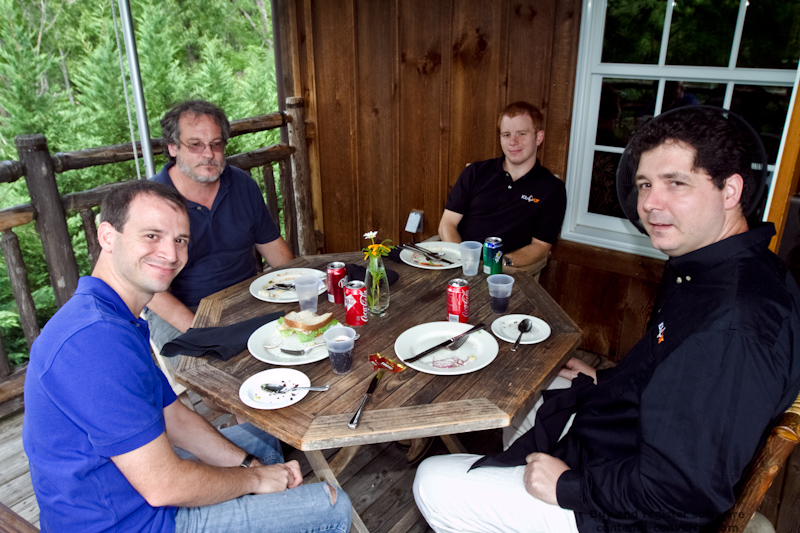
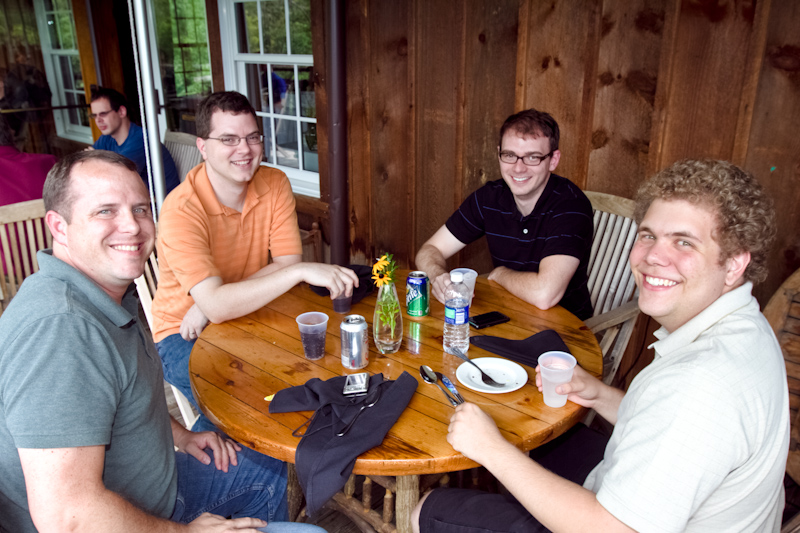
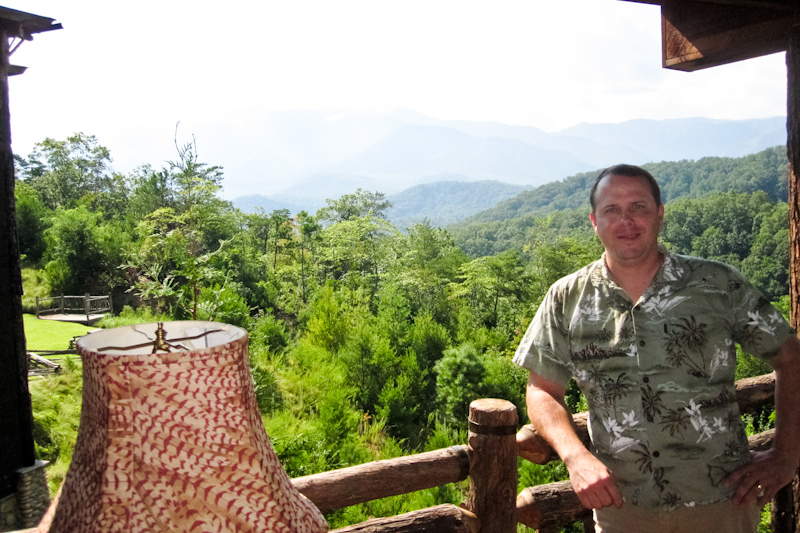
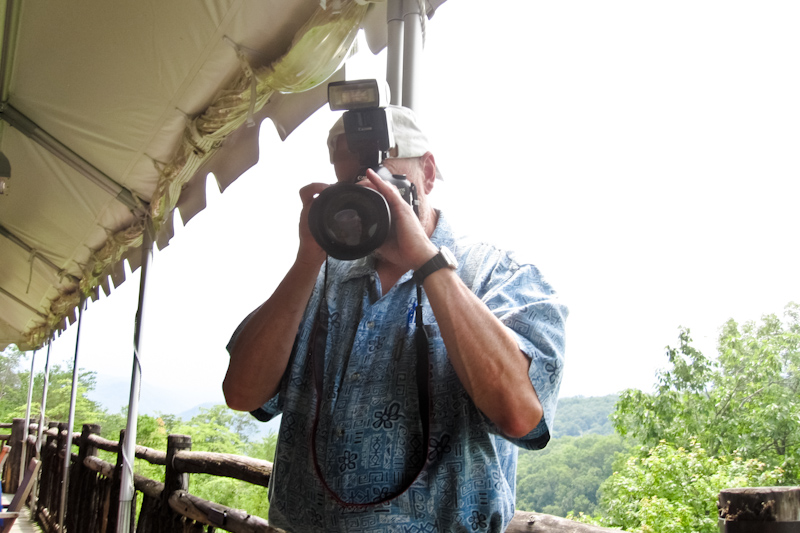
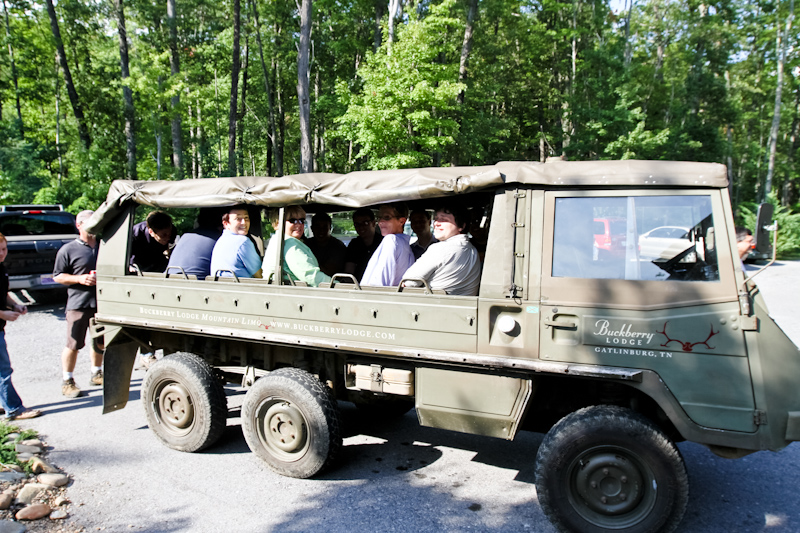
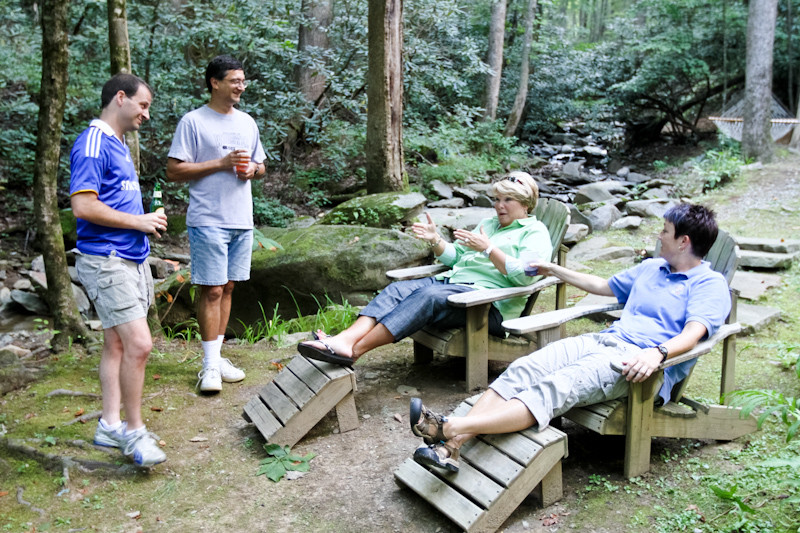
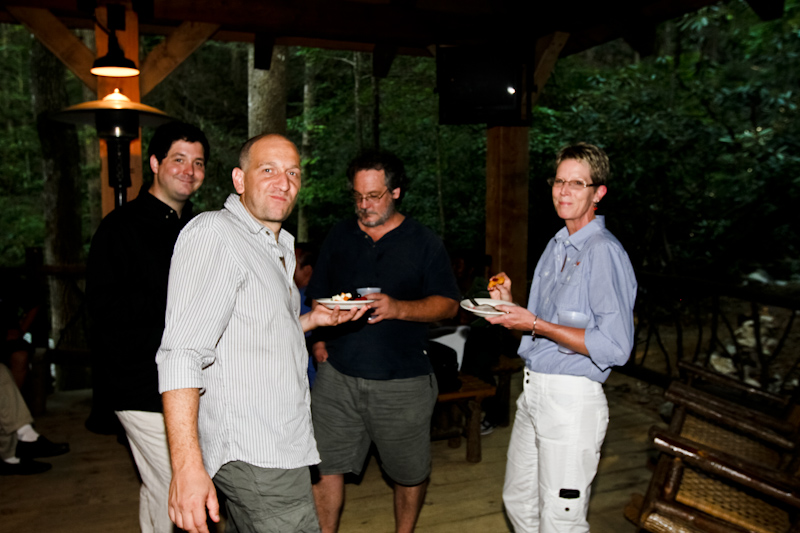
This year’s ICL retreat was held on August 11th and 12th in Gatlinburg, Tennessee. Over forty ICL folks were present and more than 30 talks were given about ICL research and operations. There were many new faces, alongside longtime ICL veterans, who enjoyed the new surroundings of the Lodge at Buckberry Creek in the Great Smoky Mountains.







Computational Science Kickoff
 On Friday, August 19th, leaders of our campus computational science community invited students, faculty, and staff to the University Center’s Shiloh Room to discover some of the exciting developments in computational science at UTK during the Computational Science Kickoff. The kickoff was a success, and those in attendance began the academic year by learning about the exciting intellectual, educational, and professional opportunities in computational science and engineering.
China: A Quick Ascent
Jack Dongarra was interviewed on the August 2nd episode of NPR’s All Things Considered. During the episode, Jack weighed in on China’s Tianhe-1A supercomputer—the fastest supercomputer in the world from November 2010 to June 2011—and China’s new-found position as a formidable contender in high performance computing.
The striking thing is, back in 2001, China had zero computers on the [Top 500] list. So China very quickly grew its high-performance computing capabilities, and are now No. 2 on the list in terms of the number of high-performance computers deployed.
But hardware isn’t everything. As Jack explains, the machine is nothing without the proper software:
This is a critical thing. They have a race car; now you have to build something around the race car to effectively use it. You can’t just invest in hardware. You need to make an investment across the board. Sometimes these ecosystems are out of balance, and as a result of that, the computer would be very hard to use.
Recent Releases
MAGMA 1.0
MAGMA 1.0 is now available. This release includes the MAGMA sources. MAGMA 1.0 is intended for a single CUDA enabled NVIDIA GPU. It extends version 0.2 by adding support for the Fermi GPUs. For more details see the MAGMA 1.0 release notes and the MAGMA 1.0 presentation.
Included are routines for the following algorithms:
- LU, QR, and Cholesky factorizations in both real and complex arithmetic (single and double);
- Hessenberg, bidiagonal, and tridiagonal reductions in both real and complex arithmetic (single and double);
- Linear solvers based on LU, QR, and Cholesky in both real and complex arithmetic (single and double);
- Eigen and singular value problem solvers in both real and complex arithmetic (single and double);
- Generalized Hermitian-definite eigenproblem solvers;
- Mixed-precision iterative refinement solvers based on LU, QR, and Cholesky in both real and complex arithmetic;
- MAGMA BLAS in real arithmetic (single and double), including gemm, gemv, symv, and trsm.
See the software section for a download link.
Interview

Ichitaro Yamazaki
Where are you from, originally?
I am originally from from Chiba, a small city in Japan. I moved to Northern California with my family during my senior year of high school. Last fall, we went back to Japan so that my grandma could meet her first great-grandson. We also enjoyed visiting a few temples, hiking up beautiful mountains, and of course eating good Japanese food.
Can you summarize your educational background?
After graduating from high school, I started out at Foothill College, and then I transferred to UCLA with a major in Business Administration. I graduated from UCLA in 2000 with a B.S. in Mathematics of Computation. For two years after graduation, I worked for a couple of different start-ups in Silicon Valley. Then, I entered graduate school at the University of California, Davis, and I earned my Ph.D. in Computer Science in 2008.
Where did you work before joining ICL?
I was a postdoc in the Scientific Computing Group at Lawrence Berkeley National Laboratory, working on two SciDAC projects, TOPS and COMPASS. Our main objective was to develop a parallel solver for large-scale sparse linear systems of equations, and the application of our main interest was to design accelerator cavities and fusion devices.
Tell us how you first learned about ICL. What made you want to work for ICL?
I had met several people from ICL at conferences. Everyone seemed very nice and their projects at ICL interested me. I was especially impressed by how passionate you are about your jobs. ICL seemed like a great fit for me, so I decided to make the big jump from California.
What are your interests/hobbies outside work?
Right now, I spend most of my free time having adventures with my wife and my one-year-old son. We love outdoor activities like hiking, so we are looking forward to visiting the Smoky Mountains. I am also hoping to get back into playing sports. My favorite sport is tennis, so I am thinking of signing up for IM tennis, or perhaps racquetball, this quarter.
Tell us something about yourself that might surprise people.
My wife and I love to travel. We went to Guatemala for our honeymoon, and the airlines ended up losing our luggage. For most of the trip we literally had nothing but the clothes on our backs. We were hiking around in the middle of the jungle in sandals and going to five-star restaurants in sweatpants, but we still had a great time!
What are you working on while at ICL?
I have not decided on an exact project yet, but I will be working mainly with the Linear Algebra Group.
If you weren’t working at ICL, where would you like to be working and why?
I like the outdoors, so it might be nice to be a forest ranger in a state or national park. My brother-in-law is in this line of work in Oregon, and it seems like an exciting job.


