PAPI 7.1.0.0
Loading...
Searching...
No Matches
pfmlib_common.c File Reference
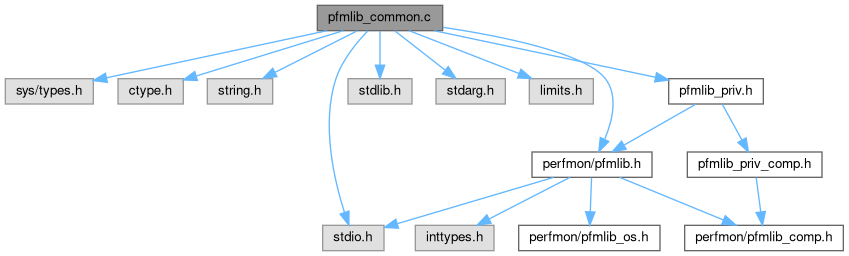
Include dependency graph for pfmlib_common.c:

Go to the source code of this file.

Macros

#define _GNU_SOURCE   /* for getline */
 

Functions

static void pfm_check_debug_env (void)
 
int pfm_initialize (void)
 
int pfm_set_options (pfmlib_options_t *opt)
 
int pfm_get_pmu_name_bytype (int type, char *name, size_t maxlen)
 
int pfm_list_supported_pmus (int(*pf)(const char *fmt,...))
 
int pfm_get_pmu_name (char *name, int maxlen)
 
int pfm_get_pmu_type (int *type)
 
int pfm_is_pmu_supported (int type)
 
int pfm_force_pmu (int type)
 
int pfm_find_event_byname (const char *n, unsigned int *idx)
 
int pfm_find_event_bycode (int code, unsigned int *idx)
 
int pfm_find_event (const char *v, unsigned int *ev)
 
int pfm_find_event_bycode_next (int code, unsigned int i, unsigned int *next)
 
static int pfm_do_find_event_mask (unsigned int ev, const char *str, unsigned int *mask_idx)
 
int pfm_find_event_mask (unsigned int ev, const char *str, unsigned int *mask_idx)
 
static int pfm_check_duplicates (pfmlib_event_t *e, unsigned int u)
 
static int pfm_add_numeric_masks (pfmlib_event_t *e, const char *str)
 
int pfm_get_event_name (unsigned int i, char *name, size_t maxlen)
 
int pfm_get_event_code (unsigned int i, int *code)
 
int pfm_get_event_code_counter (unsigned int i, unsigned int cnt, int *code)
 
int pfm_get_event_counters (unsigned int i, pfmlib_regmask_t *counters)
 
int pfm_get_event_mask_name (unsigned int ev, unsigned int mask, char *name, size_t maxlen)
 
int pfm_get_num_events (unsigned int *count)
 
int pfm_get_num_event_masks (unsigned int ev, unsigned int *count)
 
int pfm_dispatch_events (pfmlib_input_param_t *inp, void *model_in, pfmlib_output_param_t *outp, void *model_out)
 
int pfm_get_num_counters (unsigned int *num)
 
int pfm_get_num_pmcs (unsigned int *num)
 
int pfm_get_num_pmds (unsigned int *num)
 
int pfm_get_impl_pmcs (pfmlib_regmask_t *impl_pmcs)
 
int pfm_get_impl_pmds (pfmlib_regmask_t *impl_pmds)
 
int pfm_get_impl_counters (pfmlib_regmask_t *impl_counters)
 
int pfm_get_hw_counter_width (unsigned int *width)
 
char * pfm_strerror (int code)
 
int pfm_get_version (unsigned int *version)
 
int pfm_get_max_event_name_len (size_t *len)
 
int pfm_get_cycle_event (pfmlib_event_t *e)
 
int pfm_get_inst_retired_event (pfmlib_event_t *e)
 
int pfm_get_event_description (unsigned int i, char **str)
 
int pfm_get_event_mask_description (unsigned int event_idx, unsigned int mask_idx, char **desc)
 
int pfm_get_event_mask_code (unsigned int event_idx, unsigned int mask_idx, unsigned int *code)
 
int pfm_get_full_event_name (pfmlib_event_t *e, char *name, size_t maxlen)
 
int pfm_find_full_event (const char *v, pfmlib_event_t *e)
 

Variables

static pfm_pmu_support_tsupported_pmus []
 
pfm_config_t pfm_config
 
int forced_pmu = PFMLIB_NO_PMU
 
static char * pfmlib_err_list []
 
static size_t pfmlib_err_count = sizeof(pfmlib_err_list)/sizeof(char *)
 

Macro Definition Documentation

◆ _GNU_SOURCE

#define _GNU_SOURCE   /* for getline */

Definition at line 25 of file pfmlib_common.c.

Function Documentation

◆ pfm_add_numeric_masks()

static int pfm_add_numeric_masks ( pfmlib_event_t e,
const char *  str 
)
static

Definition at line 500 of file pfmlib_common.c.
501{
502 unsigned int i, j, c;
503 unsigned int num_masks = 0;
504 unsigned long mask_val = -1, m = 0;
505 char *endptr = NULL;
506 int ret = PFMLIB_ERR_UMASK;
507
508 /* empty mask name */
509 if (*str == '\0')
510 return PFMLIB_ERR_UMASK;
511
512 num_masks = pfm_num_masks(e->event);
513
514 /*
515 * add to the existing list of unit masks
516 */
517 j = e->num_masks;
518
519 /*
520 * use unsigned long to benefit from radix wildcard
521 * and error checking of strtoul()
522 */
523 mask_val = strtoul(str, &endptr, 0);
524 if (endptr && *endptr != '\0')
525 return PFMLIB_ERR_UMASK;
526
527 /*
528 * look for a numerical match
529 */
530 for (i = 0; i < num_masks; i++) {
531 pfm_current->get_event_mask_code(e->event, i, &c);
532 if ((mask_val & c) == (unsigned long)c) {
533 /* ignore duplicates */
536 ret = PFMLIB_ERR_TOOMANY;
537 break;
538 }
539 e->unit_masks[j++] = i;
540 }
541 m |= c;
542 }
543 }
544
545 /*
546 * all bits accounted for
547 */
548 if (mask_val == m) {
549 e->num_masks = j;
550 return PFMLIB_SUCCESS;
551 }
552
553 /*
554 * extra bits left over;
555 * reset and flag error
556 */
557 for (i = e->num_masks; i < j; i++)
558 e->unit_masks[i] = 0;
559
560 return ret;
561}
int i
static double c[MATRIX_SIZE][MATRIX_SIZE]
Definition: libmsr_basic.c:40
#define PFMLIB_ERR_UMASK
Definition: pfmlib.h:306
#define PFMLIB_SUCCESS
Definition: pfmlib.h:283
#define PFMLIB_MAX_MASKS_PER_EVENT
Definition: pfmlib.h:80
#define PFMLIB_ERR_TOOMANY
Definition: pfmlib.h:295
static int pfm_check_duplicates(pfmlib_event_t *e, unsigned int u)
#define pfm_current
Definition: pfmlib_priv.h:78
static unsigned int pfm_num_masks(int e)
Definition: pfmlib_priv.h:125
unsigned int num_masks
Definition: pfmlib.h:90
unsigned int unit_masks[PFMLIB_MAX_MASKS_PER_EVENT]
Definition: pfmlib.h:89
unsigned int event
Definition: pfmlib.h:86
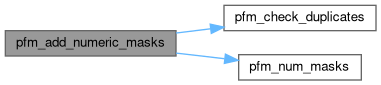
Here is the call graph for this function:
Here is the caller graph for this function:

◆ pfm_check_debug_env()

static void pfm_check_debug_env ( void  )
static

Definition at line 116 of file pfmlib_common.c.
117{
118 char *str;
119
121
122 str = getenv("LIBPFM_VERBOSE");
123 if (str && *str >= '0' && *str <= '9') {
124 pfm_config.options.pfm_verbose = *str - '0';
126 }
127
128 str = getenv("LIBPFM_DEBUG");
129 if (str && *str >= '0' && *str <= '9') {
130 pfm_config.options.pfm_debug = *str - '0';
132 }
133
134 str = getenv("LIBPFM_DEBUG_STDOUT");
135 if (str)
137
138 str = getenv("LIBPFM_FORCE_PMU");
139 if (str)
140 forced_pmu = atoi(str);
141}
FILE * stdout
FILE * stderr
pfm_config_t pfm_config
int forced_pmu
FILE * libpfm_fp
Definition: pfmlib_priv.c:42
int options_env_set
Definition: pfmlib_priv.h:69
pfmlib_options_t options
Definition: pfmlib_priv.h:67
unsigned int pfm_verbose
Definition: pfmlib.h:139
unsigned int pfm_debug
Definition: pfmlib.h:138
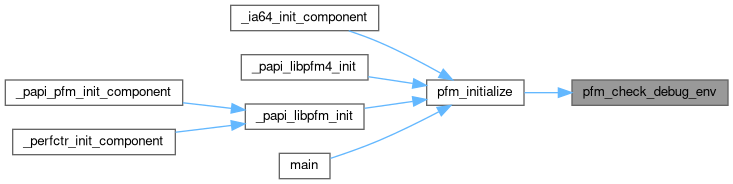
Here is the caller graph for this function:

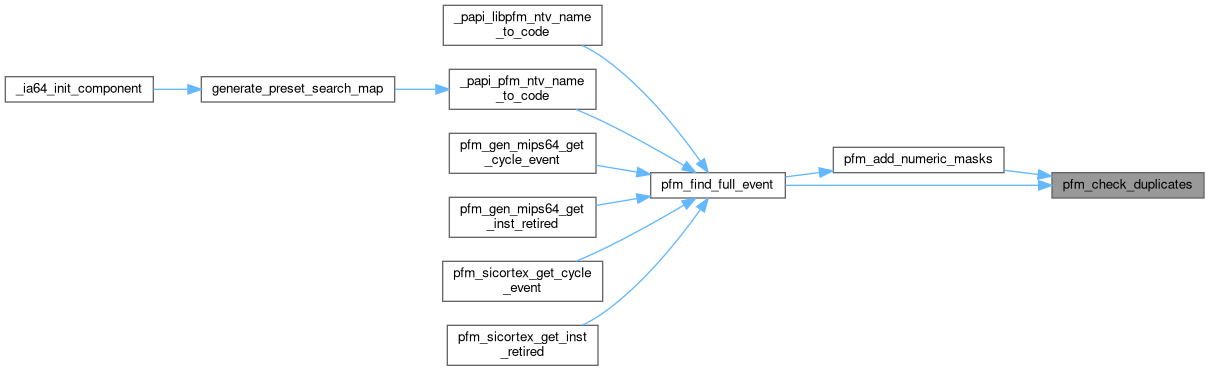
◆ pfm_check_duplicates()

static int pfm_check_duplicates ( pfmlib_event_t e,
unsigned int  u 
)
inlinestatic

Definition at line 488 of file pfmlib_common.c.
489{
490 unsigned int j;
491
492 for(j=0; j < e->num_masks; j++) {
493 if (e->unit_masks[j] == u)
494 return PFMLIB_ERR_UMASK;
495 }
496 return PFMLIB_SUCCESS;
497}
Here is the caller graph for this function:

◆ pfm_dispatch_events()

int pfm_dispatch_events ( pfmlib_input_param_t inp,
void *  model_in,
pfmlib_output_param_t outp,
void *  model_out 
)

Definition at line 721 of file pfmlib_common.c.

724{
725 unsigned count;
726 unsigned int i;
727 int ret;
728
729 if (PFMLIB_INITIALIZED() == 0)
730 return PFMLIB_ERR_NOINIT;
731
732 /* at least one input and one output set must exist */
733 if (!inp && !model_in)
734 return PFMLIB_ERR_INVAL;
735 if (!outp && !model_out)
736 return PFMLIB_ERR_INVAL;
737
738 if (!inp)
739 count = 0;
740 else if (inp->pfp_dfl_plm == 0)
741 /* the default priv level must be set to something */
742 return PFMLIB_ERR_INVAL;
743 else if (inp->pfp_event_count >= PFMLIB_MAX_PMCS)
744 return PFMLIB_ERR_INVAL;
745 else if (inp->pfp_event_count > pfm_current->num_cnt)
746 return PFMLIB_ERR_NOASSIGN;
747 else
748 count = inp->pfp_event_count;
749
750 /*
751 * check that event and unit masks descriptors are correct
752 */
753 for (i=0; i < count; i++) {
754 ret = __pfm_check_event(inp->pfp_events+i);
755 if (ret != PFMLIB_SUCCESS)
756 return ret;
757 }
758
759 /* reset output data structure */
760 if (outp)
761 memset(outp, 0, sizeof(*outp));
762
763 return pfm_current->dispatch_events(inp, model_in, outp, model_out);
764}
static long count
#define PFMLIB_MAX_PMCS
Definition: pfmlib.h:41
#define PFMLIB_ERR_INVAL
Definition: pfmlib.h:285
#define PFMLIB_ERR_NOINIT
Definition: pfmlib.h:286
#define PFMLIB_ERR_NOASSIGN
Definition: pfmlib.h:288
int __pfm_check_event(pfmlib_event_t *e)
Definition: pfmlib_priv.c:65
#define PFMLIB_INITIALIZED()
Definition: pfmlib_priv.h:72
unsigned int pfp_dfl_plm
Definition: pfmlib.h:110
pfmlib_event_t pfp_events[PFMLIB_MAX_PMCS]
Definition: pfmlib.h:113
unsigned int pfp_event_count
Definition: pfmlib.h:109
Here is the call graph for this function:
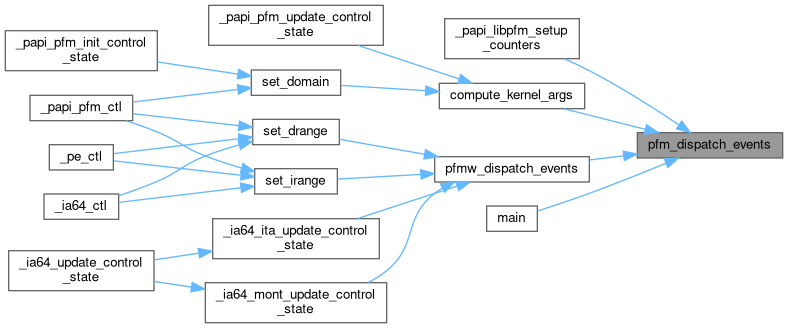
Here is the caller graph for this function:

◆ pfm_do_find_event_mask()

static int pfm_do_find_event_mask ( unsigned int  ev,
const char *  str,
unsigned int mask_idx 
)
static

Definition at line 437 of file pfmlib_common.c.

438{
439 unsigned int i, c, num_masks = 0;
440 unsigned long mask_val = -1;
441 char *endptr = NULL;
442 char *mask_name;
443
444 /* empty mask name */
445 if (*str == '\0')
446 return PFMLIB_ERR_UMASK;
447
448 num_masks = pfm_num_masks(ev);
449 for (i = 0; i < num_masks; i++) {
450 mask_name = pfm_current->get_event_mask_name(ev, i);
451 if (!mask_name)
452 continue;
453 if (strcasecmp(mask_name, str))
454 continue;
455 *mask_idx = i;
456 return PFMLIB_SUCCESS;
457 }
458 /* don't give up yet; check for a exact numerical value */
459 mask_val = strtoul(str, &endptr, 0);
460 if (mask_val != ULONG_MAX && endptr && *endptr == '\0') {
461 for (i = 0; i < num_masks; i++) {
462 pfm_current->get_event_mask_code(ev, i, &c);
463 if (mask_val == c) {
464 *mask_idx = i;
465 return PFMLIB_SUCCESS;
466 }
467 }
468 }
469 return PFMLIB_ERR_UMASK;
470}
Here is the call graph for this function:
Here is the caller graph for this function:

◆ pfm_find_event()

int pfm_find_event ( const char *  v,
unsigned int ev 
)

Definition at line 388 of file pfmlib_common.c.

389{
390 unsigned long number;
391 char *endptr = NULL;
392 int ret = PFMLIB_ERR_INVAL;
393
394 if (PFMLIB_INITIALIZED() == 0)
395 return PFMLIB_ERR_NOINIT;
396
397 if (v == NULL || ev == NULL)
398 return PFMLIB_ERR_INVAL;
399
400 if (isdigit((int)*v)) {
401 number = strtoul(v,&endptr, 0);
402 /* check for errors */
403 if (*endptr!='\0')
404 return PFMLIB_ERR_INVAL;
405
406 if (number <= INT_MAX) {
407 int the_int_number = (int)number;
408 ret = pfm_find_event_bycode(the_int_number, ev);
409 }
410 } else
411 ret = pfm_find_event_byname(v, ev);
412 return ret;
413}
int pfm_find_event_bycode(int code, unsigned int *idx)
int pfm_find_event_byname(const char *n, unsigned int *idx)
int
Definition: sde_internal.h:89
Here is the call graph for this function:
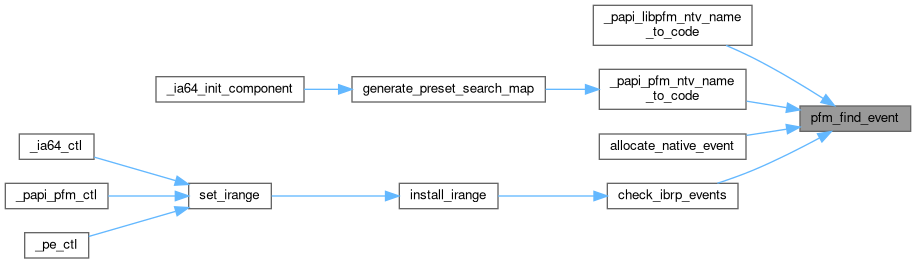
Here is the caller graph for this function:

◆ pfm_find_event_bycode()

int pfm_find_event_bycode ( int  code,
unsigned int idx 
)

Definition at line 351 of file pfmlib_common.c.

352{
353 pfmlib_regmask_t impl_cnt;
354 unsigned int i, j, num_cnt;
355 int code2;
356
357 if (PFMLIB_INITIALIZED() == 0) return PFMLIB_ERR_NOINIT;
358
359 if (idx == NULL) return PFMLIB_ERR_INVAL;
360
361 if (pfm_current->flags & PFMLIB_MULT_CODE_EVENT) {
362 pfm_current->get_impl_counters(&impl_cnt);
363 num_cnt = pfm_current->num_cnt;
364
365 for(i=0; i < pfm_current->pme_count; i++) {
366 for(j=0; num_cnt; j++) {
367 if (pfm_regmask_isset(&impl_cnt, j)) {
368 pfm_current->get_event_code(i, j, &code2);
369 if (code2 == code)
370 goto found;
371 num_cnt--;
372 }
373 }
374 }
375 } else {
376 for(i=0; i < pfm_current->pme_count; i++) {
377 pfm_current->get_event_code(i, PFMLIB_CNT_FIRST, &code2);
378 if (code2 == code) goto found;
379 }
380 }
381 return PFMLIB_ERR_NOTFOUND;
382found:
383 *idx = i;
384 return PFMLIB_SUCCESS;
385}
#define PFMLIB_ERR_NOTFOUND
Definition: pfmlib.h:287
static int pfm_regmask_isset(pfmlib_regmask_t *h, unsigned int b)
Definition: pfmlib.h:313
#define PFMLIB_MULT_CODE_EVENT
Definition: pfmlib_priv.h:60
#define PFMLIB_CNT_FIRST
Definition: pfmlib_priv.h:62
Here is the call graph for this function:
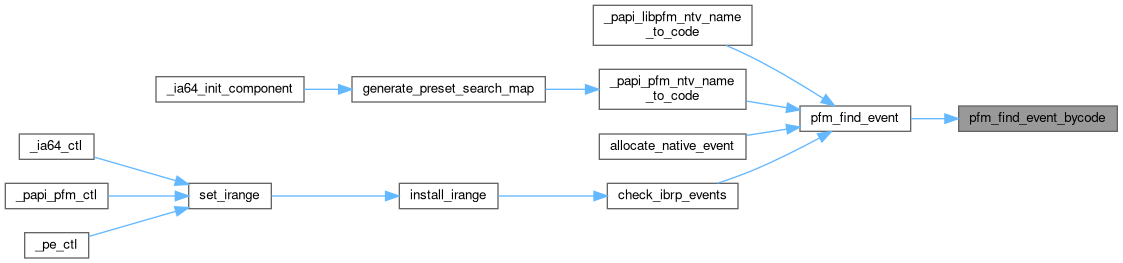
Here is the caller graph for this function:

◆ pfm_find_event_bycode_next()

int pfm_find_event_bycode_next ( int  code,
unsigned int  i,
unsigned int next 
)

Definition at line 416 of file pfmlib_common.c.

417{
418 int code2;
419
420 if (PFMLIB_INITIALIZED() == 0)
421 return PFMLIB_ERR_NOINIT;
422
423 if (!next)
424 return PFMLIB_ERR_INVAL;
425
426 for(++i; i < pfm_current->pme_count; i++) {
427 pfm_current->get_event_code(i, PFMLIB_CNT_FIRST, &code2);
428 if (code2 == code) goto found;
429 }
430 return PFMLIB_ERR_NOTFOUND;
431found:
432 *next = i;
433 return PFMLIB_SUCCESS;
434}

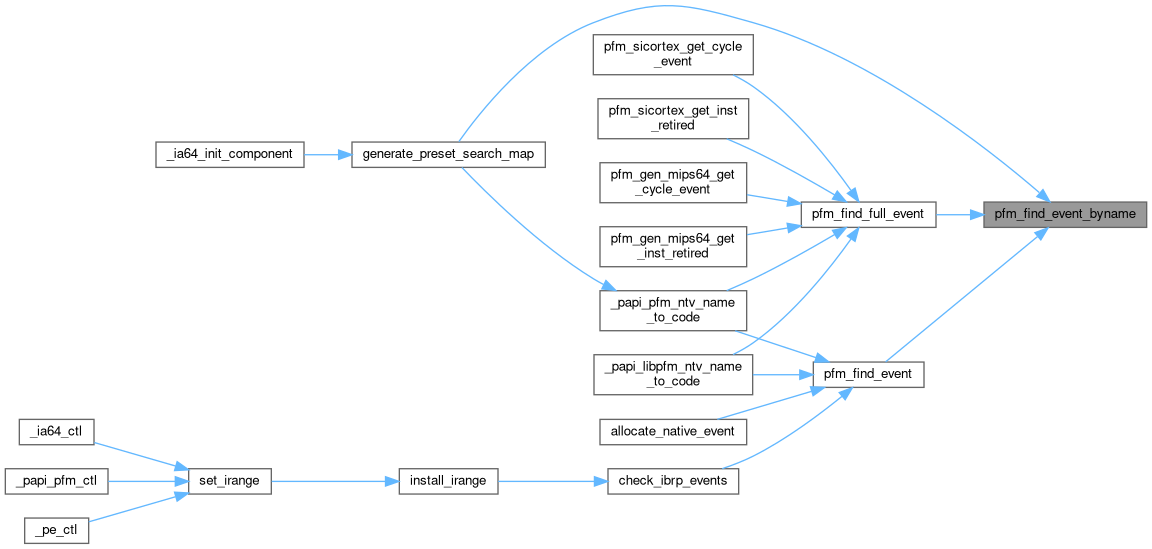
◆ pfm_find_event_byname()

int pfm_find_event_byname ( const char *  n,
unsigned int idx 
)

Definition at line 310 of file pfmlib_common.c.
311{
312 char *p, *e;
313 unsigned int i;
314 size_t len;
315
316 if (PFMLIB_INITIALIZED() == 0)
317 return PFMLIB_ERR_NOINIT;
318
319 if (n == NULL || idx == NULL)
320 return PFMLIB_ERR_INVAL;
321
322 /*
323 * this function ignores any ':' separator
324 */
325 p = strchr(n, ':');
326 if (!p)
327 len = strlen(n);
328 else
329 len = p - n;
330
331 /*
332 * we do case insensitive comparisons
333 *
334 * event names must match completely
335 */
336 for(i=0; i < pfm_current->pme_count; i++) {
337 e = pfm_current->get_event_name(i);
338 if (!e)
339 continue;
340 if (!strncasecmp(e, n, len)
341 && len == strlen(e))
342 goto found;
343 }
344 return PFMLIB_ERR_NOTFOUND;
345found:
346 *idx = i;
347 return PFMLIB_SUCCESS;
348}
Here is the caller graph for this function:

◆ pfm_find_event_mask()

int pfm_find_event_mask ( unsigned int  ev,
const char *  str,
unsigned int mask_idx 
)

Definition at line 473 of file pfmlib_common.c.

474{
475 if (PFMLIB_INITIALIZED() == 0)
476 return PFMLIB_ERR_NOINIT;
477
478 if (str == NULL || mask_idx == NULL || ev >= pfm_current->pme_count)
479 return PFMLIB_ERR_INVAL;
480
481 return pfm_do_find_event_mask(ev, str, mask_idx);
482}
static int pfm_do_find_event_mask(unsigned int ev, const char *str, unsigned int *mask_idx)
Here is the call graph for this function:

◆ pfm_find_full_event()

int pfm_find_full_event ( const char *  v,
pfmlib_event_t e 
)

Definition at line 1081 of file pfmlib_common.c.

1082{
1083 char *str, *p, *q;
1084 unsigned int j, mask;
1085 int ret = PFMLIB_SUCCESS;
1086
1087 if (PFMLIB_INITIALIZED() == 0)
1088 return PFMLIB_ERR_NOINIT;
1089
1090 if (v == NULL || e == NULL)
1091 return PFMLIB_ERR_INVAL;
1092
1093 memset(e, 0, sizeof(*e));
1094
1095 /*
1096 * must copy string because we modify it when parsing
1097 */
1098 str = strdup(v);
1099 if (!str)
1100 return PFMLIB_ERR_NOMEM;
1101
1102 /*
1103 * find event. this function ignores ':' separator
1104 */
1105 ret = pfm_find_event_byname(str, &e->event);
1106 if (ret)
1107 goto error;
1108
1109 /*
1110 * get number of unit masks for event
1111 */
1112 j = pfm_num_masks(e->event);
1113
1114 /*
1115 * look for colon (unit mask separator)
1116 */
1117 p = strchr(str, ':');
1118
1119 /* If no unit masks available and none specified, we're done */
1120
1121 if ((j == 0) && (p == NULL)) {
1122 free(str);
1123 return PFMLIB_SUCCESS;
1124 }
1125
1126 ret = PFMLIB_ERR_UMASK;
1127 /*
1128 * error if:
1129 * - event has no unit mask and at least one is passed
1130 */
1131 if (p && !j)
1132 goto error;
1133
1134 /*
1135 * error if:
1136 * - event has unit masks, no default unit mask, and none is passed
1137 */
1138 if (j && !p) {
1139 if (pfm_current->has_umask_default
1140 && pfm_current->has_umask_default(e->event)) {
1141 free(str);
1142 return PFMLIB_SUCCESS;
1143 }
1144 goto error;
1145 }
1146
1147 /* skip : */
1148 p++;
1149 /*
1150 * separator is passed but there is nothing behind it
1151 */
1152 if (!*p)
1153 goto error;
1154
1155 /* parse unit masks */
1156 for( q = p; q ; p = q) {
1157
1158 q = strchr(p,':');
1159 if (q)
1160 *q++ = '\0';
1161
1162 /*
1163 * text or exact unit mask value match
1164 */
1165 ret = pfm_do_find_event_mask(e->event, p, &mask);
1166 if (ret == PFMLIB_ERR_UMASK) {
1167 ret = pfm_add_numeric_masks(e, p);
1168 if (ret != PFMLIB_SUCCESS)
1169 break;
1170 } else if (ret == PFMLIB_SUCCESS) {
1171 /*
1172 * ignore duplicates
1173 */
1174 ret = pfm_check_duplicates(e, mask);
1175 if (ret != PFMLIB_SUCCESS) {
1176 ret = PFMLIB_SUCCESS;
1177 continue;
1178 }
1179
1181 ret = PFMLIB_ERR_TOOMANY;
1182 break;
1183 }
1184 e->unit_masks[e->num_masks] = mask;
1185 e->num_masks++;
1186 }
1187 }
1188error:
1189 free(str);
1190 return ret;
1191}
#define PFMLIB_ERR_NOMEM
Definition: pfmlib.h:307
static int pfm_add_numeric_masks(pfmlib_event_t *e, const char *str)
Here is the call graph for this function:
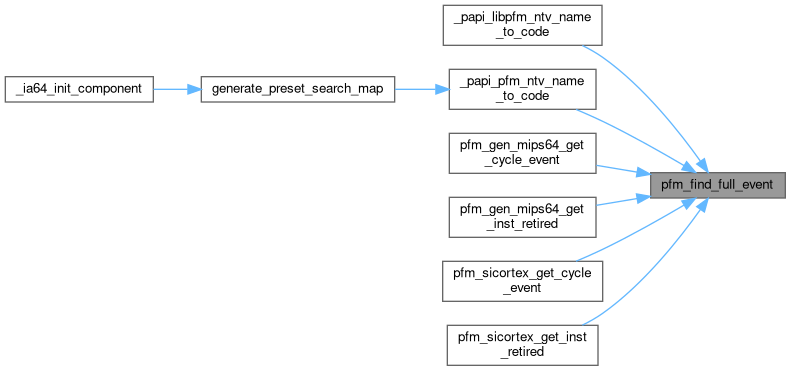
Here is the caller graph for this function:

◆ pfm_force_pmu()

int pfm_force_pmu ( int  type)

Definition at line 294 of file pfmlib_common.c.

295{
297
298 while (*p) {
299 if ((*p)->pmu_type == type) goto found;
300 p++;
301 }
302 return PFMLIB_ERR_NOTSUPP;
303found:
304 pfm_current = *p;
305
306 return PFMLIB_SUCCESS;
307}
uint16_t type
#define PFMLIB_ERR_NOTSUPP
Definition: pfmlib.h:284
static pfm_pmu_support_t * supported_pmus[]
Definition: pfmlib_common.c:39

◆ pfm_get_cycle_event()

int pfm_get_cycle_event ( pfmlib_event_t e)

Definition at line 943 of file pfmlib_common.c.

944{
945 if (PFMLIB_INITIALIZED() == 0)
946 return PFMLIB_ERR_NOINIT;
947 if (e == NULL)
948 return PFMLIB_ERR_INVAL;
949
950 if (!pfm_current->get_cycle_event)
951 return PFMLIB_ERR_NOTSUPP;
952
953 memset(e, 0, sizeof(*e));
954
955 return pfm_current->get_cycle_event(e);
956}
Here is the caller graph for this function:

◆ pfm_get_event_code()

int pfm_get_event_code ( unsigned int  i,
int code 
)

Definition at line 598 of file pfmlib_common.c.

599{
600 if (PFMLIB_INITIALIZED() == 0) return PFMLIB_ERR_NOINIT;
601
602 if (i >= pfm_current->pme_count || code == NULL) return PFMLIB_ERR_INVAL;
603
604 return pfm_current->get_event_code(i, PFMLIB_CNT_FIRST, code);
605
606}
Here is the caller graph for this function:

◆ pfm_get_event_code_counter()

int pfm_get_event_code_counter ( unsigned int  i,
unsigned int  cnt,
int code 
)

Definition at line 609 of file pfmlib_common.c.

610{
611 if (PFMLIB_INITIALIZED() == 0) return PFMLIB_ERR_NOINIT;
612
613 if (i >= pfm_current->pme_count || code == NULL) return PFMLIB_ERR_INVAL;
614
615 return pfm_current->get_event_code(i, cnt, code);
616}
Here is the caller graph for this function:

◆ pfm_get_event_counters()

int pfm_get_event_counters ( unsigned int  i,
pfmlib_regmask_t counters 
)

Definition at line 619 of file pfmlib_common.c.

620{
621 if (PFMLIB_INITIALIZED() == 0) return PFMLIB_ERR_NOINIT;
622
623 if (i >= pfm_current->pme_count) return PFMLIB_ERR_INVAL;
624
625 pfm_current->get_event_counters(i, counters);
626
627 return PFMLIB_SUCCESS;
628}
Here is the caller graph for this function:

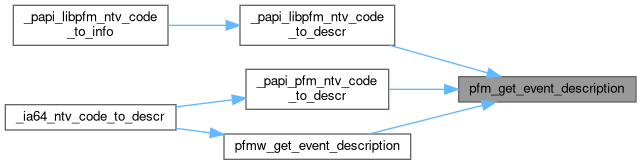
◆ pfm_get_event_description()

int pfm_get_event_description ( unsigned int  i,
char **  str 
)

Definition at line 978 of file pfmlib_common.c.
979{
980 if (PFMLIB_INITIALIZED() == 0) return PFMLIB_ERR_NOINIT;
981
982 if (i >= pfm_current->pme_count || str == NULL) return PFMLIB_ERR_INVAL;
983
984 if (pfm_current->get_event_desc == NULL) {
985 *str = strdup("no description available");
986 return PFMLIB_SUCCESS;
987 }
988 return pfm_current->get_event_desc(i, str);
989}
Here is the caller graph for this function:

◆ pfm_get_event_mask_code()

int pfm_get_event_mask_code ( unsigned int  event_idx,
unsigned int  mask_idx,
unsigned int code 
)

Definition at line 1009 of file pfmlib_common.c.

1010{
1011 if (PFMLIB_INITIALIZED() == 0) return PFMLIB_ERR_NOINIT;
1012
1013 if (event_idx >= pfm_current->pme_count || code == NULL) return PFMLIB_ERR_INVAL;
1014
1015 if (pfm_current->get_event_mask_code == NULL) {
1016 *code = 0;
1017 return PFMLIB_SUCCESS;
1018 }
1019 if (mask_idx >= pfm_current->get_num_event_masks(event_idx))
1020 return PFMLIB_ERR_INVAL;
1021
1022 return pfm_current->get_event_mask_code(event_idx, mask_idx, code);
1023}
Here is the caller graph for this function:

◆ pfm_get_event_mask_description()

int pfm_get_event_mask_description ( unsigned int  event_idx,
unsigned int  mask_idx,
char **  desc 
)

Definition at line 992 of file pfmlib_common.c.

993{
994 if (PFMLIB_INITIALIZED() == 0) return PFMLIB_ERR_NOINIT;
995
996 if (event_idx >= pfm_current->pme_count || desc == NULL) return PFMLIB_ERR_INVAL;
997
998 if (pfm_current->get_event_mask_desc == NULL) {
999 *desc = strdup("no description available");
1000 return PFMLIB_SUCCESS;
1001 }
1002 if (mask_idx >= pfm_current->get_num_event_masks(event_idx))
1003 return PFMLIB_ERR_INVAL;
1004
1005 return pfm_current->get_event_mask_desc(event_idx, mask_idx, desc);
1006}
Here is the caller graph for this function:

◆ pfm_get_event_mask_name()

int pfm_get_event_mask_name ( unsigned int  ev,
unsigned int  mask,
char *  name,
size_t  maxlen 
)

Definition at line 631 of file pfmlib_common.c.

632{
633 char *str;
634 unsigned int num;
635 size_t l, j;
636
637 if (PFMLIB_INITIALIZED() == 0)
638 return PFMLIB_ERR_NOINIT;
639
640 if (ev >= pfm_current->pme_count || name == NULL || maxlen < 1)
641 return PFMLIB_ERR_INVAL;
642
643 num = pfm_num_masks(ev);
644 if (num == 0)
645 return PFMLIB_ERR_NOTSUPP;
646
647 if (mask >= num)
648 return PFMLIB_ERR_INVAL;
649
650 str = pfm_current->get_event_mask_name(ev, mask);
651 if (!str)
652 return PFMLIB_ERR_BADHOST;
653 l = strlen(str);
654 if (l >= (maxlen-1))
655 return PFMLIB_ERR_FULL;
656
657 strcpy(name, str);
658
659 /*
660 * present nice uniform names
661 */
662 l = strlen(name);
663 for(j=0; j < l; j++)
664 if (islower(name[j]))
665 name[j] = (char)toupper(name[j]);
666 return PFMLIB_SUCCESS;
667}
#define PFMLIB_ERR_BADHOST
Definition: pfmlib.h:303
#define PFMLIB_ERR_FULL
Definition: pfmlib.h:289
const char * name
Definition: rocs.c:225
Here is the call graph for this function:

◆ pfm_get_event_name()

int pfm_get_event_name ( unsigned int  i,
char *  name,
size_t  maxlen 
)

Definition at line 564 of file pfmlib_common.c.

565{
566 size_t l, j;
567 char *str;
568
569 if (PFMLIB_INITIALIZED() == 0)
570 return PFMLIB_ERR_NOINIT;
571
572 if (i >= pfm_current->pme_count || name == NULL || maxlen < 1)
573 return PFMLIB_ERR_INVAL;
574
575 str = pfm_current->get_event_name(i);
576 if (!str)
577 return PFMLIB_ERR_BADHOST;
578 l = strlen(str);
579
580 /*
581 * we fail if buffer is too small, simply because otherwise we
582 * get partial names which are useless for subsequent calls
583 * users mus invoke pfm_get_event_name_max_len() to correctly size
584 * the buffer for this call
585 */
586 if ((maxlen-1) < l)
587 return PFMLIB_ERR_INVAL;
588
589 for(j=0; j < l; j++)
590 name[j] = (char)toupper(str[j]);
591
592 name[l] = '\0';
593
594 return PFMLIB_SUCCESS;
595}
Here is the caller graph for this function:

◆ pfm_get_full_event_name()

int pfm_get_full_event_name ( pfmlib_event_t e,
char *  name,
size_t  maxlen 
)

Definition at line 1026 of file pfmlib_common.c.

1027{
1028 char *str;
1029 size_t l, j;
1030 int ret;
1031
1032 if (PFMLIB_INITIALIZED() == 0)
1033 return PFMLIB_ERR_NOINIT;
1034
1035 if (e == NULL || name == NULL || maxlen < 1)
1036 return PFMLIB_ERR_INVAL;
1037
1038 ret = __pfm_check_event(e);
1039 if (ret != PFMLIB_SUCCESS)
1040 return ret;
1041
1042 /*
1043 * make sure the string is at least empty
1044 * important for programs that do not check return value
1045 * from this function!
1046 */
1047 *name = '\0';
1048
1049 str = pfm_current->get_event_name(e->event);
1050 if (!str)
1051 return PFMLIB_ERR_BADHOST;
1052 l = strlen(str);
1053 if (l > (maxlen-1))
1054 return PFMLIB_ERR_FULL;
1055
1056 strcpy(name, str);
1057 maxlen -= l + 1;
1058 for(j=0; j < e->num_masks; j++) {
1059 str = pfm_current->get_event_mask_name(e->event, e->unit_masks[j]);
1060 if (!str)
1061 continue;
1062 l = strlen(str);
1063 if (l > (maxlen-1))
1064 return PFMLIB_ERR_FULL;
1065
1066 strcat(name, ":");
1067 strcat(name, str);
1068 maxlen -= l + 1;
1069 }
1070 /*
1071 * present nice uniform names
1072 */
1073 l = strlen(name);
1074 for(j=0; j < l; j++)
1075 if (islower(name[j]))
1076 name[j] = (char)toupper(name[j]);
1077 return PFMLIB_SUCCESS;
1078}
Here is the call graph for this function:
Here is the caller graph for this function:

◆ pfm_get_hw_counter_width()

int pfm_get_hw_counter_width ( unsigned int width)

Definition at line 845 of file pfmlib_common.c.

846{
847 if (PFMLIB_INITIALIZED() == 0) return PFMLIB_ERR_NOINIT;
848 if (width == NULL) return PFMLIB_ERR_INVAL;
849
850 pfm_current->get_hw_counter_width(width);
851
852 return PFMLIB_SUCCESS;
853}

◆ pfm_get_impl_counters()

int pfm_get_impl_counters ( pfmlib_regmask_t impl_counters)

Definition at line 832 of file pfmlib_common.c.

833{
834 if (PFMLIB_INITIALIZED() == 0) return PFMLIB_ERR_NOINIT;
835 if (impl_counters == NULL) return PFMLIB_ERR_INVAL;
836
837 memset(impl_counters, 0, sizeof(*impl_counters));
838
839 pfm_current->get_impl_counters(impl_counters);
840
841 return PFMLIB_SUCCESS;
842}
Here is the caller graph for this function:

◆ pfm_get_impl_pmcs()

int pfm_get_impl_pmcs ( pfmlib_regmask_t impl_pmcs)

Definition at line 806 of file pfmlib_common.c.

807{
808 if (PFMLIB_INITIALIZED() == 0) return PFMLIB_ERR_NOINIT;
809 if (impl_pmcs == NULL) return PFMLIB_ERR_INVAL;
810
811 memset(impl_pmcs , 0, sizeof(*impl_pmcs));
812
813 pfm_current->get_impl_pmcs(impl_pmcs);
814
815 return PFMLIB_SUCCESS;
816}

◆ pfm_get_impl_pmds()

int pfm_get_impl_pmds ( pfmlib_regmask_t impl_pmds)

Definition at line 819 of file pfmlib_common.c.

820{
821 if (PFMLIB_INITIALIZED() == 0) return PFMLIB_ERR_NOINIT;
822 if (impl_pmds == NULL) return PFMLIB_ERR_INVAL;
823
824 memset(impl_pmds, 0, sizeof(*impl_pmds));
825
826 pfm_current->get_impl_pmds(impl_pmds);
827
828 return PFMLIB_SUCCESS;
829}

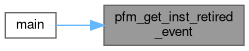
◆ pfm_get_inst_retired_event()

int pfm_get_inst_retired_event ( pfmlib_event_t e)

Definition at line 962 of file pfmlib_common.c.
963{
964 if (PFMLIB_INITIALIZED() == 0)
965 return PFMLIB_ERR_NOINIT;
966 if (e == NULL)
967 return PFMLIB_ERR_INVAL;
968
969 if (!pfm_current->get_inst_retired_event)
970 return PFMLIB_ERR_NOTSUPP;
971
972 memset(e, 0, sizeof(*e));
973
974 return pfm_current->get_inst_retired_event(e);
975}
Here is the caller graph for this function:

◆ pfm_get_max_event_name_len()

int pfm_get_max_event_name_len ( size_t len)

Definition at line 903 of file pfmlib_common.c.

904{
905 unsigned int i, j, num_masks;
906 size_t max = 0, l;
907 char *str;
908
909 if (PFMLIB_INITIALIZED() == 0)
910 return PFMLIB_ERR_NOINIT;
911 if (len == NULL)
912 return PFMLIB_ERR_INVAL;
913
914 for(i=0; i < pfm_current->pme_count; i++) {
915 str = pfm_current->get_event_name(i);
916 if (!str)
917 continue;
918 l = strlen(str);
919 if (l > max) max = l;
920
921 num_masks = pfm_num_masks(i);
922 /*
923 * we need to add up all length because unit masks can
924 * be combined typically. We add 1 to account for ':'
925 * which is inserted as the unit mask separator
926 */
927 for (j = 0; j < num_masks; j++) {
928 str = pfm_current->get_event_mask_name(i, j);
929 if (!str)
930 continue;
931 l += 1 + strlen(str);
932 }
933 if (l > max) max = l;
934 }
935 *len = max;
936 return PFMLIB_SUCCESS;
937}
Here is the call graph for this function:
Here is the caller graph for this function:

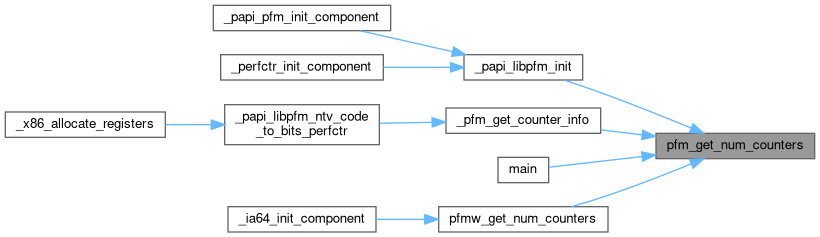
◆ pfm_get_num_counters()

int pfm_get_num_counters ( unsigned int num)

Definition at line 770 of file pfmlib_common.c.
771{
772 if (PFMLIB_INITIALIZED() == 0) return PFMLIB_ERR_NOINIT;
773
774 if (num == NULL) return PFMLIB_ERR_INVAL;
775
776 *num = pfm_current->num_cnt;
777
778 return PFMLIB_SUCCESS;
779}
Here is the caller graph for this function:

◆ pfm_get_num_event_masks()

int pfm_get_num_event_masks ( unsigned int  ev,
unsigned int count 
)

Definition at line 682 of file pfmlib_common.c.

683{
684 if (PFMLIB_INITIALIZED() == 0)
685 return PFMLIB_ERR_NOINIT;
686
687 if (ev >= pfm_current->pme_count || count == NULL)
688 return PFMLIB_ERR_INVAL;
689
690 *count = pfm_num_masks(ev);
691
692 return PFMLIB_SUCCESS;
693}
Here is the call graph for this function:
Here is the caller graph for this function:

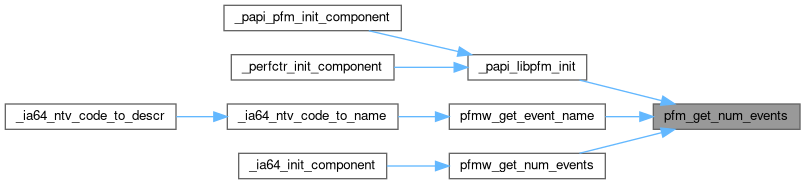
◆ pfm_get_num_events()

int pfm_get_num_events ( unsigned int count)

Definition at line 670 of file pfmlib_common.c.
671{
672 if (PFMLIB_INITIALIZED() == 0) return PFMLIB_ERR_NOINIT;
673
674 if (count == NULL) return PFMLIB_ERR_INVAL;
675
676 *count = pfm_current->pme_count;
677
678 return PFMLIB_SUCCESS;
679}
Here is the caller graph for this function:

◆ pfm_get_num_pmcs()

int pfm_get_num_pmcs ( unsigned int num)

Definition at line 782 of file pfmlib_common.c.

783{
784 if (PFMLIB_INITIALIZED() == 0) return PFMLIB_ERR_NOINIT;
785
786 if (num == NULL) return PFMLIB_ERR_INVAL;
787
788 *num = pfm_current->pmc_count;
789
790 return PFMLIB_SUCCESS;
791}

◆ pfm_get_num_pmds()

int pfm_get_num_pmds ( unsigned int num)

Definition at line 794 of file pfmlib_common.c.

795{
796 if (PFMLIB_INITIALIZED() == 0) return PFMLIB_ERR_NOINIT;
797
798 if (num == NULL) return PFMLIB_ERR_INVAL;
799
800 *num = pfm_current->pmd_count;
801
802 return PFMLIB_SUCCESS;
803}

◆ pfm_get_pmu_name()

int pfm_get_pmu_name ( char *  name,
int  maxlen 
)

Definition at line 251 of file pfmlib_common.c.

252{
253 if (PFMLIB_INITIALIZED() == 0) return PFMLIB_ERR_NOINIT;
254
255 if (name == NULL || maxlen < 1) return PFMLIB_ERR_INVAL;
256
257 strncpy(name, pfm_current->pmu_name, maxlen-1);
258
259 name[maxlen-1] = '\0';
260
261 return PFMLIB_SUCCESS;
262}
Here is the caller graph for this function:

◆ pfm_get_pmu_name_bytype()

int pfm_get_pmu_name_bytype ( int  type,
char *  name,
size_t  maxlen 
)

Definition at line 212 of file pfmlib_common.c.

213{
215
216 if (name == NULL || maxlen < 1) return PFMLIB_ERR_INVAL;
217
218 while (*p) {
219 if ((*p)->pmu_type == type) goto found;
220 p++;
221 }
222 return PFMLIB_ERR_INVAL;
223found:
224 strncpy(name, (*p)->pmu_name, maxlen-1);
225
226 /* make sure the string is null terminated */
227 name[maxlen-1] = '\0';
228
229 return PFMLIB_SUCCESS;
230}

◆ pfm_get_pmu_type()

int pfm_get_pmu_type ( int type)

Definition at line 265 of file pfmlib_common.c.

266{
267 if (PFMLIB_INITIALIZED() == 0) return PFMLIB_ERR_NOINIT;
268
269 if (type == NULL) return PFMLIB_ERR_INVAL;
270
271 *type = pfm_current->pmu_type;
272
273 return PFMLIB_SUCCESS;
274}
Here is the caller graph for this function:

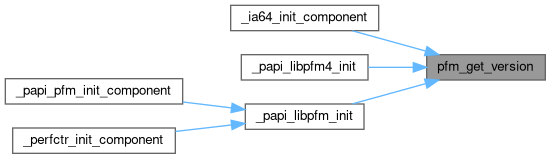
◆ pfm_get_version()

int pfm_get_version ( unsigned int version)

Definition at line 895 of file pfmlib_common.c.
896{
897 if (version == NULL) return PFMLIB_ERR_INVAL;
899 return 0;
900}
uint8_t version
#define PFMLIB_VERSION
Definition: pfmlib.h:34
Here is the caller graph for this function:

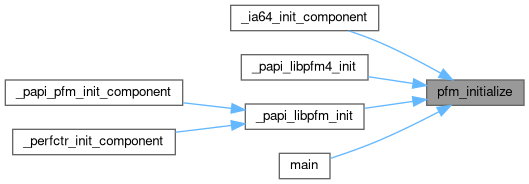
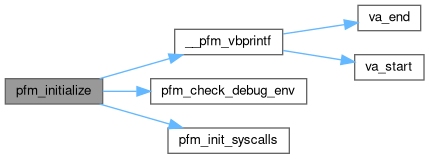
◆ pfm_initialize()

int pfm_initialize ( void  )

Definition at line 144 of file pfmlib_common.c.
145{
147 int ret;
148
150 /*
151 * syscall mapping, no failure on error
152 */
154
155 while(*p) {
156 DPRINT("trying %s\n", (*p)->pmu_name);
157 /*
158 * check for forced_pmu
159 * pmu_type can never be zero
160 */
161 if ((*p)->pmu_type == forced_pmu) {
162 __pfm_vbprintf("PMU forced to %s\n", (*p)->pmu_name);
163 goto found;
164 }
165
166 if (forced_pmu == PFMLIB_NO_PMU && (*p)->pmu_detect() == PFMLIB_SUCCESS)
167 goto found;
168 p++;
169 }
170 return PFMLIB_ERR_NOTSUPP;
171found:
172 DPRINT("found %s\n", (*p)->pmu_name);
173 /*
174 * run a few sanity checks
175 */
176 if ((*p)->pmc_count >= PFMLIB_MAX_PMCS)
177 return PFMLIB_ERR_NOTSUPP;
178
179 if ((*p)->pmd_count >= PFMLIB_MAX_PMDS)
180 return PFMLIB_ERR_NOTSUPP;
181
182 if ((*p)->pmu_init) {
183 ret = (*p)->pmu_init();
184 if (ret != PFMLIB_SUCCESS)
185 return ret;
186 }
187
188 pfm_current = *p;
189
190 return PFMLIB_SUCCESS;
191}
#define PFMLIB_MAX_PMDS
Definition: pfmlib.h:42
#define PFMLIB_NO_PMU
Definition: pfmlib.h:221
static void pfm_check_debug_env(void)
void pfm_init_syscalls(void)
void __pfm_vbprintf(const char *fmt,...)
Definition: pfmlib_priv.c:52
#define DPRINT(fmt, a...)
Definition: pfmlib_priv.h:90
Here is the call graph for this function:
Here is the caller graph for this function:

◆ pfm_is_pmu_supported()

int pfm_is_pmu_supported ( int  type)

Definition at line 280 of file pfmlib_common.c.

281{
283
284 if (PFMLIB_INITIALIZED() == 0) return PFMLIB_ERR_NOINIT;
285
286 while (*p) {
287 if ((*p)->pmu_type == type) return PFMLIB_SUCCESS;
288 p++;
289 }
290 return PFMLIB_ERR_NOTSUPP;
291}

◆ pfm_list_supported_pmus()

int pfm_list_supported_pmus ( int(*)(const char *fmt,...)  pf)

Definition at line 233 of file pfmlib_common.c.

234{
236
237 if (pf == NULL) return PFMLIB_ERR_INVAL;
238
239 (*pf)("supported PMU models: ");
240
241 for (p = supported_pmus; *p; p++) {
242 (*pf)("[%s] ", (*p)->pmu_name);;
243 }
244
245 (*pf)("\ndetected host PMU: %s\n", pfm_current ? pfm_current->pmu_name : "not detected yet");
246
247 return PFMLIB_SUCCESS;
248}

◆ pfm_set_options()

int pfm_set_options ( pfmlib_options_t opt)

Definition at line 194 of file pfmlib_common.c.

195{
196 if (opt == NULL)
197 return PFMLIB_ERR_INVAL;
198 /*
199 * environment variables override program presets
200 */
202 pfm_config.options = *opt;
203
204 return PFMLIB_SUCCESS;
205}
Here is the caller graph for this function:

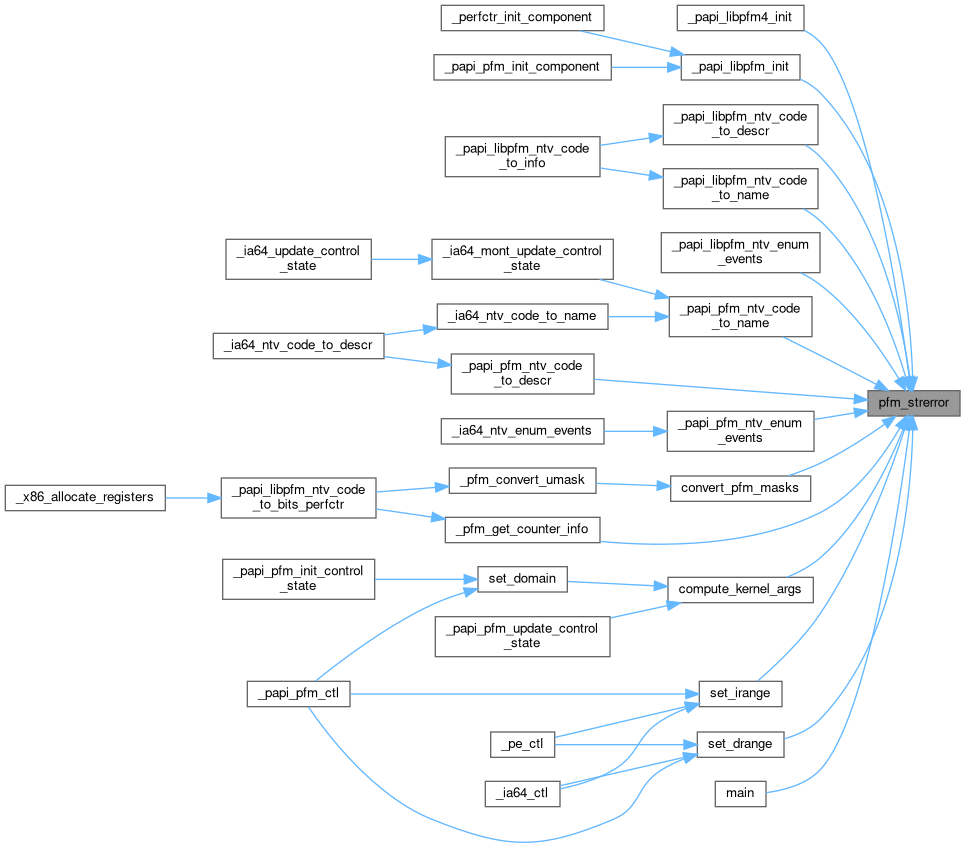
◆ pfm_strerror()

char * pfm_strerror ( int  code)

Definition at line 887 of file pfmlib_common.c.
888{
889 code = -code;
890 if (code <0 || code >= pfmlib_err_count) return "unknown error code";
891 return pfmlib_err_list[code];
892}
static char * pfmlib_err_list[]
static size_t pfmlib_err_count
Here is the caller graph for this function:

Variable Documentation

◆ forced_pmu

int forced_pmu = PFMLIB_NO_PMU

Definition at line 108 of file pfmlib_common.c.

◆ pfm_config

pfm_config_t pfm_config
Initial value:
= {
.current = NULL
}

Definition at line 104 of file pfmlib_common.c.

◆ pfmlib_err_count

size_t pfmlib_err_count = sizeof(pfmlib_err_list)/sizeof(char *)
static

Definition at line 884 of file pfmlib_common.c.

◆ pfmlib_err_list

char* pfmlib_err_list[]
static
Initial value:
=
{
"success",
"not supported",
"invalid parameters",
"pfmlib not initialized",
"event not found",
"cannot assign events to counters",
"buffer is full or too small",
"event used more than once",
"invalid model specific magic number",
"invalid combination of model specific features",
"incompatible event sets",
"incompatible events combination",
"too many events or unit masks",
"code range too big",
"empty code range",
"invalid code range",
"too many code ranges",
"invalid data range",
"too many data ranges",
"not supported by host cpu",
"code range is not bundle-aligned",
"code range requires some flags in rr_flags",
"invalid or missing unit mask",
"out of memory"
}

Definition at line 857 of file pfmlib_common.c.

◆ supported_pmus

pfm_pmu_support_t* supported_pmus[]
static

Definition at line 39 of file pfmlib_common.c.