Loading...
Searching...
No Matches
papi_native_avail.c File Reference
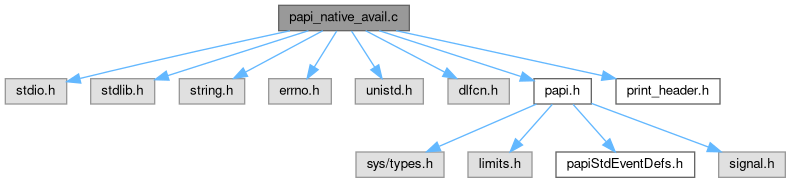
Include dependency graph for papi_native_avail.c:
Go to the source code of this file.
Data Structures | |
| struct | command_flags_t |
Macros | |
| #define | EVT_LINE 80 |
| #define | EVT_LINE_BUF_SIZE 4096 |
Functions | |
| static void | print_help (char **argv) |
| static int | no_str_arg (char *arg) |
| static void | parse_args (int argc, char **argv, command_flags_t *f) |
| static void | space_pad (char *str, int spaces) |
| static void | check_event (PAPI_event_info_t *info) |
| static int | format_event_output (PAPI_event_info_t *info, int offset) |
| static void | print_event_output (int val_flag) |
| static int | parse_event_qualifiers (PAPI_event_info_t *info) |
| int | main (int argc, char **argv) |
Variables | |
| unsigned int | event_available = 0 |
| unsigned int | event_output_buffer_size = 0 |
| char * | event_output_buffer = NULL |
Macro Definition Documentation
◆ EVT_LINE
| #define EVT_LINE 80 |
Definition at line 59 of file papi_native_avail.c.
◆ EVT_LINE_BUF_SIZE
| #define EVT_LINE_BUF_SIZE 4096 |
Definition at line 60 of file papi_native_avail.c.
Function Documentation
◆ check_event()
|
static |
Definition at line 205 of file papi_native_avail.c.
206{
208
209 // if this event has already passed the check test, no need to try this one again
211 return;
212 }
213
217 event_available = 1;
218 } // else printf("********** PAPI_add_named_event( %s ) failed: event could not be added \n", info->symbol);
220 printf("********** Call to destroy eventset failed when trying to check event '%s' **********\n", info->symbol);
221 }
222 }
223
224 return;
225}
add PAPI preset or native hardware event by name to an EventSet
Create a new empty PAPI EventSet.
Empty and destroy an EventSet.
removes a named hardware event from a PAPI event set.
Here is the caller graph for this function:

◆ format_event_output()
|
static |
Definition at line 228 of file papi_native_avail.c.
229{
232 char event_line_units[100];
233
234 /* indent by offset */
235 if ( offset ) {
236 // this one is used for event qualifiers
238 }
239 else {
240 // this one is used for new events
242 }
243
245 // The event_line_buffer is used to collect an event or mask name and its description.
246 // The description will be folded to keep the length of output lines reasonable. So this
247 // buffer may contain multiple lines of print output. Check to make sure there is room
248 // for another line of print output. If there is not enough room for another output line
249 // just exit the loop and truncate the description field (the buffer is big enough this
250 // should not happen).
252 printf ("Event or mask description has been truncated.\n");
253 break;
254 }
255
256 // get amount of description that will fit in an output line
258 // start of a description line
259 strcat(event_line_buffer,"| " );
260 // if we need to copy less than what fits in this line, move it and exit loop
262 strcat( event_line_buffer, &info->long_descr[j]);
264 strcat( event_line_buffer, "|\n" );
265 break;
266 }
267
268 // move what will fit into the line then loop back to do the rest in a new line
269 int k = strlen(event_line_buffer);
272 strcat( event_line_buffer, "|\n" );
273
274 // bump index past what we copied
275 j += i;
276 }
277
278 // also show the units for this event if a unit name has been set
279 event_line_units[0] = '\0';
282 }
283
284 // get the amount of used space in the output buffer
285 int out_buf_used = 0;
287 out_buf_used = strlen(event_output_buffer);
288 }
289
290 // if this will not fit in output buffer, make it bigger
291 if (event_output_buffer_size < out_buf_used + strlen(event_line_buffer) + strlen(event_line_units) + 1) {
293 event_output_buffer_size = 1024;
295 } else {
296 event_output_buffer_size += 1024;
298 }
299 }
300
301 // make sure we got the memory we asked for
305 }
306
307 strcat(event_output_buffer, event_line_buffer);
308 strcat(event_output_buffer, event_line_units);
309
310 return 0;
311}
int errno
FILE * stderr
Here is the call graph for this function:

Here is the caller graph for this function:

◆ main()
Definition at line 408 of file papi_native_avail.c.
409{
412 int num_cmp_events = 0;
414 PAPI_event_info_t info;
416 command_flags_t flags;
417 int enum_modifier;
418 int numcmp, cid;
419
420 /* Initialize before parsing the input arguments */
425 }
426
427 /* Parse the command-line arguments */
428 parse_args( argc, argv, &flags );
429
430 /* Set enum modifier mask */
432 enum_modifier = PAPI_NTV_ENUM_DEAR;
434 enum_modifier = PAPI_NTV_ENUM_DARR;
436 enum_modifier = PAPI_NTV_ENUM_IEAR;
438 enum_modifier = PAPI_NTV_ENUM_IARR;
440 enum_modifier = PAPI_NTV_ENUM_OPCM;
441 else
442 enum_modifier = PAPI_ENUM_EVENTS;
443
448 }
449
453 return 2;
454 }
455
456#if SDE
457 /*
458 The following code will execute if the user wants to list the SDEs in the
459 library (or executable) stored in flags.path. This code will not list the
460 SDEs per se, it will only give an opportunity to the library to register
461 their SDEs, so they can be listed further down.
462 */
464 char *cmd;
465 FILE *pipe;
466
469 goto no_sdes;
470 }
471
473 cmd = (char *)calloc(len, sizeof(char));
474 if( NULL == cmd ) goto no_sdes;
475
477 if(l<len-1){
478 free(cmd);
479 goto no_sdes;
480 }
481
482 /* First open all the dependencies of the file we were given */
483 pipe = popen(cmd, "r");
484 if( NULL != pipe ){
485 while( !feof(pipe) ){
486 char *lineptr, *lib_name, *lib_path;
487 size_t n=0;
488 lineptr = lib_name = lib_path = NULL;
489
490 if( getline(&lineptr, &n, pipe) == -1 ){
491 if(lineptr) free(lineptr);
492 break;
493 }
494
495 /* If this line does not give us a path to a library, ignore it. */
496 if( (NULL != strstr(lineptr,"not found")) || (NULL == strstr(lineptr," => ")) ) {
497 goto skip_lib;
498 }
499
500 int status = sscanf(lineptr, "%ms => %ms (%*x)", &lib_name, &lib_path);
501 /* If this line is malformed, ignore it. */
502 if(2 != status){
503 /* According to the man page: "it is necessary to call free()
504 only if the scanf() call successfully read a string." */
505 goto skip_lib;
506 }
507
508 /* Invoke the hook for the dependency we just discovered */
509 invoke_hook_fptr(lib_path);
510
511 if( lib_name ) free(lib_name);
512 if( lib_path ) free(lib_path);
513skip_lib:
514 if(lineptr) free(lineptr);
515 lineptr = NULL;
516 n=0;
517 }
518 pclose(pipe);
519 }
520
521 /* Finally, invoke the hook for the file the user gave us */
522 invoke_hook_fptr(flags.path);
523
524 if( NULL != cmd ) free(cmd);
525 }
526no_sdes:
527#endif //SDE
528
529 /* Do this code if the event name option was specified on the commandline */
535
536 /* handle the PAPI component-style events which have a component:::event type */
537 char *ptr;
539 ptr+=3;
540 /* handle libpfm4-style events which have a pmu::event type event name */
542 ptr+=2;
543 }
544 else {
545 ptr=flags.name;
546 }
547
548 /* if event qualifiers exist but none specified, process all */
549 if ( !strchr( ptr, ':' ) ) {
551 printf( "\nQualifiers: Name -- Description\n" );
552 do {
557 }
558 }
560 }
561 }
562 }
563 } else {
564 printf("Sorry, an event by the name '%s' could not be found.\n",
565 flags.name);
566 printf("Is it typed correctly?\n\n");
567 exit( 1 );
568 }
569 return 0;
570 }
571
572 // Look at all the events and qualifiers and print the information the user has asked for */
573
574 numcmp = PAPI_num_components( );
575
576 num_events = 0;
577
578 for ( cid = 0; cid < numcmp; cid++ ) {
580 component=PAPI_get_component_info(cid);
581
582 /* Skip disabled components */
584
585 printf( "===============================================================================\n" );
587 printf( "===============================================================================\n" );
588
589 // show this component has not found any events yet
590 num_cmp_events = 0;
591
592 /* Always ASK FOR the first event */
593 /* Don't just assume it'll be the first numeric value */
595
597
599 do {
600 memset( &info, 0, sizeof ( info ) );
602
603 /* This event may not exist */
605
606 /* Bail if event name doesn't contain include string */
608
609 /* Bail if event name does contain exclude string */
611
612 // if not the first event in this component, put out a divider
613 if (num_cmp_events) {
614 printf( "--------------------------------------------------------------------------------\n" );
615 }
616
617 /* count only events that are actually processed */
618 num_events++;
619 num_cmp_events++;
620
622 check_event(&info);
623 }
624
625 format_event_output( &info, 0);
626
627 /* modifier = PAPI_NTV_ENUM_GROUPS returns event codes with a
628 groups id for each group in which this
629 native event lives, in bits 16 - 23 of event code
630 terminating with PAPI_ENOEVNT at the end of the list.
631 */
632
633 /* This is an IBM Power issue */
635 k = i;
637 printf( "Groups: " );
638 do {
640 PAPI_NTV_GROUP_SHIFT ) - 1 );
642 printf( "\n" );
643 }
644 }
645
646 // If the user has asked us to check the events then we need to
647 // walk the list of qualifiers and try to check the event with each one.
648 // Even if the user does not want to display the qualifiers this is necessary
649 // to be able to correctly report which events can be used on this system.
650 //
651 // We also need to walk the list if the user wants to see the qualifiers.
652
654 k = i;
656 // clear event string using first mask
658
659 do {
662 // if first event mask string not set yet, set it now
663 if (strlen(first_event_mask_string) == 0) {
664 strcpy (first_event_mask_string, info.symbol);
665 }
666
668 check_event(&info);
669 }
670 // now test if the event qualifiers should be displayed to the user
673 format_event_output( &info, 2);
674 }
675 }
677 // if we are validating events and the event_available flag is not set yet, try a few more combinations
679 // try using the event with the first mask defined for the event and the cpu mask
680 // this is a kludge but many of the uncore events require an event specific mask (usually
681 // the first one defined will do) and they all require the cpu mask
682 strcpy (info.symbol, first_event_mask_string);
684 check_event(&info);
685 }
687 // an even bigger kludge is that there are 4 snpep_unc_pcu events which require the 'ff' and 'cpu' qualifiers to work correctly.
688 // if nothing else has worked, this code will try those two qualifiers with the current event name to see if it works
689 strcpy (info.symbol, first_event_mask_string);
691 if (wptr != NULL) {
692 *wptr = '\0';
694 check_event(&info);
695 }
696 }
697 }
698 }
701 }
702 }
703
704 if (num_cmp_events != 0) {
705 printf( "--------------------------------------------------------------------------------\n" );
706 }
708
710 printf("\nNo events detected! Check papi_component_avail to find out why.\n");
711 printf("\n");
712 }
713
714
715 return 0;
716}
Enumerate PAPI preset or native events for a given component.
Enumerate PAPI preset or native events.
Convert a name to a numeric hardware event code.
get information about a specific software component
Get the event's name and description info.
initialize the PAPI library.
Get the number of components available on the system.
Set the current debug level for error output from PAPI.
static int format_event_output(PAPI_event_info_t *info, int offset)
Definition: papi_native_avail.c:228
static int parse_event_qualifiers(PAPI_event_info_t *info)
Definition: papi_native_avail.c:344
static void parse_args(int argc, char **argv, command_flags_t *f)
Definition: papi_native_avail.c:112
int papi_print_header(char *prompt, const PAPI_hw_info_t **hwinfo)
Definition: print_header.c:12
Definition: papi.h:626
Definition: papi.h:957
Definition: papi_component_avail.c:36
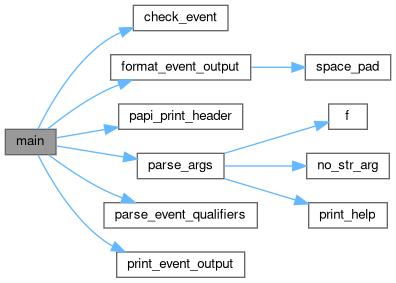
Here is the call graph for this function:
◆ no_str_arg()
|
static |
Definition at line 106 of file papi_native_avail.c.
107{
108 return ( ( arg == NULL ) || ( strlen( arg ) == 0 ) || ( arg[0] == '-' ) );
109}
Here is the caller graph for this function:

◆ parse_args()
|
static |
Definition at line 112 of file papi_native_avail.c.
113{
115
116 /* Look for all currently defined commands */
118 f->qualifiers = 1;
119 f->groups = 1;
120
123 f->darr = 1;
125 f->dear = 1;
127 f->iarr = 1;
129 f->iear = 1;
131 f->opcm = 1;
133 f->qualifiers = 0;
135 f->groups = 0;
137 f->named = 1;
138 i++;
142 printf( "Invalid argument for -e\n");
143 exit(1);
144 }
145 }
146#if SDE
148 f->list_sdes = 1;
149 i++;
153 printf( "Invalid argument for -sde\n");
154 exit(1);
155 }
156 }
157#endif
159 f->include = 1;
160 i++;
164 printf( "Invalid argument for -i\n");
165 exit(1);
166 }
168 f->xclude = 1;
169 i++;
173 printf( "Invalid argument for -x\n");
174 exit(1);
175 }
177 f->help = 1;
179 f->check = 1;
180 } else {
182 exit(1);
183 }
184 }
185
186 /* if help requested, print and bail */
188 print_help( argv);
189 exit( 1 );
190 }
191}
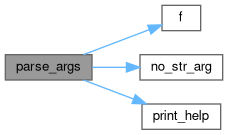
Here is the call graph for this function:
Here is the caller graph for this function:

◆ parse_event_qualifiers()
|
static |
Definition at line 344 of file papi_native_avail.c.
345{
346 char *pmask,*ptr;
347
348 /* handle the PAPI component-style events which have a component:::event type */
350 ptr+=3;
351 /* handle libpfm4-style events which have a pmu::event type event name */
353 ptr+=2;
354 }
355 else {
356 ptr=info->symbol;
357 }
358
359 if ( ( pmask = strchr( ptr, ':' ) ) == NULL ) {
360 return ( 0 );
361 }
363
364 // The description field contains the event description followed by a tag 'masks:'
365 // and then the mask description (if there was a mask with this event). The following
366 // code isolates the mask description part of this information.
367
369 if ( pmask == NULL ) {
370 info->long_descr[0] = 0;
371 } else {
372 pmask += 6; // bump pointer past 'masks:' identifier in description
374 }
375 return ( 1 );
376}
Here is the caller graph for this function:

◆ print_event_output()
|
static |
Definition at line 314 of file papi_native_avail.c.
315{
316 // first we need to update the available flag at the beginning of the buffer
317 // this needs to reflect if this event name by itself or the event name with one of the qualifiers worked
318 // if none of the combinations worked then we will show the event as not available
320 if (val_flag_ptr != NULL) {
322 // event is not available, update the place holder (replace the <--> with <NA>)
323 *(val_flag_ptr+1) = 'N';
324 *(val_flag_ptr+2) = 'A';
325 } else {
327 // event is available, just remove the place holder (replace the <--> with spaces)
328 *val_flag_ptr = ' ';
329 *(val_flag_ptr+1) = ' ';
330 *(val_flag_ptr+2) = ' ';
331 *(val_flag_ptr+3) = ' ';
332 }
333 }
334
335 // now we can finally send this events output to the user
337// printf( "--------------------------------------------------------------------------------\n" );
338
340 return;
341}
Here is the caller graph for this function:

◆ print_help()
|
static |
Definition at line 81 of file papi_native_avail.c.
82{
83 printf( "This is the PAPI native avail program.\n" );
84 printf( "It provides availability and details about PAPI Native Events.\n" );
85 printf( "Usage: %s [options]\n", argv[0] );
86 printf( "Options:\n\n" );
87 printf( "\nGeneral command options:\n" );
88 printf( "\t-h, --help print this help message\n" );
89 printf( "\t-c, --check attempts to add each event\n");
90 printf( "\t-sde FILE lists SDEs that are registered by the library or executable in FILE\n" );
91 printf( "\t-e EVENTNAME display detailed information about named native event\n" );
92 printf( "\t-i EVENTSTR include only event names that contain EVENTSTR\n" );
93 printf( "\t-x EVENTSTR exclude any event names that contain EVENTSTR\n" );
94 printf( "\t--noqual suppress display of event qualifiers (mask and flag) information\n" );
95 printf( "\nProcessor-specific options:\n");
96 printf( "\t--darr display events supporting Data Address Range Restriction\n" );
97 printf( "\t--dear display Data Event Address Register events only\n" );
98 printf( "\t--iarr display events supporting Instruction Address Range Restriction\n" );
99 printf( "\t--iear display Instruction Event Address Register events only\n" );
100 printf( "\t--opcm display events supporting OpCode Matching\n" );
101 printf( "\t--nogroups suppress display of Event grouping information\n" );
102 printf( "\n" );
103}
◆ space_pad()
|
static |
Definition at line 194 of file papi_native_avail.c.
195{
196 while ( spaces-- > 0 )
197 strcat( str, " " );
198}
Here is the caller graph for this function:

Variable Documentation
◆ event_available
| unsigned int event_available = 0 |
Definition at line 200 of file papi_native_avail.c.
◆ event_output_buffer
| char* event_output_buffer = NULL |
Definition at line 202 of file papi_native_avail.c.
◆ event_output_buffer_size
| unsigned int event_output_buffer_size = 0 |
Definition at line 201 of file papi_native_avail.c.