News and Announcements

Return to In-Person for ICL

Beginning Monday, March 7, ICL staff and faculty will begin returning to an in-person presence in Claxton at least 2 days per week. These days are not required to be scheduled nor recurring. This will be a transition period for ICL to safely return to a predominantly in-person work environment.

During this limited in-person time, please note that masks will be required in all ICL common areas. Masks will not be required while alone in office, but when meeting someone, please mask up.

Friday “lunches” will continue to be held online, but at this time, no lunches will be provided.

There is an ample supply of masks, hand sanitizers, and cleaning products for use while in Claxton. Check with the main office (Claxton 203) for supplies.

Individuals unable to return to an in-person presence at least 2 days per week at this time will need to send Jack a note regarding their situation.

Clothing and Coat Drive

Please, donate any of the following items:

  • New socks and undergarments
  • New or gently used long-sleeved clothing
  • Coats, hoodies, jackets

Donation boxes available:

  • ZEC: all floors
  • Claxton: Second floor (in the main shared area close to the vending machines)

Items will be collected until Apr 15, 2022

Conference Reports

Virtual SPARKS: Artificial Intelligence

The Office of Research, Innovation, and Economic Development (ORIED) hosted Virtual SPARKS: Artificial Intelligence on Wednesday, February 2 from 2–5 p.m. Launched in 2017, SPARKS (Seeking Partnerships to Advance Research, Knowledge, and Science) events bring UT faculty from multiple disciplines together around a common theme to learn and network. Attendees highlighted the UT-wide expertise and capacity in artificial intelligence, and fostered collaboration between departments.

ICL’s Deborah Penchoff’s presentation, titled “AI Applications for Multi-disciplinary Solutions,” focused on bias, interpretation, and discrimination in AI categorization, data sets incompleteness, biased labelling, and human interpretation vs. AI logic, vulnerability and manipulation.

Graphic for Deborah Penchoff’s presentation provided by David Rogers

ICL Resources

Friday Lunch Talks Archive Page

Thanks to TSG member David Rogers for developing a new Lunch Talks Archive Page.

This page provides streamlined access to previous speakers’ information that can be  sorted by date, speaker’s name, or affiliation. This archive should be more accessible and user friendly than the Lunch Talks Database.


Interview
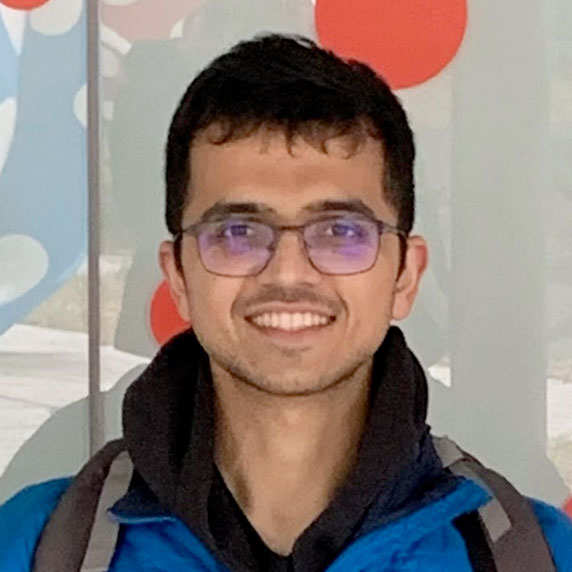
Sameer Deshmukh Then

Sameer Deshmukh

Where are you from?

I am originally from Pune, India.

Can you summarize your educational background?

I finished my undergraduate degree in Computer Science from Pune University, India. I enrolled in a Master’s degree in Computer Science at Tokyo Institute of Technology, and submitted my Master’s thesis under the guidance of Prof. Rio Yokota. I have been a Ph.D. student at Prof. Yokota’s lab since September 2019.

Where did you work before joining ICL?

I worked as a graduate student researcher at the National Institute of Advanced Industrial Science and Technology (AIST), Japan while being enrolled as a Ph.D. student at Tokyo Institute of Technology.

How did you first hear about the lab, and what made you want to work here?

I was attended SC19 at Denver, Colorado and had chanced upon Prof. George Bosilca and his students at the conference. We had some correspondence after the conference and jointly published work while working remotely. Once the COVID pandemic had reached a local minima we decided that it would be best for me to come to ICL in person in order to better collaborate with Prof. Bosilca’s group at ICL.

What is your focus here at ICL? What are you working on?

I am currently working on a distributed dense direct solver for large dense matrices with low rank off-diagonal structure. My focus is to perform experiments by combining our solver developed at Tokyo Institute of Technology with the distributed computing capabilities of Parsec, which is developed at ICL.

What are your interests/hobbies outside of work?

I enjoy hiking, music, good food and reading. I like to enjoy hikes in the Smoky Mountains over the weekend. I am also on the hunt for the best Southern burger that Knoxville has to offer and have tried out many nice burger joints so far. Live concerts in downtown are also something I look forward to.

Tell us something about yourself that might surprise people.

I went to a shooting range last week and tried my hand at some pistols and rifles for fun.

If you weren’t working at ICL, where would you like to be working and why?

I would like to work at some supercomputing facility in Japan or Europe. I think there are some great opportunities to pursue in these places, and the culture is great too.


Recent Papers

  1. Cojean, T., Y-H. Mike Tsai, and H. Anzt, Ginkgo—A math library designed for platform portability,” Parallel Computing, vol. 111, pp. 102902, February 2022. DOI: 10.1016/j.parco.2022.102902
  2. Ayala, A., S. Tomov, P. Luszczek, S. Cayrols, G. Ragghianti, and J. Dongarra, FFT Benchmark Performance Experiments on Systems Targeting Exascale,” ICL Technical Report, no. ICL-UT-22-02, March 2022.  (5.87 MB)
  3. Anzt, H., T. Cojean, G. Flegar, F. Göbel, T. Grützmacher, P. Nayak, T. Ribizel, Y. Mike Tsai, and E. S. Quintana-Ortí, Ginkgo: A Modern Linear Operator Algebra Framework for High Performance Computing,” ACM Transactions on Mathematical Software, vol. 48, issue 12, pp. 1 - 33, March 2022. DOI: 10.1145/3480935  (4.2 MB)
  4. Bak, S., C. Bertoni, S. Boehm, R. Budiardja, B. M. Chapman, J. Doerfert, M. Eisenbach, H. Finkel, O. Hernandez, J. Huber, et al., OpenMP application experiences: Porting to accelerated nodes,” Parallel Computing, vol. 109, March 2022. DOI: 10.1016/j.parco.2021.102856
  5. Du, Y., G. Pallez, L. Marchal, and Y. Robert, Optimal Checkpointing Strategies for Iterative Applications,” IEEE Transactions on Parallel Distributed Systems, vol. 33, issue 3, pp. 507-522, March 2022. DOI: 10.1109/TPDS.2021.3099440  (1.47 MB)
  6. Reed, D., D. Gannon, and J. Dongarra, Reinventing High Performance Computing: Challenges and Opportunities,” ICL Technical Report, no. ICL-UT-22-03, March 2022.  (1.36 MB)
  7. Agullo, E., M. Altenbernd, H. Anzt, L. Bautista-Gomez, T. Benacchio, L. Bonaventura, H-J. Bungartz, S. Chatterjee, F. M. Ciorba, N. DeBardeleben, et al., Resiliency in numerical algorithm design for extreme scale simulations,” The International Journal of High Performance Computing Applications, vol. 36371337212766180823, issue 2, pp. 251 - 285, March 2022. DOI: 10.1177/10943420211055188
  8. Zhong, D., Q. Cao, G. Bosilca, and J. Dongarra, Using long vector extensions for MPI reductions,” Parallel Computing, vol. 109, pp. 102871, March 2022. DOI: 10.1016/j.parco.2021.102871

Recent Conferences

  1. FEB
    Deborah Penchoff
    Deborah
    Deborah Penchoff
  2. FEB
    -
    EPEXA Meeting Roanoke, Virginia
    George Bosilca
    George
    Joseph Schuchart
    Joseph
    Thomas Herault
    Thomas
    George Bosilca, Joseph Schuchart, Thomas Herault
  3. FEB
    -
    SIAM Conference on Parallel Processing for Scientific Computing (PP22) Seattle
    Ahmad Abdelfattah
    Ahmad
    Aurelien Bouteiller
    Aurelien
    Jack Dongarra
    Jack
    Mark Gates
    Mark
    Natalie Beams
    Natalie
    Neil Lindquist
    Neil
    Piotr Luszczek
    Piotr
    Stanimire Tomov
    Stan
    Ahmad Abdelfattah, Aurelien Bouteiller, Jack Dongarra, Mark Gates, Natalie Beams, Neil Lindquist, Piotr Luszczek, Stanimire Tomov
  4. MAR
    -
    American Chemical Society San Diego, California
    Deborah Penchoff
    Deborah
    Deborah Penchoff
  5. MAR
    -
    GTC 2022 Virtual
    Alan Ayala
    Alan
    Alan Ayala

Upcoming Conferences

  1. APR
    -
    Stanimire Tomov
    Stan
    Stanimire Tomov
  2. APR
    -
    Deborah Penchoff
    Deborah
    Deborah Penchoff

Recent Lunch Talks

  1. FEB
    4
    Asim Yarkhan
    Asim Yarkhan
    A Retrospective of Runtimes (@ICL) Or How SLATE gets going PDF
  2. FEB
    11
    Neil Lindquist
    Neil Lindquist
    Improving the Performance of LU Factorization Through Threshold Pivoting PDF
  3. FEB
    18
    Maksim Melnichenko
    Maksim Melnichenko
    An Update on Templates for Randomized Numerical Linear Algebra & Randomized LAPACK Effort PDF
  4. FEB
    25
    Laura Grigori
    Laura Grigori
    INRIA Paris
    Recent advances in randomization techniques for solving linear systems of equations
  5. MAR
    4
    Ashlee Anderson
    Ashlee Anderson
    TPTE
    Just what is critical race theory, and why is everyone talking about it? PDF
  6. MAR
    11
    Nigel Tan
    Nigel Tan
    GCL
    Towards Access Pattern Aware Checkpointing For Kokkos Applications
  7. MAR
    25
    Eddie Mitchell
    Eddie Mitchell
    UTK Department of Mathematics
    Simplicial Convolutional Neural Networks for Neural Spike Train Decoding

Upcoming Lunch Talks

  1. APR
    1
    Cleve Moler
    Cleve Moler
    Mathworks
    Cleve's Corner Blog, April 1; Past and Present
  2. APR
    8
    Sherry Li
    Sherry Li
    Lawrence Berkeley National Laboratory
    Interplay of linear algebra, machine learning, and HPC
  3. APR
    22
    Zhaojun Bai
    Zhaojun Bai
    UC Davis
    Meeting the challenges of computing many eigenpairs
  4. APR
    29
    David Keyes
    David Keyes
    KAUST
    ExaGeoStat and PaRSEC ring the Bell

congratulations

Jack Welcomes #8

Over the first weekend of March, Jack Dongarra welcomed his eighth grandchild.

Say hello to Jason Joseph Bachor.

Jack Dongarra is Ranked 30th in the World

The 8th edition of top scientists ranking for Computer Science was published by Research.com, one of the major websites for Computer Science research offering credible data on scientific contributions since 2014.

Our own Jack Dongarra ranks 30th among the listed top 1,000 Computer Scientists.

Congratulations Jack!

See the list here

Dates to Remember

Save the Date