News and Announcements
2014 ICL Winter Reception
ICL once again held its annual Winter Reception at the Bridgeview Grill, which overlooks the Tennessee River. There were plenty of ICLers, and significant others, mingling and enjoying good food, drinks, and conversation. We have provided some photos of the event, above, for your entertainment. Here’s to another stellar year at ICL!
Architecture-aware Algorithms for Peta and Exascale Computing
Watch ICL’s Jack Dongarra deliver his talk on Architecture-aware Algorithms for Peta and Exascale Computing at the NVIDIA booth at SC13. Thanks to Inside HPC’s Rich Brueckner for posting the video.
This talk will highlight the emerging technologies in high performance computing. We will look at the development of accelerators and some of the accomplishments in the Matrix Algebra on GPU and Multicore Architectures (MAGMA) project. We use a hybridization methodology that is built on representing linear algebra algorithms as collections of tasks and data dependencies, as well as properly scheduling the tasks’ execution over the available multicore and GPU hardware components.
NICS HPC Seminar Series
The National Institute for Computational Sciences invites you to a Seminar Series on High Performance Computing, every Tuesday and Thursday from 2:10pm to 3:10pm in the NICS conference room in Claxton 351. This is a joint effort between different leadership organizations (NICS, JICS, OLCF, ICL) to increase HPC awareness within the academic community.
Different topics will be introduced starting with the most basic and building up to more advanced topics in HPC. No registration is required for the seminar.
Calendar of topics to be covered in March:
| Date | Title |
|---|---|
| 4 | Introduction to the Intel MIC Arquitecture |
| 6 | Intel MIC programming as Accelerator |
| 11 | Intel MIC programming as CPU |
| 13 | Optimization techniques on MICs |
| 18 | (Spring break) |
| 20 | (Spring break) |
| 25 | Debugging programs |
| 27 | Profiling your code |
Conference Reports
SIAM PP
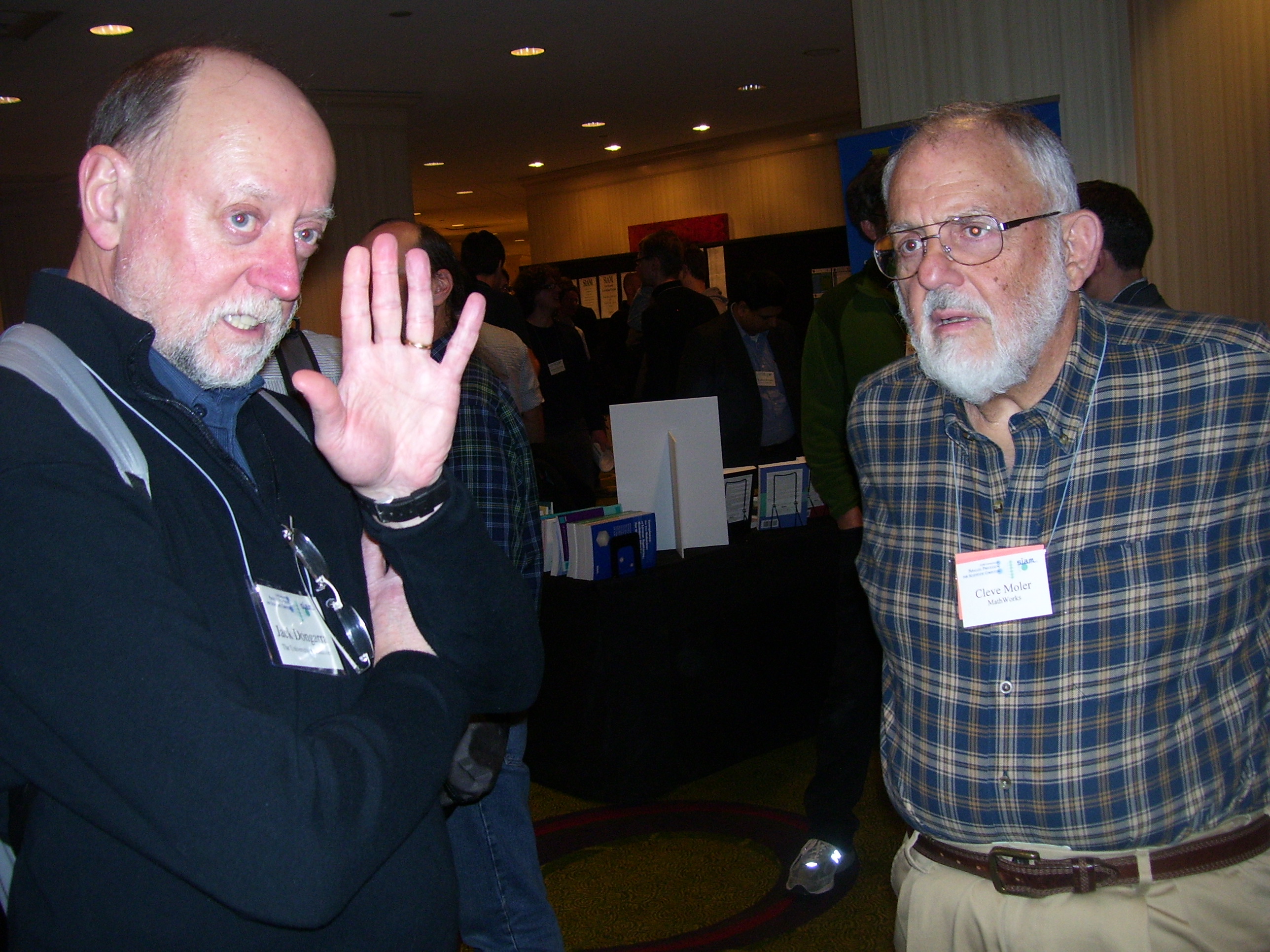
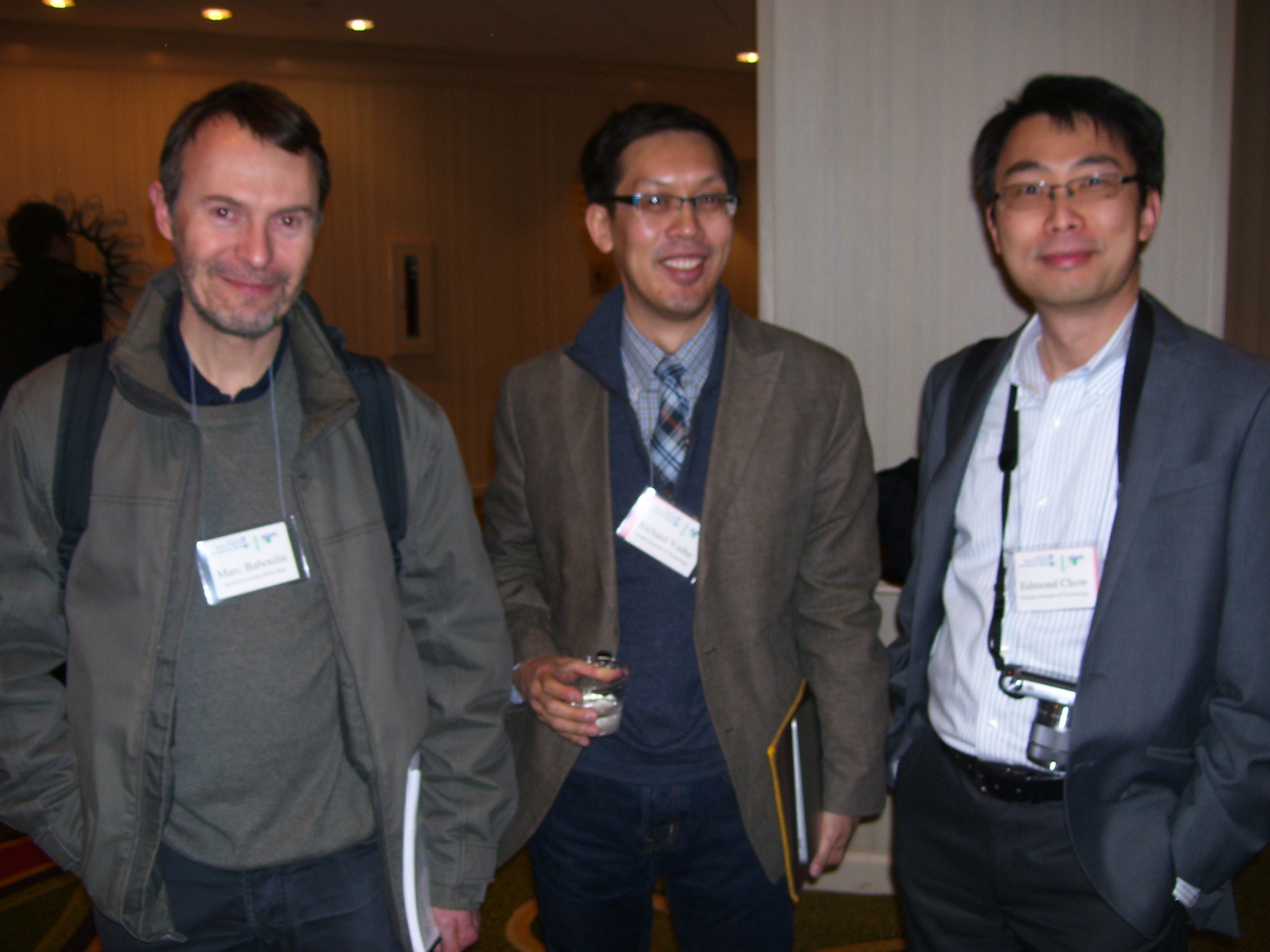
On February 18-21, several members of ICL, including Jack Dongarra, attended the SIAM Conference on Parallel Processing for Scientific Computing. SIAM PP has played a key role in promoting parallel scientific computing, algorithms for parallel systems, and parallel numerical algorithms. The conference emphasizes the intersection between high performance scientific computing and scalable algorithms, architectures, and software, and provides a forum for communication among the applied mathematics, computer science, and computational science and engineering communities.
For ICL’s part, we were well represented with several presentations. Thomas Herault presented A Flexible Programming Environment for Distributed Heterogeneous Resources. Jakub Kurzak also gave a talk on DPLASMA and the PaRSEC runtime—Distributed Memory Runtimes for Dense Linear Algebra Software. Not to be outdone, Piotr Luszczek gave a talk, Towards a Unified ABFT Approach for Resilient Dense Linear Algebra, and Ichitaro Yamazaki talked about Performance of Communication-avoiding Krylov Subspace Methods on GPUs.
There were also several ICL alum at SIAM PP, including Emmanuel Agullo, Marc Baboulin, Alfredo Buttari, and Mathieu Faverge, as well as old friends Cleve Moler and Jim Demmel.
Interview

Phil Mucci
Where are you from, originally?
I am originally from a small town in Massachusetts that lies 40 minutes west of Boston called Stow. It was founded in 1683, one of those idyllic little New England towns that predates much of the country. It has a fairly diverse population, mostly educated professionals, engineers and executives who are part of Boston’s version of Silicon Valley in one form or another.
Can you summarize your educational background?
I earned my undergraduate degree from the Johns Hopkins University in 1993. My degree was a bachelor of arts in computer science with a minor in mathematical science. The school was extremely difficult. While I was used to success in the very public schools I attended, I was not ready for the competition at a university where people from around the world fight to attend.
At Hopkins, I found that I loved all my science classes. After toying with a degree in physics and mechanical engineering, I settled on computer science because I realized it would let me touch many fields. I remember supercomputing and operating systems as being the most interesting subjects to me at the time. Sadly, this was not a specialty at Johns Hopkins – they spent a lot of time on theory. The first course you took as an undergraduate was also the “weed-out” course, Theory of Computation. Naturally, the professor had written his own textbook.
In any case, I survived Johns Hopkins and decided in my senior year to apply for grad school. It was too late for the fall term so I had to wait until the following year. I had interned at a number of places in Massachusetts, including MIT and a somewhat revolutionary supercomputer company called Thinking Machines. My father was the vice president of marketing and research, after a near thirty-year career working as a manager of government systems for Digital Equipment Corporation. Naturally, my father and Jack’s paths crossed more than once, as “boutique” supercomputing was huge at the time in Massachusetts. Undoubtedly the subject of my father’s geeky son and his love for supercomputing came up, and the connection was made. So after applying to a bunch of schools in addition to the University of Tennessee, I came to ICL in the fall of 1994.
How did you get introduced to ICL?
I was introduced to ICL through my application to Jack. I had not met Jack prior to our interview although we had corresponded.
What did you work on during your time at ICL?
I’ve worked on a number of things at ICL. When I first joined, I was part of the PBM team with Robert Manchek and Al Geist, among others. My very first coding assignment was to write a test suite for PVM in conjunction with one of our French colleagues at the time, Emmanuel. This test suite still lurks out on the web somewhere, and I occasionally get an e-mail about it, which still frightens me to this day.
Early on, I got involved in the PARKBENCH effort, which was a benchmark suite promoted by some folks in the UK and Jack that had a nice complement of low-level, middle tier, and application level parallel benchmarks. I went to a bunch of those meetings and indicated that there really were no good low-level benchmarks at the time so I started writing LLCBench, which garnered a fair bit of attention.
I was also becoming very interested in efficiency and performance. At the time, nobody was really doing zero copier OS bypass or the impacts of protocol overhead. There were a few seminal papers on the subject at the time, but it seemed like only a few companies were listening. So I settled on my thesis topic, which was active messaging protocol for PDM that could work on any low-level packet interface.
I think around 95 or 96; I had the opportunity to go to IBM research in Yorktown Heights. I’m not sure how Jack managed to get me that gig, but I ended up working for the Power Parallel division—the people responsible for the IBM SP supercomputer. When I got there, they wanted me to analyze the NASA benchmarks on their system using this “super secret feature” they had on their chips, performance monitoring registers. After a week of rumination, I came back to them and said, “Why don’t you let me build a tool on top of this functionality?” After some convincing, they did; it was called VHPM. I remember a rather infamous quote from a manager, now no longer with IBM, “Why would we ever want our customers to know exactly how our machine is performing?” This experience, along with my subsequent discovery of similar registers on other machines, led me to invent PAPI.
As of today, I still continue to stick my nose in and around ICL to see what kind of interesting things are going on.
What are some of your favorite memories from your time at ICL?
I loved working at ICL – especially when we were based in Ayres Hall. It had a very homey and cozy feel to it even though it was mostly separated up and cubicles. The team wasn’t very big back then, maybe 20 people, but everybody knew each other’s role and everybody was pretty available to help. You could tell it was a special place then, just as it is now. I didn’t socialize very heavily with the ICL crew, although I was no stranger to a tailgate party or Friday lunch.
One of my favorite memories is something Jack said to me, which I have since repeated to friends and employees alike. I once was stuck on something (I can’t recall what) and sheepishly came into Jack’s office looking for help. We talked about what I was working on, but we were both frustrated. I remember him looking me dead in the eye and saying calmly, “I don’t pay you to come up with questions, I expect you to come up with answers.” It was exactly what I needed to hear. That memory makes me a better engineer, executive and partner every day. Always provide options, that is part of doing research!
There are also plenty of good memories at supercomputing as well. It’s always so wonderful to see everyone promote what they’ve been working so hard on. And of course, it never gets old watching old nerds like us get drunk.
Tell us where you are and what you’re doing now.
I am currently running a small technology development and consulting firm called Minimal Metrics. I founded this with a partner, Tushar Mohan, someone whom I met when I had an office out at Lawrence Berkeley National Laboratory. While our specialty is system, library and application tuning, we do a number of development projects, including apps, which are funded by our service work. The “right” people are a critical component of Minimal Metrics. We work with an outstanding team of engineers and subcontractors – all of whom have become personal friends of mine. We are a virtual company, and have people in ~7 time zones which makes coordination really fun – but adds a great cultural variety to the mix.
Our clients in the last few years have included Cray, MIPS, Microsoft, Texas Instruments and GeoSpace Technologies. Our current projects include, doing a high performance implementation of the LAPACK library on a next-generation hybrid DSP from Ti, a vector math library for Curtis-Wright and an Organizational Performance Dashboard for the Housing Authority of Washington DC.
The last project is pretty interesting because it dovetails together with all of our experience on performance analysis. Through one of my professional connections, I came to meet an industrial engineer and efficiency expert who was working with many of the nation’s housing authorities. He wanted to build automated performance reporting dashboards based on metrics being collected from around the organization. So we leveraged some commodity business intelligence software packages to deliver, what is essentially, a performance tool for the entire organization. We’re pushing hard on this area in the future, in addition to adding deep analytics to our data stores.
Lastly, I serve as a technical and strategic advisor to a number of firms, large and small. Generally, folks have some technology of interest, but are having trouble seeing how to get from the technology to a viable business. These days anyone can write code – but can one build a sustainable and profitable venture that delivers good products and happy customers? Doing this is one of my favorite activities – as it taps into all my experience both with technology and with people.
I now live on the Gulf Coast of Florida, in a small town called Navarre, wedged between Pensacola and Destin. It’s pure beach country with an amazing amount of wildlife and biodiversity.
In what ways did working at ICL prepare you for what you do now, if at all?
ICL was absolutely instrumental in my professional development. If Jack hadn’t given me 6 months of time to go work on PAPI when I first had the idea, life would have been very different for me. That project alone catapulted me in the minds of many throughout the industry, which made doing business so much easier. Also, the level of technical expertise, leadership and tradition of people doing great things at ICL were all powerful motivators. Lastly, ICL prepared me for dealing with people. As engineers, we can learn how to deal with machines on our own terms. But to be truly successful, to be able to turn ideas into business or funding, you have to be able to communicate and motivate people. My time at ICL and my time with PAPI trained me to do just that, through papers and PowerPoints given to audiences around the globe over the years. Communication and motivation are both parts of a valuable skill of growing one’s network.
Tell us something about yourself that might surprise some people.
The funniest surprise is exactly how I came up with PAPI – which happened to be in the shower after a particularly good night of partying in Knoxville. I’m sure I must have looked like a haggard lab rat when I pitched the idea to Jack the following day.
The other thing most people don’t know is my love for the ocean and marine life. I had always wanted to be an oceanographer (one of the few classes I got an A in at Hopkins). But I chickened out of declaring that major early.
A few years ago, I started taking biology classes again and completed all my prerequisites for applying for a PhD in Quantitative Ecology and Oceanography. I got accepted to a number of schools. I have not been able to accept that offer quite yet, due to work going so well and the fact that we are not ready to leave living at the beach. So in the meantime, I’ll have to let my hobbies as an avid offshore fisherman and PADI dive instructor hold me over until the time is right.