
News and Announcements
The Great Flood of 2012
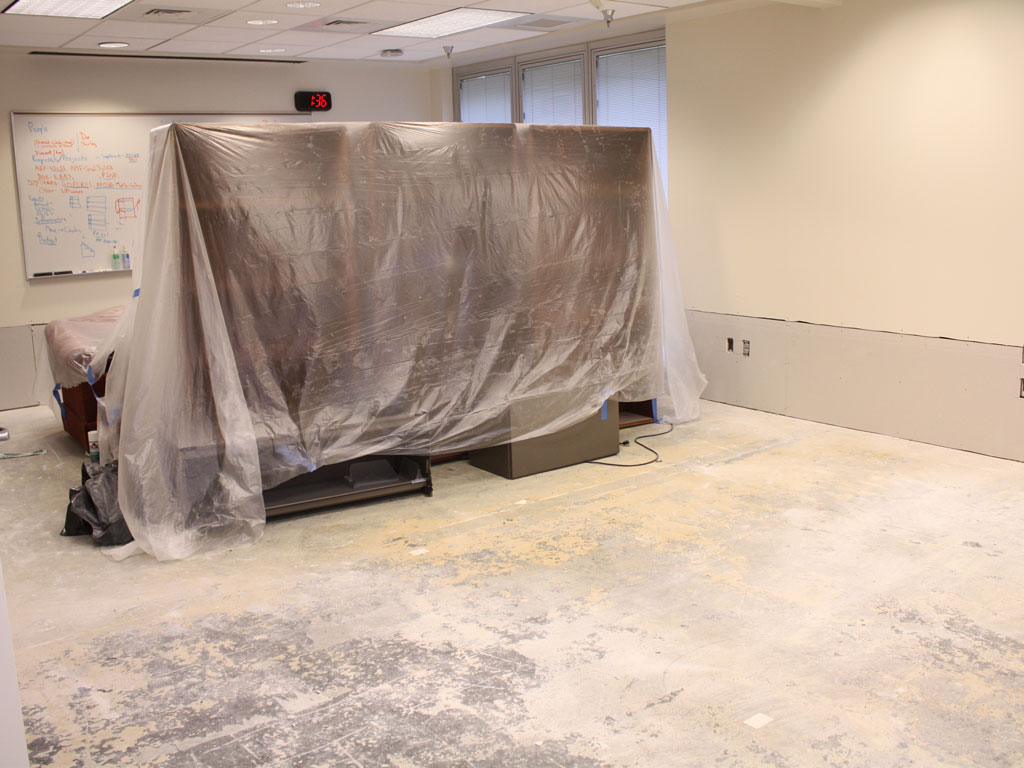
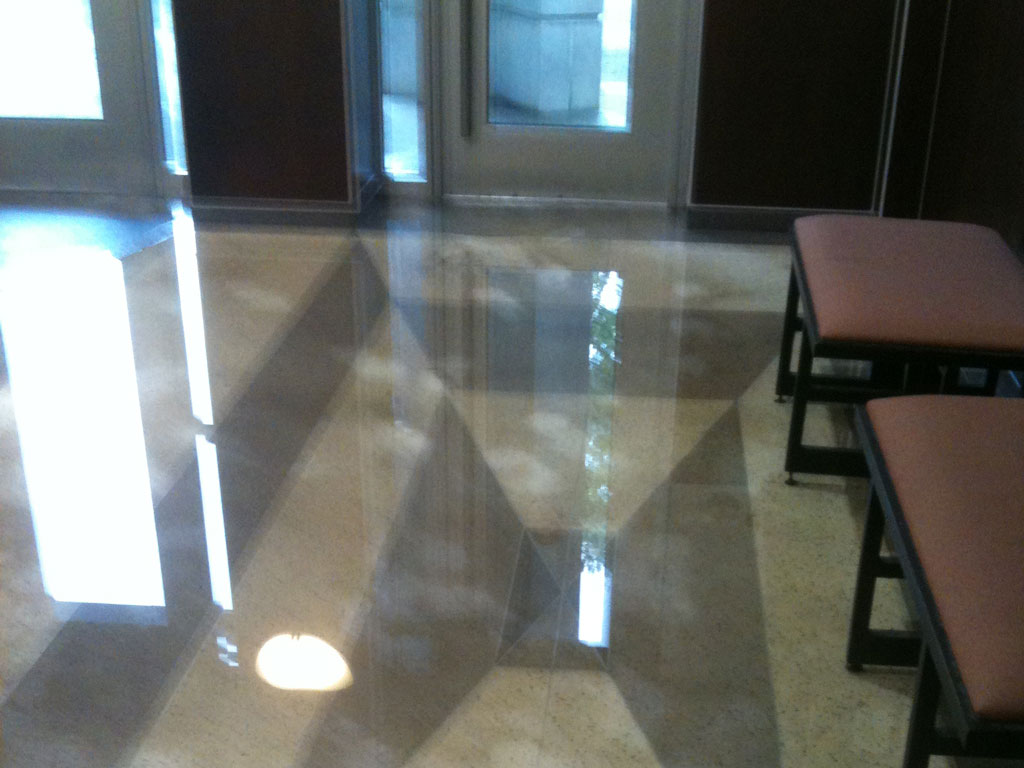
On July 19th, a significant weather event caused flash flooding in the Knoxville area, including here on the UTK campus. The rain was intense enough to overrun the drainage capability of the Claxton building and come in through the doors and windows. These heavy rains were accompanied by strong winds, which somehow blew the doors open in the atrium, allowing water to flow freely over the threshold, into the hallways and offices, and down the stairs into the first floor, home of NIMBioS. Several of ICL’s offices in 203 were also compromised, the worst being Jack’s office.
BELFOR, a company specializing in property restoration, is now on the scene repairing and restoring what has been damaged—including new drywall board and carpet in the affected areas. Contractors cleared the drains surrounding Claxton and installed French drains on the north side of the building to direct water down and away from the building’s foundation. The work may take a few weeks to complete, so be mindful of the construction and debris in 203 and elsewhere.




ICL Retreat 2012
As a reminder, mark your calendars for August 16-17 for the 2012 ICL Retreat! This year, we return to the Buckberry Lodge in Gatlinburg.
Also, a new set of presentation themes is available just in time for your retreat presentations.

Orange Variant Download PPT Download KTH

Gray Variant Download PPT Download KTH
Conference Reports
7th Scheduling Workshop








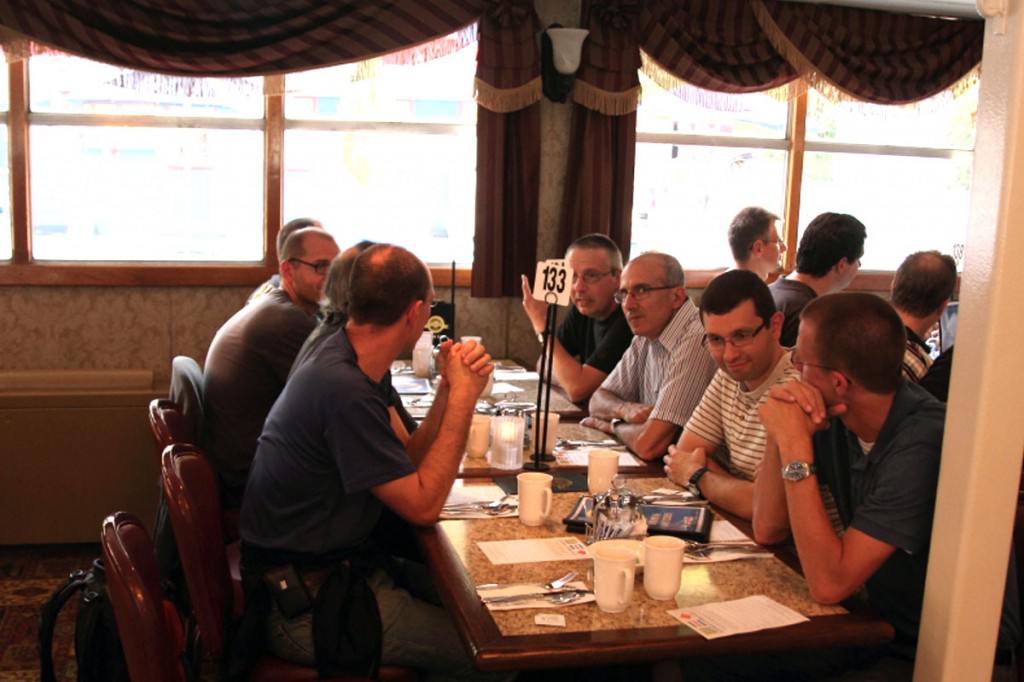
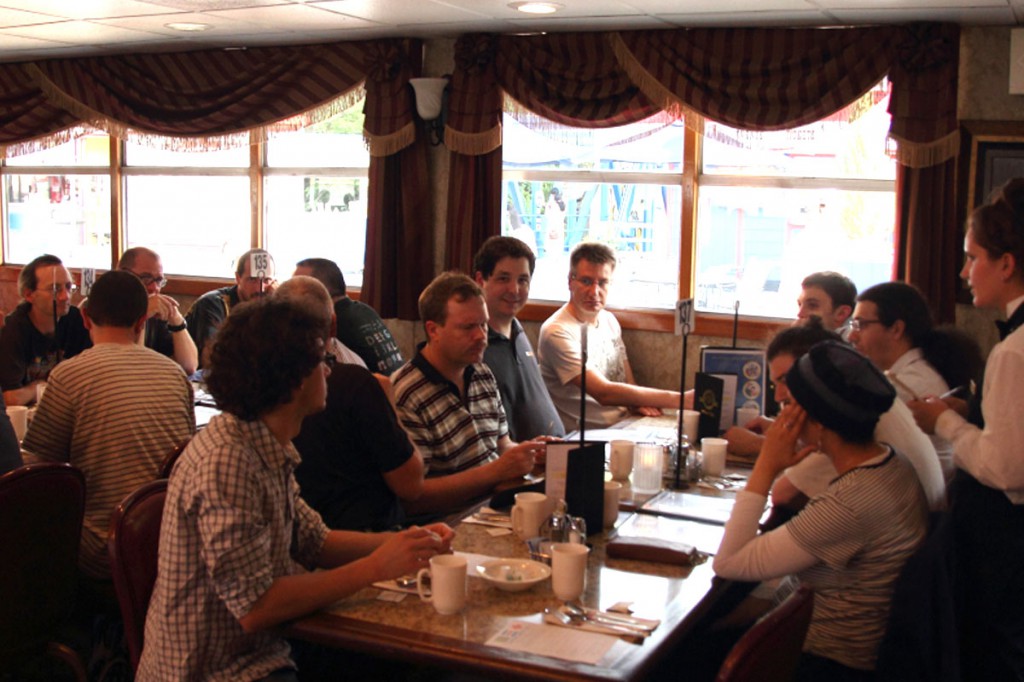

The University of Pittsburgh recently hosted the 7th Scheduling for Large Scale Systems Workshop on June 28th – 30th. This workshop focused, as the title suggests, on scheduling and algorithms for large scale systems, and was structured as a set of thematic half-day sessions. This format allowed for a series of talks that were 20 minutes in duration, but also left plenty of time for discussion.
The workshop itself had 25 participants—including several ICLers who gave talks. Thomas gave a talk on the DAGuE framework, Yves gave a talk on a Unified Model for Assessing Checkpointing Protocols at Extreme Scale, Mathieu gave a talk titled Non Regular Algorithms Over DAGUE Runtime, Anthony gave a talk on Automatic Generation of Tasks for the DAG Scheduling Engine DAGuE, and Aurelien presented on Fault Tolerance Techniques for MPI Programs. In all, ICL was well represented at the workshop, including ICL alumni Julien Langou, Henri Casanova, and Emmanuel Jeannot.
VECPAR 2012 and iWAPT 2012
ICL’s Jakub Kurzak recently attended the 10th International Meeting on High Performance Computing for Computational Science (VECPAR 2012) at the Riken Advanced Institute for Computational Science in Kobe, Japan. While at VECPAR, Jakub gave a 30 minute talk about Programming the LU Factorization for a Multicore System with Accelerators, and served as a chair for the GPU Computing session.
The Seventh International Workshop on Automatic Performance Tuning (iWAPT 2012) was also hosted at RIKEN on July 17th. In this workshop, Jakub was invited to give a talk on Autotuning BLAS for GPUS: Matrix Multiplication on Fermi and Kepler. In total, the events had around 120-150 attendees and Jakub described the scene as small and focused, with a strong emphasis on linear algebra, autotuning, and GPUs. While in Japan, Jakub met with ICL alumni Keita Teranishi and Tomo Hiroyasu.


Interview
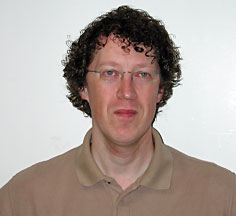

Victor Eijkhout
Where are you from, originally?
I was born in the Netherlands, where I also got my degree. I came to the US about 20 years ago.
Can you summarize your educational background?
My thesis was in numerical analysis from the University of Nijmegen, and although it said something about vector and parallel in the title, I didn’t actually touch too many parallel computers writing it.
How did you first meet Jack?
I had read papers by Jack, and seen him in action at some conferences. If you want the literal answer, I first met him in person when he gave a lecture at the CWI in Amsterdam. In those days, BLAS Level 3 and the idea of optimizing for it were fairly new, and to me as a mathematician those ideas were strange, but also exciting.
What did you work on during your time at ICL?
My own interests include iterative methods for sparse linear systems, so I did a good amount of work on that. Some software that resulted from that is now best forgotten, but I also became a sometime developer of PETSc where I contributed code that I needed for my research. I also participated in some of the ongoing projects such as NetSolve. Among the more tangible results of my work is the Templates book, which is still surprisingly often cited.
What are some of your favorite memories from your time at ICL?
Definitely the retreats in Townsend! In general, ICL is a unique group because of things like the Friday lunches, which make people really feel like they are all part of the same team.
Tell us where you are and what you’re doing now.
In 2005 I joined the Texas Advanced Computing Center in Austin, TX, which at that time was not really on anyone’s map, except in the Teragrid. Since then we acquired Ranger, a top 5 supercomputer, and we are about to deploy Stampede, the first large installation with the Intel Xeon Phi. I play with all that stuff, but also pursue my own research interests, both in iterative methods and other topics. For instance, I’m working on a theoretical model for parallel computations that I’m really excited about.
In what ways did working at ICL prepare you for what you do now, if at all?
Being at ICL was my first experience working with Ph.D. students (I was involved to some degree or other with the thesis work of Piotr Luszczek, Erika Fuentes, and Alfredo Buttari), and writing proposals. My stay was a good transition from working on projects that Jack had set up, to coming up with my own ideas and getting them funded. I learned a lot in my time at ICL.
Tell us something about yourself that might surprise some people.
Knoxville is where I learned to two-step. My enthusiasm for country music and country dancing got to the point that I regularly participated in the tapings of a TV show, Club Dance. One time I was absent from an ICL party, which Jack remarked on. Someone told him that I was probably two-stepping on TV (tapings were on friday nights). Jack’s reaction was something along the lines of, “Are we talking about the same Victor? The one with “ijk” in the last name?”


 ICL alumnus Kiran Kasichayanula received a Best Paper award at