
News and Announcements
YinHe FeiTeng CPU
In December 2011, Xing Zuocheng, of the National University of Defense Technology in China, hosted a seminar about the new Chinese YinHe FeiTeng (YHFT) general purpose CPU. Although information on this chip is scarce, according to the abstract, the updated version of the YHFT CPU will be taped out this year and used in the next generation of TH supercomputers.
Michael Feldman of HPC Wire speculates that, “Given China’s desire to develop and use indigenous microprocessors for its HPC sector, it wouldn’t be too surprising to see FeiTeng processors replace both Intel and NVIDIA parts in a future NUDT supercomputer.”
China’s Homegrown Supercomputers
Last October we saw China take a large step towards building a completely homegrown supercomputer when BlueLight MPP debuted with the Chinese Shenwei SW1600 processor. Well, the Chinese are at it again. A second machine, named Dawning 6000, uses the new Godson-3B processor, and is currently under development.
Interestingly enough, these particular machines may be geared more towards increasing China’s self-sufficiency and market share rather than outright speed. As explained by Jack Dongarra, “I would guess that the Chinese would want to move toward a system that they have developed themselves.…They want to be in a position where they can develop an industry that can generate computers for China and the rest of the world rather than relying on Western components.”
Even though these chips may not be the fastest in the HPC ecosystem, the Chinese claim the Godson-3B is capable of 128 billion flops using just 40 watts—nearly double the peak power efficiency of some U.S. competitors. However, these chips have yet to be tested with a standard benchmark like Linpack. Dongarra also points out that the processor is only part of the energy used in a real-world application; the interconnect, memory, and other components must also be factored into the performance/watt ratio.
ICL on the Move

Min H. Kao Electrical Engineering and Computer Science Building
As many of you are aware, our friends and colleagues at the Electrical Engineering and Computer Science department (EECS) are moving out of the Claxton building and into their new facilities in the Min H. Kao Electrical Engineering and Computer Science Building, or “Min Kao” for short.
With this transition already underway, the ICL administration will be moving into the former EECS executive offices on Claxton’s second floor. Research personnel and support staff will also be relocating to offices on the second and third floors. The “big move” is tentatively scheduled for mid-February. Keep an eye on your e-mail inbox for updates.
Best Paper at IPDPS ’12
“HierKNEM: An Adaptive Framework for Kernel-Assisted and Topology-Aware Collective Communications on Many-core Clusters,” a paper by Teng Ma, George Bosilca, Aurelien Bouteiller, and Jack Dongarra, has been named Best Paper out of 569 submissions for the 26th IEEE International Parallel and Distributed Processing Symposium (IPDPS ’12). The paper will be formally presented at IPDPS ’12 in Shanghai, China, in May 2012. Congratulations on a job well done!
Conference Reports
ORNL Titan Workshop

Several ICL alumni attended the workshop for Titan, the next-generation leadership-class computational resource at the Oak Ridge Leadership Computing Facility (OLCF). Former ICLers in attendance, as pictured above, included Jeff Larkin, Tom Cortese, Haihang You, Bilel Hadri and Daniel Lucio.
The workshop, which ran from January 23-27 at Oak Ridge National Lab, is designed to introduce users to working with Titan by providing hands-on exercises which demonstrate how to utilize available tools and techniques for porting applications to the new machine.
Recent Releases
QUARK 0.9.0 Released
The first standalone release of the QUARK runtime environment (0.9.0) is now available for download.
QUARK enables the dynamic execution of tasks with data dependencies in a multi-core, multi-socket, shared-memory environment. This version is well tested within the PLASMA project, but comes with only a few independent examples in this package.
Visit the new QUARK website to download the tarball.
For detailed examples of how to use QUARK see the PLASMA software distribution.
ScaLAPACK 2.0.1 Released
The ScaLAPACK 2.0.1 release is now available for download.
This package contains:
- Improvements and bug fixes to the PxHSEQR Nonsymmetric Eigenvalue Problem routines.
- Other small bug fixes.
For a complete summary of changes, read the ScaLAPACK 2.0.1 release notes.
Visit the ScaLAPACK web site to download the tarball.
Interview
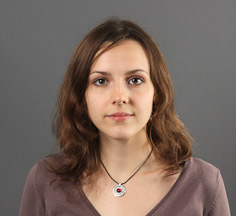
Stephanie Moreaud
Where are you from, originally?
I come from the Perigord, a beautiful region in the South-West of France, famous for its forests, villages and prehistoric sites. It is also well-known for its duck based products such as foie gras, its wines (Bergerac, Monbazillac), and as one of the areas where you can find truffles and ceps. More precisely, I come from Monpazier, a well-preserved bastide built in the 13th century, and classified as one of the most beautiful villages in France.
Can you summarize your educational background?
I studied at the University of Bordeaux where I got my Bachelor’s and my Master’s degrees in Computer Science, and then did my PhD.
Where did you work before joining ICL?
I worked at the LaBRI, University of Bordeaux, in the INRIA Runtime team, where I used to be a PhD student and a teaching assistant at the Computer Science Department and the Institute of Technologies.
Tell us how you first learned about ICL.
As far as ICL as “ICL,” I learned that quite recently. However, I can’t remember exactly when or how, but I learned about “Jack’s lab” at the beginning of my PhD. After that, lots of people contributed to constructing the pool of knowledge I had about ICL before arriving, from my former colleagues and advisors who interacted with the laboratory, to former and current ICL members.
What made you want to work for ICL?
At some point ICL’s and Runtime’s interests crossed and lead to related works and collaborations. It appeared obvious it would be a great opportunity for me to work with ICL’s people. Moreover, in addition to their computer science skills, some people of the lab have pretty well developed commercial skills. 😉
What are your interests/hobbies outside work?
I like reading (with a preference for science fiction and fantasy books), and enjoy role-playing games (the ones you play around a table with (real) people, dice and imagination). I am very fond of walking, theater, and since I arrived I also found myself enthusiastic about swing dancing.
Tell us something about yourself that might surprise people.
That’s not an easy question. Something quite unusual might be that I chose to study computer science by eliminating the other scientific fields proposed at University, and I had barely touched a computer before. Indeed my dream job was to be a theater actress, but as it is uneasy to live from dreams, I looked for safer studies in my other favorite field, Science. I eliminated the fields I could not imagine myself in “for a work-life” and then subscribed to the remaining one, computer science. In France, the first years at University are quite general and treat multiple subjects, so I could easily change my mind. But it appears it wasn’t a bad choice.
What are you working on while at ICL?
My primary research interests are to improve data transfer performance on HPC architectures. In that context, I work, for now, on the DAGuE project, and will look at how it could benefit from using new communication interfaces such as CCI.
If you weren’t working at ICL, where would you like to be working and why?
Well, in a theater I guess, as some dreams die-hard, or in a French university as it seems that far from my students, I really miss teaching.


 Charles Collins and his wife Julia are the proud parents of a new baby boy! Samuel Phillip Collins was born on December 1, 2011 at 14:01 EST, weighing in at 7 pounds and 7 ounces.