
News and Announcements
IESP: Meeting Six, San Francisco
 At the beginning of April, ICL helped organize and stage the sixth meeting of the International Exascale Software Project (IESP). The success of the meeting has to be counted as something of a surprise, given the fact that less than three weeks before the scheduled dates, the meeting had to be moved from Kyoto, Japan to San Francisco because of the disruptions and uncertainty surrounding the tragic aftermath of the earthquake, tsunami, and ongoing nuclear crisis that struck Japan in the middle of March. Working with colleagues at Argonne National Laboratory, Tracy managed, with heroic effort, to locate and make all the necessary meeting preparations at a hotel in downtown San Francisco, and most of the invited participants (more than seventy in all) were able to adjust their travel accordingly. Jack and Pete Beckman led the meeting; Tracy, Teresa, and Terry were there to support the effort.
The dominant theme of the San Francisco meeting was “infrastructure co-design for HPC,” i.e. pro-active collaboration between science communities, software infrastructure R&D groups, and commercial hardware and system vendors, intended to help negotiate the complex design tradeoffs involved in building the tomorrow’s extreme scale platforms. The idea of the “co-design process” was pioneered in the mobile and embedded system industry, but the IESP has played a leading role in generalizing it in order to help meet the unprecedented challenges of exascale computing. Following a series of updates on the progress in extreme scale HPC programs in the US, Europe, and Asia, breakout sessions for each of the main stakeholder groups worked on developing their specific goal requirements for the exascale co-design process.
Supercomputers: Speed vs. Utility
As the University of Illinois at Urbana-Champaign assembles their new supercomputer, aptly named Blue Waters because of its method of cooling, their research team questions whether an attempt at the Top 500 list even matters. Thom Dunning, who leads the computer’s development as head of the university’s National Center for Supercomputing Applications, is more interested in complex simulations of tornadoes and biological cell development than the Top 500’s benchmark.
Dr. Jack Dongarra insists that the new HPC benchmark will better reflect a supercomputer’s multifaceted abilities, rather than simply calculating its speed. In this context, the best supercomputer may not be the fastest, but the machine that best fits the given application.
http://chronicle.com/article/In-University-Supercomputing/126979/
Charm++ Workshop
Jack gave a lecture at this year’s Charm++ Workshop where he outlined the importance of software development in a parallel computing environment. New hardware architectures, and the resulting leaps in performance, have been handicapped by the scarcity of open source software to support the road to Exascale. See the PowerPoint slides for the entire lecture.
The Keeneland Project
The Keeneland Project is a five-year, $12 million Track 2D grant awarded by the NSF for the deployment of an experimental high performance heterogeneous system with NVIDIA Tesla accelerators. UTK is a partner leading the development of scientific libraries for the new system. On April 14 and 15 there was a two day Keeneland tutorial on GPU heterogeneous processing for computational science. Stan Tomov gave an overview of the MAGMA 1.0 library–a library similar in functionality to LAPACK but for GPU and multicore architectures. The slides from his presentation are provided in the link below.
http://icl.cs.utk.edu/projectsfiles/magma/pubs/KeenelandTomov.pdf
ATLAS Featured on RCE Podcast
[audio:http://icl.cs.utk.edu/newsletter/files/2011-05/52RCE-ATLAS.mp3|titles=52RCE-ATLAS]Former ICLer Dr. Clint Whaley was interviewed by Brock Palen and Jeff Squyres about the ATLAS project in a recent episode of the RCE Podcast.
http://www.rce-cast.com/Podcast/rce-52-atlas-automatically-tuned-linear-algebra-software.html
Dates to Remember
SC11 Submission Deadlines
Poster submissions for SC11 are open until July 22, 2011. Don’t forget to discuss your entries with your team leader, or Jack, before submitting them to the Supercomputing web site.
A complete list of submission deadlines can be viewed here:
ICL Retreat 2011

Mark your calendars for August 11-12 for this year’s ICL Retreat! The tentative venue is the Buckberry Lodge in Gatlinburg.
Interview

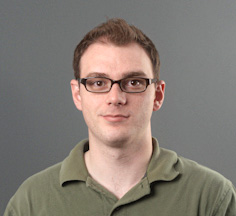
Sam Crawford
Where are you from, originally?
I am originally from Knoxville, Tennessee. Home grown, I suppose.
Can you summarize your educational background?
In May of 2010, I graduated from UT with a B.A. in English with concentrations in Technical Communication and Rhetoric & Writing. My education primarily focused on efficient communication, composition pedagogy, and analysis & production of technical documentation.
Where did you work before joining ICL?
I worked as a Systems Administrator and Compliance Team Member at Brogan Financial—a small investment brokerage in West Knoxville. I was in charge of the portfolio management software database, contact management software database, domain controller, and compliant archiving solutions.
Tell us how you first learned about ICL.
I had been searching for a Technical Writing position at DOE for several months, but the job postings were scarce, and were usually filled internally. Finally, a friend of mine—Brian Zachary—said I should look at UT and ICL for similar positions. A month or so went by, and sure enough, I saw a job posting at ICL for an “Information Specialist.” I read the job description, and it was exactly what I had been looking for.
What made you want to work for ICL?
When I did my initial investigation of ICL, I was blown away by all of the bleeding-edge research that goes on here. Originally, when I thought of supercomputing, I thought of ORNL or IBM; I had no idea that UT was home to a supercomputing laboratory of this scale. I immediately wanted to be a part of it.
What are your interests/hobbies outside work?
I am a petrol head; I love to build cars, and that is what I spend a sizeable portion of my “free time” doing. I’ve had several cars over the years, daily drivers, but one car I’ve managed to hang onto is my 1966 Mustang coupe. My dad and I have had the car for almost ten years and we work on it whenever we have the opportunity. One day I hope to make it a dedicated Auto-X car in the SCCA vintage class.

Tell us something about yourself that might surprise people.
In high school, I took every welding class my school offered, and eventually got a job as a welder/fabricator. I worked for a company called Promax in Clinton, TN where I helped build pro-street and pro-modified race cars.
What will you be working on while at ICL?
I will be working with Terry Moore, Don Fike, and David Rogers on the newsletters and annual reports. I’m working with the IGMCS participants, handling their applications and answering any questions they have about the minor. I also help the ICL team polish their research papers prior to submission.
If you weren’t working at ICL, where would you like to be working and why?
I would love to work for Subaru’s Rally Team and build Subaru’s next generation World Rally Car. Subaru has such a rich history in rally, and it would be incredible to work for a rally team that has attracted some of the best drivers in the sport.


