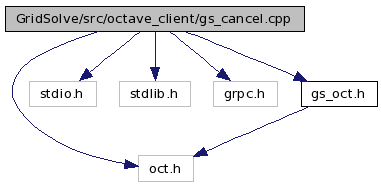
#include <oct.h>#include <stdio.h>#include <stdlib.h>#include "grpc.h"#include "gs_oct.h"
Include dependency graph for gs_cancel.cpp:
Go to the source code of this file.
Functions | |
| DEFUN_DLD (gs_cancel, args, nargout,"Octave client for GridSolve") | |
Function Documentation
| DEFUN_DLD | ( | gs_cancel | , | |
| args | , | |||
| nargout | , | |||
| "Octave client for GridSolve" | ||||
| ) |
Definition at line 22 of file gs_cancel.cpp.
                                                                    {
    octave_value_list bad_retval;   //bad return value
    grpc_error_t status;            //GridRPC status/error code
    grpc_sessionid_t req_id;        //GridRPC non-blocking call session id


    //meaningless return value for error condition
    //or those calls that do not make grpc function call
    for (int i = 0; i < nargout; i++) {
        bad_retval(i) = Matrix(0, 0);
    }

    //number of input arguments
    int nargin = args.length();

    //input argument error checking
    if (nargin <= 0) {
        fprintf(stderr, "No input service name found. Aborted.\n");
        return bad_retval;
    }

    if (nargin > 1) {
        fprintf(stderr, "Exactly one argument (session id) is expected. Aborted.\n");
        return bad_retval;
    }

    //otherwise, the input is correct

    //initialize the GridSolve environment
    status = grpc_initialize(NULL);
    if (status != GRPC_NO_ERROR && status != GRPC_ALREADY_INITIALIZED) {
        fprintf(stderr, "%s\n", grpc_error_string(status));
        return bad_retval;
    }

    //the GRPC session id
    req_id = args(0).int_value();
    //cancel the job
    status = grpc_cancel(req_id);

    if (status != GRPC_NO_ERROR) {
        fprintf(stderr, "%s\n", grpc_error_string(status));
        return bad_retval;
    }

    //finalize and clean up
    grpc_finalize();
    return octave_value(status);
}
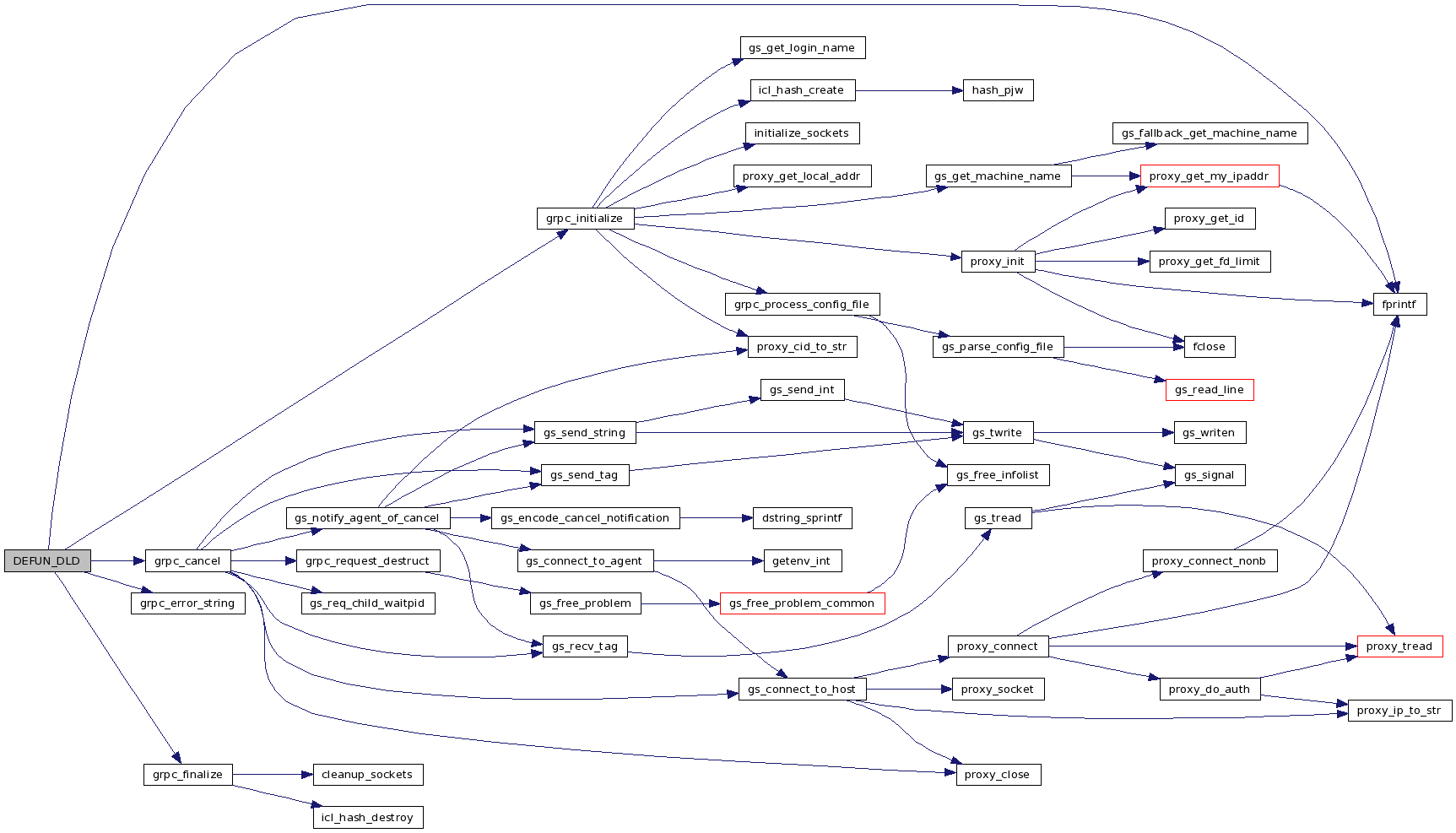
Here is the call graph for this function: