Loading...
Searching...
No Matches
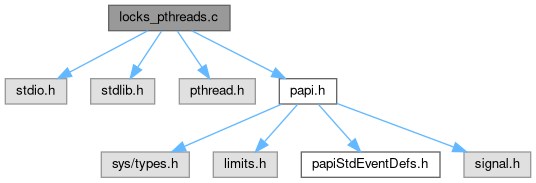
Include dependency graph for examples/locks_pthreads.c:
Go to the source code of this file.
Macros | |
| #define | ERROR_RETURN(retval) { fprintf(stderr, "Error %d %s:line %d: \n", retval,__FILE__,__LINE__); exit(retval); } |
| #define | LOOPS 100000 |
| #define | SLEEP_VALUE 20000 |
Functions | |
| void * | Master (void *arg) |
| void * | Slave (void *arg) |
| int | main (int argc, char **argv) |
Variables | |
| int | count |
| int | rank |
Macro Definition Documentation
◆ ERROR_RETURN
| #define ERROR_RETURN | ( | retval | ) | { fprintf(stderr, "Error %d %s:line %d: \n", retval,__FILE__,__LINE__); exit(retval); } |
Definition at line 13 of file examples/locks_pthreads.c.
◆ LOOPS
| #define LOOPS 100000 |
Definition at line 15 of file examples/locks_pthreads.c.
◆ SLEEP_VALUE
| #define SLEEP_VALUE 20000 |
Definition at line 16 of file examples/locks_pthreads.c.
Function Documentation
◆ main()
Definition at line 73 of file examples/locks_pthreads.c.
74{
75 pthread_t master;
76 pthread_t slave1;
79
80 /* Setup a random number so compilers can't optimize it out */
81 count = rand();
82 result_m = count;
83 rank = 0;
84
86 result_m = 2 * result_m - i;
87 }
88 result_s = result_m;
89
91 result_s += i;
92 }
93
95 {
96 printf("Library initialization error! \n");
97 exit(-1);
98 }
99
102
105
111 }
116 }
117 pthread_join(master, NULL);
120 ERROR_RETURN(1);
122
123 pthread_join(slave1, NULL);
125
127 ERROR_RETURN(1);
128
129 exit(0);
130}
initialize the PAPI library.
Lock one of two mutex variables defined in papi.h.
Set the current debug level for error output from PAPI.
Initialize thread support in the PAPI library.
Unlock one of the mutex variables defined in papi.h.
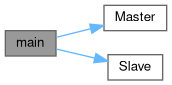
Here is the call graph for this function:
◆ Master()
| void * Master | ( | void * | arg | ) |
Definition at line 21 of file examples/locks_pthreads.c.
22{
24 int *pointer, * pointer2;
25
26 tmp = 20;
27 pointer = &tmp;
28
29 /* register the thread */
32
33 /* save the pointer for late use */
36 /* change the value of tmp */
37 tmp = 15;
38
39 usleep(SLEEP_VALUE);
41 /* Make sure Slaves are not sleeping */
44 }
46
47 /* retrieve the pointer saved by PAPI_set_thr_specific */
50
51 /* the output value should be 15 */
52 printf("Thread specific data is %d \n", *pointer2);
53
54 pthread_exit(NULL);
55}
Retrieve a pointer to a thread specific data structure.
Notify PAPI that a thread has 'appeared'.
Store a pointer to a thread specific data structure.
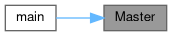
Here is the caller graph for this function:
◆ Slave()
| void * Slave | ( | void * | arg | ) |
Definition at line 57 of file examples/locks_pthreads.c.
58{
60
65 }
68 pthread_exit(NULL);
69}
Here is the caller graph for this function:

Variable Documentation
◆ count
| int count |
Definition at line 18 of file examples/locks_pthreads.c.
◆ rank
| int rank |
Definition at line 19 of file examples/locks_pthreads.c.