Loading...
Searching...
No Matches
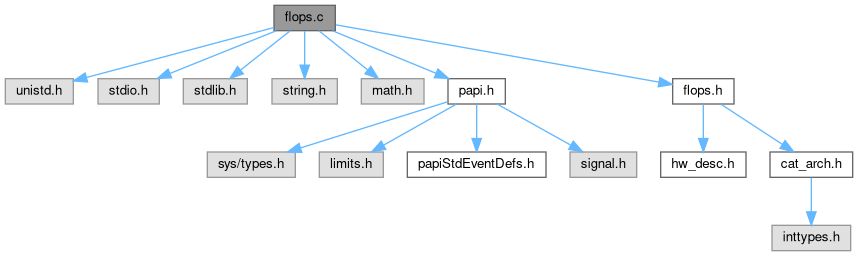
Include dependency graph for flops.c:
Go to the source code of this file.
Macros | |
| #define | _GNU_SOURCE |
| #define | DOUBLE 2 |
| #define | SINGLE 1 |
| #define | HALF 0 |
| #define | CHOLESKY 3 |
| #define | GEMM 2 |
| #define | NORMALIZE 1 |
| #define | MAXDIM 51 |
| #define | FMA 0 |
Functions | |
| void | print_header (FILE *fp, char *prec, char *kernel) |
| void | resultline (int i, int kernel, int EventSet, FILE *fp) |
| void | exec_flops (int precision, int EventSet, FILE *fp) |
| double | normalize_double (int n, double *xd) |
| void | cholesky_double (int n, double *ld, double *ad) |
| void | exec_double_norm (int EventSet, FILE *fp) |
| void | exec_double_cholesky (int EventSet, FILE *fp) |
| void | exec_double_gemm (int EventSet, FILE *fp) |
| void | keep_double_vec_res (int n, double *xd) |
| void | keep_double_mat_res (int n, double *ld) |
| float | normalize_single (int n, float *xs) |
| void | cholesky_single (int n, float *ls, float *as) |
| void | exec_single_norm (int EventSet, FILE *fp) |
| void | exec_single_cholesky (int EventSet, FILE *fp) |
| void | exec_single_gemm (int EventSet, FILE *fp) |
| void | keep_single_vec_res (int n, float *xs) |
| void | keep_single_mat_res (int n, float *ls) |
| void | gemm_single (int n, float *cs, float *as, float *bs) |
| void | gemm_double (int n, double *cd, double *ad, double *bd) |
| void | flops_driver (char *papi_event_name, hw_desc_t *hw_desc, char *outdir) |
Macro Definition Documentation
◆ _GNU_SOURCE
◆ CHOLESKY
◆ DOUBLE
◆ FMA
◆ GEMM
◆ HALF
◆ MAXDIM
◆ NORMALIZE
◆ SINGLE
Function Documentation
◆ cholesky_double()
| void cholesky_double | ( | int | n, |
| double * | ld, | ||
| double * | ad | ||
| ) |

◆ cholesky_single()
| void cholesky_single | ( | int | n, |
| float * | ls, | ||
| float * | as | ||
| ) |

◆ exec_double_cholesky()
| void exec_double_cholesky | ( | int | EventSet, |
| FILE * | fp | ||
| ) |
Definition at line 353 of file flops.c.
353 {
354
356 double *ad=NULL, *ld=NULL;
357 double sumd = 0.0;
358
359 /* Print info about the computational kernel. */
361
362 /* Allocate the matrices. */
365
366 /* Step through the different array sizes. */
368 /* Initialize the needed arrays at this size. */
371 ld[i * n + j] = 0.0;
372 ld[j * n + i] = 0.0;
373
376 }
379 }
380
381 /* Guarantee diagonal dominance for successful Cholesky. */
383 sumd = 0.0;
384 for ( j = 0; j < n; j++ ) {
385 sumd += fabs(ad[i * n + j]);
386 }
388 }
389
390 /* Reset PAPI count. */
392 return;
393 }
394
395 /* Run the kernel. */
396 cholesky_double( n, ld, ad );
397 usleep(1);
398
399 /* Stop and print count. */
401
402 keep_double_mat_res( n, ld );
403 }
404
405 free( ad );
406 free( ld );
407}
Start counting hardware events in an event set.
Here is the call graph for this function:

Here is the caller graph for this function:

◆ exec_double_gemm()
| void exec_double_gemm | ( | int | EventSet, |
| FILE * | fp | ||
| ) |
Definition at line 409 of file flops.c.
409 {
410
412 double *ad=NULL, *bd=NULL, *cd=NULL;
413
414 /* Print info about the computational kernel. */
416
417 /* Allocate the matrices. */
421
422 /* Step through the different array sizes. */
424 /* Initialize the needed arrays at this size. */
426 for ( j = 0; j < n; j++ ) {
427 cd[i * n + j] = 0.0;
430 }
431 }
432
433 /* Reset PAPI count. */
435 return;
436 }
437
438 /* Run the kernel. */
439 gemm_double( n, cd, ad, bd );
440 usleep(1);
441
442 /* Stop and print count. */
444
445 keep_double_mat_res( n, cd );
446 }
447
448 free( ad );
449 free( bd );
450 free( cd );
451}
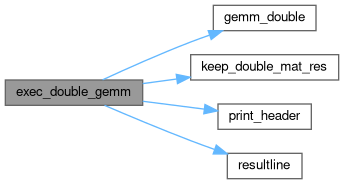
Here is the call graph for this function:
Here is the caller graph for this function:

◆ exec_double_norm()
| void exec_double_norm | ( | int | EventSet, |
| FILE * | fp | ||
| ) |
Definition at line 316 of file flops.c.
316 {
317
319 double *xd=NULL;
320
321 /* Print info about the computational kernel. */
323
324 /* Allocate the linear arrays. */
326
327 /* Step through the different array sizes. */
329 /* Initialize the needed arrays at this size. */
332 }
333
334 /* Reset PAPI count. */
336 return;
337 }
338
339 /* Run the kernel. */
340 normalize_double( n, xd );
341 usleep(1);
342
343 /* Stop and print count. */
345
346 keep_double_vec_res( n, xd );
347 }
348
349 /* Free dynamically allocated memory. */
350 free( xd );
351}
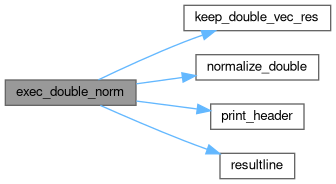
Here is the call graph for this function:
Here is the caller graph for this function:

◆ exec_flops()
Definition at line 813 of file flops.c.
813 {
814
815 /* Vector Normalization and Cholesky Decomposition tests. */
816 switch(precision) {
821 break;
826 break;
828#if defined(ARM)
832#endif
833 break;
834 default:
835 ;
836 }
837
838 return;
839}
Here is the call graph for this function:
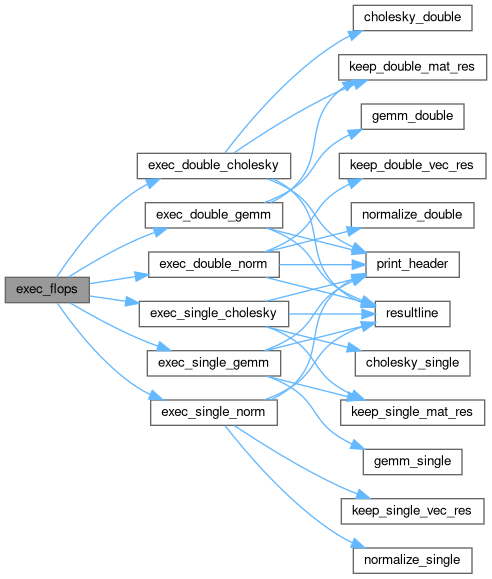
Here is the caller graph for this function:

◆ exec_single_cholesky()
| void exec_single_cholesky | ( | int | EventSet, |
| FILE * | fp | ||
| ) |
Definition at line 518 of file flops.c.
518 {
519
521 float *as=NULL, *ls=NULL;
522 float sums = 0.0;
523
524 /* Print info about the computational kernel. */
526
527 /* Allocate the matrices. */
530
531 /* Step through the different array sizes. */
533 /* Initialize the needed arrays at this size. */
536 ls[i * n + j] = 0.0;
537 ls[j * n + i] = 0.0;
538
541 }
544 }
545
546 /* Guarantee diagonal dominance for successful Cholesky. */
548 sums = 0.0;
549 for ( j = 0; j < n; j++ ) {
550 sums += fabs(as[i * n + j]);
551 }
553 }
554
555 /* Reset PAPI count. */
557 return;
558 }
559
560 /* Run the kernel. */
561 cholesky_single( n, ls, as );
562 usleep(1);
563
564 /* Stop and print count. */
566
567 keep_single_mat_res( n, ls );
568 }
569
570 free( as );
571 free( ls );
572}
Here is the call graph for this function:
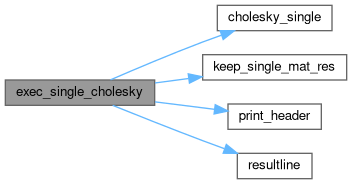
Here is the caller graph for this function:

◆ exec_single_gemm()
| void exec_single_gemm | ( | int | EventSet, |
| FILE * | fp | ||
| ) |
Definition at line 574 of file flops.c.
574 {
575
577 float *as=NULL, *bs=NULL, *cs=NULL;
578
579 /* Print info about the computational kernel. */
581
582 /* Allocate the matrices. */
586
587 /* Step through the different array sizes. */
589 /* Initialize the needed arrays at this size. */
591 for ( j = 0; j < n; j++ ) {
592 cs[i * n + j] = 0.0;
595 }
596 }
597
598 /* Reset PAPI count. */
600 return;
601 }
602
603 /* Run the kernel. */
604 gemm_single( n, cs, as, bs );
605 usleep(1);
606
607 /* Stop and print count. */
609
610 keep_single_mat_res( n, cs );
611 }
612
613 free( as );
614 free( bs );
615 free( cs );
616}
Here is the call graph for this function:
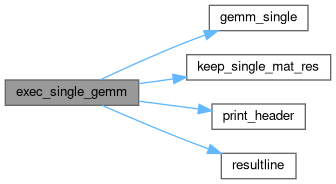
Here is the caller graph for this function:

◆ exec_single_norm()
| void exec_single_norm | ( | int | EventSet, |
| FILE * | fp | ||
| ) |
Definition at line 481 of file flops.c.
481 {
482
484 float *xs=NULL;
485
486 /* Print info about the computational kernel. */
488
489 /* Allocate the linear arrays. */
491
492 /* Step through the different array sizes. */
494 /* Initialize the needed arrays at this size. */
497 }
498
499 /* Reset PAPI count. */
501 return;
502 }
503
504 /* Run the kernel. */
505 normalize_single( n, xs );
506 usleep(1);
507
508 /* Stop and print count. */
510
511 keep_single_vec_res( n, xs );
512 }
513
514 /* Free dynamically allocated memory. */
515 free( xs );
516}
Here is the call graph for this function:
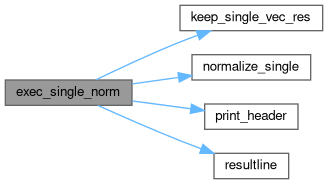
Here is the caller graph for this function:

◆ flops_driver()
| void flops_driver | ( | char * | papi_event_name, |
| hw_desc_t * | hw_desc, | ||
| char * | outdir | ||
| ) |
Definition at line 841 of file flops.c.
841 {
844 FILE* ofp_papi;
845 const char *sufx = ".flops";
846 char *papiFileName;
847
848 (void)hw_desc;
849
850 int l = strlen(outdir)+strlen(papi_event_name)+strlen(sufx);
851 if (NULL == (papiFileName = (char *)calloc( 1+l, sizeof(char)))) {
852 return;
853 }
854 if (l != (sprintf(papiFileName, "%s%s%s", outdir, papi_event_name, sufx))) {
855 goto error0;
856 }
857 if (NULL == (ofp_papi = fopen(papiFileName,"w"))) {
859 goto error0;
860 }
861
864 goto error1;
865 }
866
869 goto error1;
870 }
871
875
878 goto error1;
879 }
882 goto error1;
883 }
884
885error1:
886 fclose(ofp_papi);
887error0:
888 free(papiFileName);
889 return;
890}
add PAPI preset or native hardware event by name to an EventSet
Empty and destroy an EventSet.
Create a new empty PAPI EventSet.
Empty and destroy an EventSet.
FILE * stderr
int fclose(FILE *__stream)
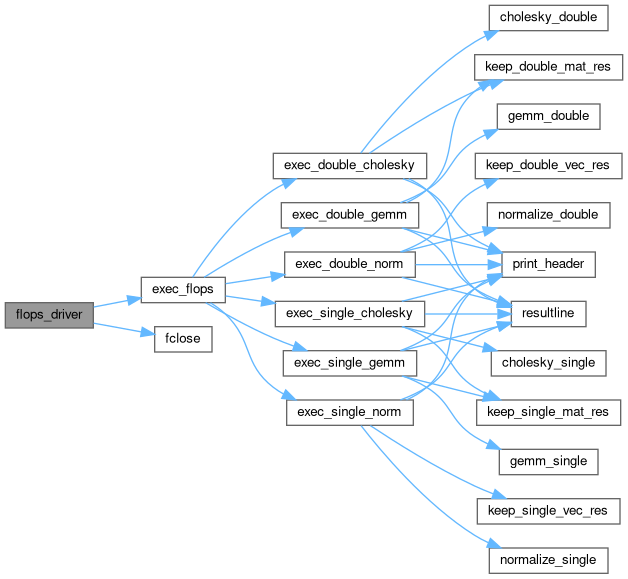
Here is the call graph for this function:
Here is the caller graph for this function:

◆ gemm_double()
| void gemm_double | ( | int | n, |
| double * | cd, | ||
| double * | ad, | ||
| double * | bd | ||
| ) |
Definition at line 298 of file flops.c.
298 {
299
301 DP_SCALAR_TYPE argI, argJ, argK;
302
304 for (j = 0; j < n; j++) {
305 argK = SET_VEC_SD(0.0);
306 for (k = 0; k < n; k++) {
307 argI = SET_VEC_SD(ad[i * n + k]);
308 argJ = SET_VEC_SD(bd[k * n + j]);
309 FMA_VEC_SD(argK, argI, argJ, argK);
310 }
312 }
313 }
314}
Here is the caller graph for this function:

◆ gemm_single()
| void gemm_single | ( | int | n, |
| float * | cs, | ||
| float * | as, | ||
| float * | bs | ||
| ) |
Definition at line 240 of file flops.c.
240 {
241
243 SP_SCALAR_TYPE argI, argJ, argK;
244
246 for (j = 0; j < n; j++) {
247 argK = SET_VEC_SS(0.0);
248 for (k = 0; k < n; k++) {
249 argI = SET_VEC_SS(as[i * n + k]);
250 argJ = SET_VEC_SS(bs[k * n + j]);
251 FMA_VEC_SS(argK, argI, argJ, argK);
252 }
254 }
255 }
256}
Here is the caller graph for this function:

◆ keep_double_mat_res()
| void keep_double_mat_res | ( | int | n, |
| double * | ld | ||
| ) |
Definition at line 466 of file flops.c.
466 {
467
469 double sum = 0.0;
471 for( j = 0; j < n; ++j ) {
472 sum += ld[i * n + j];
473 }
474 }
475
476 if( 1.2345 == sum ) {
477 fprintf(stderr, "Side-effect to disable dead code elimination by the compiler. Please ignore.\n");
478 }
479}
Here is the caller graph for this function:

◆ keep_double_vec_res()
| void keep_double_vec_res | ( | int | n, |
| double * | xd | ||
| ) |

◆ keep_single_mat_res()
| void keep_single_mat_res | ( | int | n, |
| float * | ls | ||
| ) |
Definition at line 631 of file flops.c.
631 {
632
634 float sum = 0.0;
636 for( j = 0; j < n; ++j ) {
637 sum += ls[i * n + j];
638 }
639 }
640
641 if( 1.2345 == sum ) {
642 fprintf(stderr, "Side-effect to disable dead code elimination by the compiler. Please ignore.\n");
643 }
644}
Here is the caller graph for this function:

◆ keep_single_vec_res()
| void keep_single_vec_res | ( | int | n, |
| float * | xs | ||
| ) |

◆ normalize_double()
| double normalize_double | ( | int | n, |
| double * | xd | ||
| ) |

◆ normalize_single()
| float normalize_single | ( | int | n, |
| float * | xs | ||
| ) |

◆ print_header()
| void print_header | ( | FILE * | fp, |
| char * | prec, | ||
| char * | kernel | ||
| ) |
◆ resultline()
Definition at line 65 of file flops.c.
65 {
66
67 long long flpins = 0, denom;
68 long long papi, all, add, sub, mul, div, sqrt, fma;
70
72 return;
73 }
74
75 switch(kernel) {
77 all = 3*i+1;
78 denom = all;
79 add = i;
80 sub = 0;
81 mul = i;
82 div = i;
84 sqrt = 0;
85 } else {
86 sqrt = 1;
87 }
88 fma = 0;
89 break;
93 denom = 1;
94 } else {
95 denom = all;
96 }
97 add = 0;
98 sub = 0;
99 mul = 0;
100 div = 0;
101 sqrt = 0;
103 break;
107 denom = 1;
108 } else {
109 denom = all;
110 }
115 sqrt = i;
116 fma = 0;
117 break;
118 default:
119 all = -1;
120 denom = -1;
121 add = -1;
122 sub = -1;
123 mul = -1;
124 div = -1;
125 sqrt = -1;
126 fma = -1;
127 }
128
129 papi = flpins << FMA;
130
131 fprintf(fp, "%d %lld %.17g %lld %lld %lld %lld %lld %lld %lld\n", i, papi, ((double)papi)/((double)denom), add, sub, mul, div, sqrt, fma, all);
132}
Stop counting hardware events in an event set.
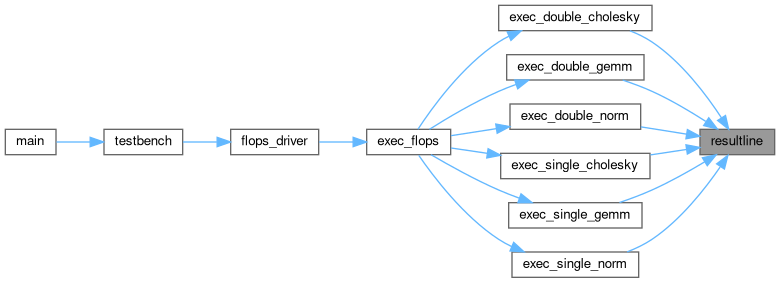
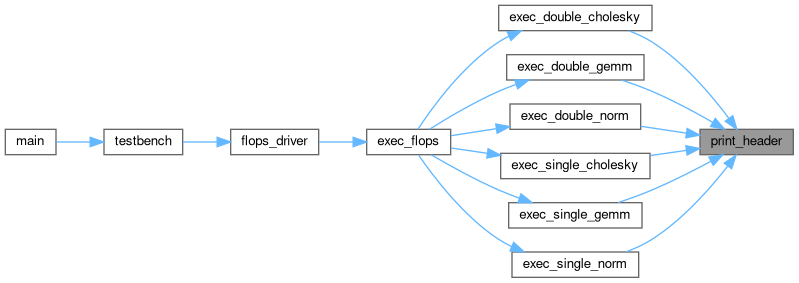
Here is the caller graph for this function: