PAPI 7.1.0.0
Loading...
Searching...
No Matches
calibrate.c File Reference
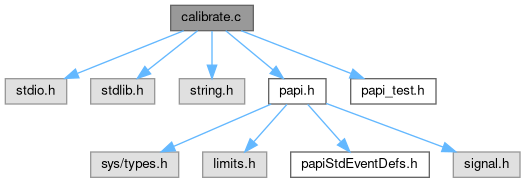
Include dependency graph for calibrate.c:
Go to the source code of this file.

Macros

#define INDEX1   100
 
#define INDEX5   500
 
#define MAX_WARN   10
 
#define MAX_ERROR   80
 
#define MAX_DIFF   14
 
#define FMA   0
 

Functions

static void headerlines (const char *title, int quiet)
 
static void resultline (int i, int j, int EventSet, int fail, int quiet)
 
static void print_help (char **argv)
 
static float inner_single (int n, float *x, float *y)
 
static double inner_double (int n, double *x, double *y)
 
static void vector_single (int n, float *a, float *x, float *y)
 
static void vector_double (int n, double *a, double *x, double *y)
 
static void matrix_single (int n, float *c, float *a, float *b)
 
static void matrix_double (int n, double *c, double *a, double *b)
 
static void reset_flops (const char *title, int EventSet)
 
int main (int argc, char *argv[])
 

Macro Definition Documentation

◆ FMA

#define FMA   0

Definition at line 58 of file calibrate.c.

◆ INDEX1

#define INDEX1   100

Definition at line 26 of file calibrate.c.

◆ INDEX5

#define INDEX5   500

Definition at line 27 of file calibrate.c.

◆ MAX_DIFF

#define MAX_DIFF   14

Definition at line 31 of file calibrate.c.

◆ MAX_ERROR

#define MAX_ERROR   80

Definition at line 30 of file calibrate.c.

◆ MAX_WARN

#define MAX_WARN   10

Definition at line 29 of file calibrate.c.

Function Documentation

◆ headerlines()

static void headerlines ( const char *  title,
int  quiet 
)
static

Definition at line 38 of file calibrate.c.

39{
40
41 if ( !quiet ) {
42 printf( "\n%s:\n%8s %12s %12s %8s %8s\n", title, "i", "papi", "theory",
43 "diff", "%error" );
44 printf( "-------------------------------------------------------------------------\n" );
45 }
46}
int quiet
Definition: rapl_overflow.c:19
Here is the caller graph for this function:

◆ inner_double()

static double inner_double ( int  n,
double *  x,
double *  y 
)
static

Definition at line 131 of file calibrate.c.

132{
133 double aa = 0.0;
134 int i;
135
136 for ( i = 0; i <= n; i++ )
137 aa = aa + x[i] * y[i];
138 return ( aa );
139}
int i
double aa[N]
Definition: byte_profile.c:35
volatile double y
volatile double x
Here is the caller graph for this function:

◆ inner_single()

static float inner_single ( int  n,
float *  x,
float *  y 
)
static

Definition at line 120 of file calibrate.c.

121{
122 float aa = 0.0;
123 int i;
124
125 for ( i = 0; i <= n; i++ )
126 aa = aa + x[i] * y[i];
127 return ( aa );
128}
Here is the caller graph for this function:

◆ main()

int main ( int  argc,
char *  argv[] 
)

Definition at line 197 of file calibrate.c.

198{
199 extern void dummy( void * );
200
201 float aa, *a=NULL, *b=NULL, *c=NULL, *x=NULL, *y=NULL;
202 double aad, *ad=NULL, *bd=NULL, *cd=NULL, *xd=NULL, *yd=NULL;
203 int i, j, n;
204 int inner = 0;
205 int vector = 0;
206 int matrix = 0;
207 int double_precision = 0;
208 int fail = 1;
209 int retval = PAPI_OK;
210 char papi_event_str[PAPI_MIN_STR_LEN] = "PAPI_FP_OPS";
211 int papi_event;
212 int EventSet = PAPI_NULL;
213 int quiet;
214
215 /* Parse the input arguments */
216 for ( i = 0; i < argc; i++ ) {
217 if ( strstr( argv[i], "-i" ) )
218 inner = 1;
219 else if ( strstr( argv[i], "-f" ) )
220 fail = 0;
221 else if ( strstr( argv[i], "-v" ) )
222 vector = 1;
223 else if ( strstr( argv[i], "-m" ) )
224 matrix = 1;
225 else if ( strstr( argv[i], "-e" ) ) {
226 if ( ( argv[i + 1] == NULL ) || ( strlen( argv[i + 1] ) == 0 ) ) {
227 print_help( argv );
228 exit( 1 );
229 }
230 strncpy( papi_event_str, argv[i + 1], sizeof ( papi_event_str ) - 1);
231 papi_event_str[sizeof ( papi_event_str )-1] = '\0';
232 i++;
233 } else if ( strstr( argv[i], "-d" ) )
234 double_precision = 1;
235 else if ( strstr( argv[i], "-h" ) ) {
236 print_help( argv );
237 exit( 1 );
238 }
239 }
240
241 /* if no options specified, set all tests to TRUE */
242 if ( inner + vector + matrix == 0 )
243 inner = vector = matrix = 1;
244
245
246 /* Set TESTS_QUIET variable */
247 quiet = tests_quiet( argc, argv );
248
249 if ( !quiet ) {
250 printf( "Initializing..." );
251 }
252
253 /* Initialize PAPI */
255 if ( retval != PAPI_VER_CURRENT ) {
256 test_fail( __FILE__, __LINE__, "PAPI_library_init", retval );
257 }
258
259 /* Translate name */
260 retval = PAPI_event_name_to_code( papi_event_str, &papi_event );
261 if ( retval != PAPI_OK ) {
262 test_fail( __FILE__, __LINE__, "PAPI_event_name_to_code", retval );
263 }
264
265 if ( PAPI_query_event( papi_event ) != PAPI_OK ) {
266 test_skip( __FILE__, __LINE__, "PAPI_query_event", PAPI_ENOEVNT );
267 }
268
269 if ( ( retval = PAPI_create_eventset( &EventSet ) ) != PAPI_OK ) {
270 test_fail( __FILE__, __LINE__, "PAPI_create_eventset", retval );
271 }
272
273 if ( ( retval = PAPI_add_event( EventSet, papi_event ) ) != PAPI_OK ) {
274 test_fail( __FILE__, __LINE__, "PAPI_add_event", retval );
275 }
276
277 if (!quiet) printf( "\n" );
278
279 retval = PAPI_OK;
280
281 /* Inner Product test */
282 if ( inner ) {
283 /* Allocate the linear arrays */
284 if (double_precision) {
285 xd = malloc( INDEX5 * sizeof(double) );
286 yd = malloc( INDEX5 * sizeof(double) );
287 if ( !( xd && yd ) )
289 }
290 else {
291 x = malloc( INDEX5 * sizeof(float) );
292 y = malloc( INDEX5 * sizeof(float) );
293 if ( !( x && y ) )
295 }
296
297 if ( retval == PAPI_OK ) {
298 headerlines( "Inner Product Test", quiet );
299
300 /* step through the different array sizes */
301 for ( n = 0; n < INDEX5; n++ ) {
302 if ( n < INDEX1 || ( ( n + 1 ) % 50 ) == 0 ) {
303
304 /* Initialize the needed arrays at this size */
305 if ( double_precision ) {
306 for ( i = 0; i <= n; i++ ) {
307 xd[i] = ( double ) rand( ) * ( double ) 1.1;
308 yd[i] = ( double ) rand( ) * ( double ) 1.1;
309 }
310 } else {
311 for ( i = 0; i <= n; i++ ) {
312 x[i] = ( float ) rand( ) * ( float ) 1.1;
313 y[i] = ( float ) rand( ) * ( float ) 1.1;
314 }
315 }
316
317 /* reset PAPI flops count */
318 reset_flops( "Inner Product Test", EventSet );
319
320 /* do the multiplication */
321 if ( double_precision ) {
322 aad = inner_double( n, xd, yd );
323 dummy( ( void * ) &aad );
324 } else {
325 aa = inner_single( n, x, y );
326 dummy( ( void * ) &aa );
327 }
328 resultline( n, 1, EventSet, fail, quiet );
329 }
330 }
331 }
332 if (double_precision) {
333 free( xd );
334 free( yd );
335 } else {
336 free( x );
337 free( y );
338 }
339 }
340
341 /* Matrix Vector test */
342 if ( vector && retval != PAPI_ENOMEM ) {
343 /* Allocate the needed arrays */
344 if (double_precision) {
345 ad = malloc( INDEX5 * INDEX5 * sizeof(double) );
346 xd = malloc( INDEX5 * sizeof(double) );
347 yd = malloc( INDEX5 * sizeof(double) );
348 if ( !( ad && xd && yd ) )
350 } else {
351 a = malloc( INDEX5 * INDEX5 * sizeof(float) );
352 x = malloc( INDEX5 * sizeof(float) );
353 y = malloc( INDEX5 * sizeof(float) );
354 if ( !( a && x && y ) )
356 }
357
358 if ( retval == PAPI_OK ) {
359 headerlines( "Matrix Vector Test", quiet );
360
361 /* step through the different array sizes */
362 for ( n = 0; n < INDEX5; n++ ) {
363 if ( n < INDEX1 || ( ( n + 1 ) % 50 ) == 0 ) {
364
365 /* Initialize the needed arrays at this size */
366 if ( double_precision ) {
367 for ( i = 0; i <= n; i++ ) {
368 yd[i] = 0.0;
369 xd[i] = ( double ) rand( ) * ( double ) 1.1;
370 for ( j = 0; j <= n; j++ )
371 ad[i * n + j] =
372 ( double ) rand( ) * ( double ) 1.1;
373 }
374 } else {
375 for ( i = 0; i <= n; i++ ) {
376 y[i] = 0.0;
377 x[i] = ( float ) rand( ) * ( float ) 1.1;
378 for ( j = 0; j <= n; j++ )
379 a[i * n + j] =
380 ( float ) rand( ) * ( float ) 1.1;
381 }
382 }
383
384 /* reset PAPI flops count */
385 reset_flops( "Matrix Vector Test", EventSet );
386
387 /* compute the resultant vector */
388 if ( double_precision ) {
389 vector_double( n, ad, xd, yd );
390 dummy( ( void * ) yd );
391 } else {
392 vector_single( n, a, x, y );
393 dummy( ( void * ) y );
394 }
395 resultline( n, 2, EventSet, fail, quiet );
396 }
397 }
398 }
399 if (double_precision) {
400 free( ad );
401 free( xd );
402 free( yd );
403 } else {
404 free( a );
405 free( x );
406 free( y );
407 }
408 }
409
410 /* Matrix Multiply test */
411 if ( matrix && retval != PAPI_ENOMEM ) {
412 /* Allocate the needed arrays */
413 if (double_precision) {
414 ad = malloc( INDEX5 * INDEX5 * sizeof(double) );
415 bd = malloc( INDEX5 * INDEX5 * sizeof(double) );
416 cd = malloc( INDEX5 * INDEX5 * sizeof(double) );
417 if ( !( ad && bd && cd ) )
419 } else {
420 a = malloc( INDEX5 * INDEX5 * sizeof(float) );
421 b = malloc( INDEX5 * INDEX5 * sizeof(float) );
422 c = malloc( INDEX5 * INDEX5 * sizeof(float) );
423 if ( !( a && b && c ) )
425 }
426
427
428 if ( retval == PAPI_OK ) {
429 headerlines( "Matrix Multiply Test", quiet );
430
431 /* step through the different array sizes */
432 for ( n = 0; n < INDEX5; n++ ) {
433 if ( n < INDEX1 || ( ( n + 1 ) % 50 ) == 0 ) {
434
435 /* Initialize the needed arrays at this size */
436 if ( double_precision ) {
437 for ( i = 0; i <= n * n + n; i++ ) {
438 cd[i] = 0.0;
439 ad[i] = ( double ) rand( ) * ( double ) 1.1;
440 bd[i] = ( double ) rand( ) * ( double ) 1.1;
441 }
442 } else {
443 for ( i = 0; i <= n * n + n; i++ ) {
444 c[i] = 0.0;
445 a[i] = ( float ) rand( ) * ( float ) 1.1;
446 b[i] = ( float ) rand( ) * ( float ) 1.1;
447 }
448 }
449
450 /* reset PAPI flops count */
451 reset_flops( "Matrix Multiply Test", EventSet );
452
453 /* compute the resultant matrix */
454 if ( double_precision ) {
455 matrix_double( n, cd, ad, bd );
456 dummy( ( void * ) c );
457 } else {
458 matrix_single( n, c, a, b );
459 dummy( ( void * ) c );
460 }
461 resultline( n, 3, EventSet, fail, quiet );
462 }
463 }
464 }
465 if (double_precision) {
466 free( ad );
467 free( bd );
468 free( cd );
469 } else {
470 free( a );
471 free( b );
472 free( c );
473 }
474 }
475
476 /* exit with status code */
477 if ( retval == PAPI_ENOMEM ) {
478 test_fail( __FILE__, __LINE__, "malloc", retval );
479 }
480
481 test_pass( __FILE__ );
482
483 return 0;
484}
static void reset_flops(const char *title, int EventSet)
Definition: calibrate.c:184
static void matrix_single(int n, float *c, float *a, float *b)
Definition: calibrate.c:162
#define INDEX1
Definition: calibrate.c:26
#define INDEX5
Definition: calibrate.c:27
static void matrix_double(int n, double *c, double *a, double *b)
Definition: calibrate.c:173
static void resultline(int i, int j, int EventSet, int fail, int quiet)
Definition: calibrate.c:62
static float inner_single(int n, float *x, float *y)
Definition: calibrate.c:120
static void headerlines(const char *title, int quiet)
Definition: calibrate.c:38
static double inner_double(int n, double *x, double *y)
Definition: calibrate.c:131
static void vector_single(int n, float *a, float *x, float *y)
Definition: calibrate.c:142
static void vector_double(int n, double *a, double *x, double *y)
Definition: calibrate.c:152
add PAPI preset or native hardware event to an event set
Create a new empty PAPI EventSet.
Convert a name to a numeric hardware event code.
initialize the PAPI library.
Query if PAPI event exists.
void dummy(void *array)
Definition: do_loops.c:306
#define PAPI_VER_CURRENT
Definition: f90papi.h:54
#define PAPI_OK
Definition: f90papi.h:73
#define PAPI_MIN_STR_LEN
Definition: f90papi.h:208
#define PAPI_NULL
Definition: f90papi.h:78
#define PAPI_ENOEVNT
Definition: f90papi.h:139
#define PAPI_ENOMEM
Definition: f90papi.h:16
static int EventSet
Definition: init_fini.c:8
static double a[MATRIX_SIZE][MATRIX_SIZE]
Definition: libmsr_basic.c:38
static double b[MATRIX_SIZE][MATRIX_SIZE]
Definition: libmsr_basic.c:39
static double c[MATRIX_SIZE][MATRIX_SIZE]
Definition: libmsr_basic.c:40
static void print_help(void)
Definition: papi_cost.c:85
int tests_quiet(int argc, char **argv)
Definition: test_utils.c:376
void PAPI_NORETURN test_fail(const char *file, int line, const char *call, int retval)
Definition: test_utils.c:491
void PAPI_NORETURN test_pass(const char *filename)
Definition: test_utils.c:432
void PAPI_NORETURN test_skip(const char *file, int line, const char *call, int retval)
Definition: test_utils.c:584
int retval
Definition: zero_fork.c:53
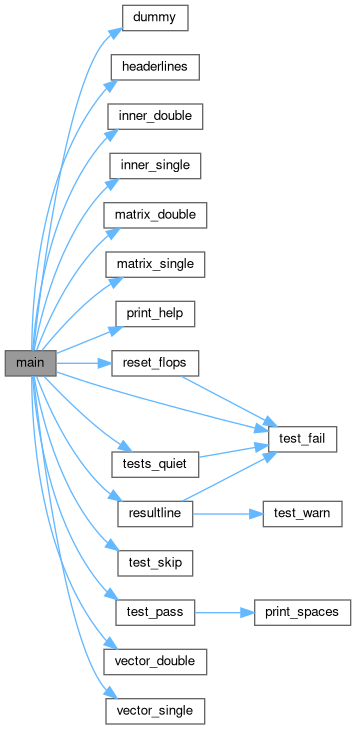
Here is the call graph for this function:
◆ matrix_double()

static void matrix_double ( int  n,
double *  c,
double *  a,
double *  b 
)
static

Definition at line 173 of file calibrate.c.

174{
175 int i, j, k;
176
177 for ( i = 0; i <= n; i++ )
178 for ( j = 0; j <= n; j++ )
179 for ( k = 0; k <= n; k++ )
180 c[i * n + j] = c[i * n + j] + a[i * n + k] * b[k * n + j];
181}
Here is the caller graph for this function:

◆ matrix_single()

static void matrix_single ( int  n,
float *  c,
float *  a,
float *  b 
)
static

Definition at line 162 of file calibrate.c.

163{
164 int i, j, k;
165
166 for ( i = 0; i <= n; i++ )
167 for ( j = 0; j <= n; j++ )
168 for ( k = 0; k <= n; k++ )
169 c[i * n + j] = c[i * n + j] + a[i * n + k] * b[k * n + j];
170}
Here is the caller graph for this function:

◆ print_help()

static void print_help ( char **  argv)
static

Definition at line 102 of file calibrate.c.

103{
104 printf( "Usage: %s [-ivmdh] [-e event]\n", argv[0] );
105 printf( "Options:\n\n" );
106 printf( "\t-i Inner Product test.\n" );
107 printf( "\t-v Matrix-Vector multiply test.\n" );
108 printf( "\t-m Matrix-Matrix multiply test.\n" );
109 printf( "\t-d Double precision data. Default is float.\n" );
110 printf( "\t-e event Use <event> as PAPI event instead of PAPI_FP_OPS\n" );
111 printf( "\t-f Suppress failures\n" );
112 printf( "\t-h Print this help message\n" );
113 printf( "\n" );
114 printf( "This test measures floating point operations for the specified test.\n" );
115 printf( "Operations can be performed in single or double precision.\n" );
116 printf( "Default operation is all three tests in single precision.\n" );
117}

◆ reset_flops()

static void reset_flops ( const char *  title,
int  EventSet 
)
static

Definition at line 184 of file calibrate.c.

185{
186 int retval;
187 char err_str[PAPI_MAX_STR_LEN];
188
190 if ( retval != PAPI_OK ) {
191 sprintf( err_str, "%s: PAPI_start", title );
192 test_fail( __FILE__, __LINE__, err_str, retval );
193 }
194}
Start counting hardware events in an event set.
#define PAPI_MAX_STR_LEN
Definition: f90papi.h:77
Here is the call graph for this function:

Here is the caller graph for this function:

◆ resultline()

static void resultline ( int  i,
int  j,
int  EventSet,
int  fail,
int  quiet 
)
static

Definition at line 62 of file calibrate.c.

63{
64 float ferror = 0;
65 long long flpins = 0;
66 long long papi, theory;
67 int diff, retval;
68 char err_str[PAPI_MAX_STR_LEN];
69
70 retval = PAPI_stop( EventSet, &flpins );
71 if ( retval != PAPI_OK )
72 test_fail( __FILE__, __LINE__, "PAPI_stop", retval );
73
74 i++; /* convert to 1s base */
75 theory = 2;
76 while ( j-- )
77 theory *= i; /* theoretical ops */
78 papi = flpins << FMA;
79
80 diff = ( int ) ( papi - theory );
81
82 ferror = ( ( float ) abs( diff ) ) / ( ( float ) theory ) * 100;
83
84 if (!quiet) {
85 printf( "%8d %12lld %12lld %8d %10.4f\n", i, papi, theory, diff, ferror );
86 }
87
88 if ( ferror > MAX_WARN && abs( diff ) > MAX_DIFF && i > 20 ) {
89 sprintf( err_str, "Calibrate: difference exceeds %d percent", MAX_WARN );
90 test_warn( __FILE__, __LINE__, err_str, 0 );
91 }
92 if (fail) {
93 if ( ferror > MAX_ERROR && abs( diff ) > MAX_DIFF && i > 20 ) {
94 sprintf( err_str, "Calibrate: error exceeds %d percent", MAX_ERROR );
95 test_fail( __FILE__, __LINE__, err_str, PAPI_EMISC );
96 }
97 }
98}
#define MAX_DIFF
Definition: calibrate.c:31
#define MAX_ERROR
Definition: calibrate.c:30
#define MAX_WARN
Definition: calibrate.c:29
#define FMA
Definition: calibrate.c:58
Stop counting hardware events in an event set.
#define PAPI_EMISC
Definition: f90papi.h:122
void test_warn(const char *file, int line, const char *call, int retval)
Definition: test_utils.c:547
int
Definition: sde_internal.h:89
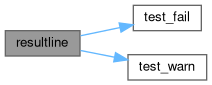
Here is the call graph for this function:
Here is the caller graph for this function:

◆ vector_double()

static void vector_double ( int  n,
double *  a,
double *  x,
double *  y 
)
static

Definition at line 152 of file calibrate.c.

153{
154 int i, j;
155
156 for ( i = 0; i <= n; i++ )
157 for ( j = 0; j <= n; j++ )
158 y[i] = y[i] + a[i * n + j] * x[i];
159}
Here is the caller graph for this function:

◆ vector_single()

static void vector_single ( int  n,
float *  a,
float *  x,
float *  y 
)
static

Definition at line 142 of file calibrate.c.

143{
144 int i, j;
145
146 for ( i = 0; i <= n; i++ )
147 for ( j = 0; j <= n; j++ )
148 y[i] = y[i] + a[i * n + j] * x[i];
149}
Here is the caller graph for this function: