SC24 Recap
SC24 brought the global HPC community together in Atlanta, setting records with over 18,000 attendees and nearly 500 exhibitors. ICL participated with a dedicated University of Tennessee booth and a strong presence from current researchers, alumni, and collaborators. Under this year’s theme, “HPC Creates,” the conference celebrated HPC’s role in driving transformative solutions across industries.
Remembering Gordon Bell
At SC24, the prestigious Gordon Bell Prize ceremony began with a heartfelt tribute by ICL founder Jack Dongarra, honoring the life and legacy of Gordon Bell, a pioneering force in high-performance computing. Jack reflected on Gordon’s remarkable career, his enduring influence on the field, and the creation of the Gordon Bell Prize, which continues to inspire breakthroughs in computational science.
2024 ACM Gordon Bell Prize for Climate Modelling Award-Winning Team Features ICL Alumni and Contributions
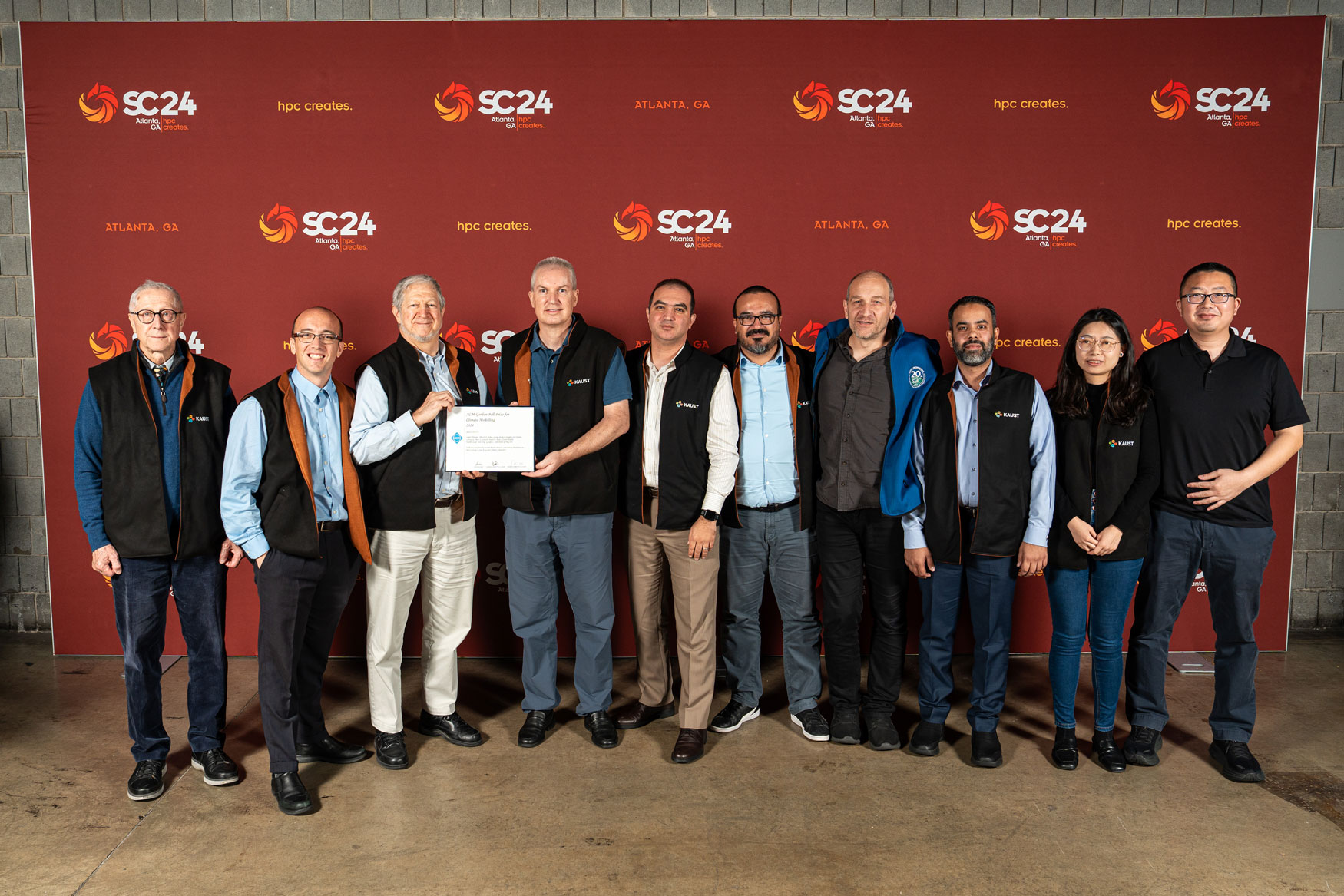
This year’s ACM Gordon Bell Prize for Climate Modelling was awarded to a 12-member team recognized for advancing climate change prediction through cutting-edge computational techniques. Their work, detailed in the paper titled Boosting Earth System Model Outputs and Saving PetaBytes in Their Storage Using Exascale Climate Emulators, includes contributions from ICL alumni Hatem Ltaief, Bilel Hadri, Qinglei Cao, and ICL’s George Bosilca. The team utilized ICL’s PaRSEC dynamic runtime system to develop an exascale climate emulator that models spatio-temporal variations in climate data. This approach significantly improves computational efficiency, enhances emulator accuracy, and provides deeper insights into climate change and extreme weather events.
ICL Exhibit Floor Presence

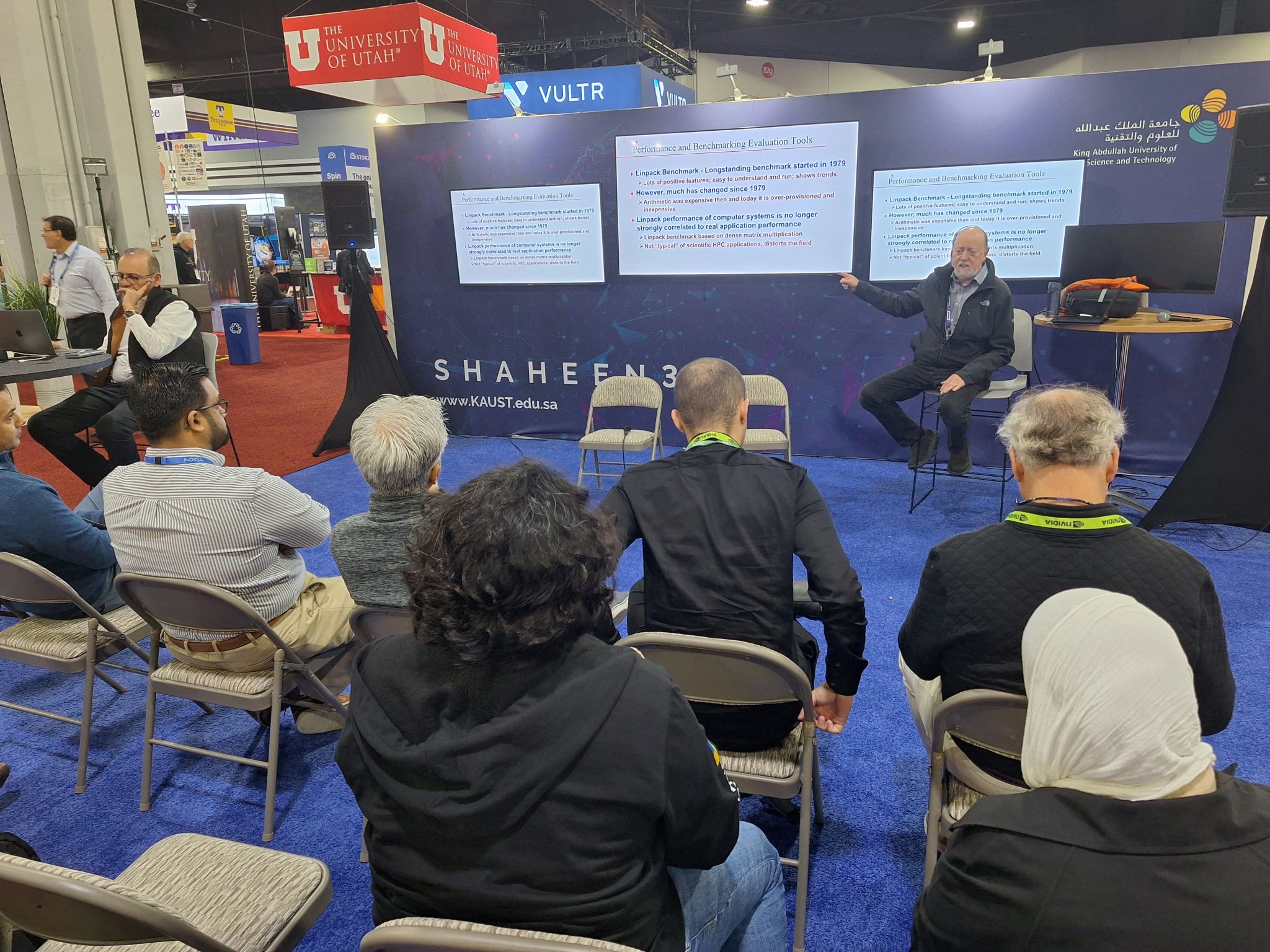
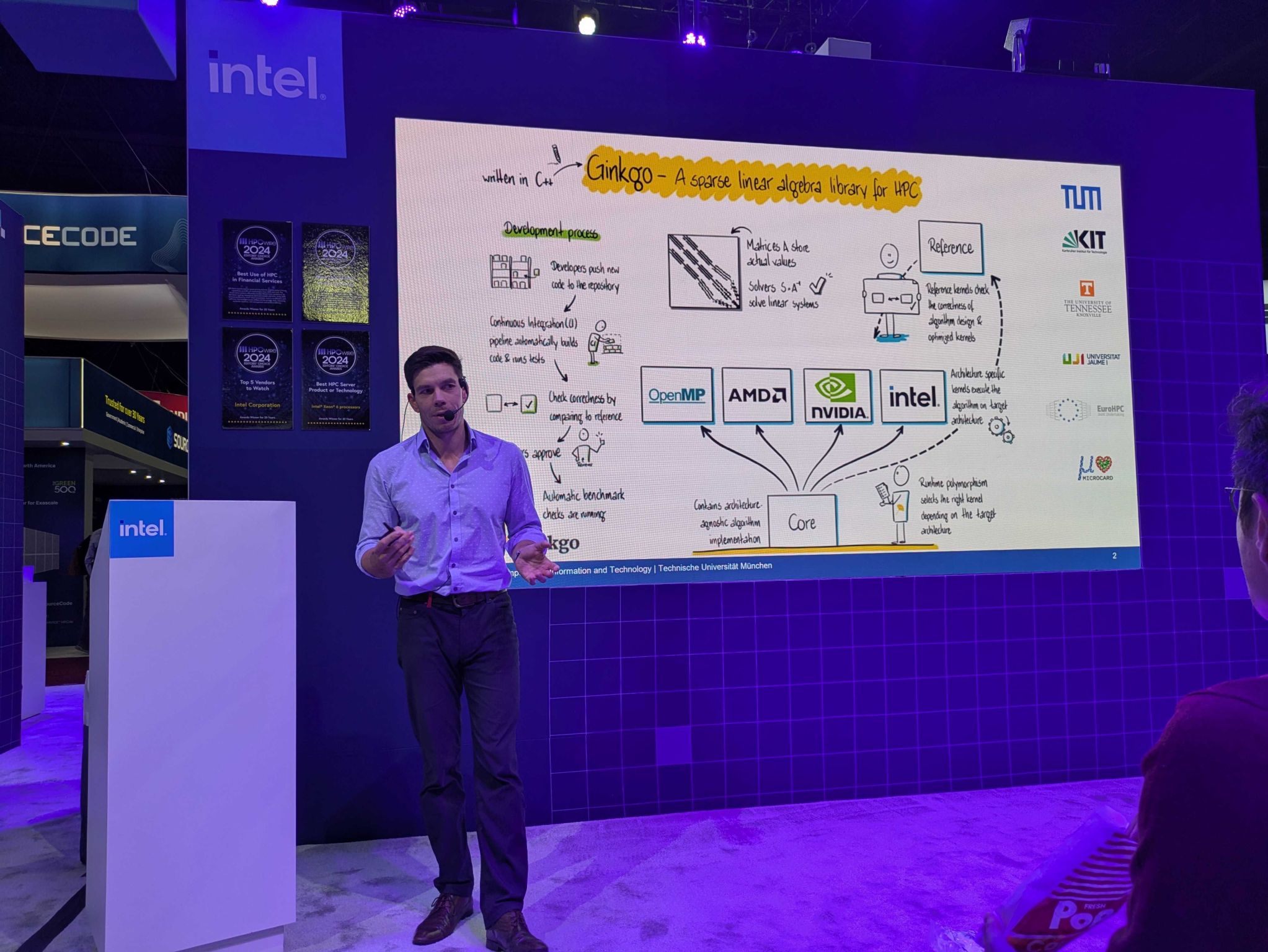
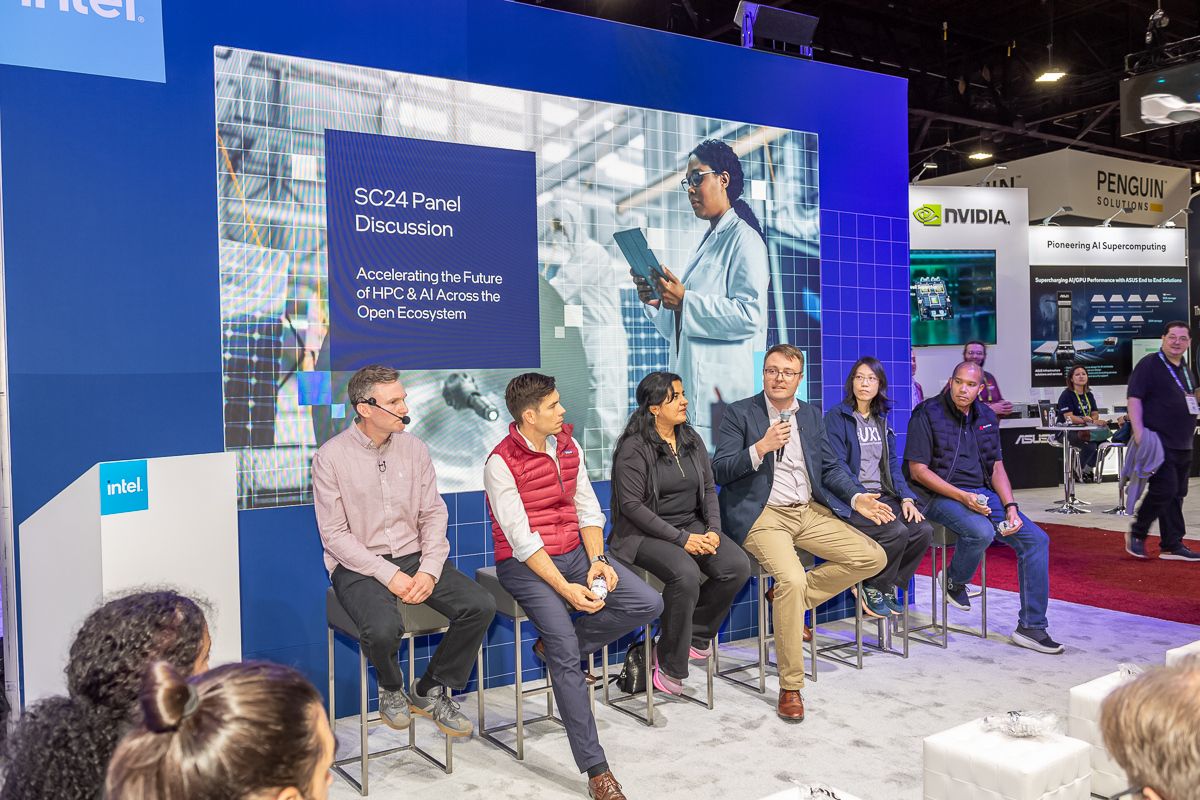
ICL represented the University of Tennessee on the SC24 exhibit floor with a booth showcasing handouts highlighting ICL’s latest research activities. Beyond its dedicated booth, ICL extended its presence across the exhibit floor with Jack Dongarra speaking at the KAUST booth and Hartwig Anzt presenting at the Intel booth. For downloadable PDFs of this year’s handouts, as well as a complete list of ICL attendees and activities, visit our SC24 booth page: https://icl.utk.edu/sc24


TOP500
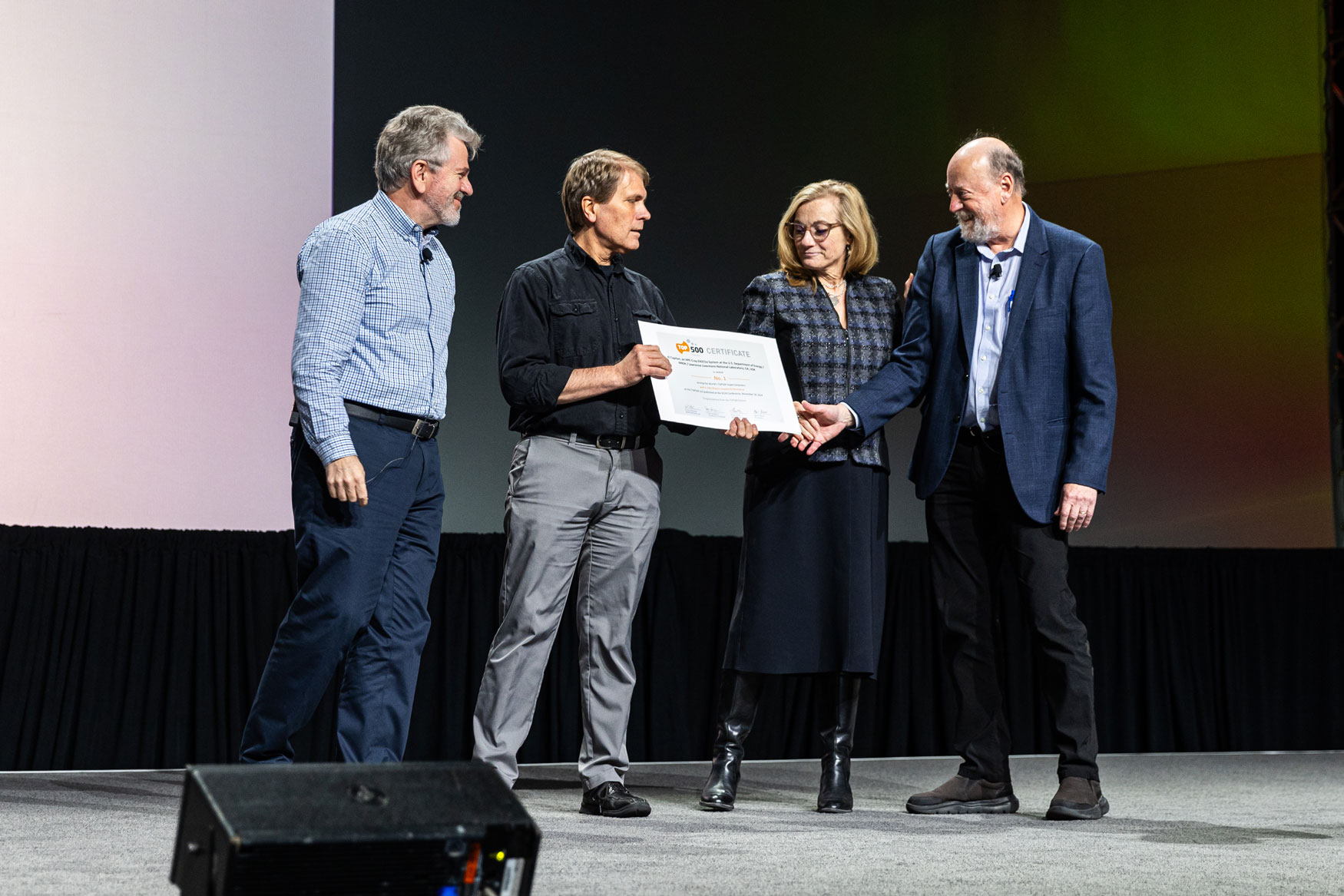
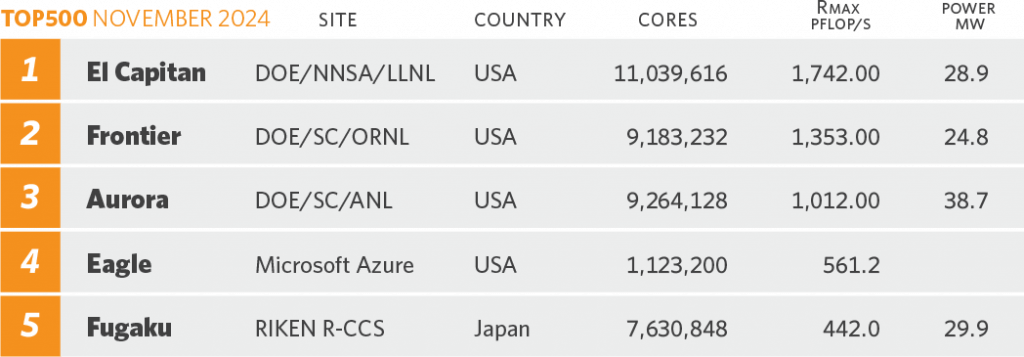
The 64th TOP500 list crowned El Capitan at Lawrence Livermore National Laboratory as the world’s most powerful supercomputer with an HPL score of 1.742 EFlop/s, surpassing Frontier and Aurora, now ranked second and third. El Capitan features over 11 million CPU and GPU cores, leveraging AMD’s 4th-gen EPYC processors and MI300A accelerators with Cray’s Slingshot 11 network. Frontier, based at Oak Ridge National Laboratory, improved its HPL score to 1.353 EFlop/s and increased its core count to over 9 million, reflecting ongoing advancements in exascale computing. The full TOP500 BoF is available to view on Youtube:
Also available to watch on YouTube is the full SC24 Press Briefing on the Future of High-Performance Computing that includes a TOP500 update from Erich Strohmaier and Jack Dongarra:
HPCwire published an article titled “Why Supercomputer Benchmarking Is So Important” which discusses the role of the TOP500 list and quotes Piotr Luszczek:
“The word that comes to his mind about Linpack is, of course, the word legacy. It’s an important legacy that we continue so we have historical continuity.”
The article also quotes Jack Wells, a scientific program manager at Nvidia, saying “the Top500 is to computing what the Dow Jones Industrials is to the stock market.”
Read the Full Article at HPCwire
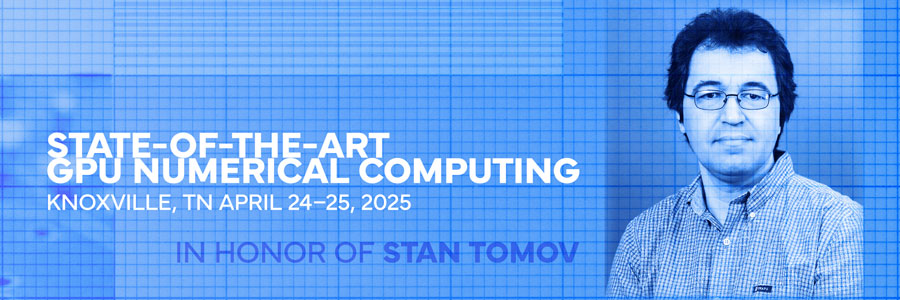
Stan Tomov Tribute at Batched Linear Algebra BoF
The organizers of the Batch Linear Algebra Software, Present and Future BoF at SC24 paid tribute to their friend and colleague Stan Tomov. ICL’s Ahmad Abdelfattah shared a video capturing the heartfelt commemoration delivered by Tzanio Kolev of Lawrence Livermore National Laboratory:
Organizers of batch #Blas BoF at #SC24 paying an emotional tribute to Dr. Stanimire Tomov who passed away tragically last month.
Stan was the kindest person. He was the mastermind behind #GPU-accelerated linear algebra and the famous #MAGMA software. Your legacy lives on.#HPC pic.twitter.com/mkca4o0Ilu
— Hatem Ltaief (@HatemLtaief) November 19, 2024
ICL Alumni Dinner
ICL’s annual alumni dinner at SC24 was held Wednesday, November 20th at Thrive Restaurant and Bar in downtown Atlanta. Thanks to Piotr Luszczek and Hidehiko Hasegawa for sharing photos from the evening:

Blueprint for Sparse Linear Algebra Operations Interface Available
 Established in 2023, the Sparse BLAS Working Group, led by ICL’s Hartwig Anzt, has been working to develop a blueprint for a standard API for sparse linear algebra operations. Their work, outlined in the paper “Interface for Sparse Linear Algebra Operations,” is now available online. The paper presents a C++ API for sparse linear algebra functionality, discusses key design choices, and explains how software developers retain significant flexibility in implementing functionality behind the API. The team welcomes feedback from the broader HPC community to refine and enhance the proposed standard. Learn more about this initiative at: https://icl.utk.edu/workshops/sparseblasbof24/
Thomas Herault to Begin Senior Researcher Role at Inria Bordeaux After 16 Years at ICL

After 16 impactful years at the Innovative Computing Laboratory (ICL)—14 as a full-time researcher and 2 as a visiting scholar—Thomas will be joining Inria, a premier research institute in France, as a senior researcher with the TOPAL team in Bordeaux, beginning in 2025.
Reflecting on his time at ICL, Thomas shared:
“During my time at ICL, I had an extraordinary experience, both professionally and personally. I am grateful for the inspiring collaborations, lifelong friendships, and the countless opportunities to grow and contribute to cutting-edge research.”
At Inria, Thomas will cover a broad range of high-performance computing (HPC) topics, including fault tolerance, communication systems, runtime systems, and tensor operations, with applications to both numerical simulations and deep neural networks.
In his new role, Thomas will join a distinguished group of ICL alumni at Inria Bordeaux, including Emmanuel Jeannot, Emmanuel Agullo, Mathieu Faverge, and Amina Guermouche. He looks forward to continuing fruitful collaborations with ICL and the broader community of ICL alumni worldwide.
ORNL’s Pedro Valero-Lara Introduces AI-Driven Tools for HPC
Pedro Valera-Lara of ORNL presented his work on “ChatHPC: Building the foundation of a new era of AI-assisted HPC” at a recent ICL Seminar. The project’s approach involves creating multiple mid-sized AI agents specialized in specific HPC tasks rather than relying on a single, large language model (LLM). This modular approach allows for targeted optimization, addressing the limitations of generalized LLMs, which are trained mainly on internet-based data and may not perform well in specialized HPC contexts.
Valera-Lara’s slides from the talk are available for download as well as a Zoom recording of the presentation:
 Download PDF Download PDF |
 Zoom Recording Zoom Recording |
Exploring Binary Numbers Through Metaphor

ICL Research Assistant Professor Anthony Danalis recently posted an article on LinkedIn titled “Unlocking the World of Binary: A Fresh Approach for New Learners.” In the piece, Anthony breaks down the concept of binary numbers using an imaginative metaphor: a chocolate factory with automated packaging machines. By comparing the packaging process in a chocolate factory to binary number representation, Anthony illustrates how numbers in different numeral systems are constructed—and why binary is ideal for computers.
Congratulations
Best Paper Award at DRBSD 2024
The 10th International Workshop on Data Analysis and Reduction for Big Scientific Data, held in conjunction with SC24 on November 18 in Atlanta, GA, brought together researchers to explore cutting-edge methods for addressing the growing disparity between simulation speeds and I/O rates in exascale systems. The workshop focused on advancing high-performance online data analysis and reduction techniques, covering topics such as data reduction strategies, quality metrics, AI/ML-enhanced analysis, and co-design approaches to improve efficiency, accuracy, and portability in managing large-scale scientific data.
Congratulations to Hartwig Anzt, Thomas Grützmacher, Robert Underwood, and their co-authors for earning the Best Paper award for their work, “FRSZ2 for In-Register Block Compression Inside GMRES on GPUs.” Their paper introduces FRSZ2, a lightweight in-register compression method designed to operate at the memory bandwidth speed of NVIDIA H100 GPUs. By leveraging FRSZ2 to compress the Krylov basis in the GMRES iterative solver, the authors demonstrate significant runtime benefits compared to low-precision compression, all while maintaining the accuracy of final results. This innovative approach addresses critical memory bandwidth limitations and advances the performance of GPU-based iterative solvers.
Congratulations to ICL’s Tokey Tahmid

We are pleased to announce that Tokey Tahmid has successfully earned his Master’s degree in Computer Science from the University of Tennessee, Knoxville. During his graduate studies, Tokey was advised by Dr. Piotr Luszczek, Dr. Catherine Schuman, and Dr. Mark Gates, whose mentorship supported his academic and professional development.
We are excited that Tokey will begin the next phase of his career with ICL when he will join the Performance Group next year as a Research Associate.
Recent Releases
Ginkgo 1.9.0
The Ginkgo team is proud to announce the new Ginkgo minor release 1.9.0. This release brings new features such as:
- Support for half precision (IEEE FP16).
- New implementations of the ILU and IC factorization for CUDA, HIP, OpenMP, and Reference backends.
- New (S)SOR and Gauss-Seidel preconditioners.
- Simplified distributed matrix assembly by exchanging local rows between neighboring processes.
Visit the Ginkgo website at https://ginkgo-project.github.io/ for further information.
Interview
Aurelien Bouteiller

Where are you from originally?
I am originally from Normandy, France. My hometown was mostly farmland with more cows than people, and more cheese varieties than you can count. The biggest city around is Rouen, famous for its 12th-century city center and the Cathedral, which Claude Monet painted many times.
Can you summarize your educational and professional background?
I did my BS at the University of Rouen (CS), then moved to University of Paris XI (in Orsay, which is pretty far-out in the southern Paris periphery), for my MS (distributed computing), and Ph.D. (under the direction of Franck Cappello.)
How did you first hear about ICL, and what made you want to work here?
I heard about ICL when I was still doing my Ph.D. from George Bosilca, who had recently started there. George was working on getting the Open MPI project started, and that really piqued my interest and I wanted to join in.
What are your main research interests and what do you work on at ICL?
My research interests are following two main directions. One is centered around HPC communication: over the years I worked with MPI (fault-tolerance, architecture aware collective operations, zero-copy designs, standardization body member, etc.), OpenSHMEM (fault-tolerance, threading model), UCX, (threading model) and PMIx (fault-tolerance, chair of the standardization committee). The second theme revolves around task-based programming models, with the primary product being PaRSEC, a task-based runtime that can schedule distributed computation on multicores and accelerators.
What are your interests/hobbies outside of work?
I am an avid motorcyclist, it is actually my main mode of transportation, and I go to the Dragon Tail at least twice a year. I am also a scoutmaster for my son’s local Boy Scout troop.
Tell us something about yourself that might surprise people.
Last year I did a twelve day, 120 mile backpacking trip with my son. We ascended 12 summits in New Mexico. We carried our tent, food, essentials, and not much else. Life was very simple: walking from camp to camp, navigating with a map and compass, getting lost, getting tired, getting unlost, filtering water, cooking on the campfire, and witnessing the beauty of nature. It was the experience of a lifetime and a total change of pace, highly recommended!
If you weren’t working at ICL, where do you think you would like to be working and why?
One of my original reasons for getting a Ph.D. was to teach at the university, so that would be something I would enjoy revisiting someday. On the other hand, I do really enjoy creating high quality software that people actually use, like we do in ICL, but also in the private sector.