2023 ICL Retreat
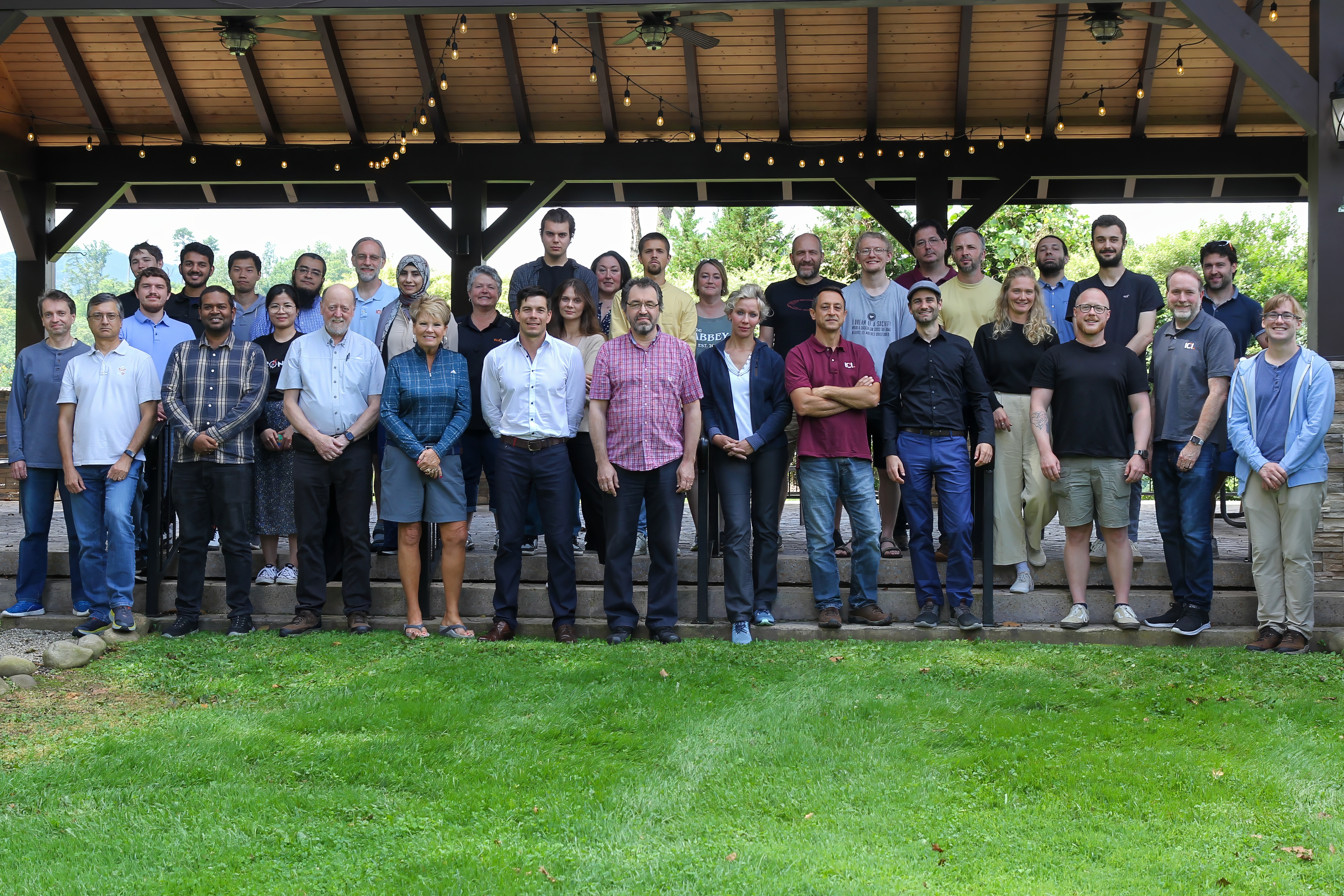
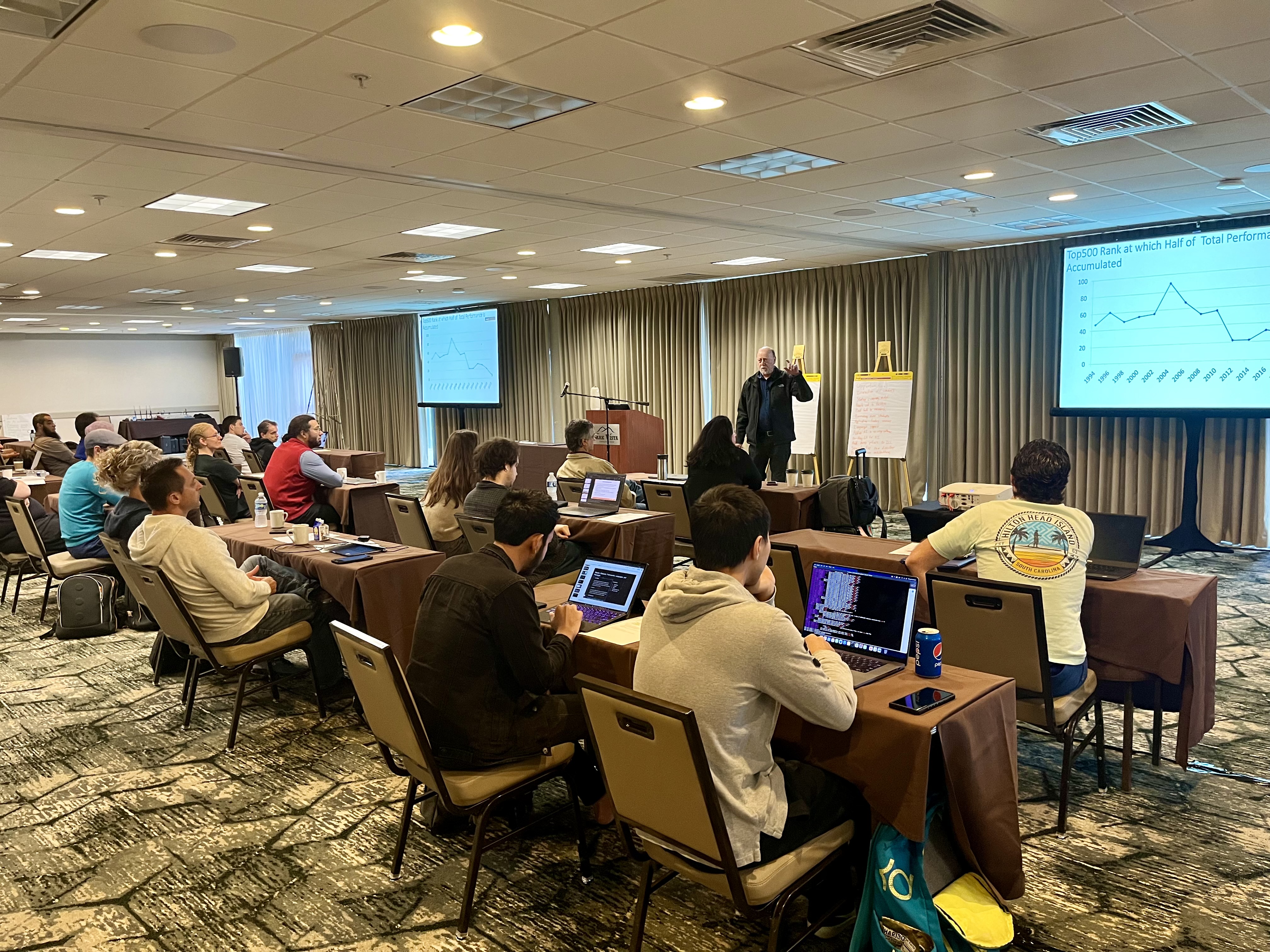
The 2023 edition of the ICL Retreat took place August 17-18 at the Park Vista Hotel in Gatlinburg. One of ICL’s long-standing traditions, the retreat represents an opportunity for the entire group to gather in one location to get to know each other better and share details about their work. This year, a new format was adopted, which featured breakout sessions and a poster session in addition to the usual plenary presentations. This new format provided more variety to the schedule and was well-received.
2023 Retreat Hike
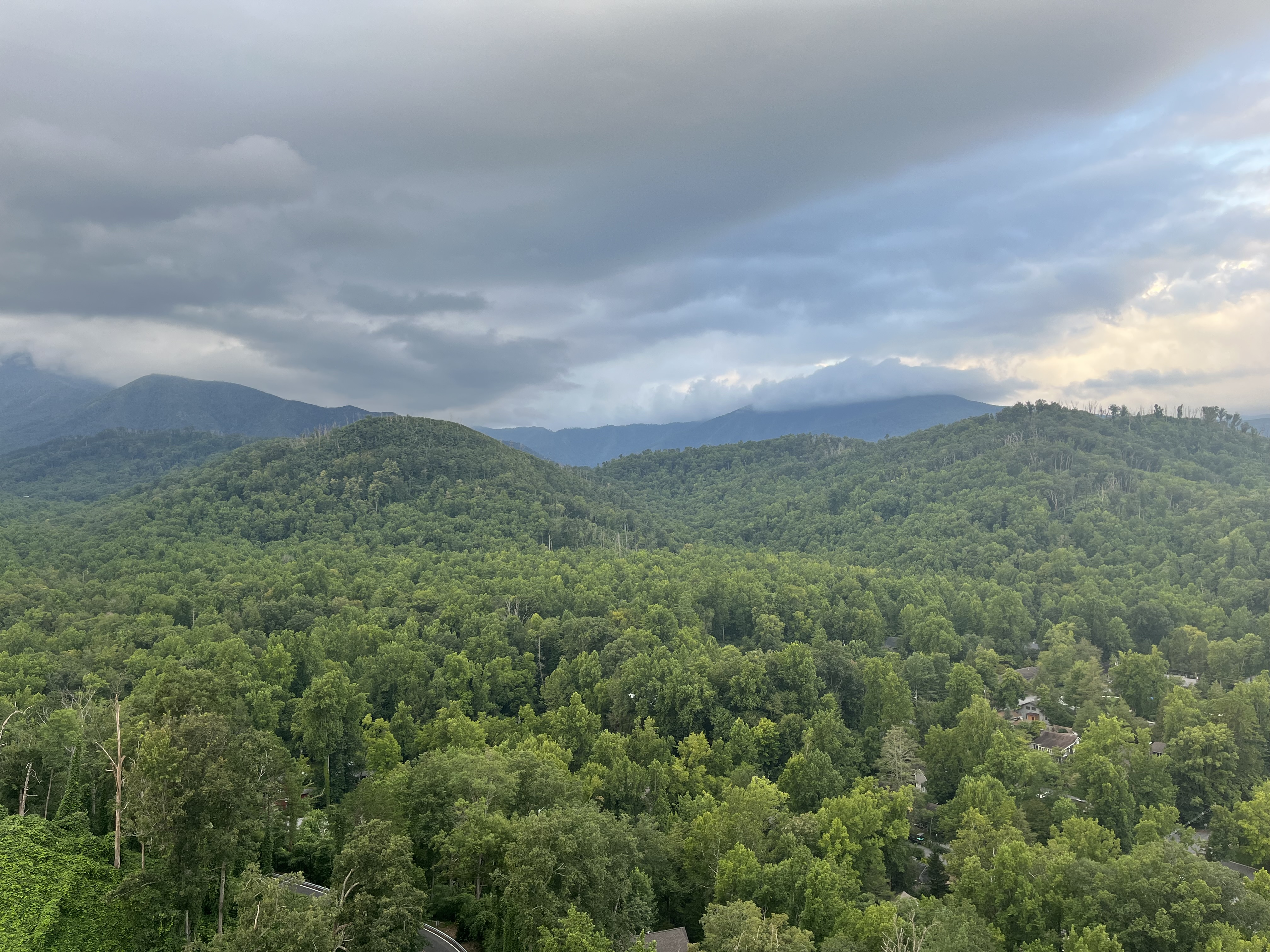
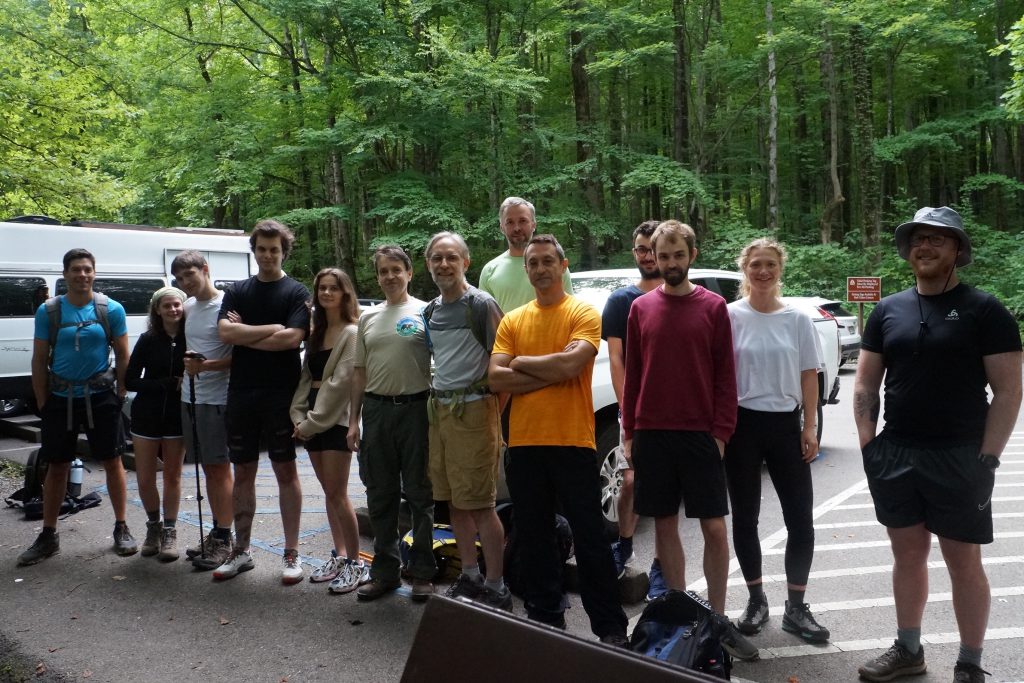
In what has become a new tradition, participants from ICL arrived at Gatlinburg the day before the retreat for a one-day hiking trip. The group enjoyed perfect weather on the trek to Rainbow Falls.

Honoring Teresa Finchum
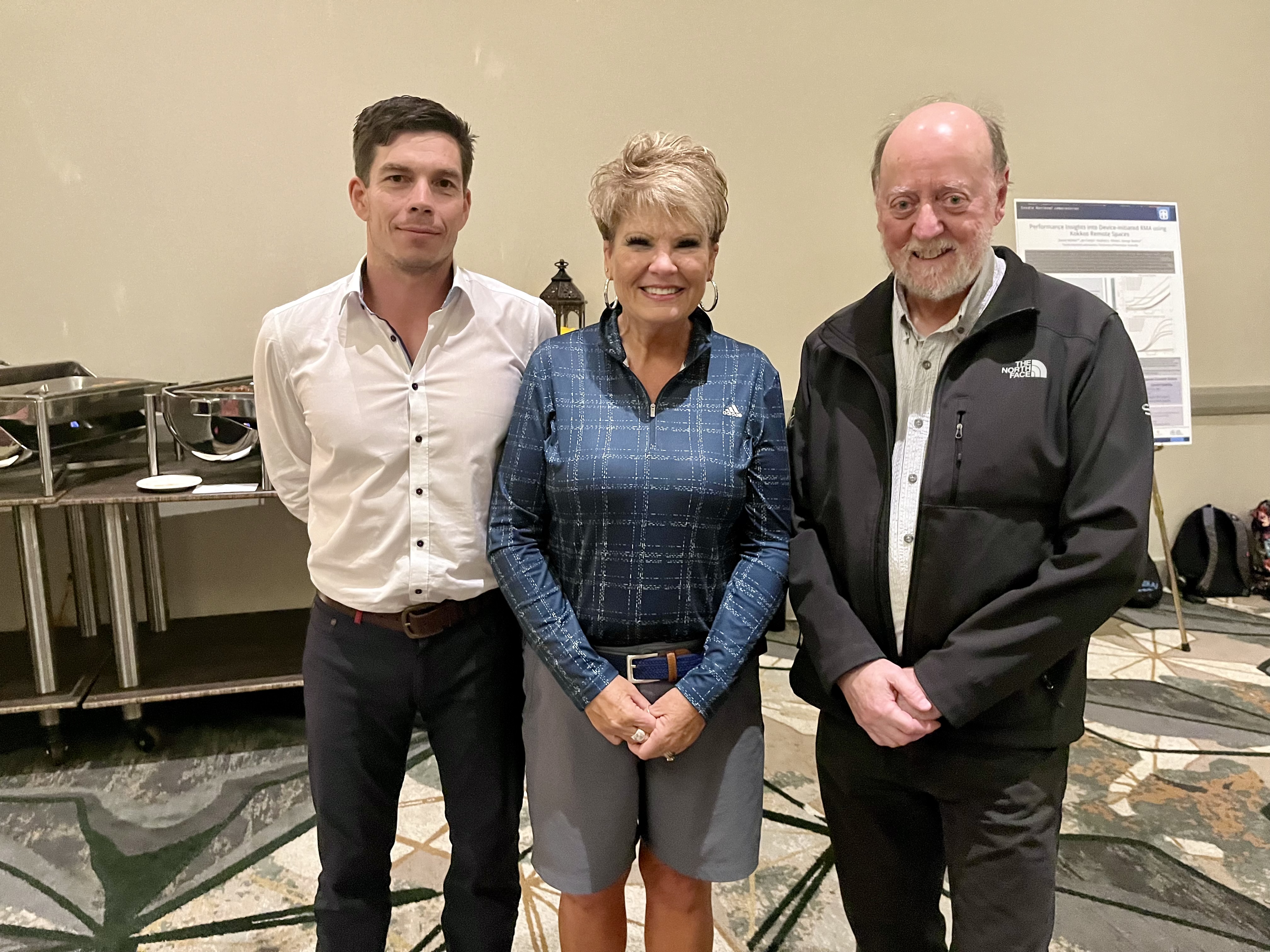
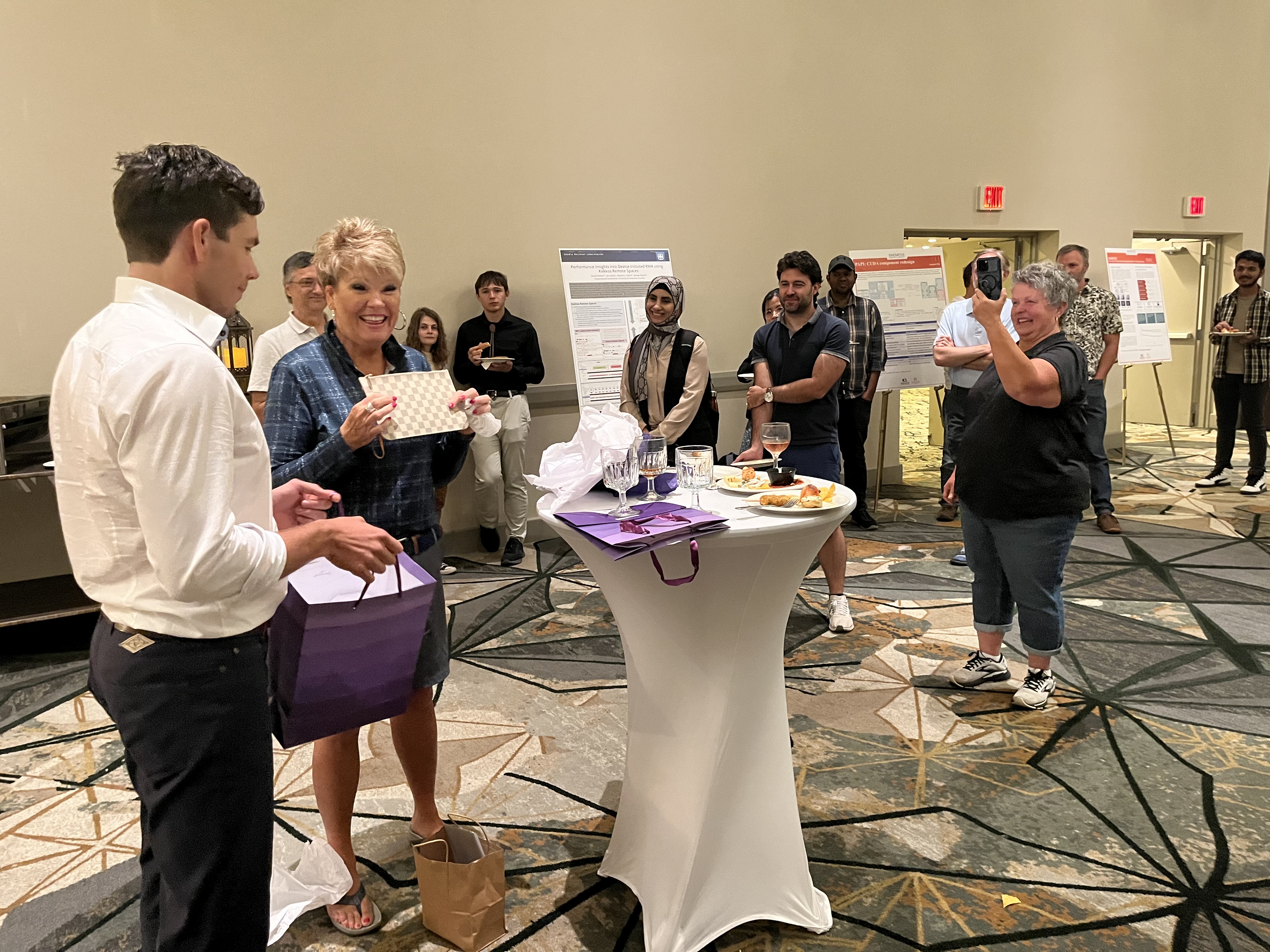
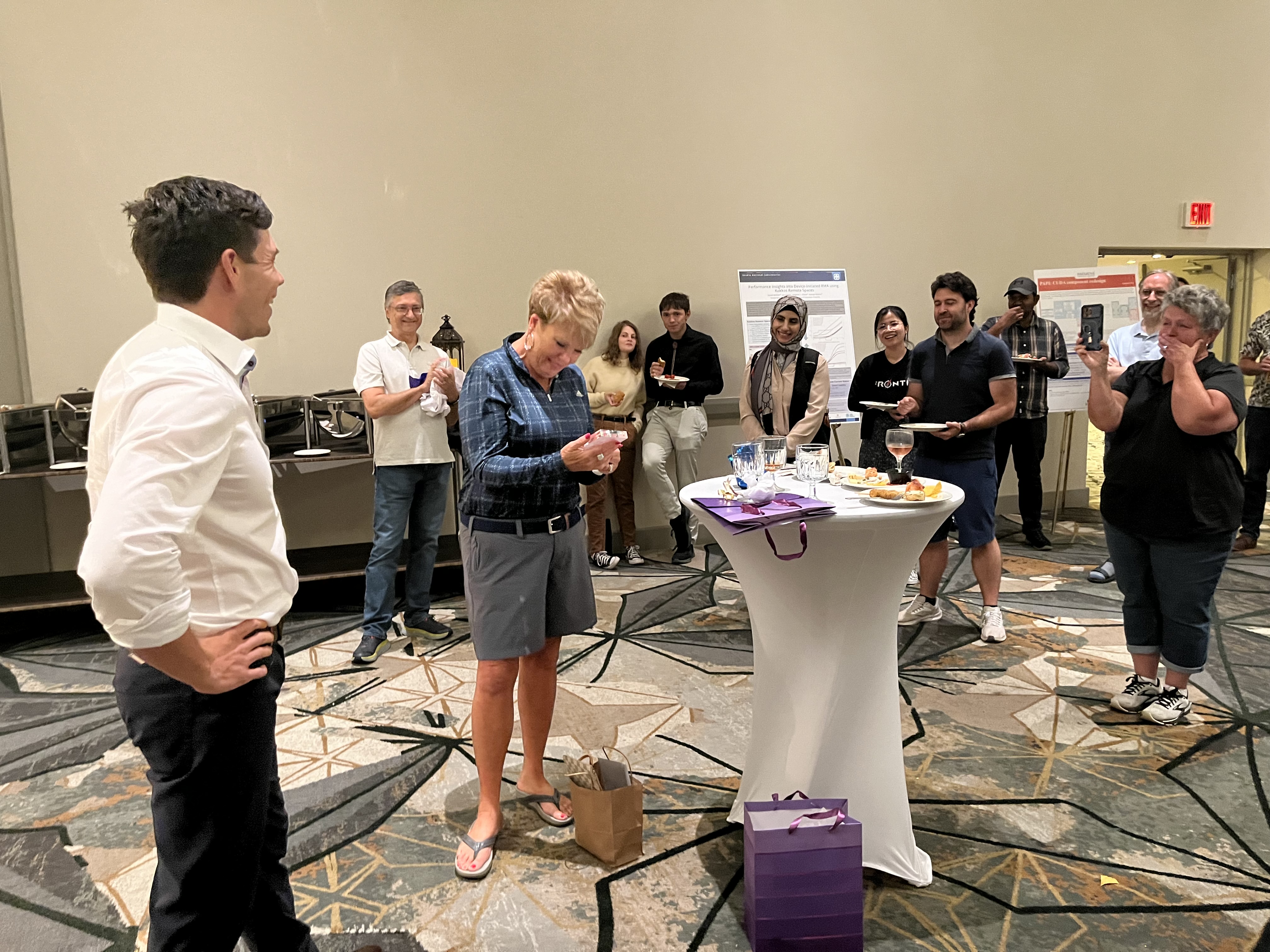
In addition to the poster session and walking dinner, the Thursday evening retreat agenda included a time to recognize Teresa Finchum for her 23 years of service to ICL. She started a new position with UTK’s newly founded Baker School of Public Policy and Public Affairs. Best wishes, Teresa!
Giving Nuclear Forensics an Upgrade
 The University of Tennessee Department of Nuclear Engineering recently highlighted ICL’s involvement in the new DOE NNSA Consortium for Nuclear Forensics (CNF). From the article:
Nuclear forensics requires cooperation between experts in nuclear science, nuclear security, law enforcement, and public policy—and, increasingly, computer science.
“High-performance computing (HPC) has enabled outstanding advances in computing capabilities, enabling faster problem solving in many scientific domains,” said Research Assistant Professor Deborah Penchoff. “It is becoming clear that HPC and artificial intelligence (AI) are critical to developing solutions for the betterment of society at local, national, and global levels.”
Congratulations
Coryell Award Winner Eleigha Wrancher
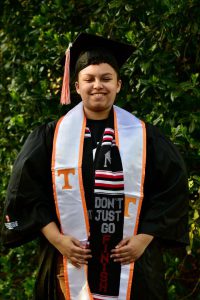 Congratulations to Eleigha Wrancher, an undergraduate student working with Dr. Penchoff on HPC for radiotherapeutics, who received the 2023 Charles D. Coryell Award. The award, given annually by the Division of Nuclear Chemistry and Technology (NUCL) in the American Chemical Society, honors undergraduate students who have completed research projects in nuclear or nuclear-related areas.
ICL Alumni Spotlight
Former ICLer Hatem Ltaief Named as 2023 Gordon Bell Prize Finalist
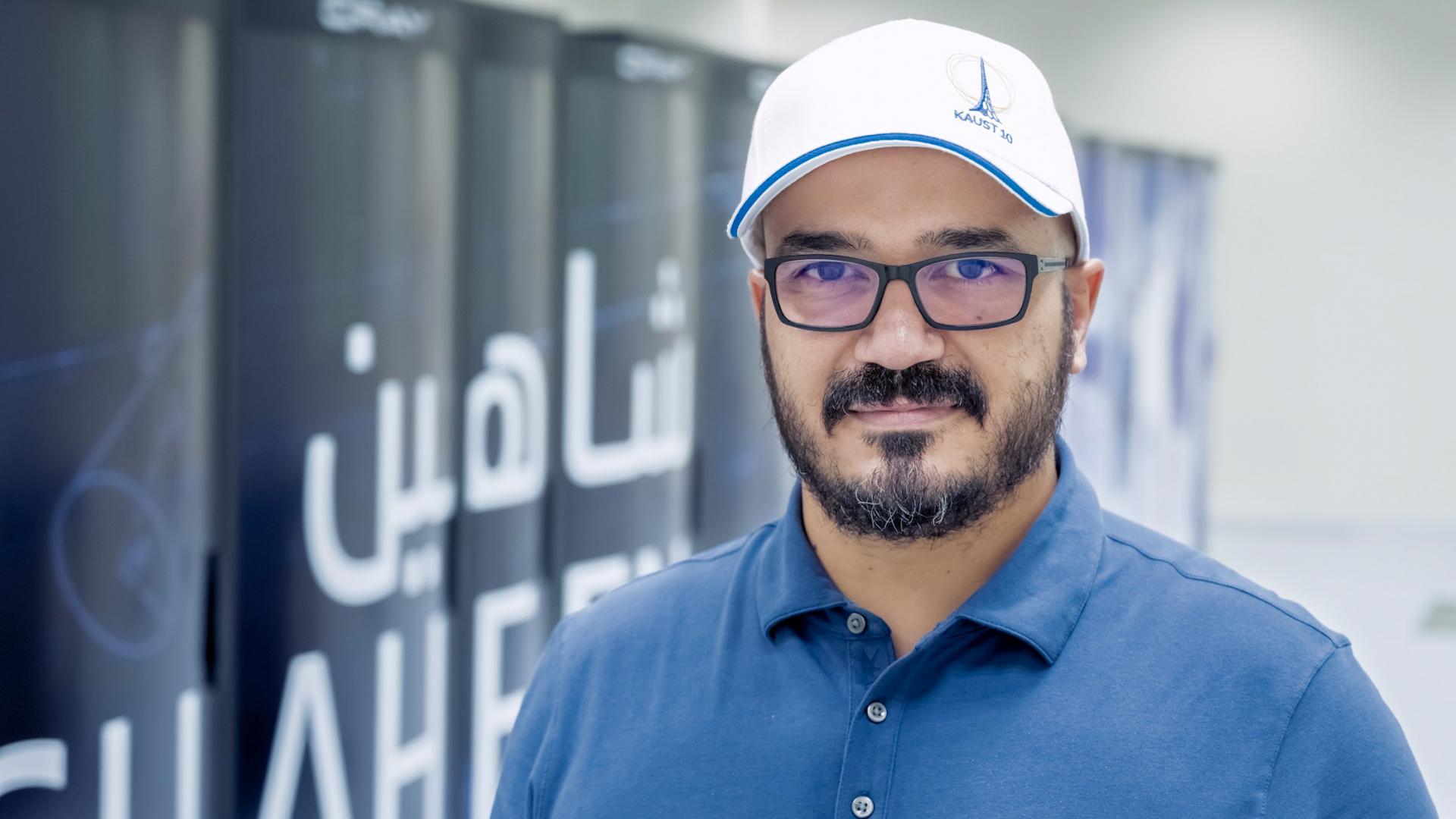 Congratulations to ICL alumnus Hatem Ltaief and his team from KAUST who were recently named as 2023 Gordon Bell Prize finalists. Hatem was at ICL from 2008 through 2010.
From the SC23 blog:
“This work exploits the high-memory bandwidth of artificial intelligence (AI)-customized Cerebras CS-2 systems for seismic processing by leveraging the low-rank matrix approximation to fit the problem on SRAM (static random-access memory) wafer-scale hardware and use many wave-equation-based algorithms that rely on multidimensional convolution operators. As a result, the team implemented a standard seismic benchmark dataset into the small local memories of Cerebras processing elements, extrapolating a worst-case load-balanced whole application execution to 48 CS-2 systems on 35,784,000 processing elements. This is a significant example of applications run on AI-customized architectures that can enable a new generation of seismic algorithms.”
Conference Reports
Smoky Mountains Computational Sciences & Engineering Conference
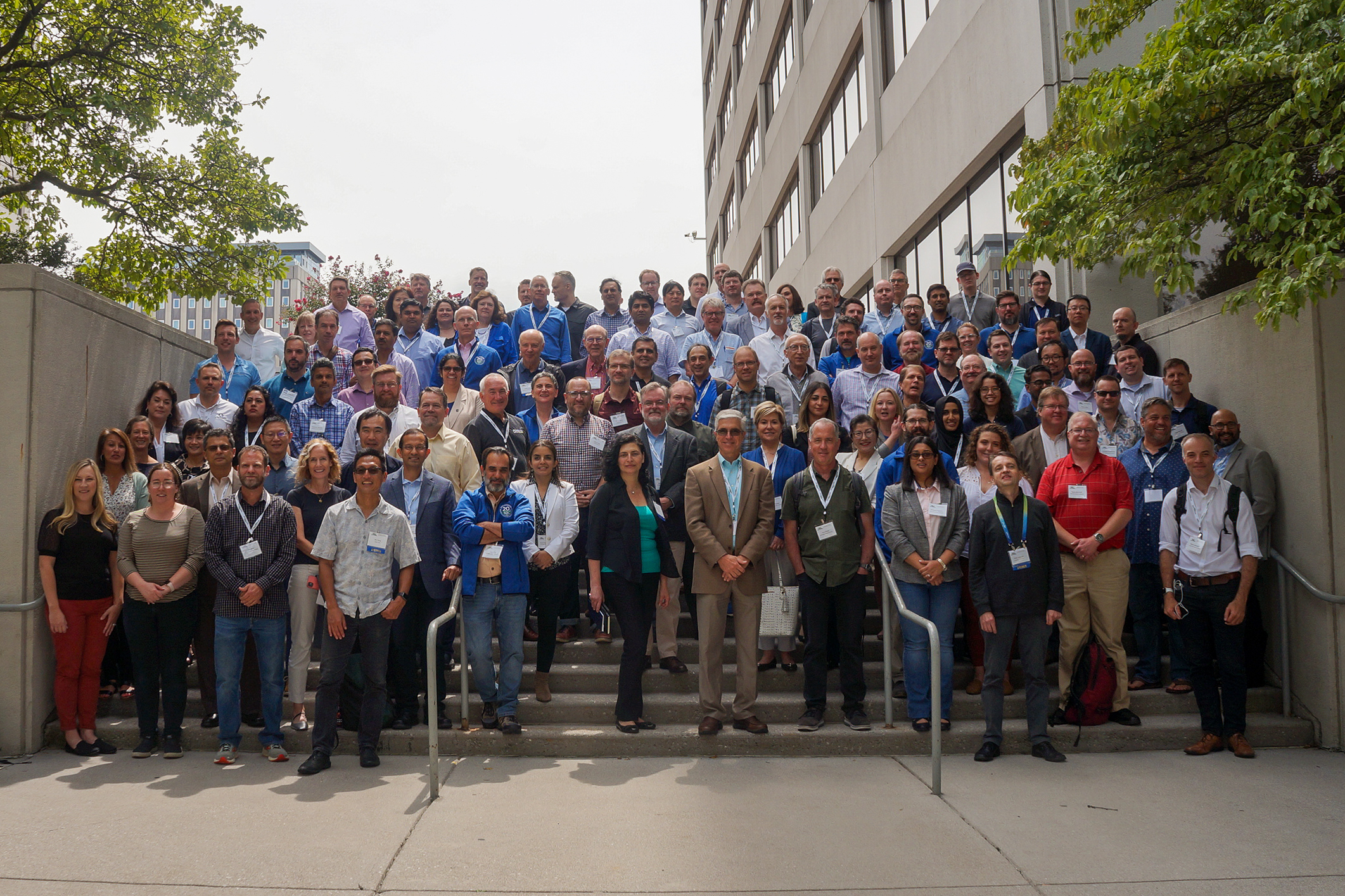
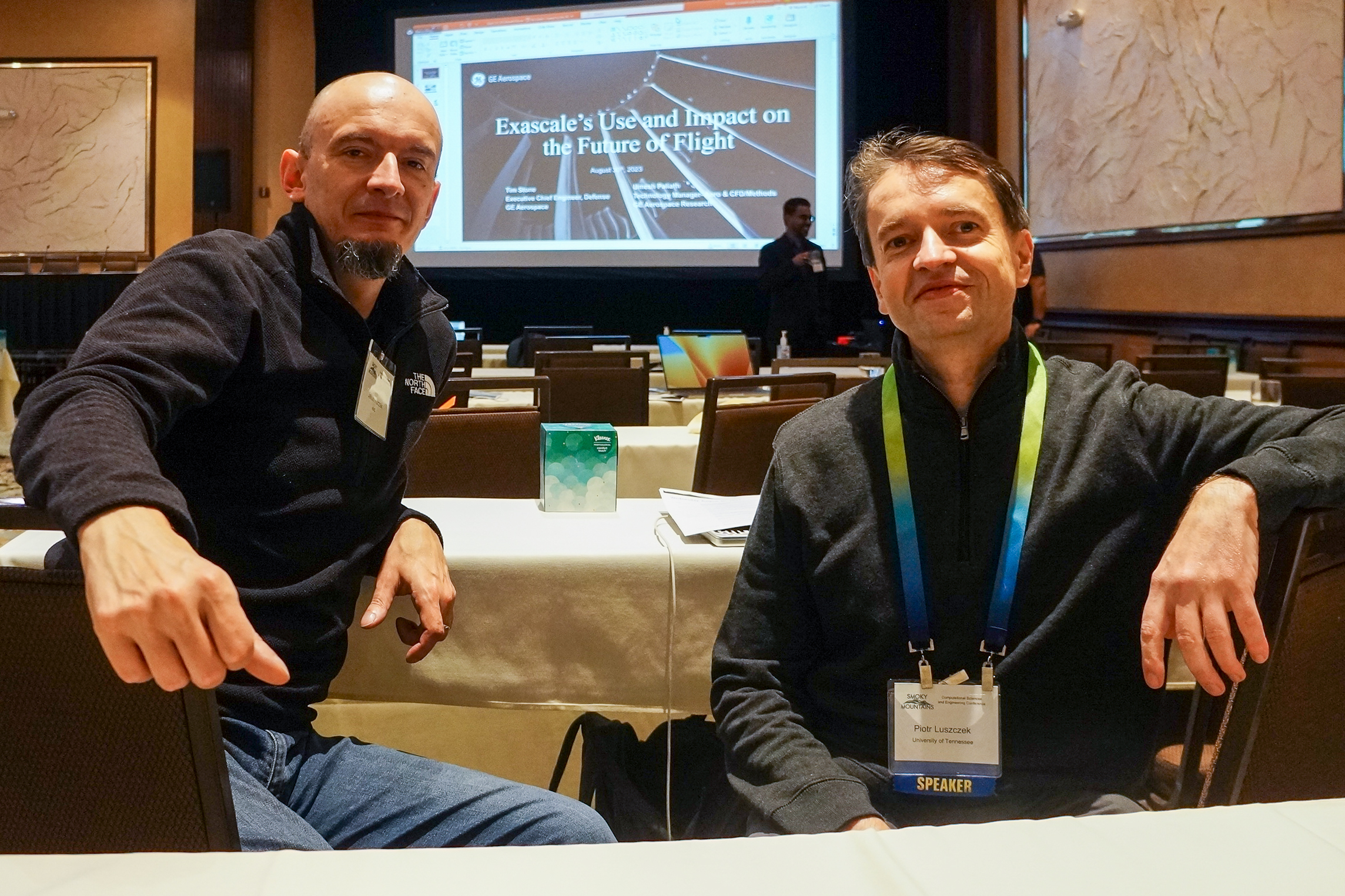
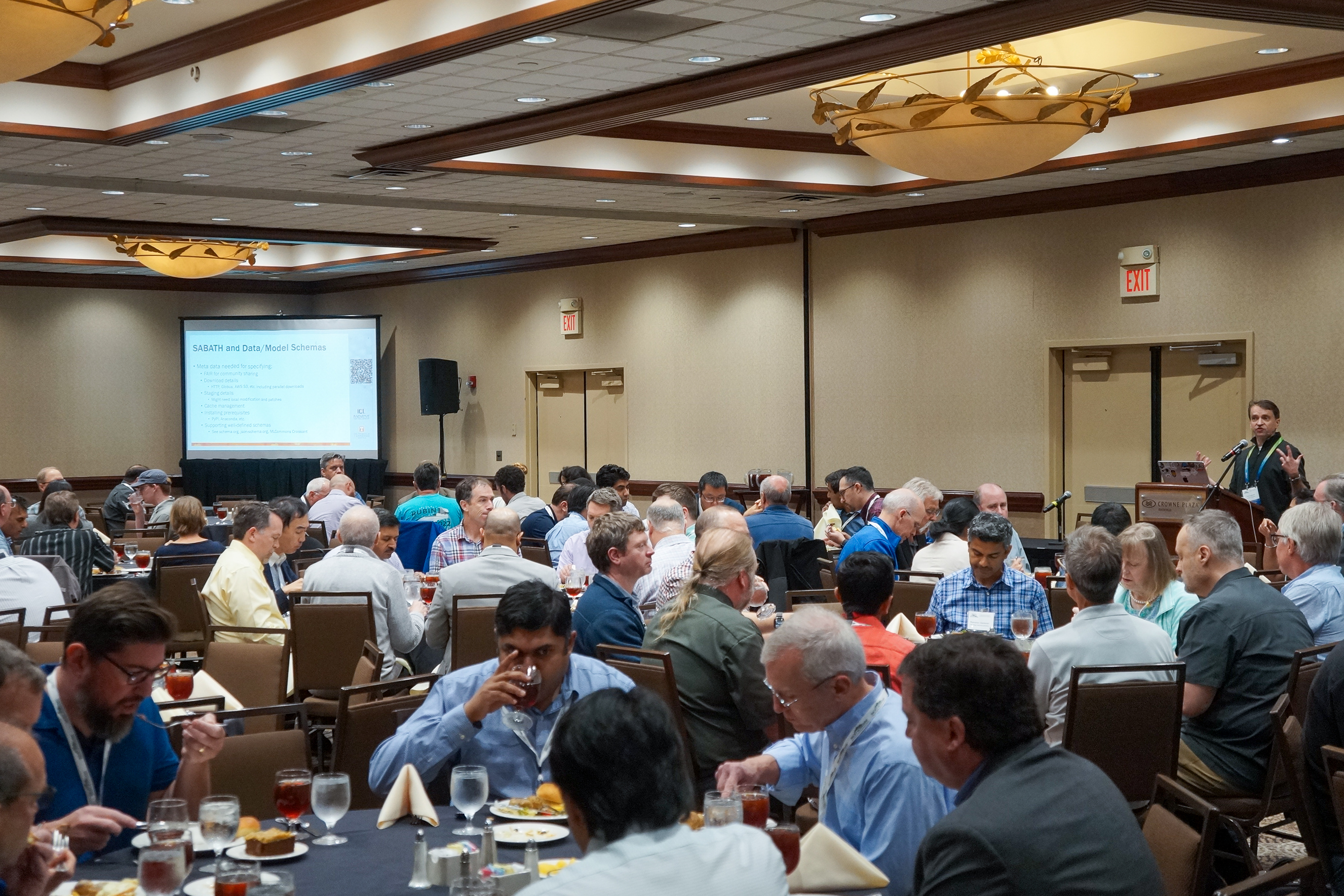
The Smoky Mountains Computational Sciences & Engineering Conference returned to an in-person format in 2023, taking place from August 29 to August 31 at the Knoxville Crowne Plaza Hotel in downtown Knoxville. This marked the 20th edition of the conference, formerly known as the Fall Creek Falls conference.
This year’s 20th-anniversary event included 4 attendees who attended the inaugural edition in 2003. They shared their perspectives on the landscape of high-performance computing (HPC) and supercomputing as it existed two decades ago. Topics included the debut of the Big Mac supercomputer on the TOP500 list, which occurred in the shadow of Japan’s Earth Simulator.
Satoshi Matsuoka from RIKEN gave an invited talk making potentially controversial statements comparing Fugaku and Frontier as well as the need for compute versus memory capabilities. The main theme of the conference was Integrated Research Facilities and plenty of talks focused on cross-site integration and large experiment management.
ICL was represented by Piotr Luszczek, George Bosilca, and Hartwig Anzt. Piotr gave an invited talk “Scientific ML/AI with Surrogate Models’ Benchmarking for FAIR Principles’ Conformance” which took place during a working lunch session. Other attendees at the event included former ICLer Jakub Kurzak from AMD and past ICL visitor Pedro Valero-Lara from ORNL.
11th Annual MVAPICH User Group (MUG) Conference
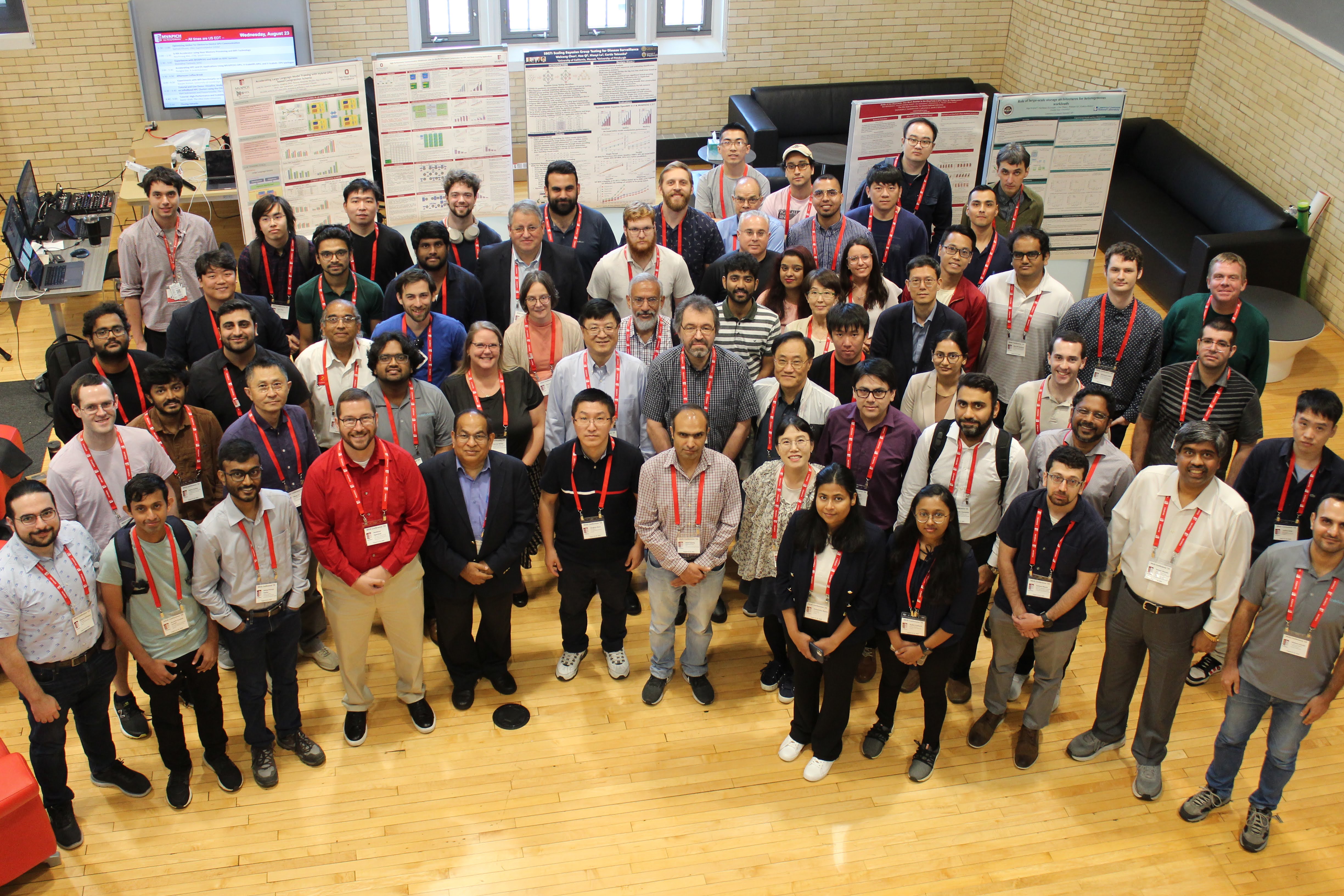
The 11th Annual MVAPICH User Group (MUG) Conference was a hybrid event that was held August 21-23, 2023 at the Ohio State University Translational Data Analytics Institute (TDAI) and online. Videos of talks from the event are available to view on the MVAPICH Youtube channel including Stan’s invited talk from Day 3 of the conference on heFFTe: Highly Efficient Exascale FFT Library for Heterogeneous Architectures:
Interview
Neil Lindquist

Where are you from originally?
New Ulm, a small town in southern Minnesota.
Can you summarize your educational background?
I got my bachelor’s in Computer Science and Math at Saint John’s University. During that time, I had the opportunity to do research under Mike Heroux. Then, I came to ICL to do my Ph.D. I defended my dissertation this past July and am currently looking for a postdoc position.
How did you first hear about ICL, and what made you want to work here?
During my undergrad research, Jack and UT appeared in paper after paper. Then, when I was applying to grad schools, Mike introduced me to Jack and some of the other ICL folks. Both the prevalence of interesting papers and Mike’s positive recommendation made me interested in ICL.
What are your main research interests and what do you work on at ICL?
My main research interest is numerical linear algebra, particularly in exploring how approximations affect both the mathematical and algorithmic properties. Most of my work at ICL has been on distributed dense LU and finding alternatives to partial pivoting. I’ve also done a little work on mixed-precision GMRES.
What are your interests/hobbies outside of work?
I’m part of a rowing club here in Knoxville. I also enjoy various types of board games.
Tell us something about yourself that might surprise people.
I almost went my whole 4 years here without getting to do a newsletter interview!
If you weren’t working at ICL, where do you think you would like to be working and why?
I’ve been trying to figure that out now that I’ve finished my Ph.D.! I really enjoy doing research, so probably one of the DOE labs or maybe a university position.