
News and Announcements
Systems Supporting ICL’s ECP Endeavors Point to the Future
In its work for the US Department of Energy’s Exascale Computing Project (ECP), ICL is benchmarking the OpenMP-based Parallel Linear Algebra Software for Multicore Architectures package (PLASMA) and will soon start prototyping solutions for the Software for Linear Algebra Targeting at Exascale project (SLATE) with backing from some of the latest and greatest high-performance computing systems.
Among those are the Titan supercomputer and the new Summit development (summit-dev) system, which resembles the upcoming Summit. Summit-dev has IBM POWER8 CPUs and Nvidia Pascal GPUs. The actual Summit, available to users in 2018, will have POWER9 and Nvidia Volta.
ICL also will have access to an ARMv8 system made by Cray and based on the Cavium ThunderX 48-core ARM CPUs. This opportunity is especially exciting because ARM appears to be a contender for exascale.
A report on PLASMA performance will be published soon, and the SLATE roadmap document will follow in a couple of months.
The Latest on the Exascale Computing Project
On April 18 at the HPC User Forum in Santa Fe, NM, Paul Messina, director of the US Department of Energy’s Exascale Computing Project (ECP), presented an update on the ECP.
Holistic and integrative in approach, the ECP was established to maximize the benefits of high-performance computing for the US and accelerate the development of a capable exascale computing ecosystem.
Exascale refers to computing systems that deliver fifty times the performance of today’s 20-petaflop systems, support applications that bring high-fidelity solutions in less time, and address problems of greater complexity.
Exascale systems will operate in a power envelope of 20 to 30 megawatts; provide sufficient resiliency, which means a perceived fault rate of 1 week or less; and include a software stack that supports a broad spectrum of applications and workloads.
Industry news outlets insideHPC and HPCwire covered Messina’s talk via a video, a podcast, and a synopsis article.
Conference Reports
Future Online Analysis Platform Workshop
ICL’s Piotr Luszczek and Terry Moore participated in a workshop on April 4th and 5th in Washington, DC, directed at confronting edge computing environments, which are characterized by the rapid proliferation and deployment of new and powerful data sources, ranging from huge instruments and experimental facilities to highly dispersed sensor networks.
Called the Future Online Analysis Platform, the workshop was sponsored by the US Department of Energy (DOE) and organized by Kate Keahey of Argonne National Laboratory and Jim Ahrens of Sandia National Laboratories. The workshop was designed to contribute to DOE’s effort to develop scalable cyberinfrastructure that can provide efficient and timely data analysis capabilities to researchers who want to channel and use this unprecedented flood of data.
Piotr participated as a representative of a nascent project focused on scalable distributed computing for data analysis in edge environments. Known as InLocus, the project is being developed by ICL with Martin Swany of Indiana University and Micah Beck of UT Knoxville.
Terry participated as a representative of the Big Data and Extreme-Scale Computing (BDEC) project. BDEC is premised on the need to systematically map out and account for the ways in which the major issues associated with Big Data intersect with, impinge upon, and potentially change the national (and international) plans that are now being laid out for achieving exascale computing. ICL has been leading the BDEC project the past several years.
Invited Talk at NASA Langley Research Center
During a visit April 11–12 to NASA Langley Research Center in Langley, VA, ICL’s Stephen Wood gave a talk on the numerical analysis and linear algebra subject of LU (“lower upper”) factorization to approximately twenty-five members of the center’s Computational Aerosciences Branch.
After his talk, Stephen spent the rest of his stay improving the performance and scalability of a finite element mini app by refactoring OpenMP commands; attending a talk on LAVA by Cetin Kiris, the NASA Computational Aerosciences Branch chief; attending a talk on transition modeling by James Coder of UT Knoxville’s Mechanical, Aerospace, and Biomedical Engineering Department; and participating in discussions concerning the HPC needs and challenges across NASA’s branches.
LAVA is a computational framework for launch, ascent, and vehicle aerodynamics.
Transition modeling pertains to predicting the changes between laminar (streamline) and turbulence flows in fluids and the effects on the overall solution. Transition modeling is very compute intensive.
“Detecting and quantifying the transition from laminar flow to turbulence and back again is one of the major frontiers of simulation and experimental science,” Stephen said. “In many respects the aerospace community is leading the charge to better understand turbulence, but the impacts of progress are felt in disciplines from meteorology to cardiology.”
Invited Talk for the DoD High Performance Computing Modernization Program
On April 25th in Aberdeen, MD, ICL’s Stephen Wood gave an invited talk at the US Department of Defense High Performance Computing Modernization Program PETTT Transition to Knight’s Landing (KNL): Approaches, Tools, and Architecture workshop to an interactive audience of approximately sixty people in person and thirty web participants. PETTT refers to user productivity enhancement, training, and technology transfer.
“The presentation sparked fruitful discussions about the influence of work-sharing patterns, the utility of OpenMP features, and the configuration of computational environment—KNL memory modes, numactl settings, numeric libraries, and so forth,” Stephen said.
Lessons learned during the development of what is called an asynchronous parallel LU factorization (PariLU) for dense and sparse matrices on Haswell, Knights Corner, and KNL processors were presented and discussed, along with other related subject matter.
Interview
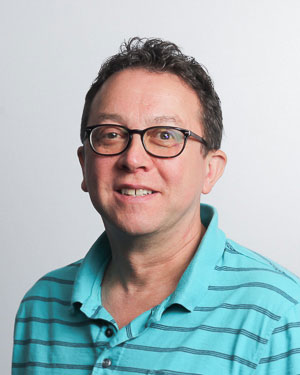

Earl Carr
Where are you from originally?
I was born in Chicago, Illinois, but my family is originally from East Tennessee. My partner and I recently moved to the original homestead where my ancestors settled almost 200 years ago.
What is your educational background?
Bachelor’s in international studies from Long Island University, New York, with an additional propedeuse in international management from the College of Economic Studies (Hogeschool voor Economische Studies), Amsterdam, Netherlands. I’m also a certified project manager (PMP).
Where did you work before joining ICL?
Besides a six-month job at Roane State Community College in Harriman, TN, as the international education coordinator, I worked for fourteen years at IBM Netherlands.
What drew you to ICL?
To contribute to a government program that is attempting to make the fastest super computer in the world is pretty darn cool and impressive! Even though I don’t have a technical education, I enjoy working with technical people; I feel at home at ICL. Besides that, UT was the number one employer that I wanted to work for when I moved to the area.
What is your primary role here?
I am in charge of the administrative and project management (PM) elements for the ECP projects. The work involves implementing sound and cost/time-efficient PM improvements where needed, handling many of the project-related administrative duties so that the ECP project teams can focus on their work, and eventually becoming an expert on JIRA, confluence, and ECP.
What are your interests/hobbies outside of work?
Piddling around on our little homestead in the Tennessee mountains (I garden and plan to eventually raise some small livestock), singing, spending quality time with my family, enjoying wine and good food, and exercising. And I’m a news junkie.
Tell us something about yourself that might surprise us.
For ten years I was one of the lead singers for AGC (The Amstel Gospel Choir). AGC is a semiprofessional group that performs gospel and soul (nonreligious) music in the black American style all over the Netherlands and Belgium.


