
News and Announcements
2016 ICL Winter Reception
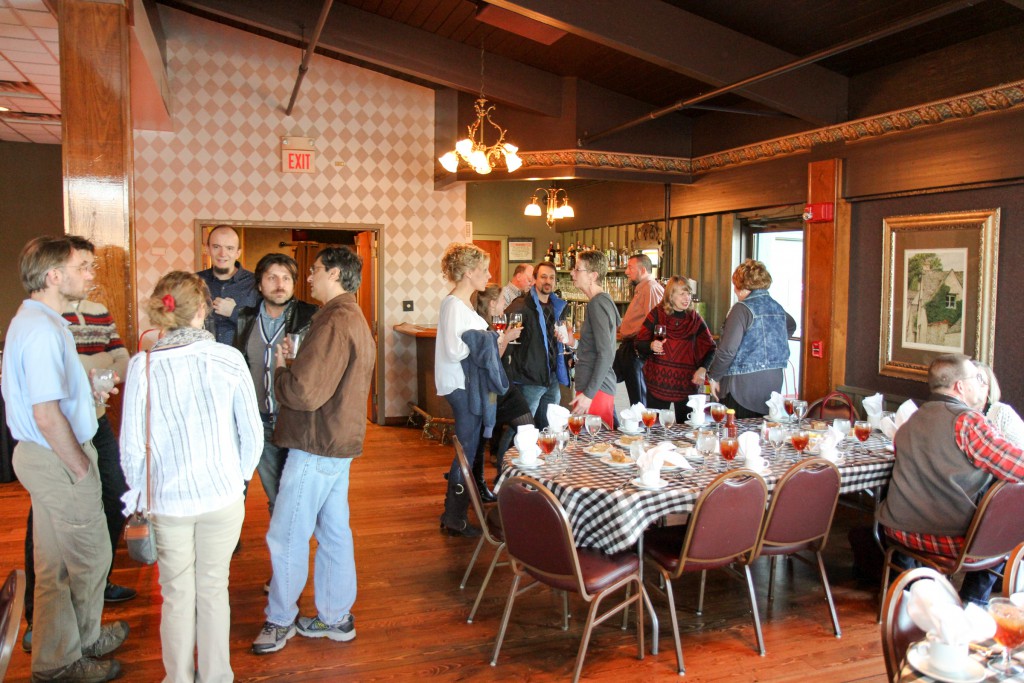
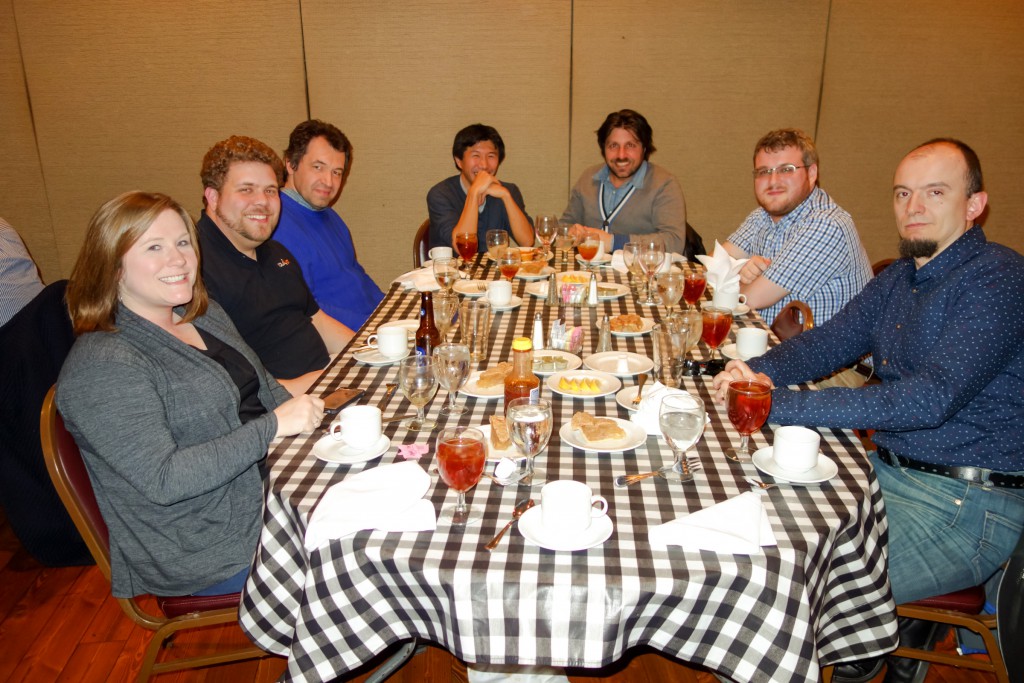


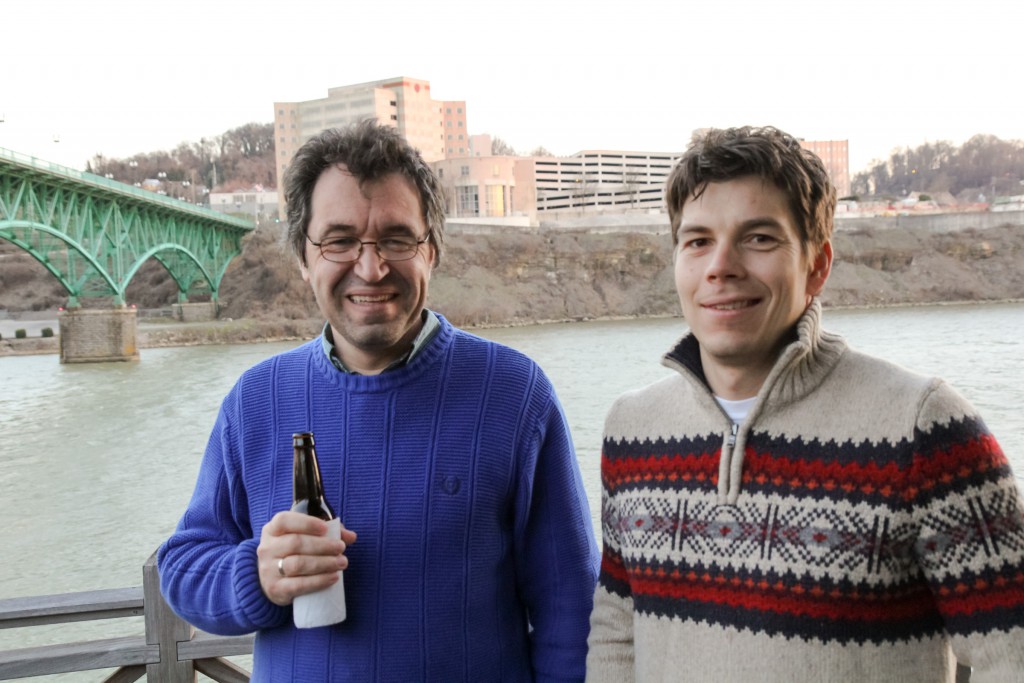
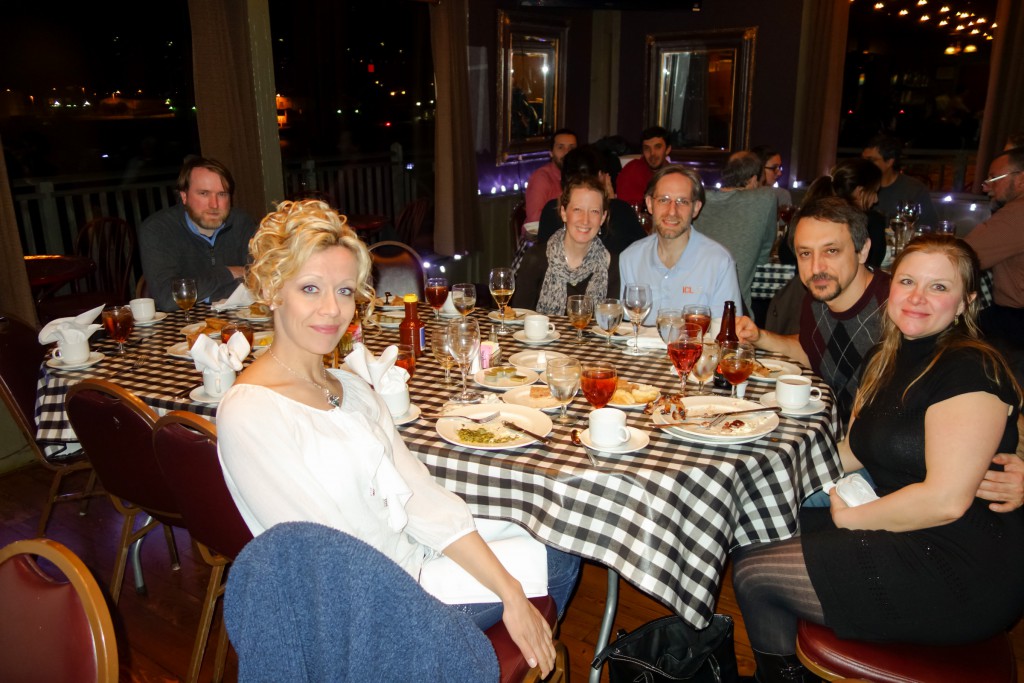
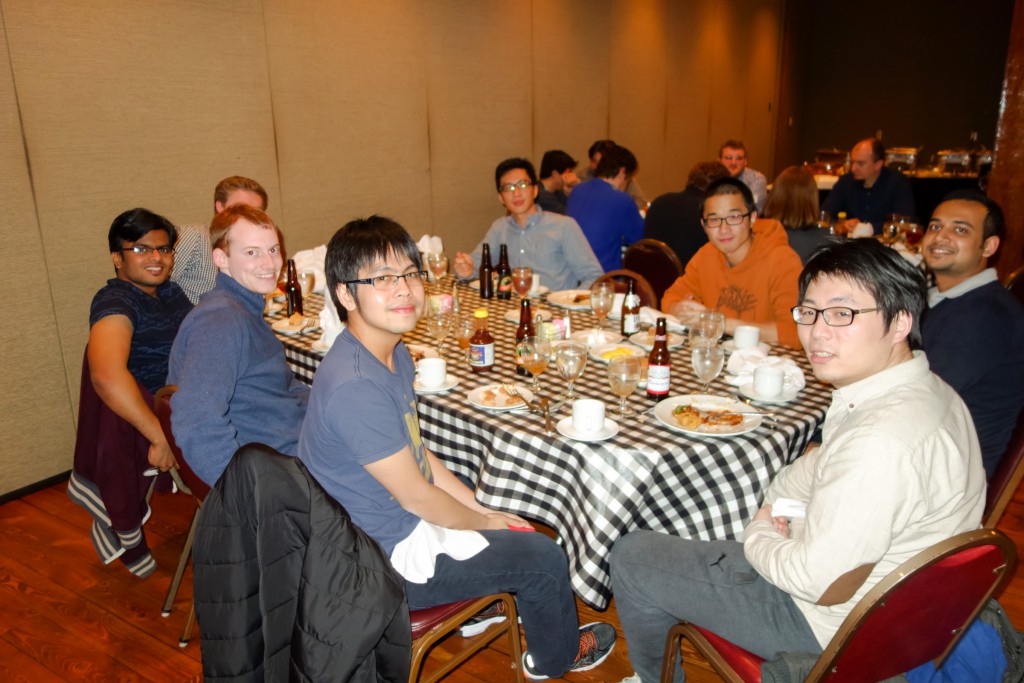
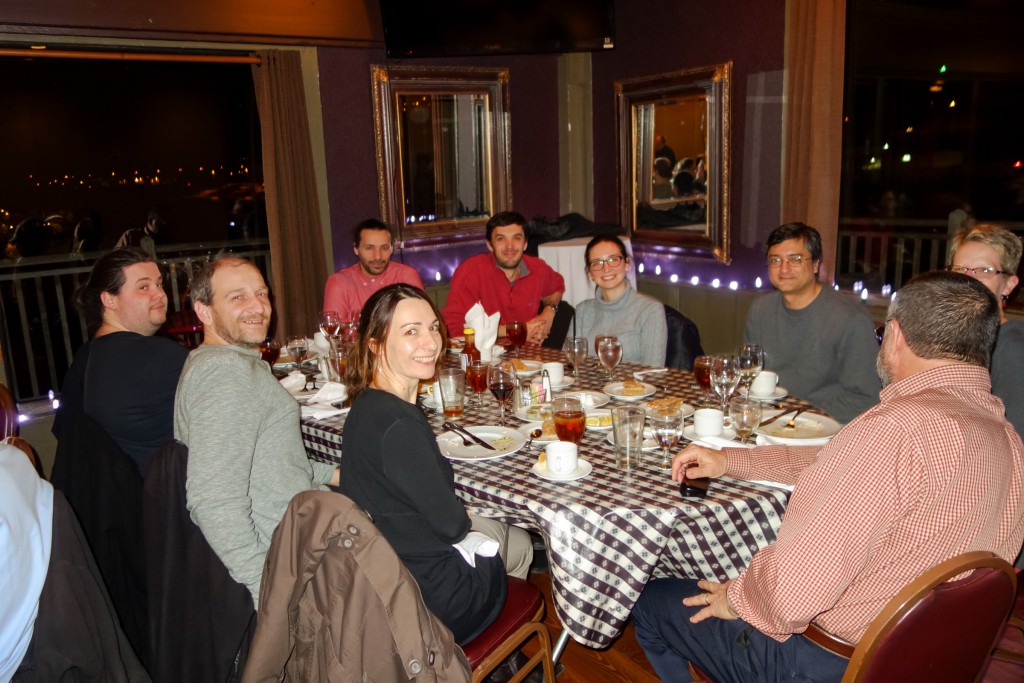

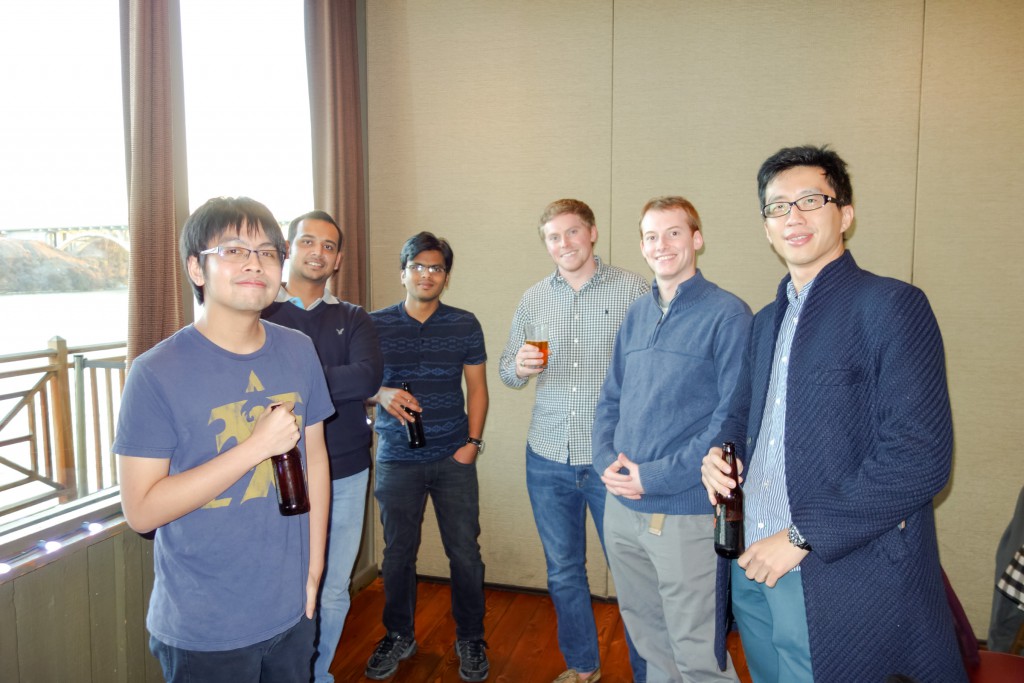

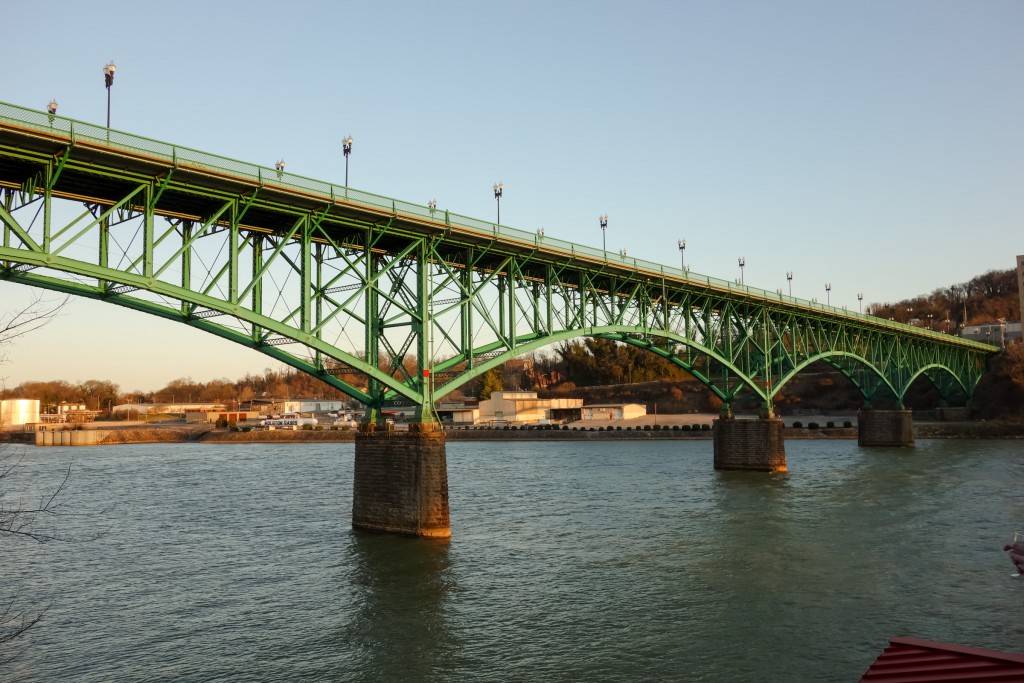

After a hiatus in 2015, the ICL Winter Reception returns! This year’s reception was held at Calhoun’s on the River where they graciously hosted around 50 ICLers and their invited guests. Above, we have provided some photos of the event for your entertainment. Here’s to another great year at ICL!
US Budget now Includes Exascale
 The US Federal budget for FY2017 reveals new information on the National Strategic Computing Initiative (NSCI), which was first mentioned by President Obama in July of 2015. Unlike previous budgets which used a variety of programs in the NSF, DOE, NIST and DoD to parcel out funding for research in HPC and extreme scale computing, next year’s budget makes an explicit commitment to an Exascale initiative in the form of the NSCI and departmental sub-programs like DOE’s Exascale Computing Program (ECP) and Science Exascale Computing Program (SC-ECP).
ICL’s Jack Dongarra offered this regarding the future of Exascale initiatives in the US: “I remember very well the last time—more than 15 years ago—when such an ambitious federal initiative was launched because it was my long time friend and collaborator, the late Ken Kennedy, who led the President’s Information Technology Advisory Committee (PITAC) that produced the Information Technology Research: Investing in Our Future report. If the NSCI generates, over time, the same kind of national research environment that Ken’s PITAC report did, then the future prospects for Computing will indeed be bright.”
HPCwire has a very informative writeup about the budget details, including a breakdown of brass tax. Click here to read more.
Recent Releases
MAGMA 2.0 Released
MAGMA 2.0 is now available! This release includes a major interface change for all MAGMA BLAS functions; most higher level functions such as magma_zgetrf have not changed their interface.
Significant changes:
- Added queue argument to magmablas routines, and deprecated magmablas{Set,Get}KernelStream. This resolves a thread safety issue with using global magmablas{Set,Get}KernelStream.
- Fixed bugs related to relying on CUDA NULL stream implicit synchronization.
- Fixed memory leaks (zunmqr_m, zheevdx_2stage, etc.). Add -DDEBUG_MEMORY option to catch leaks.
- Fixed geqrf*_gpu bugs for m == nb, n >> m (ex: -N 64,10000); and m >> n, n == nb+i (ex: -N 10000,129).
- Fixed zunmql2_gpu for rectangular sizes.
- Fixed zhegvdx_m itype 3.
- Added zunglq, zungbr, zgeadd2 (which takes both alpha and beta).
MAGMA sparse:
- Added QMR, TFQMR, preconditioned TFQMR.
- Added CGS, preconditioned CGS.
- Added kernel-fused versions for CGS/PCGS QMR, TFQMR/PTFQMR.
- Changed relative stopping criterion to be relative to RHS.
- Fixed bug in complex version of CG.
- Accelerated version of Jacobi-CG.
- Added very efficient IDR.
- Performance tuning for SELLP SpMV.
Note: MAGMA 2.0.1 fixes a minor issue with “make install.” There are no other source code changes from 2.0.0 to 2.0.1.
Please visit the MAGMA software page to download the tarball.
Interview

Hidehiko Hasegawa
Where are you from, originally?
Tsukuba, Japan.
Can you summarize your educational background?
In 1980 I earned my BS in Mathematics from the University of Tsukuba, and then followed up with a Master of Arts from Tsukuba.
I also took a doctoral course from 1980-1983 in the Division of Social Engineering (also at University of Tsukuba) and was a Research Associate at the University of Library and Information Science.
In 1994 I earned my PhD in Engineering from the University of Tsukuba.
How did you get introduced to ICL?
I had a chance to research abroad in 1994; however, there were two problems. The first problem was my English ability, and the second was having to choose a new research topic. To make these problems tractable, I chose ICL—where my familiar topics were also being studied/researched. A friend of my boss knew Jack well, and that made it easy to get in touch with Jack and get a position at ICL. Although, at that time, Jack’s lab didn’t have the name “ICL.”
What did you work on during your time at ICL?
As my university was one of the National universities, and all of my expenses were supported by the Ministry of Education, I had a lot of flexibility in my research. I tried to master many new parallel computing environments, including IBM SP-2, Intel Paragon, MasPar MP-2, Thinking Machines CM-5, and PVM2. Since I used vector supercomputers like the HITAC S-820 and S-3800 in Japan, these experiences were very fresh and enjoyable for understanding future computing environments. I also tried to develop a distributed version of a parallel tridiagonal solver, but this project is still on my bookshelf. My wife and I translated “Templates for the Solution of Linear Systems: Building Blocks for Iterative Methods” into Japanese, and published the translated version. The book is still available.
What are some of your favorite memories from your time at ICL?
Friday lunches! It’s a time to eat “big” food by sharing instead of eating from a small lunch box. I remember having a Subway sandwich that was taller/longer than a human being, which was very impressive, and I had no prior opportunity to see or eat a sandwich like that except at the lab’s Friday lunch.
Tell us where you are and what you’re doing now.
For 15 years, I was involved in projects to create a numerical linear algebra library “Lis,” a simple interface for many kinds of libraries and computing environments “SILC”, and a high precision arithmetic library tuned for SIMD. I am interested in high quality and ease of use instead of high performance. I would like to waste computing power for a quality of computation and usability of the computer.
Currently, I am a dean of the College of Knowledge and Library Sciences, School of Informatics at the University of Tsukuba, and managing the education process for undergraduate students. When teaching my class I use a style that I believe was influenced by the Computer Science department at UTK.
I live in Tsukuba, Japan, which is one hour from Narita International Airport and Tokyo. Tsukuba is a big science city like Knoxville and Oak Ridge. My office room is the same as when I stayed in ICL, but the name of the organization has changed because of the merge with the University of Tsukuba in 2002.
Tell us something about yourself that might surprise some people.
On April 1st (not an April Fool’s prank) I will become a provost of the School of Informatics at the University of Tsukuba.


