
News and Announcements
Supercomputing ’11
This year’s annual Supercomputing Conference, SC11, was held on November 12-18th at the Washington State Convention Center in Seattle, Washington. ICL had a considerable presence at SC11 with papers, BoFs, posters, software releases, and 18 ICLers who traveled to Seattle for the conference.
Azzam Haidar, Hatem Ltaief, and Jack Dongarra presented a paper titled, “Parallel Reduction to Condensed Forms for Symmetric Eigenvalue Problems using Aggregated Fine-Grained and Memory-Aware Kernels.” A second paper, titled “Optimizing Symmetric Dense Matrix-Vector Multiplication on GPUs,” was presented by Rajib Nath from UC San Diego and Stan Tomov, Tingxing Dong, and Jack Dongarra from ICL. Peng Du also presented a paper, “Soft Error Resilient QR Factorization for Hybrid System with GPGPU,” with Piotr Luszczek, Stan Tomov, and Jack Dongarra.
The Top500 rankings and HPC Challenge results were announced in separate BoF sessions on Day 4 of the conference. The PAPI team presented a poster for the latest version of the PAPI performance analysis tool, and most of ICL’s other projects were represented with handouts which were available in the ORNL booth. The LAPACK, MAGMA, and ScaLAPACK teams all released new software at SC11 as well.
The ICL SC11 Alumni Dinner was held on Wednesday, November, 16th at the Steelhead Diner in Seattle. As usual, there were plenty of ICL alumni hanging out and having a good time.
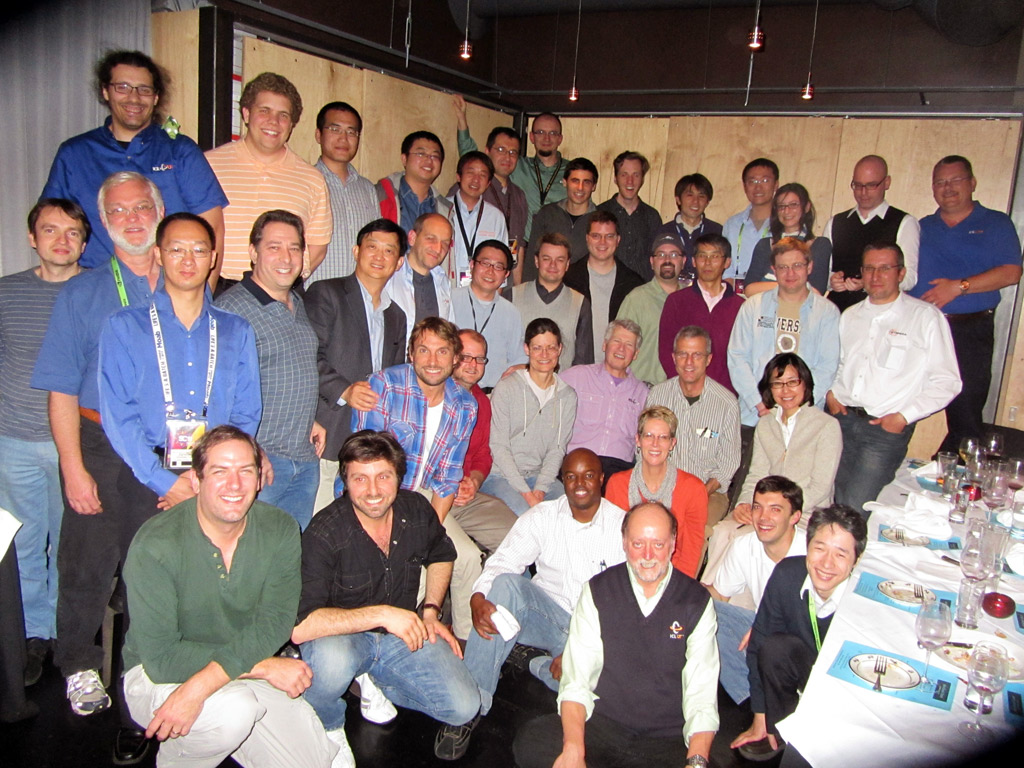
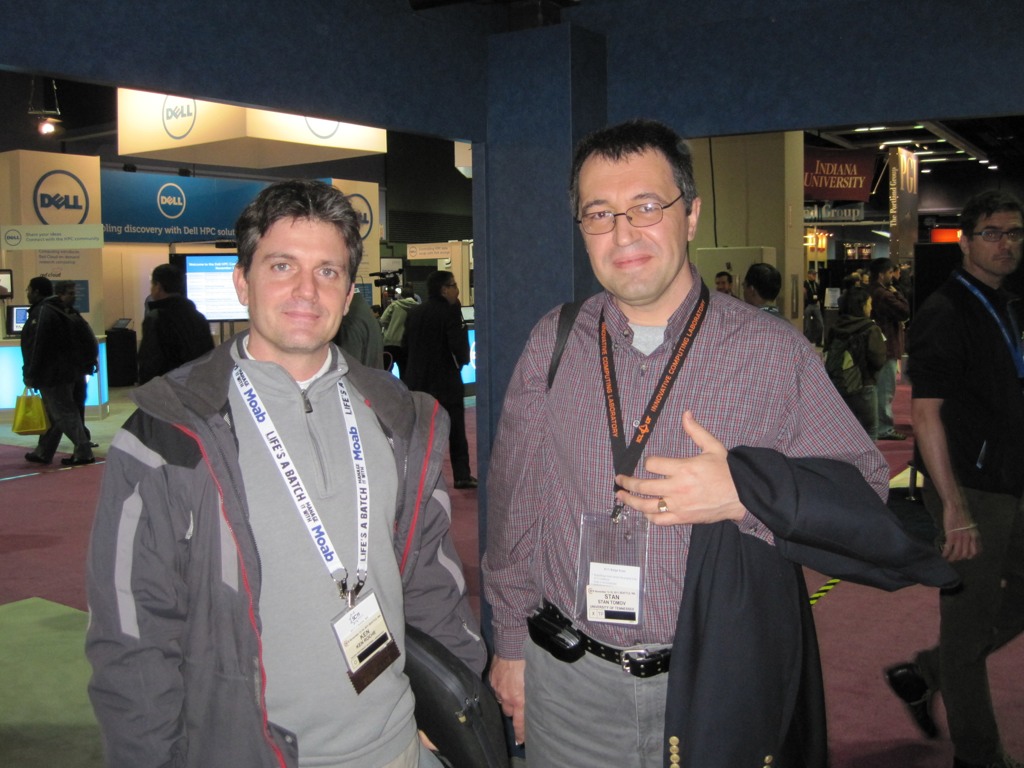

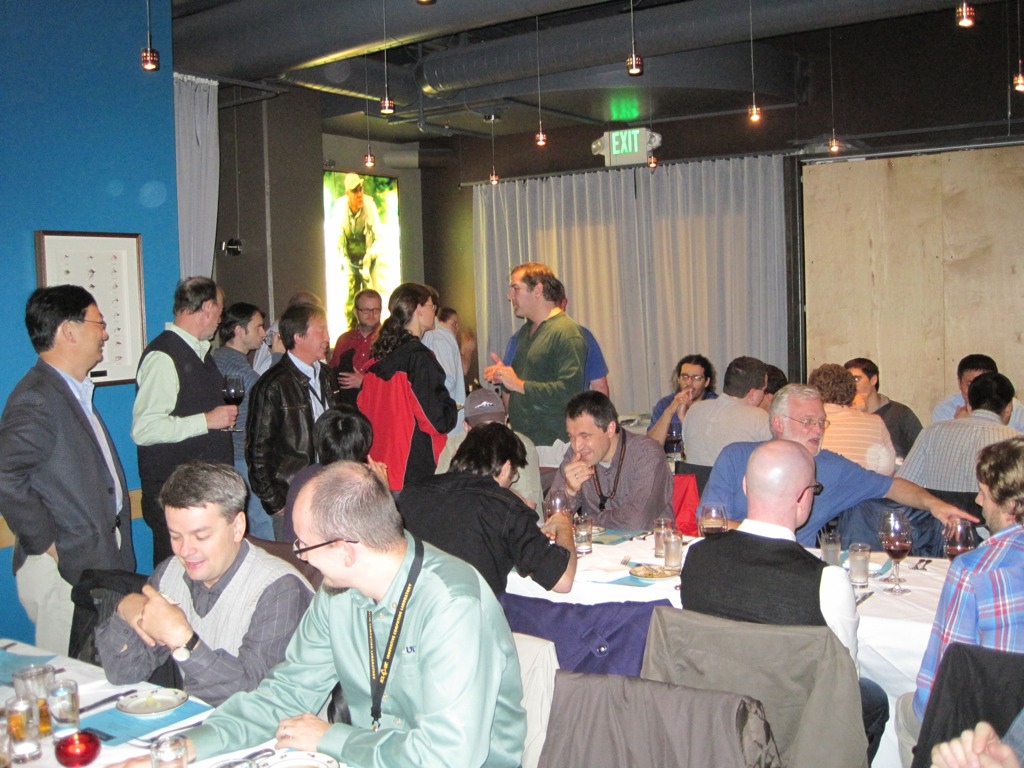
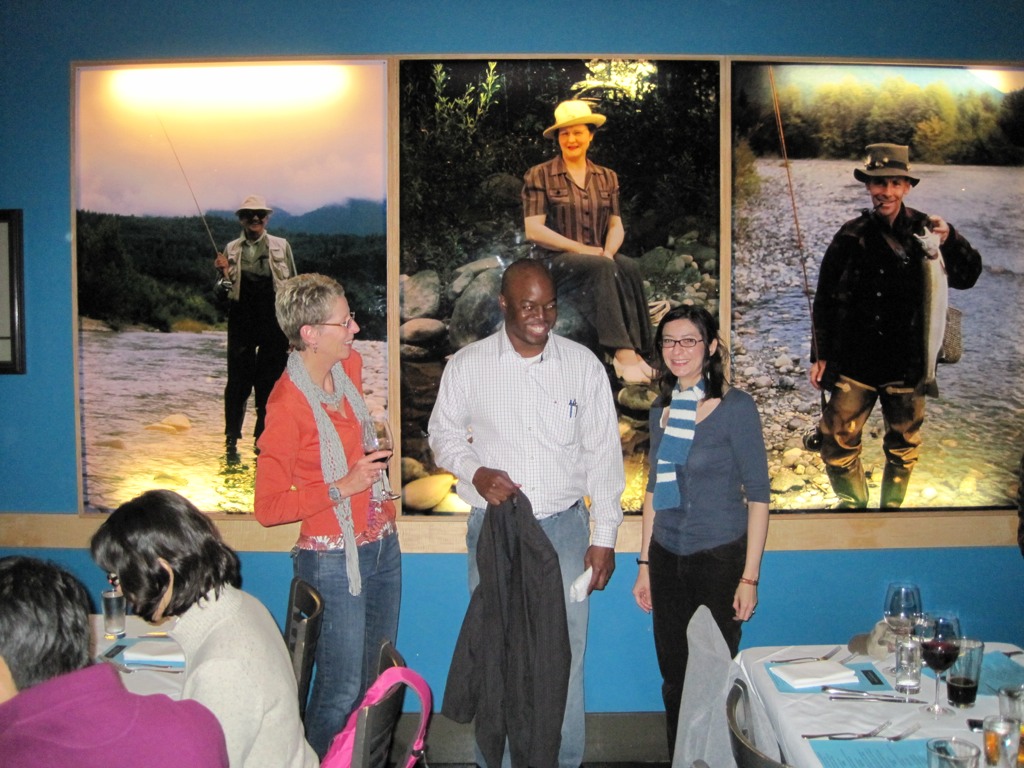
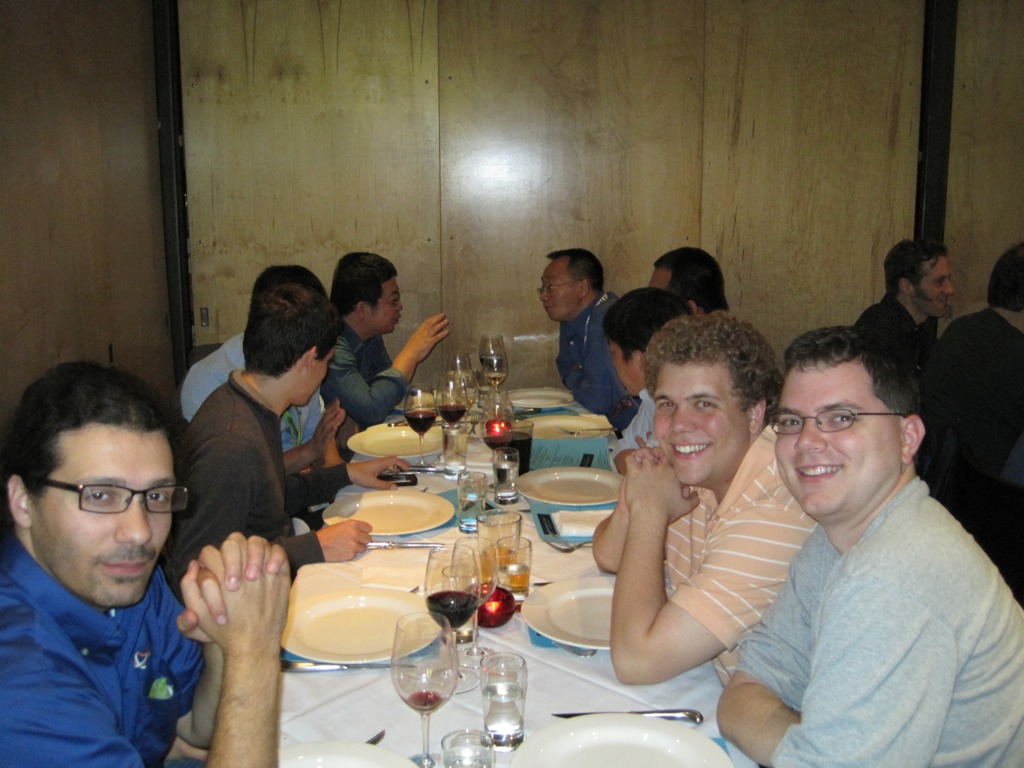

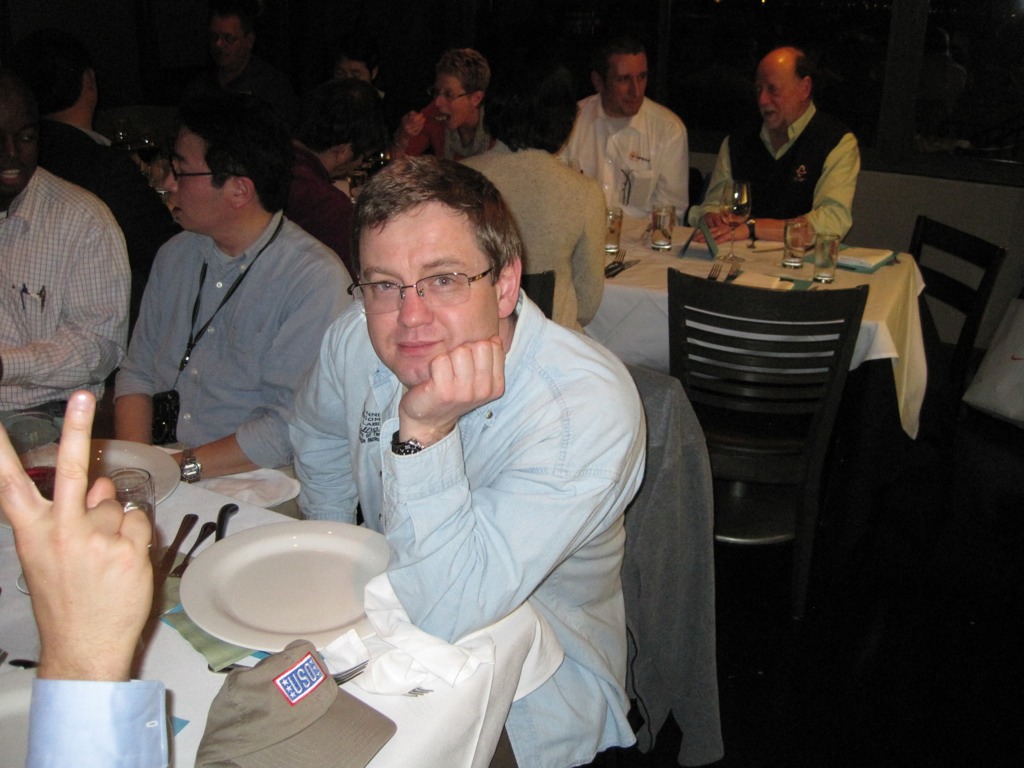

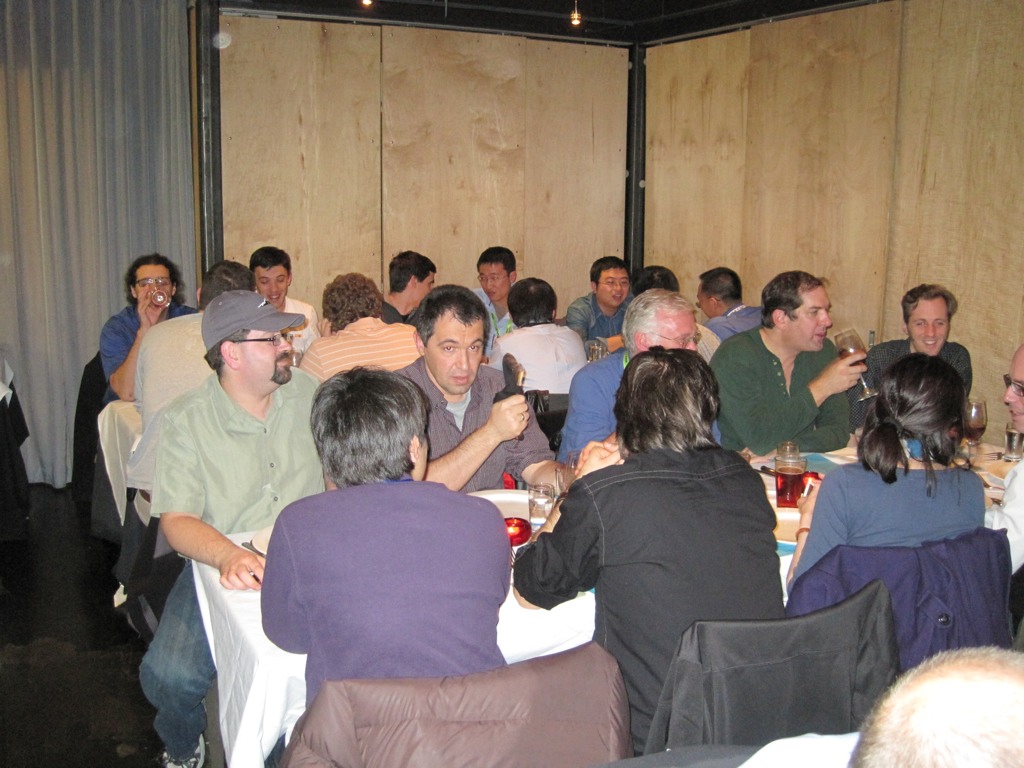

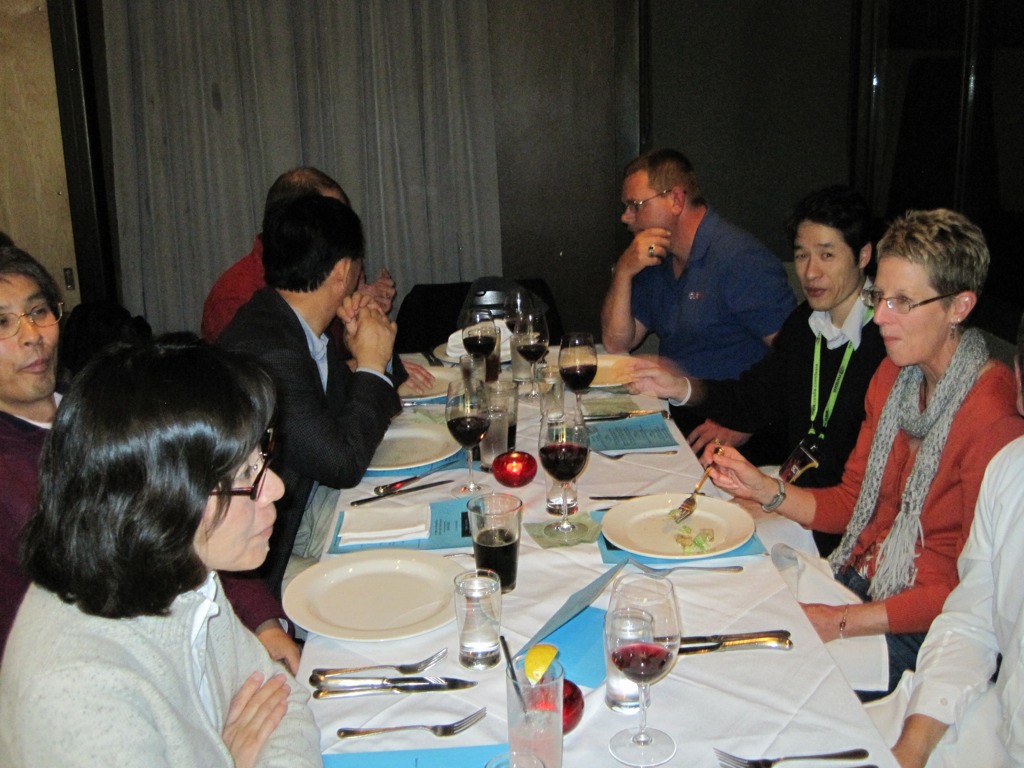
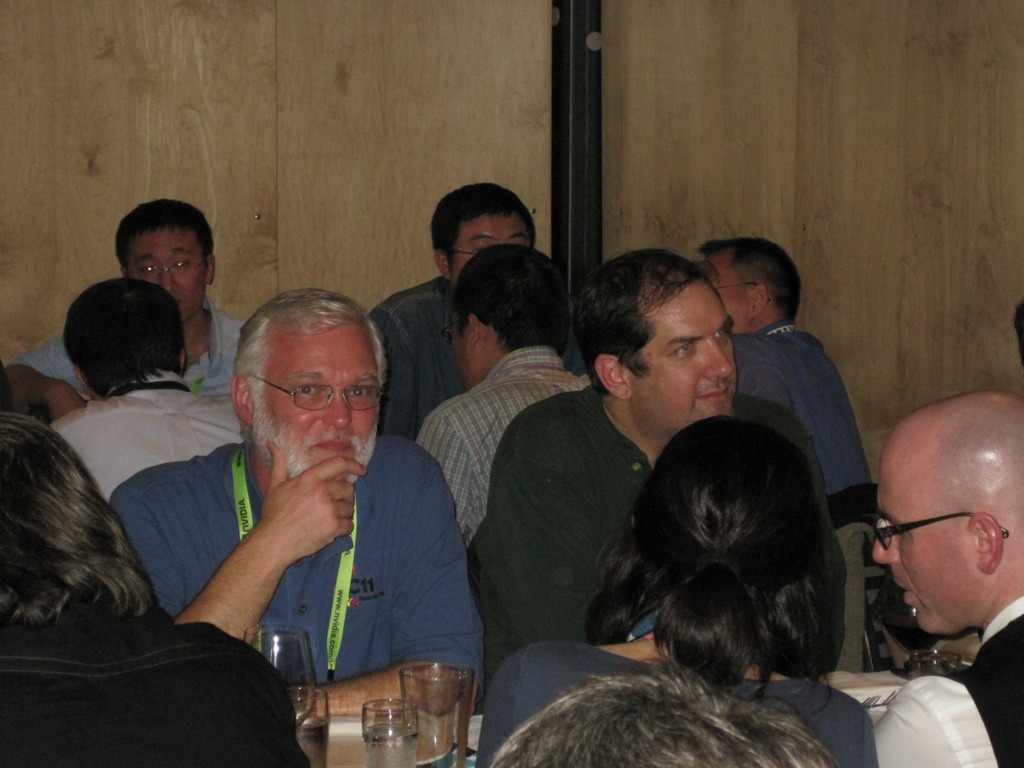
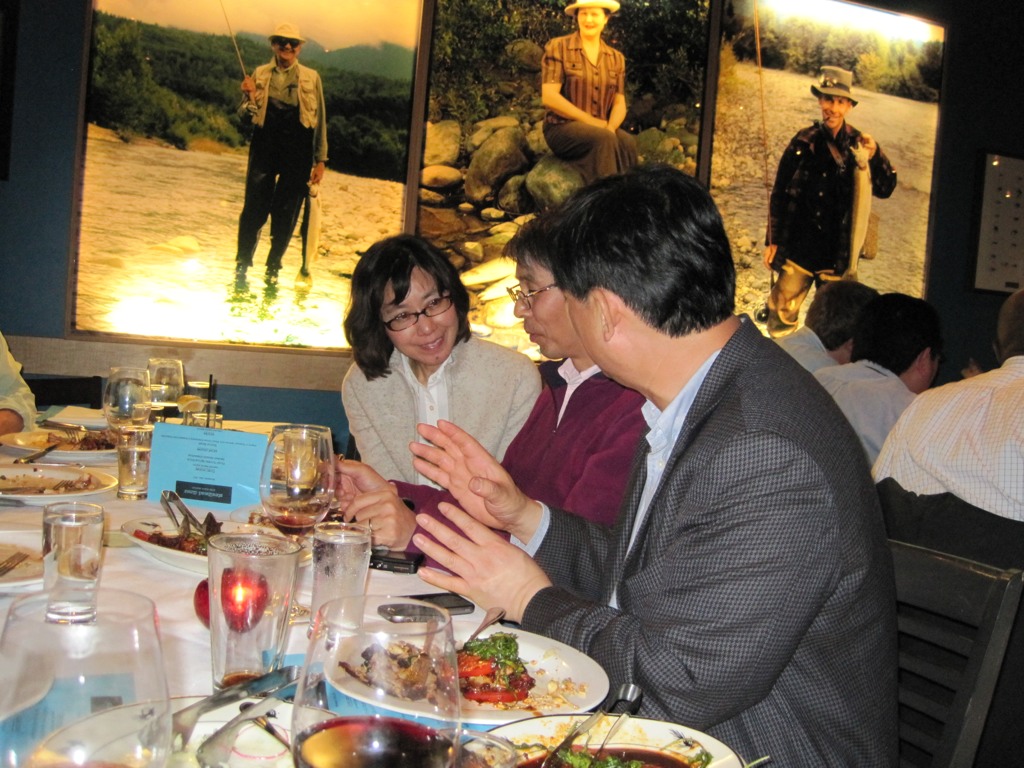
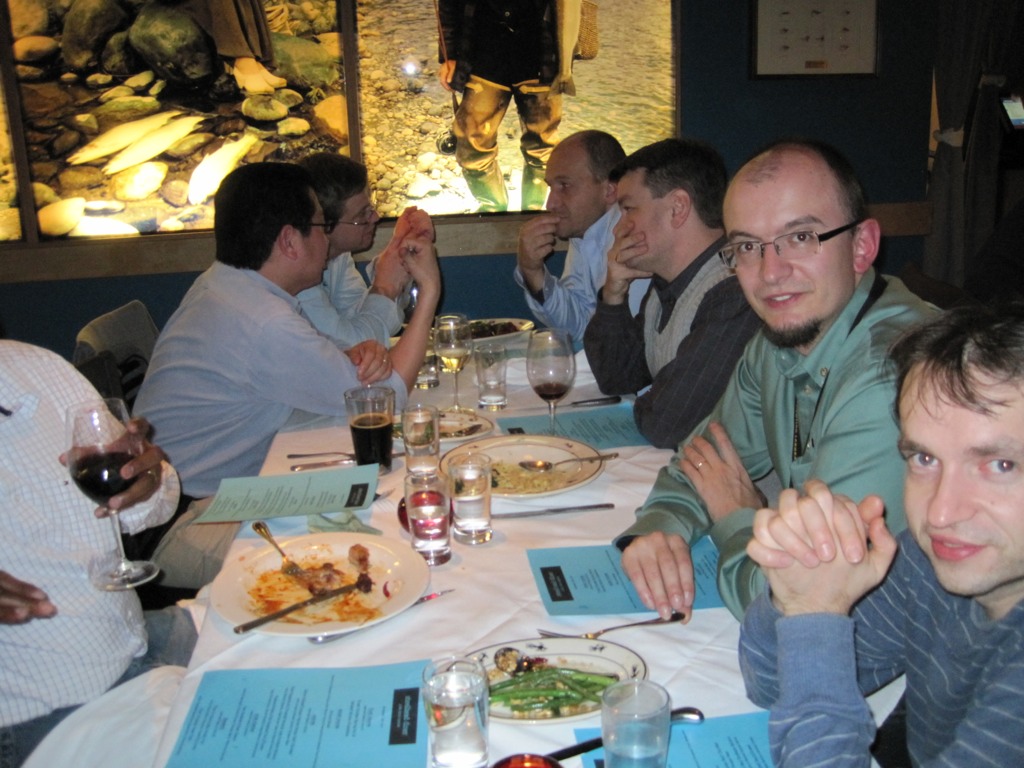
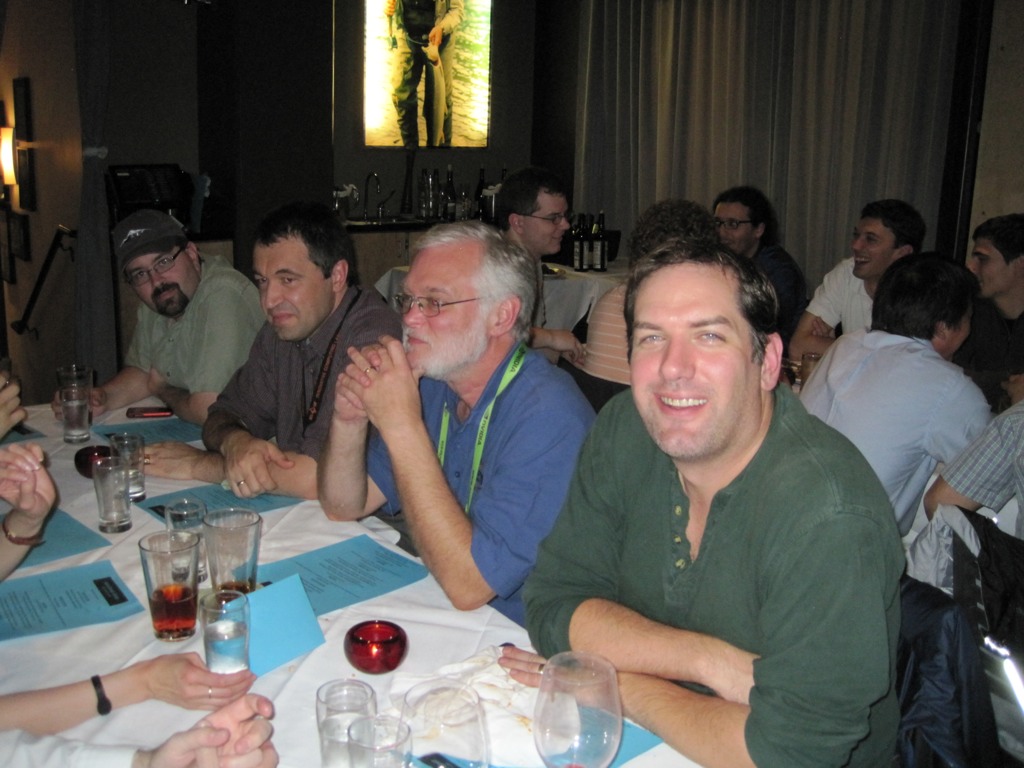

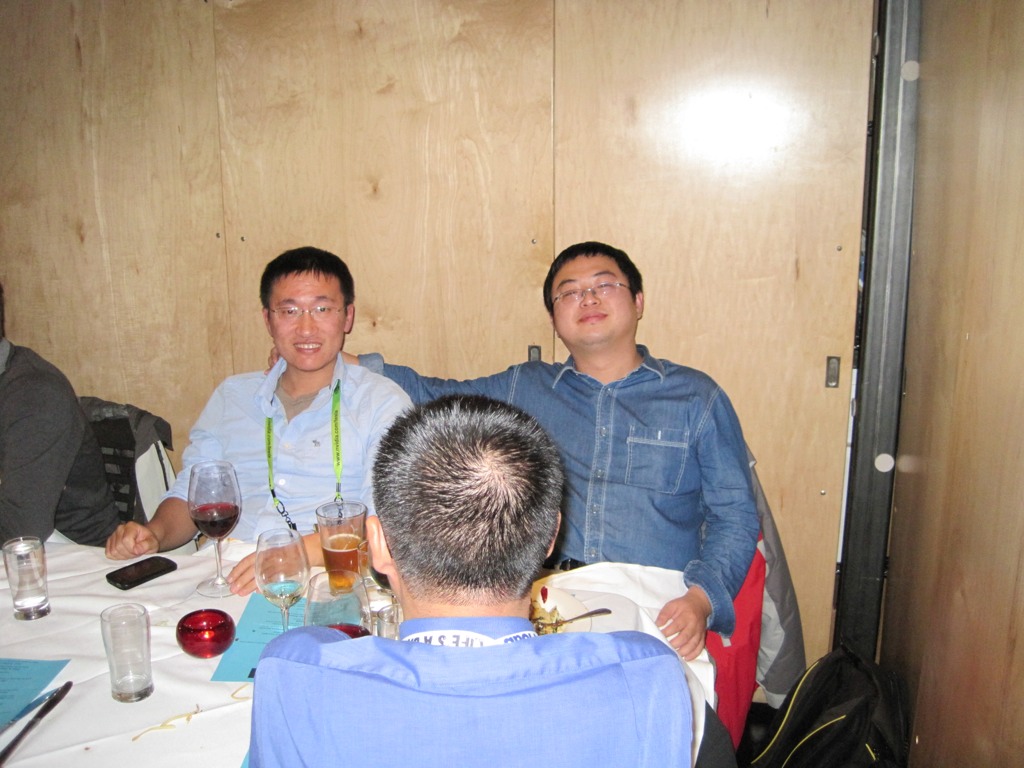
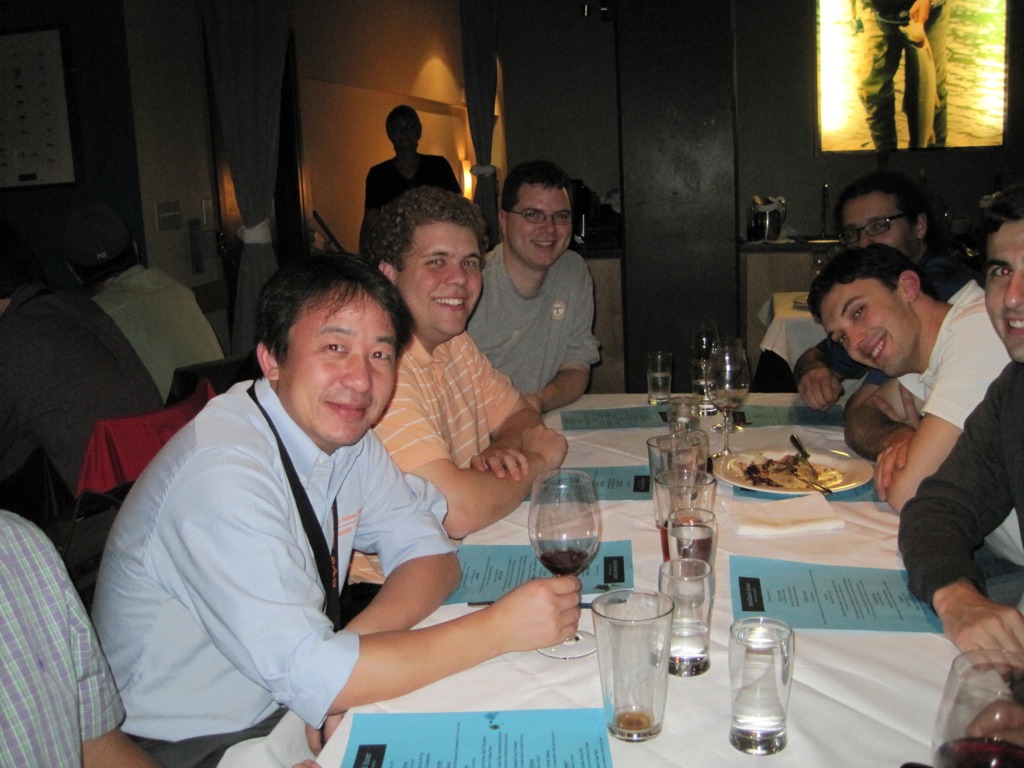

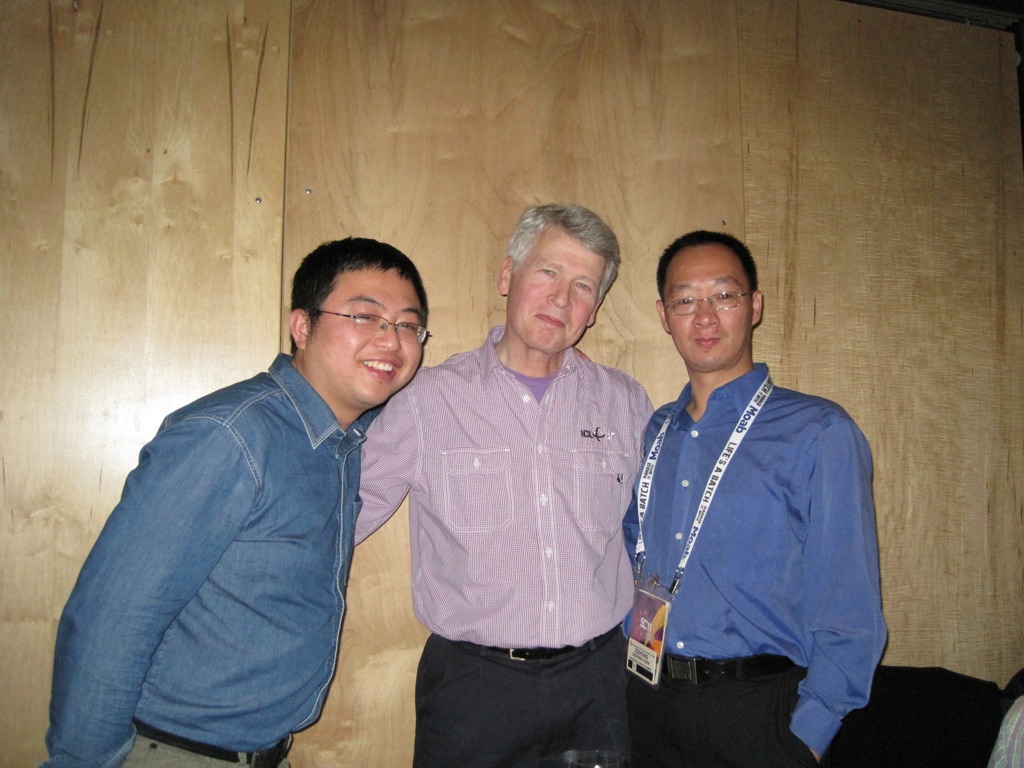

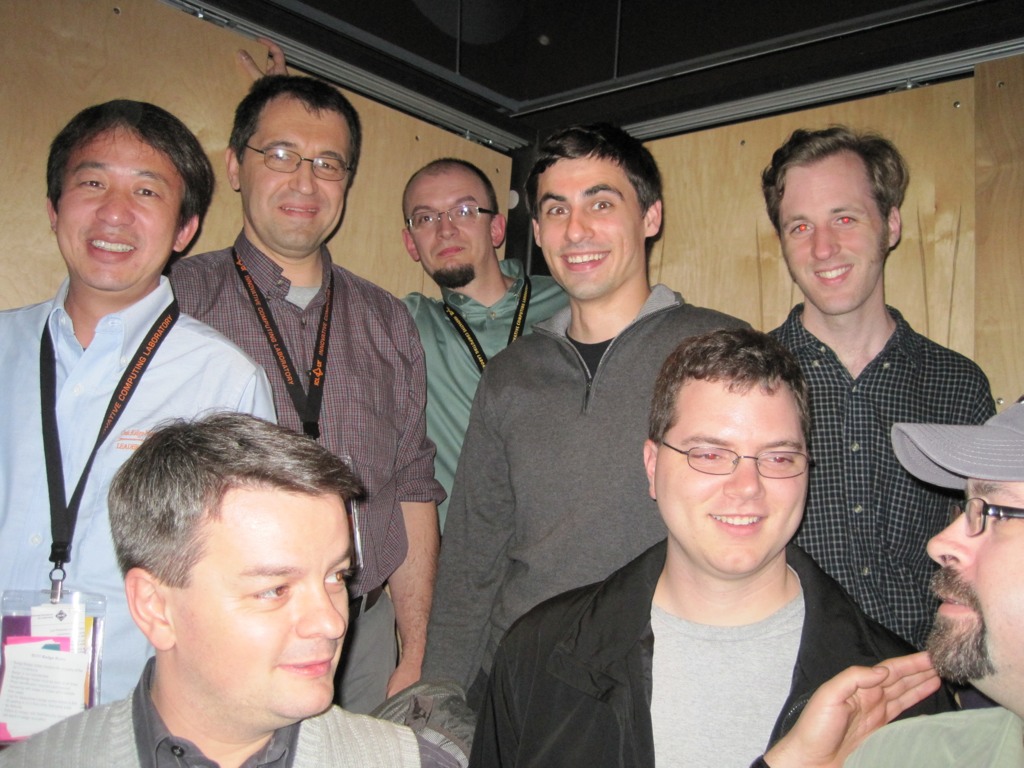
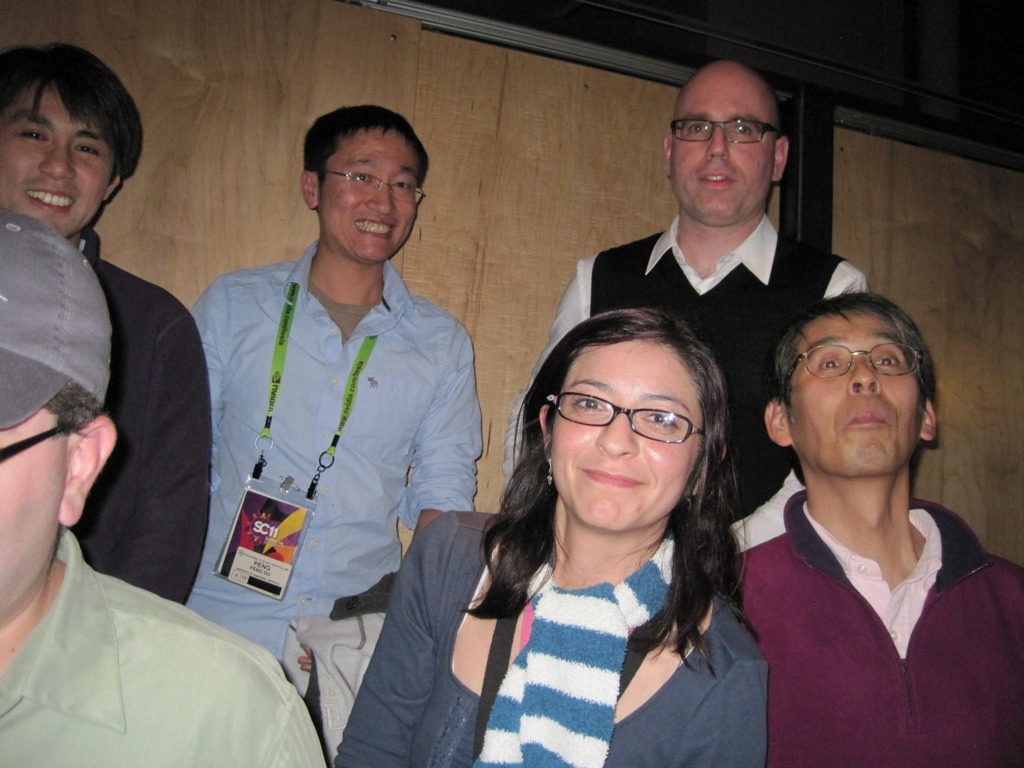

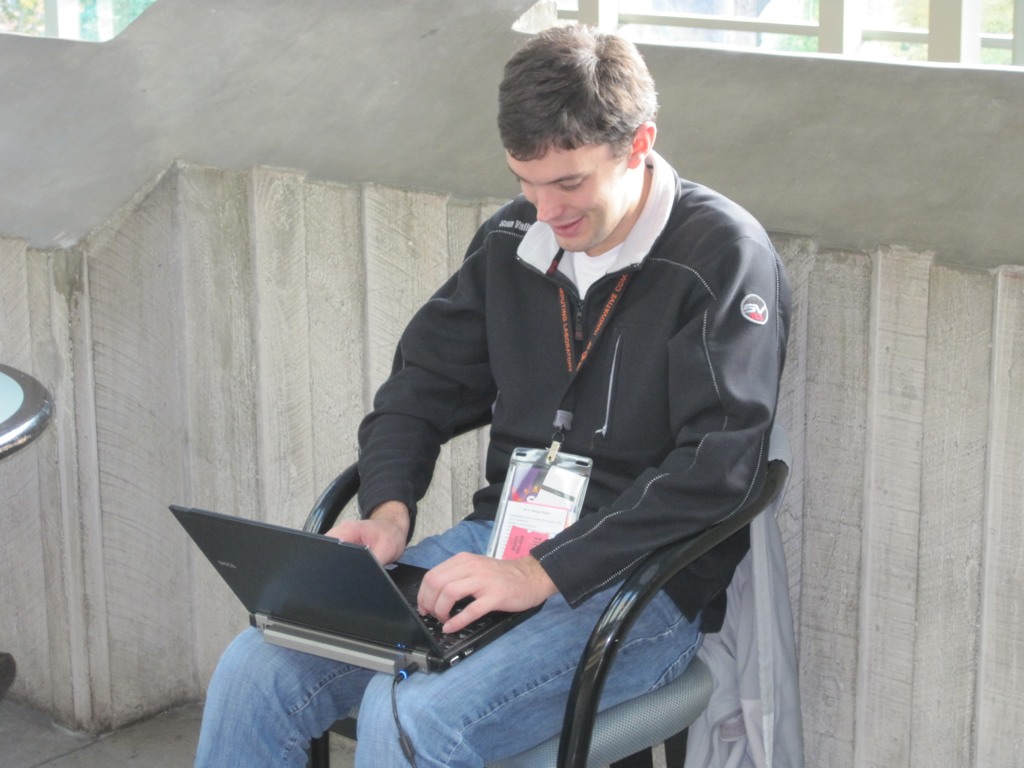

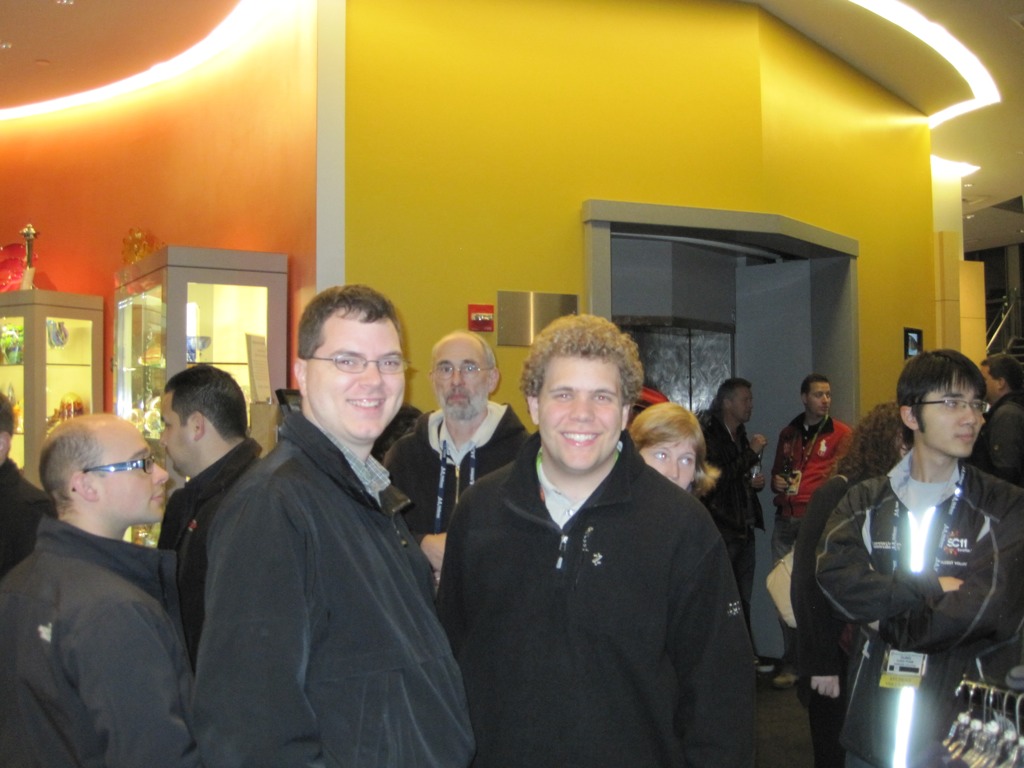
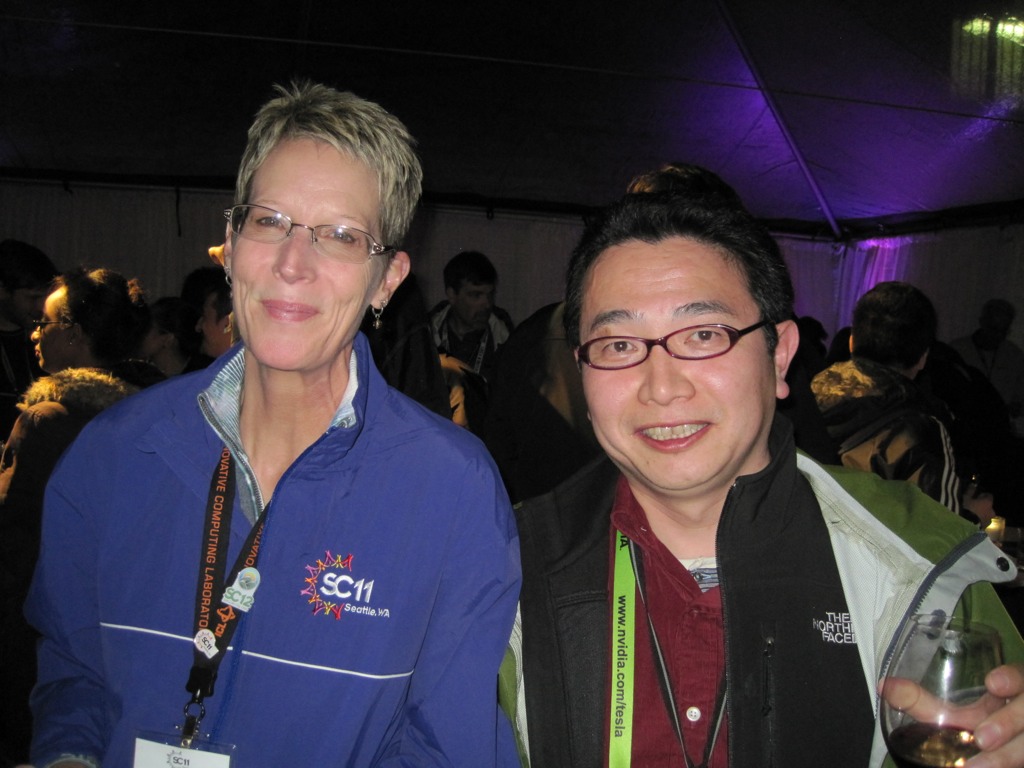
SC11 was not all strictly business, of course:
Top500 Ranking Released
The latest Top500 rankings were released last month at SC11. Check out the table below for the top 5 machines on the list or visit the Top500 website for a comprehensive list of the world’s fastest supercomputer sites.
You can also hear Rich Brueckner and Dan Olds discuss the new TOP500 list with Jack Dongarra and Hans Meuer from TOP500.org by listening to the following podcast: [audio:http://icl.cs.utk.edu/newsletter/files/2011-11/audio/Nov2011top500-Podcast.mp3]
2011 HPC Challenge Awards
Piotr Luszczek and Jack Dongarra unveiled the winners of the annual HPC Challenge awards during a BoF session at SC11. The Japanese K Computer, current Top500 champion, took the number one spot across the board in the Class 1 category, besting the competition in the Global HPL, Global RandomAccess, EP STREAM (Triad) per system, and Global FFT benchmarks.
Please visit the HPCC website to view a comprehensive list of the winners.
ICL Annual Report Published
 For eleven years, ICL has produced an annual report to provide a concise profile of our research, including information about the people and external organizations that make it all happen. Please download a copy and check it out.
SC11 Handouts
New project handouts from SC11 are available for download in PDF format.


Floss4Science MAGMA Interview
The folks over at Free Libre Open Source Software for Science and Engineering (Floss4Science) recently interviewed Jack Dongarra and Stan Tomov about the MAGMA project. The interview provides a detailed overview of MAGMA–including a bit of history on how it came about and a glimpse of where it might be headed. Click here to read the entire interview.
Recent Releases
PLASMA 2.4.5 Released
The PLASMA 2.4.5 release is now available for download.
This package contains:
- Add LU inversion functions: PLASMA_zgetri, PLASMA_zgetri_Tile, and PLASMA_zgetri_Tile_Async using the recursive parallel panel implementation of LU factorization.
- The householder reduction trees for QR and LQ factorizations can now work on general cases and not only on matrices with M multiple of MB.
- Matrix generation has been changed in every timing, testing, and example file to use a parallel initialization generating a better distribution of the data on the architecture, especially for Tile interface. The “numactl” is not required anymore.
- Timing routines can now generate DAGs with the –dag option, and traces with –trace option if EZTRACE is present.
See the Software Page to download the tarball.
LAPACK 3.4.0 Released at SC11
The LAPACK 3.4.0 release is now available for download.
This package contains:
- xGEQRT: QR factorization (improved interface)
- xGEQRT3: recursive QR factorization
- xTPQRT: Communication-Avoiding QR sequential kernels
- CMAKE build system
- Doxygen documentation, see http://www.netlib.org/lapack/explore-html/
- New website allowing for easier navigation
- LAPACKE – Standard C language APIs for LAPACK
For a complete summary of changes, read the LAPACK 3.4.0 release notes.
Visit the LAPACK 3.4.0 web page to download the tarball.
MAGMA 1.1 Released at SC11
The MAGMA 1.1 release is now available for download.
This release extends MAGMA 1.0 by providing the following new functionalities:
- Multicore and multi-GPU support
- Non-GPU-resident LU, QR, and Cholesky factorizations
- Tile LU, QR, and Cholesky factorizations and solvers with StarPU dynamic scheduling
- Matrix inversion routines
- LAPACK testing
The following links provide a complete list of MAGMA 1.1’s computational and driver routines.
See the Software Page to download the tarball.
ScaLAPACK 2.0.0 Released at SC11
The ScaLAPACK 2.0.0 release is now available for download.
This package contains:
- PxHSEQR: Nonsymmetric Eigenvalue Problem
- PxSYEVR/PxHEEVR: MRRR (Multiple Relatively Robust Representations) algorithm
- BLACS revamping
For a complete summary of changes, read the ScaLAPACK 2.0.0 release notes.
Visit the ScaLAPACK web site to download the tarball.
Interview
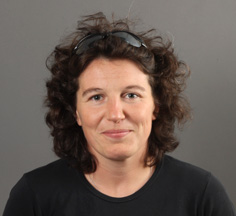
Julie Langou
Where are you from, originally?
Tolosa!!! That is Toulouse, in Occitan, in the dialect from the area. Toulouse is a wonderful city in the South West of France, located one hour from Spain and the Pyrenées Mountains, one hour from the Mediterranean and two hours from the Atlantic Ocean. This is a great place to live, very lively as many students live there but Toulouse has also a lot of industries, the most famous being Airbus. Several ICLers know Toulouse from the CERFACS, a European research organization that develops advanced methods for the numerical simulation and the algorithmic solution of large scientific and technological problems of interest for both research and industry. CERFACS algo team leader Iain Duff is an old friend of Jack, and two ICLers—Julien Langou and Azzam Haidar—were at CERFACS before joining ICL.
Can you summarize your educational background?
My educational background is somewhat special. I earned my Bachelor’s degree in Applied Mathematics from Toulouse Science University, and after I integrated a “grande école”: SUPAERO (Grande écoles are those very special elitist graduate schools that we have in France). SUPAERO is an aeronautic and space school, as I did not know anything in those fields I decided to major in Computer Science and get an extra degree in Business. Three years ago, I went back to school and earned an MBA with an option in Finance from UC Denver. This was fun to have again classes and homework!
Where did you work before joining ICL?
Before Joining ICL, I was working as a Software Engineer in Paris at the Caisse des Dépots and Consignation. This, again very French, entity is a company that is supposed to make money for the Country, and take care of most of the French Asseta. Over there, I worked on a huge computer science project related to life insurance. It was the biggest IT project in France at that time: 300 people for 5 years developing software that never actually went live!
Tell us how you first learned about ICL.
I first learned about ICL at Julien’s PhD defense that took place in Saint-Girons, in the Pyrenées. Most of the linear algebra community was present, Jack included. From what I remember, Jack was the only one typing on his computer during Julien’s presentation, that first struck me, because I was not addicted to my computer at that time. After having setup a plot to throw Julien in his suit in the pool before the final dinner, that ”Jack” came to our table and asked Julien if he wanted to come to TN for a post-doc. Julien said yes and the interview was over!
What made you want to work for ICL?
At the beginning, I actually did not want to go into the HPC world. Once I had my authorization to work, I had two opportunities: work for Myricom or work at the UT College of Social Work. I decided to take the job at UT to work on a homeless management system project. This was a great experience; I had to do everything from installing computers in homeless shelters, training people, administrating the system, and so on. Unfortunately, once Julien changed his J1 visa to H1-B, I was not allowed to work anymore and the UT College of Social Work couldn’t get me my own visa. At the very same time, Julien told me there was a software engineer position at ICL. At the beginning we were not so sure, but I finally applied and got the job. I have been working for ICL for almost 6.5 years now, since February 2005.
What are you working on at ICL?
I mostly work on LAPACK and ScaLAPACK, mostly on the software engineering side: bugs, testing, maintenance, user support, etc. In recent years, we brought LAPACK under Windows, adding the CMAKE build system along with a nightly build dashboard. Since the last release, we integrated Doxygen documentation. I am really trying to understand the need of our users and answer it.
Some folks may wonder why they don’t see you around the halls of Claxton. Where are you, exactly?
Good question again! I spent more than a year at ICL, but when Julien got his assistant professor position at Denver, we had to move. I went to Jack’s office to actually resign from my position, but he offered to let me work remotely from Denver. So since summer 2006, this is what I have been doing.
Until recently I was wandering between France and Denver, but since (Today!) I moved to California in the desert side between Death Valley and the Sierra Nevada Mountains. And yes, Jack, they have Internet over there!
If you weren’t working at ICL, where would you like to be working and why?
I honestly don’t know, but surely not in the HPC world. I am somebody who follows her instinct, I have plans but I am staying very flexible to any opportunities. I actually got several other offers from the IT industry since I have been at ICL, but I always turned them down. I really like my job at ICL, especially the people—that is what matters most to me. It is easy to find a good job, but not to find great people. Jack is a wonderful and very fair manager, I learn a lot from him, how he handles situations, how he manages to forge that wonderful team spirit. The research teams are very open minded, and each member has their very own personality. How could you find a replacement for a Piotr, a Jakub, or a George? Those guys are really unique! Lastly, the support staff is great. I know I have been really annoying form time to time, but they have always been very helpful and very patient with me. What I like is that ICL is just more than a lab, it is a real community.
What are your interests/hobbies outside work?
My main hobby is clearly Judo. I have been practicing Judo since I was 9 years old. I enjoyed the competition, being part of the French National Team, but I also enjoy teaching Judo to the kids. Judo is a very small sport in the US and it is hard to find people to practice with, so I am not practicing it in the US. But I found other ways to stay active in Judo. I am using my Judo network to create an exchange between France and the US. Last summer, I trained two US girls that were going to the World Championship at my Judo Club in Toulouse. It was a lot of work, but also a lot of fun as I enjoy seeing the girls discovering the cultural differences between France and the US.
I love sports and being active, so I enjoy any outdoor sport: Tennis, Mountain Biking, Hiking, Skiing, etc.
I also enjoy a lot of music. When I was sharing my office with Don, we enjoyed talking and listening to music in the office.
Tell us something about yourself that might surprise people.
I am the one who created the newsletter. Shortly after I moved to Denver, I went back to TN and asked Jack why the lab does not have a newsletter. Now that I am away, I am not aware of all the happenings at ICL. He replied to me with his favorite answer: “Great! Do it!” This is how this started with David, Don and me. But being away from ICL, it was hard for me to get the news and update and so on, so Scott, and now Sam, joined the team. Now when I see the professionalism of the ICL newsletter, I am very impressed. You guys are doing awesome work. And I believe ICL-alumni are asking for it! Keep up the good work.


