
News and Announcements
CSE 11 Recap

A large contingent of current and past ICL researchers descended on Reno, Nevada in March for the SIAM Conference on Computational Science and Engineering (CSE11). The current team members who attended were Asim Yarkan, Azzam Haidar, Jakub Kurzak, Mathieu Faverge, Piotr Luszczek, and Stan Tomov; the ICL alumni attending were Hatem Ltaief, Emmanuel Aguillo, Marc Baboulin and Cedric Augonnet. Photographic evidence (a sample of which is seen above) suggests that, in addition to all the well received presentations they made, a good time was had by all.
Online registration for SAAHPC 2011 now open
The 2011 Symposium on Application Accelerators in High-Performance Computing will be held again in Knoxville on July 19th – 21st.
Online registration is now open for SAAHPC 2011. Through June 30, registration is discounted to $150; starting July 1, registration will be $175. Students can register for just $75. See http://saahpc.org to register.
The best paper on the use of GPUs for scientific computing presented at SAAHPC 2011 will be rewarded with an NVIDIA Tesla C2070 GPU computing processor, courtesy of NVIDIA. Submissions are due by May 6, 2011. See http://saahpc.ncsa.illinois.edu/submit/.
Supercomputers to increase capacity and speed
At the recent HPCC conference Jack gives a talk on Architecture-Aware Algorithms and Software for Peta & Exascale Computing. This talk is in 3 parts available on Youtube.
In other new, Jack explains the magnitude of the move from petascale to exascale in this Tennessee Journalist article, Supercomputers to increase capacity and speed.
Better computers allow better simulations and more confident predictions. Science today is built on three things – theory, experiments and computer simulations.
Recent Releases
PAPI CUDA Component Released
The CUDA component is a hardware performance counter measurement technology for the NVIDIA CUDA platform which provides access to the hardware counters inside the GPU. PAPI CUDA is based on CUPTI support – shipped with CUDA 4.0rc – in the NVIDIA driver library. In any environment where the CUPTI-enabled driver is installed, the PAPI CUDA component can provide detailed performance counter information regarding the execution of GPU kernels.
If users want to test the component, they will have to do a clean checkout from cvs. Also, we are planning on releasing PAPI 4.2 in a week or two in case you want to wait for an official release.
MAGMA 1.0 RC4 Released
MAGMA 1.0 RC4 is now available. This release includes the MAGMA sources! MAGMA 1.0 RC4 is intended for a single CUDA enabled NVIDIA GPU. It extends version 0.2 by adding support for the Fermi GPUs (see the sample performances for LU, QR, and Cholesky factorizations and LS solvers in complex arithmetic). For more details see the MAGMA 1.0 presentation.
Included are routines for the following algorithms:
- LU, QR, and Cholesky factorizations in both real and complex arithmetic (single and double);
- Hessenberg, bidiagonal, and tridiagonal reductions in both real and complex arithmetic (single and double);
- Linear solvers based on LU, QR, and Cholesky in both real and complex arithmetic (single and double);
- Eigen and singular value problem solvers in both real and complex arithmetic (single and double);
- Mixed-precision iterative refinement solvers based on LU, QR, and Cholesky in both real and complex arithmetic;
- MAGMA BLAS in real arithmetic (single and double), including gemm, gemv, symv, and trsm.
See the Software section for a download link.
MAGMA was also mentioned in the recent release of the PGI Insider, read the article here, Using GPU-enabled Math Libraries with PGI Fortran.
Interview
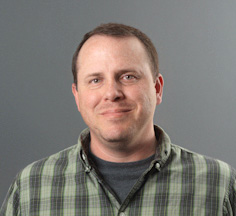
Charles Collins
Where are you from, originally?
I was born in southern California, but raised in west Tennessee. My dad was in the Navy and retired when I was little. That’s when we moved.
Can you summarize your educational background?
After high school, I joined the Navy and worked as an aviation electronics technician. In 1994, I moved to Knoxville to attend UT, where I met my wife Julia. I eventually started working as a computer technician and left UT. I received an Information Technology BS from American Intercontinental University in 2004 and have been working as a Systems Administrator ever since.
Where did you work before joining ICL?
I spent most of the last few years working at URS corporation in Oak Ridge as a Systems Administrator. I managed Windows and Linux servers that provide web and database services to external customers.
Tell us how you first learned about ICL.
For years, I’ve had an interest in working with research-oriented organizations. I had been focusing on a career change to ORNL until I noticed there was an opening at ICL. I had not previously heard of ICL, but when I read the 2010 report, I became impressed with its role in the supercomputing industry. I immediately began pursuing the IT Administrator position there.
What made you want to work for ICL?
I have always been a fan of large computing environments. I regularly follow news concerning the Jaguar and Kraken systems and am very proud of east Tennessee’s role in this cutting-edge field. When I read about the bright people that work at ICL and the unique role that ICL plays in the supercomputing arena, I knew I wanted to be a part of that.
What are your interests/hobbies outside work?
I sail keelboats whenever I get the opportunity. I’ve been sailing on and off since 1992 and love it. I recently visited San Diego for Navy business and made sure to go sailing multiple times. I also have a passion for computer hardware and experimentation, so I regularly spend time working on computers at home.
Tell us something about yourself that might surprise people.
As a Navy reserve member, I was deployed to Iraq in 2005. While there, I served as a Seabee electrician and systems administrator at Al Taqaddam air base. I enjoyed working with the Iraqi people and hope to go back there as a tourist some day.
What will you be working on while at ICL?
I will be working with Paul Peltz to build and maintain servers and clusters as needed by the researchers.
If you weren’t working at ICL, where would you like to be working and why?
I would love to work for NASA. I’m a big fan of their space exploration endeavors and would enjoy taking part in that. If they called me today and asked me to fly into space, I’d immediately say yes!


