
News and Announcements
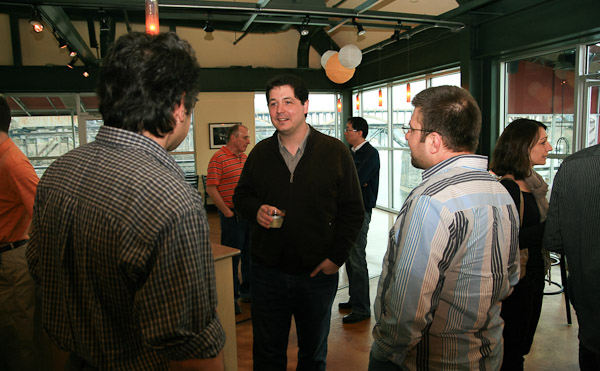
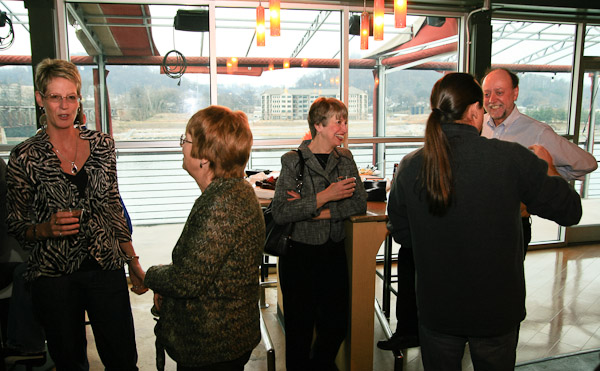
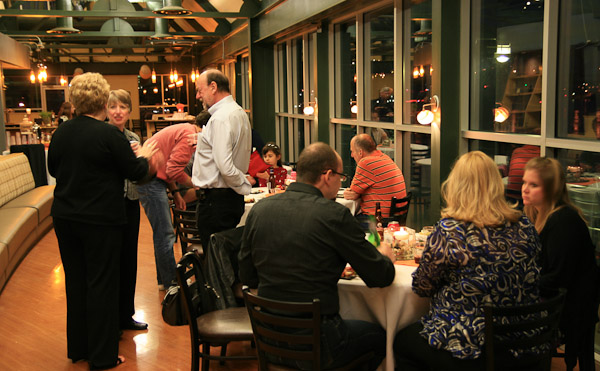
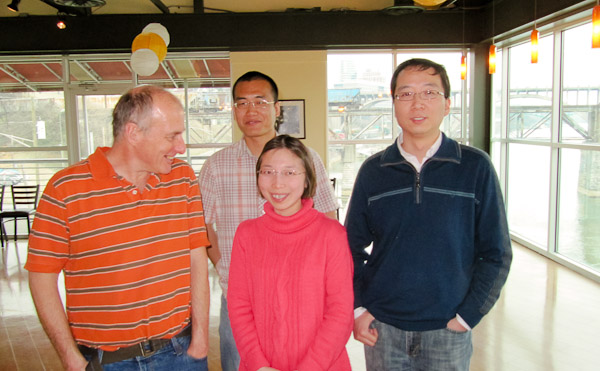
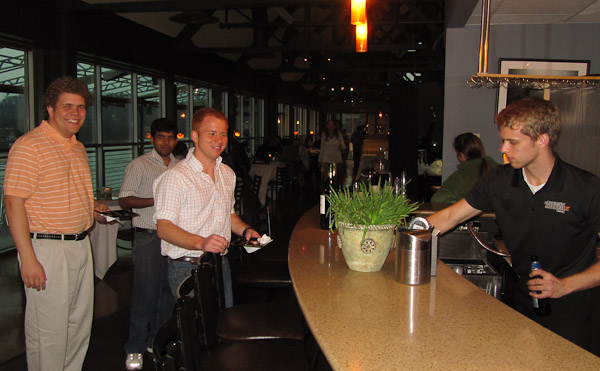
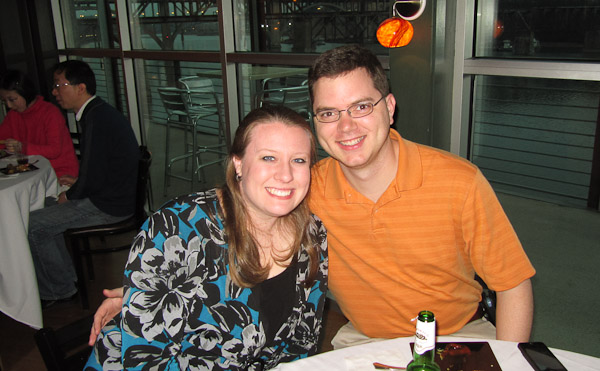
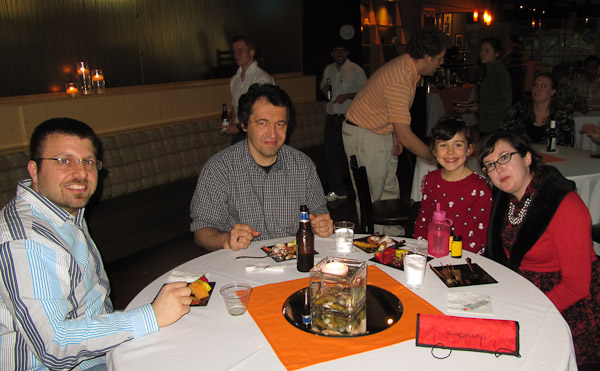
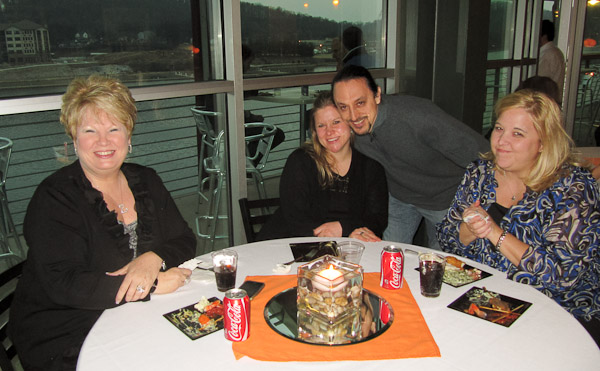
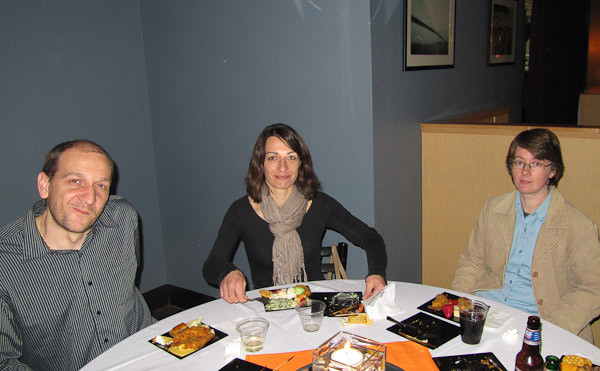
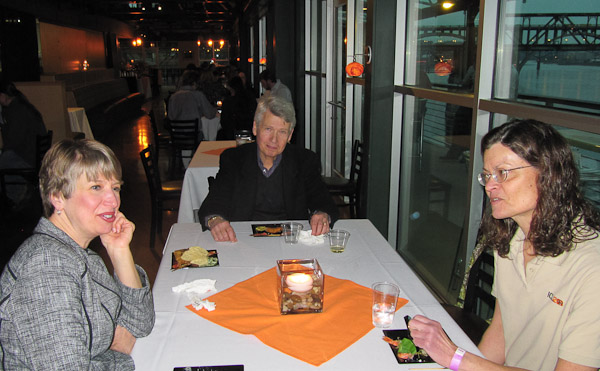
ICL Winter Reception Photos



ICL Alumus Julien Langou Awarded NSF CAREER Award

Julien Langou, who was a research scientist at ICL from 2003-2006 and is currently collaborating on important ICL projects, has been selected for a prestigious NSF Faculty Early Career Development (CAREER) Program award. In the project titled Foundations for Understanding and Reaching the Limits of Standard Numerical Linear Algebra, he proposes to explore ways of quantifying the potential for accelerating a given computation in order improve our understanding numerical algorithms and advance our capacity to optimize them. The grant is for three years and $220k, beginning in January 2011, with a potential for a two year, $180k extension to follow in 2014.
Our sincere congratulations go out to Julien for this wonderful achievement.
Interview with Jack on Australian Broadcasting Corporation’s FutureTense
Jack gives an explanation on what a supercomputer is, and their importance in being competitive in this Australian ABC Future Tense broadcast on China, technology and US anxiety.
Jack also provides his predictions on future petaflop super computers in this Information Week article titled 100-Petaflop Supercomputers Predicted By 2017.
Jack Dongarra, a computing expert at the University of Tennessee who helped design the technology used in testing systems on the Top 500 list, said he expects more 10-petaflop-plus systems next year. “Everything is moving along according to Moore’s law, so things are doubling every 18 months, roughly,” Dongarra told InformationWeek.
ICL Alum Adam Beguelin Announces Seed Funding
Our heartiest congratulations go out to alumnus Adam Beguelin, an early of ICL employee who has gone on to become a very successful Internet entrepreneur. His newest company, Sensr.net, has received an initial round of seed funding, as announced in this recent TechCrunch article: Sensr.net Raises $1.5 Million Cloud-Based Video Monitoring Platform. As that post explains,
Sensr.net essentially allows anyone to create a web-based video monitoring system. All you need is a web-cam and a computer set up to video monitor your home or office. Sensr.net will keep track of interesting images and alert you when something happens. The startup will send you an email or a text message if they detect something out of the ordinary.
Gordon Bell and Raj Reddy, both renowned Computer Scientists, are angel investors.
HeteroPar’2011 Call for Papers
The International Workshop on Algorithms, Models and Tools for Parallel Computing on Heterogeneous Platforms (HeteroPar’2011) will be held, on its ninth edition, in Bordeaux, France. For the third time, this workshop is organized in conjunction with the Euro-Par annual series of international conferences dedicated to the promotion and advancement of all aspects of parallel computing. See the HeteroPar’2011 site for topics of interest, important dates, etc.
Recent Releases
PAPI 4.1.2.1 Now Available
The PAPI 4.1.2.1 release is now available for download. This is a minor release of PAPI-C. It addresses a bug in event selection for Westmere processors. See the software page to download the tarball.
Interview
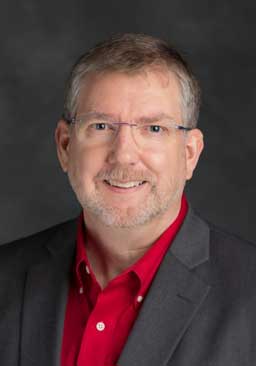
Scott Wells
You just recently left ICL. Tell us where you are and what you’re doing now.
My last day at ICL was indeed January 3rd of this year. I took an administrative position with a new research group here at UT – the Center for Intelligent Systems and Machine Learning. I have some of the same responsibilities I had at ICL, which includes involvement in the research funding process, e.g., reading and editing proposals, generating reports. So basically I still do lots of reading, writing, editing, development, etc. I also help manage the day-to-day operation of the Center, which isn’t overly complicated at the moment since I’m the only staff member. I can manage myself pretty well most of the time.
The Center’s research focuses on designing and developing computer-based applications and systems that exhibit intelligent behavior, operate autonomously, and adapt to environmental changes. This includes such areas as text/data mining, biologically-inspired computing, reinforcement learning, robotics, pattern recognition, etc. Currently, the Center includes nine faculty from three different colleges here on campus and six ORNL research affiliates. So there are lots of interesting things going on simply due to the diversity of expertise we have. Throw in that I’m finishing up my PhD dissertation in Communication and Information, and there’s never a dull day.
You’re one of the earlier ICLers. Tell us about your education background and how you got started with the group.
I received BA and MS degrees from UT in English and Information Science (IS), respectively. I received the MS in December 1996 and was looking for a job in early 1997 when a former classmate saw an ICL job posting for a research associate on an IS listserv that was cross-posted from a CS list. He forwarded it to me and said, “I think you would be perfect for that job.” I applied for it, interviewed, and got hired. I started out my ICL career working for Shirley. The job was working on data models and web interfacing for the Repository in a Box (RIB) project, which in addition to Shirley included Paul McMahan and Jeff Horner.
Enjoying such a long tenure with the group, any interesting stories you would like to share about your time here?
That wouldn’t incriminate some of the former or existing staff? Hmmm. I have plenty of stories but some of them I better not tell. I don’t know if anyone will find this funny, but I still remember the day I was interviewed. It was in Ayres Hall, where ICL used to be, and I believe there were four other people in the room. I came in wearing a suit and I noticed one of the others wearing sandals and most of them wearing jeans. I knew then this was going to be interesting. But it got better. I engaged in conversation with those at the table, they asked a few questions, and then Jack came in. I got asked a few more questions, and then I remember Jack asking someone at the table for a copy of my resume. He looked at it for about 30 seconds and then asked me something completely unrelated to the interview or working at ICL. I answered him, and he then smiled and said, “Ok, any more questions for Scott?” as he looked around. No one said anything, at which point he looked at me and said, “Good luck!” I still remember walking down the steps outside Ayres headed for the parking garage and thinking, “Ok, what’s your plan B?”
You haven’t been gone from ICL really long enough to miss it much, so what do you think you’re going to miss the most?
Actually, I do miss some things already. The camaraderie is one of them. At ICL, everyone is together in the same building and mostly on the same floor. And with 45 or so employees, it is easy to run into your co-workers and strike up a conversation. Even though I’m still in the same building, I’m pretty isolated, and all of my new co-workers are faculty who are usually in class teaching or otherwise engaged – meeting with students, traveling, etc. So there are many days I don’t see anyone. It’s a bit of an adjustment going from working nearly 14 years with so many people and seeing them daily to not seeing many people at all much of the time. And of course there are the Friday lunches. Who doesn’t miss those? Maybe I should work out some kind of deal where I could come and get a plate of food once in a while on Fridays. LOL.
What do you see yourself doing in 10 years?
Retired! No, seriously, it’s hard to say. In an ideal world, I’d be working as a senior administrator at a college or university near the coast somewhere. It’s no secret my wife and I would love to be closer to the ocean and a little farther north of Tennessee. I’d really like to work for an institution that has some type of marine research program. I began my college experience as a marine biology major and I still have a real affinity for the marine environment, so maybe somewhere between Virginia and Maine would fit. We love snow also. How ‘bout Boston? That might work.


