#include <stdio.h>#include <math.h>
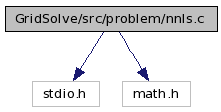
Include dependency graph for nnls.c:
Go to the source code of this file.
Defines | |
| #define | nnls_max(a, b) ((a) >= (b) ? (a) : (b)) |
| #define | nnls_abs(x) ((x) >= 0 ? (x) : -(x)) |
Typedefs | |
| typedef int | integer |
| typedef double | doublereal |
Functions | |
| double | d_sign (double *a, double *b) |
| int | nnls_ (doublereal *a, integer *mda, integer *m, integer *n, doublereal *b, doublereal *x, doublereal *rnorm, doublereal *w, doublereal *zz, integer *index, integer *mode) |
| int | g1_ (doublereal *a, doublereal *b, doublereal *cterm, doublereal *sterm, doublereal *sig) |
| int | h12_ (integer *mode, integer *lpivot, integer *l1, integer *m, doublereal *u, integer *iue, doublereal *up, doublereal *c__, integer *ice, integer *icv, integer *ncv) |
| doublereal | diff_ (doublereal *x, doublereal *y) |
| int | nnls_c (double *a, const int *mda, const int *m, const int *n, double *b, double *x, double *rnorm, double *w, double *zz, int *index, int *mode) |
Variables | |
| static integer | c__1 = 1 |
| static integer | c__0 = 0 |
| static integer | c__2 = 2 |
Define Documentation
Typedef Documentation
| typedef double doublereal |
Function Documentation
| double d_sign | ( | double * | a, | |
| double * | b | |||
| ) |

| doublereal diff_ | ( | doublereal * | x, | |
| doublereal * | y | |||
| ) |
Definition at line 733 of file nnls.c.
{
    /* System generated locals */
    doublereal ret_val;


/*  Function used in tests that depend on machine precision. */

/*  The original version of this code was developed by */
/*  Charles L. Lawson and Richard J. Hanson at Jet Propulsion Laboratory
*/
/*  1973 JUN 7, and published in the book */
/*  "SOLVING LEAST SQUARES PROBLEMS", Prentice-HalL, 1974. */
/*  Revised FEB 1995 to accompany reprinting of the book by SIAM. */

    ret_val = *x - *y;
    return ret_val;
} /* diff_ */
Here is the caller graph for this function:

| int g1_ | ( | doublereal * | a, | |
| doublereal * | b, | |||
| doublereal * | cterm, | |||
| doublereal * | sterm, | |||
| doublereal * | sig | |||
| ) |
Definition at line 498 of file nnls.c.
{
    /* System generated locals */
    doublereal d__1;

    /* Builtin functions */
    /* The following line was commented out after the f2c translation */
    /* double sqrt(), d_sign(); */

    /* Local variables */
    static doublereal xr, yr;


/*     COMPUTE ORTHOGONAL ROTATION MATRIX.. */

/*  The original version of this code was developed by */
/*  Charles L. Lawson and Richard J. Hanson at Jet Propulsion Laboratory
*/
/*  1973 JUN 12, and published in the book */
/*  "SOLVING LEAST SQUARES PROBLEMS", Prentice-HalL, 1974. */
/*  Revised FEB 1995 to accompany reprinting of the book by SIAM. */

/*     COMPUTE.. MATRIX   (C, S) SO THAT (C, S)(A) = (SQRT(A**2+B**2)) */
/*                        (-S,C)         (-S,C)(B)   (   0          ) */
/*     COMPUTE SIG = SQRT(A**2+B**2) */
/*        SIG IS COMPUTED LAST TO ALLOW FOR THE POSSIBILITY THAT */
/*        SIG MAY BE IN THE SAME LOCATION AS A OR B . */
/*     ------------------------------------------------------------------
*/
/*     ------------------------------------------------------------------
*/
    if (nnls_abs(*a) > nnls_abs(*b)) {
    xr = *b / *a;
/* Computing 2nd power */
    d__1 = xr;
    yr = sqrt(d__1 * d__1 + 1.);
    d__1 = 1. / yr;
    *cterm = d_sign(&d__1, a);
    *sterm = *cterm * xr;
    *sig = nnls_abs(*a) * yr;
    return 0;
    }
    if (*b != 0.) {
    xr = *a / *b;
/* Computing 2nd power */
    d__1 = xr;
    yr = sqrt(d__1 * d__1 + 1.);
    d__1 = 1. / yr;
    *sterm = d_sign(&d__1, b);
    *cterm = *sterm * xr;
    *sig = nnls_abs(*b) * yr;
    return 0;
    }
    *sig = 0.;
    *cterm = 0.;
    *sterm = 1.;
    return 0;
} /* g1_ */
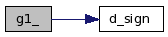
Here is the call graph for this function:
Here is the caller graph for this function:

| int h12_ | ( | integer * | mode, | |
| integer * | lpivot, | |||
| integer * | l1, | |||
| integer * | m, | |||
| doublereal * | u, | |||
| integer * | iue, | |||
| doublereal * | up, | |||
| doublereal * | c__, | |||
| integer * | ice, | |||
| integer * | icv, | |||
| integer * | ncv | |||
| ) |
Definition at line 594 of file nnls.c.
{
    /* System generated locals */
    integer u_dim1, u_offset, i__1, i__2;
    doublereal d__1, d__2;

    /* Builtin functions */
    /* The following line was commented out after the f2c translation */
    /* double sqrt(); */

    /* Local variables */
    static integer incr;
    static doublereal b;
    static integer i__, j;
    static doublereal clinv;
    static integer i2, i3, i4;
    static doublereal cl, sm;

/*     ------------------------------------------------------------------
*/
/*     double precision U(IUE,M) */
/*     ------------------------------------------------------------------
*/
    /* Parameter adjustments */
    u_dim1 = *iue;
    u_offset = u_dim1 + 1;
    u -= u_offset;
    --c__;

    /* Function Body */
    if (0 >= *lpivot || *lpivot >= *l1 || *l1 > *m) {
    return 0;
    }
    cl = (d__1 = u[*lpivot * u_dim1 + 1], nnls_abs(d__1));
    if (*mode == 2) {
    goto L60;
    }
/*                            ****** CONSTRUCT THE TRANSFORMATION. ******
*/
    i__1 = *m;
    for (j = *l1; j <= i__1; ++j) {
/* L10: */
/* Computing MAX */
    d__2 = (d__1 = u[j * u_dim1 + 1], nnls_abs(d__1));
    cl = nnls_max(d__2,cl);
    }
    if (cl <= 0.) {
    goto L130;
    } else {
    goto L20;
    }
L20:
    clinv = 1. / cl;
/* Computing 2nd power */
    d__1 = u[*lpivot * u_dim1 + 1] * clinv;
    sm = d__1 * d__1;
    i__1 = *m;
    for (j = *l1; j <= i__1; ++j) {
/* L30: */
/* Computing 2nd power */
    d__1 = u[j * u_dim1 + 1] * clinv;
    sm += d__1 * d__1;
    }
    cl *= sqrt(sm);
    if (u[*lpivot * u_dim1 + 1] <= 0.) {
    goto L50;
    } else {
    goto L40;
    }
L40:
    cl = -cl;
L50:
    *up = u[*lpivot * u_dim1 + 1] - cl;
    u[*lpivot * u_dim1 + 1] = cl;
    goto L70;
/*            ****** APPLY THE TRANSFORMATION  I+U*(U**T)/B  TO C. ******
*/

L60:
    if (cl <= 0.) {
    goto L130;
    } else {
    goto L70;
    }
L70:
    if (*ncv <= 0) {
    return 0;
    }
    b = *up * u[*lpivot * u_dim1 + 1];
/*                       B  MUST BE NONPOSITIVE HERE.  IF B = 0., RETURN.
*/

    if (b >= 0.) {
    goto L130;
    } else {
    goto L80;
    }
L80:
    b = 1. / b;
    i2 = 1 - *icv + *ice * (*lpivot - 1);
    incr = *ice * (*l1 - *lpivot);
    i__1 = *ncv;
    for (j = 1; j <= i__1; ++j) {
    i2 += *icv;
    i3 = i2 + incr;
    i4 = i3;
    sm = c__[i2] * *up;
    i__2 = *m;
    for (i__ = *l1; i__ <= i__2; ++i__) {
        sm += c__[i3] * u[i__ * u_dim1 + 1];
/* L90: */
        i3 += *ice;
    }
    if (sm != 0.) {
        goto L100;
    } else {
        goto L120;
    }
L100:
    sm *= b;
    c__[i2] += sm * *up;
    i__2 = *m;
    for (i__ = *l1; i__ <= i__2; ++i__) {
        c__[i4] += sm * u[i__ * u_dim1 + 1];
/* L110: */
        i4 += *ice;
    }
L120:
    ;
    }
L130:
    return 0;
} /* h12_ */
Here is the caller graph for this function:

| int nnls_ | ( | doublereal * | a, | |
| integer * | mda, | |||
| integer * | m, | |||
| integer * | n, | |||
| doublereal * | b, | |||
| doublereal * | x, | |||
| doublereal * | rnorm, | |||
| doublereal * | w, | |||
| doublereal * | zz, | |||
| integer * | index, | |||
| integer * | mode | |||
| ) |
Definition at line 91 of file nnls.c.
{
    /* System generated locals */
    integer a_dim1, a_offset, i__1, i__2;
    doublereal d__1, d__2;

    /* Builtin functions */
    /* The following lines were commented out after the f2c translation */
    /* double sqrt(); */
    /* integer s_wsfe(), do_fio(), e_wsfe(); */

    /* Local variables */
    extern doublereal diff_();
    static integer iter;
    static doublereal temp, wmax;
    static integer i__, j, l;
    static doublereal t, alpha, asave;
    static integer itmax, izmax, nsetp;
    extern /* Subroutine */ int g1_();
    static doublereal dummy, unorm, ztest, cc;
    extern /* Subroutine */ int h12_();
    static integer ii, jj, ip;
    static doublereal sm;
    static integer iz, jz;
    static doublereal up, ss;
    static integer rtnkey, iz1, iz2, npp1;

    /* Fortran I/O blocks */
    /* The following line was commented out after the f2c translation */
    /* static cilist io___22 = { 0, 6, 0, "(/a)", 0 }; */


/*     ------------------------------------------------------------------
*/
/*     integer INDEX(N) */
/*     double precision A(MDA,N), B(M), W(N), X(N), ZZ(M) */
/*     ------------------------------------------------------------------
*/
    /* Parameter adjustments */
    a_dim1 = *mda;
    a_offset = a_dim1 + 1;
    a -= a_offset;
    --b;
    --x;
    --w;
    --zz;
    --index;

    /* Function Body */
    *mode = 1;
    if (*m <= 0 || *n <= 0) {
    *mode = 2;
    return 0;
    }
    iter = 0;
    itmax = *n * 3;

/*                    INITIALIZE THE ARRAYS INDEX() AND X(). */

    i__1 = *n;
    for (i__ = 1; i__ <= i__1; ++i__) {
    x[i__] = 0.;
/* L20: */
    index[i__] = i__;
    }

    iz2 = *n;
    iz1 = 1;
    nsetp = 0;
    npp1 = 1;
/*                             ******  MAIN LOOP BEGINS HERE  ****** */
L30:
/*                  QUIT IF ALL COEFFICIENTS ARE ALREADY IN THE SOLUTION.
*/
/*                        OR IF M COLS OF A HAVE BEEN TRIANGULARIZED. */

    if (iz1 > iz2 || nsetp >= *m) {
    goto L350;
    }

/*         COMPUTE COMPONENTS OF THE DUAL (NEGATIVE GRADIENT) VECTOR W().
*/

    i__1 = iz2;
    for (iz = iz1; iz <= i__1; ++iz) {
    j = index[iz];
    sm = 0.;
    i__2 = *m;
    for (l = npp1; l <= i__2; ++l) {
/* L40: */
        sm += a[l + j * a_dim1] * b[l];
    }
    w[j] = sm;
/* L50: */
    }
/*                                   FIND LARGEST POSITIVE W(J). */
L60:
    wmax = 0.;
    i__1 = iz2;
    for (iz = iz1; iz <= i__1; ++iz) {
    j = index[iz];
    if (w[j] > wmax) {
        wmax = w[j];
        izmax = iz;
    }
/* L70: */
    }

/*             IF WMAX .LE. 0. GO TO TERMINATION. */
/*             THIS INDICATES SATISFACTION OF THE KUHN-TUCKER CONDITIONS.
*/

    if (wmax <= 0.) {
    goto L350;
    }
    iz = izmax;
    j = index[iz];

/*     THE SIGN OF W(J) IS OK FOR J TO BE MOVED TO SET P. */
/*     BEGIN THE TRANSFORMATION AND CHECK NEW DIAGONAL ELEMENT TO AVOID */
/*     NEAR LINEAR DEPENDENCE. */

    asave = a[npp1 + j * a_dim1];
    i__1 = npp1 + 1;
    h12_(&c__1, &npp1, &i__1, m, &a[j * a_dim1 + 1], &c__1, &up, &dummy, &
        c__1, &c__1, &c__0);
    unorm = 0.;
    if (nsetp != 0) {
    i__1 = nsetp;
    for (l = 1; l <= i__1; ++l) {
/* L90: */
/* Computing 2nd power */
        d__1 = a[l + j * a_dim1];
        unorm += d__1 * d__1;
    }
    }
    unorm = sqrt(unorm);
    d__2 = unorm + (d__1 = a[npp1 + j * a_dim1], nnls_abs(d__1)) * .01;
    if (diff_(&d__2, &unorm) > 0.) {

/*        COL J IS SUFFICIENTLY INDEPENDENT.  COPY B INTO ZZ, UPDATE Z
Z */
/*        AND SOLVE FOR ZTEST ( = PROPOSED NEW VALUE FOR X(J) ). */

    i__1 = *m;
    for (l = 1; l <= i__1; ++l) {
/* L120: */
        zz[l] = b[l];
    }
    i__1 = npp1 + 1;
    h12_(&c__2, &npp1, &i__1, m, &a[j * a_dim1 + 1], &c__1, &up, &zz[1], &
        c__1, &c__1, &c__1);
    ztest = zz[npp1] / a[npp1 + j * a_dim1];

/*                                     SEE IF ZTEST IS POSITIVE */

    if (ztest > 0.) {
        goto L140;
    }
    }

/*     REJECT J AS A CANDIDATE TO BE MOVED FROM SET Z TO SET P. */
/*     RESTORE A(NPP1,J), SET W(J)=0., AND LOOP BACK TO TEST DUAL */
/*     COEFFS AGAIN. */

    a[npp1 + j * a_dim1] = asave;
    w[j] = 0.;
    goto L60;

/*     THE INDEX  J=INDEX(IZ)  HAS BEEN SELECTED TO BE MOVED FROM */
/*     SET Z TO SET P.    UPDATE B,  UPDATE INDICES,  APPLY HOUSEHOLDER */
/*     TRANSFORMATIONS TO COLS IN NEW SET Z,  ZERO SUBDIAGONAL ELTS IN */
/*     COL J,  SET W(J)=0. */

L140:
    i__1 = *m;
    for (l = 1; l <= i__1; ++l) {
/* L150: */
    b[l] = zz[l];
    }

    index[iz] = index[iz1];
    index[iz1] = j;
    ++iz1;
    nsetp = npp1;
    ++npp1;

    if (iz1 <= iz2) {
    i__1 = iz2;
    for (jz = iz1; jz <= i__1; ++jz) {
        jj = index[jz];
        h12_(&c__2, &nsetp, &npp1, m, &a[j * a_dim1 + 1], &c__1, &up, &a[
            jj * a_dim1 + 1], &c__1, mda, &c__1);
/* L160: */
    }
    }

    if (nsetp != *m) {
    i__1 = *m;
    for (l = npp1; l <= i__1; ++l) {
/* L180: */
        a[l + j * a_dim1] = 0.;
    }
    }

    w[j] = 0.;
/*                                SOLVE THE TRIANGULAR SYSTEM. */
/*                                STORE THE SOLUTION TEMPORARILY IN ZZ().
*/
    rtnkey = 1;
    goto L400;
L200:

/*                       ******  SECONDARY LOOP BEGINS HERE ****** */

/*                          ITERATION COUNTER. */

L210:
    ++iter;
    if (iter > itmax) {
    *mode = 3;
    /* The following lines were replaced after the f2c translation */
    /* s_wsfe(&io___22); */
    /* do_fio(&c__1, " NNLS quitting on iteration count.", 34L); */
    /* e_wsfe(); */
    fprintf(stdout, "\n NNLS quitting on iteration count.\n");
    fflush(stdout);
    goto L350;
    }

/*                    SEE IF ALL NEW CONSTRAINED COEFFS ARE FEASIBLE. */
/*                                  IF NOT COMPUTE ALPHA. */

    alpha = 2.;
    i__1 = nsetp;
    for (ip = 1; ip <= i__1; ++ip) {
    l = index[ip];
    if (zz[ip] <= 0.) {
        t = -x[l] / (zz[ip] - x[l]);
        if (alpha > t) {
        alpha = t;
        jj = ip;
        }
    }
/* L240: */
    }

/*          IF ALL NEW CONSTRAINED COEFFS ARE FEASIBLE THEN ALPHA WILL */
/*          STILL = 2.    IF SO EXIT FROM SECONDARY LOOP TO MAIN LOOP. */

    if (alpha == 2.) {
    goto L330;
    }

/*          OTHERWISE USE ALPHA WHICH WILL BE BETWEEN 0. AND 1. TO */
/*          INTERPOLATE BETWEEN THE OLD X AND THE NEW ZZ. */

    i__1 = nsetp;
    for (ip = 1; ip <= i__1; ++ip) {
    l = index[ip];
    x[l] += alpha * (zz[ip] - x[l]);
/* L250: */
    }

/*        MODIFY A AND B AND THE INDEX ARRAYS TO MOVE COEFFICIENT I */
/*        FROM SET P TO SET Z. */

    i__ = index[jj];
L260:
    x[i__] = 0.;

    if (jj != nsetp) {
    ++jj;
    i__1 = nsetp;
    for (j = jj; j <= i__1; ++j) {
        ii = index[j];
        index[j - 1] = ii;
        g1_(&a[j - 1 + ii * a_dim1], &a[j + ii * a_dim1], &cc, &ss, &a[j
            - 1 + ii * a_dim1]);
        a[j + ii * a_dim1] = 0.;
        i__2 = *n;
        for (l = 1; l <= i__2; ++l) {
        if (l != ii) {

/*                 Apply procedure G2 (CC,SS,A(J-1,L),A(J,
L)) */

            temp = a[j - 1 + l * a_dim1];
            a[j - 1 + l * a_dim1] = cc * temp + ss * a[j + l * a_dim1]
                ;
            a[j + l * a_dim1] = -ss * temp + cc * a[j + l * a_dim1];
        }
/* L270: */
        }

/*                 Apply procedure G2 (CC,SS,B(J-1),B(J)) */

        temp = b[j - 1];
        b[j - 1] = cc * temp + ss * b[j];
        b[j] = -ss * temp + cc * b[j];
/* L280: */
    }
    }

    npp1 = nsetp;
    --nsetp;
    --iz1;
    index[iz1] = i__;

/*        SEE IF THE REMAINING COEFFS IN SET P ARE FEASIBLE.  THEY SHOULD
*/
/*        BE BECAUSE OF THE WAY ALPHA WAS DETERMINED. */
/*        IF ANY ARE INFEASIBLE IT IS DUE TO ROUND-OFF ERROR.  ANY */
/*        THAT ARE NONPOSITIVE WILL BE SET TO ZERO */
/*        AND MOVED FROM SET P TO SET Z. */

    i__1 = nsetp;
    for (jj = 1; jj <= i__1; ++jj) {
    i__ = index[jj];
    if (x[i__] <= 0.) {
        goto L260;
    }
/* L300: */
    }

/*         COPY B( ) INTO ZZ( ).  THEN SOLVE AGAIN AND LOOP BACK. */

    i__1 = *m;
    for (i__ = 1; i__ <= i__1; ++i__) {
/* L310: */
    zz[i__] = b[i__];
    }
    rtnkey = 2;
    goto L400;
L320:
    goto L210;
/*                      ******  END OF SECONDARY LOOP  ****** */

L330:
    i__1 = nsetp;
    for (ip = 1; ip <= i__1; ++ip) {
    i__ = index[ip];
/* L340: */
    x[i__] = zz[ip];
    }
/*        ALL NEW COEFFS ARE POSITIVE.  LOOP BACK TO BEGINNING. */
    goto L30;

/*                        ******  END OF MAIN LOOP  ****** */

/*                        COME TO HERE FOR TERMINATION. */
/*                     COMPUTE THE NORM OF THE FINAL RESIDUAL VECTOR. */

L350:
    sm = 0.;
    if (npp1 <= *m) {
    i__1 = *m;
    for (i__ = npp1; i__ <= i__1; ++i__) {
/* L360: */
/* Computing 2nd power */
        d__1 = b[i__];
        sm += d__1 * d__1;
    }
    } else {
    i__1 = *n;
    for (j = 1; j <= i__1; ++j) {
/* L380: */
        w[j] = 0.;
    }
    }
    *rnorm = sqrt(sm);
    return 0;

/*     THE FOLLOWING BLOCK OF CODE IS USED AS AN INTERNAL SUBROUTINE */
/*     TO SOLVE THE TRIANGULAR SYSTEM, PUTTING THE SOLUTION IN ZZ(). */

L400:
    i__1 = nsetp;
    for (l = 1; l <= i__1; ++l) {
    ip = nsetp + 1 - l;
    if (l != 1) {
        i__2 = ip;
        for (ii = 1; ii <= i__2; ++ii) {
        zz[ii] -= a[ii + jj * a_dim1] * zz[ip + 1];
/* L410: */
        }
    }
    jj = index[ip];
    zz[ip] /= a[ip + jj * a_dim1];
/* L430: */
    }
    switch ((int)rtnkey) {
    case 1:  goto L200;
    case 2:  goto L320;
    }

    /* The next line was added after the f2c translation to keep
       compilers from complaining about a void return from a non-void
       function. */
    return 0;

} /* nnls_ */
Here is the call graph for this function:

Here is the caller graph for this function:

| int nnls_c | ( | double * | a, | |
| const int * | mda, | |||
| const int * | m, | |||
| const int * | n, | |||
| double * | b, | |||
| double * | x, | |||
| double * | rnorm, | |||
| double * | w, | |||
| double * | zz, | |||
| int * | index, | |||
| int * | mode | |||
| ) |