FCRC Plenary Panel: Reflecting on 50 Years of Computing Research, & Future Outlook
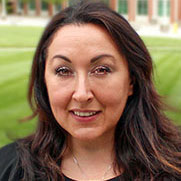
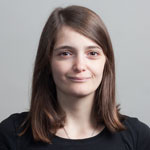
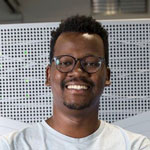
ACM’s 2023 Federated Computing Research Conference (FCRC) colocated over a dozen conferences in Orlando, Florida during June. Each morning FCRC features a joint plenary talk on topics of broad appeal to the computing research community. In celebration of the 50th anniversary of the Computing Research Agency (CRA), CRA organized and hosted a special plenary panel session at FCRC titled “Reflecting on 50 Years of Computing Research, & Future Outlook”. The discussion was facilitated by Mary Hall of the University of Utah, and the panelists included ICL’s Jack Dongarra, along with Hagit Attiya from Technion, Lizy Kurian John from The University of Texas at Austin, Huan Liu from Arizona State University, and Guy L. Steele Jr. from Oracle Labs.
Jack Dongarra Talks Exascale on ECP Podcast
Former ICLer Scott Gibson hosted Jack Dongarra on the most recent episode of the ECP’s Let’s Talk Exascale podcast.
Sustainable Tools Ecosystem Project
 The Sustainable Tools Ecosystem Project (STEP) is an ASCR-funded initiative, and one of the Co-PIs for STEP is ICL’s Heike Jagode. As part of its efforts, STEP is organizing a series of three town hall meetings throughout the summer of 2023. The main goal of these meetings is to develop a strategic action plan for DOE/ASCR, focusing on the long-term sustainability of the HPC tools ecosystem.
The first town hall meeting, held on June 6-7, 2023, at IBM’s T.J. Watson Research Center in Yorktown Heights, NY, was attended in person by Heike Jagode and George Bosilca from ICL. This event brought together ~50 stakeholders from various communities, including tool developers, vendors, facility operators, and application developers. The town hall covered a wide range of topics related to three key sustainability challenges: exploding hardware complexity, expanding use cases, and coordination.
If you are interested in getting involved with STEP, Heike Jagode encourages you to fill out the “Get Involved” form on the project’s website at https://ascr-step.org/getinvolved/. This initiative is not limited to tool developers only. The STEP leadership team values feedback and input from both current and potential users, regarding purposes, requirements, community support, challenges, and opportunities for enhancing sustainability.
Congratulations
Best Paper Finalist at ICS 2023: International Conference on Supercomputing

ICS 2023: International Conference on Supercomputing was part of ACM’s Federated Computing Research Conference (FCRC) that colocated over a dozen conferences in Orlando, Florida during June 2023. ICL’s Neil Lindquist traveled to ISC 2023 where he presented a Best Paper Finalist at the conference.
“Using Additive Modifications in LU Factorization Instead of Pivoting,”
37th ACM International Conference on Supercomputing (ICS’23), Orlando, FL, ACM, June 2023.
 (624.18 KB)
Conference Reports
PASC23
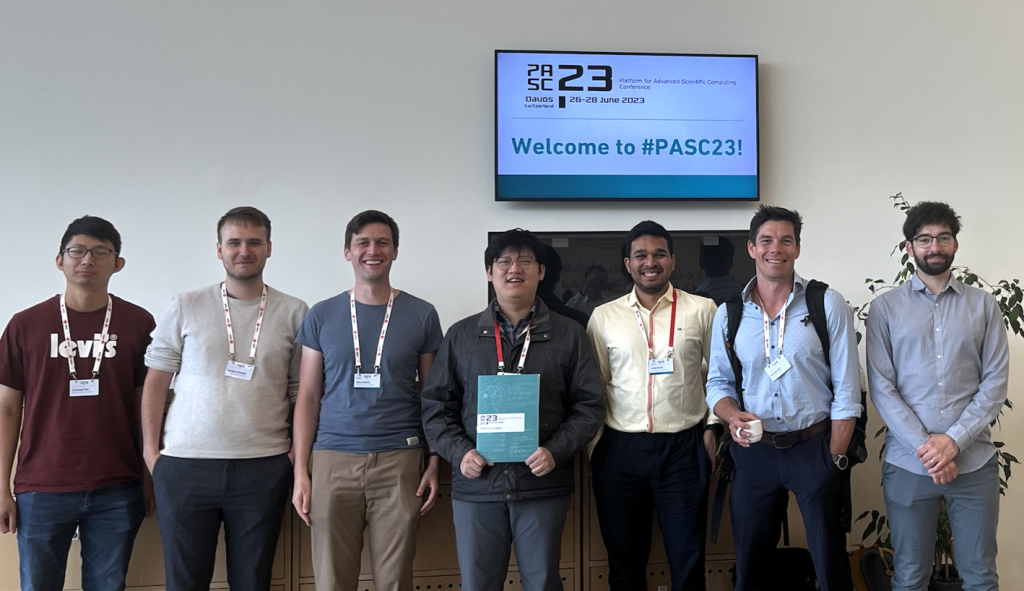
The Platform for Advanced Scientific Computing (PASC) Conference is co-sponsored by the Association for Computing Machinery (ACM) and the Swiss National Supercomputing Centre (CSCS) and was held from June 26 to 28, 2023 at the Congress Center Davos, located in Davos, Switzerland. A dominating theme at the conference was climate modeling and the performance engineering of climate codes. This includes the best paper presentation of NVIDIA’s forecastnet paper that uses AI for weather prediction. The beautiful landscape of the Davos mountains motivated several hiking activities.
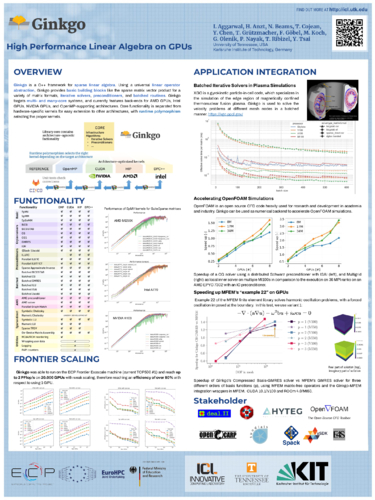 At PASC23, ICL and friends presented research efforts and success stories from linear algebra and distributed computing. George Bosilca gave a talk on “Tunable Tasking in PARSEC for Numerical Linear Algebra Routines Used in HPC,” KIT’s Yu-Hsiang Mike Tsai presented “Experience From Ginkgo Porting to the SYCL Ecosystem.” Michela Taufer of GCLab presented the paper “Runtime Steering of Molecular Dynamics Simulations Through In Situ Analysis and Annotation of Collective Variables,” and a poster was presented on Ginkgo — A High-Performance Portable Numerical Linear Algebra Software.
PESO Community Workshop

The PESO Project (Toward a Post-ECP Software Sustainability Organization) is collecting input from the broad community of stakeholders (government labs, academia, and vendors) to help determine requirements for post-ECP software sustainment.
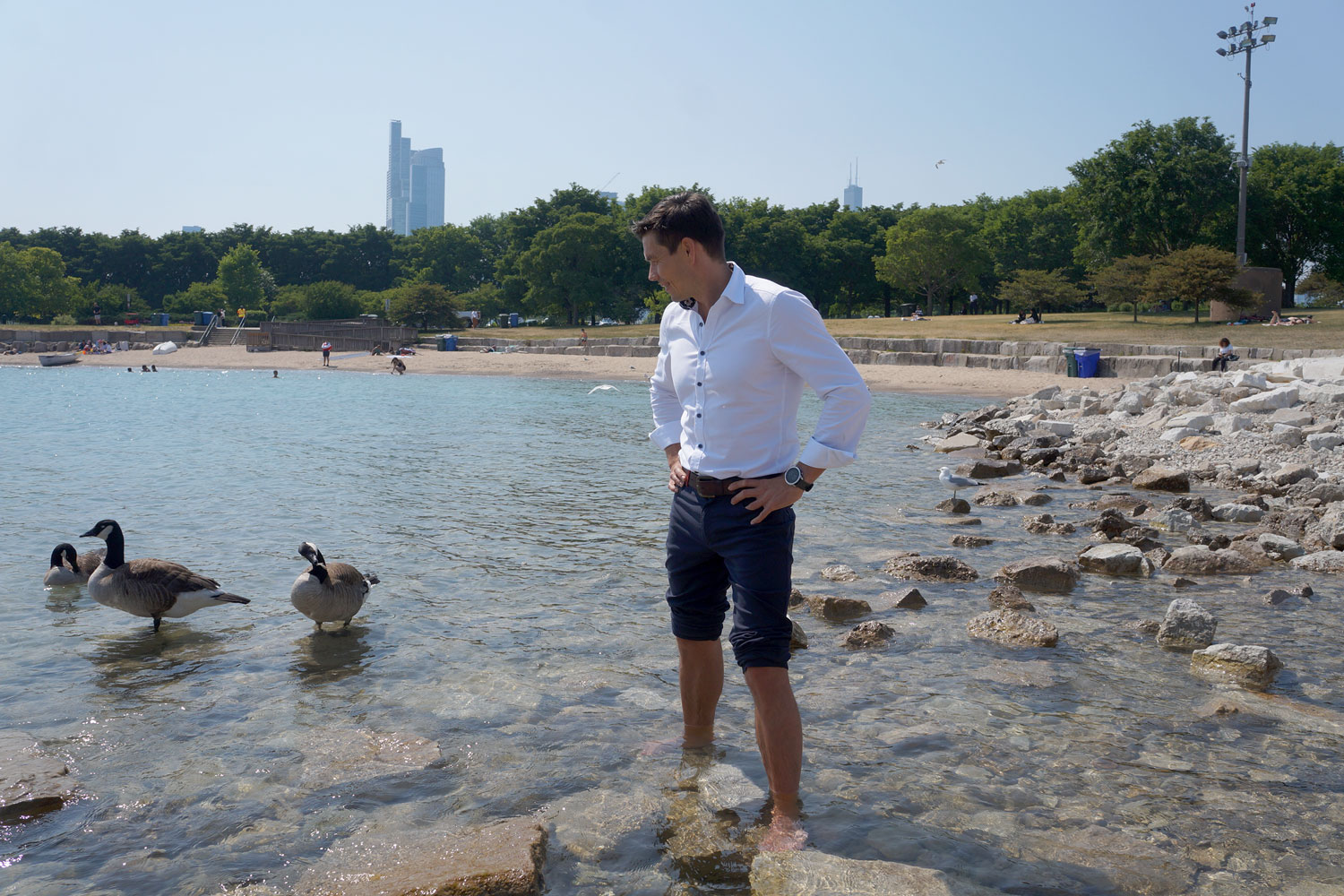
The PESO Community Workshop was held onsite at Argonne National Laboratory, June 8-9, 2023 as one means of providing community input.ICL’s Hartwig Anzt, Piotr Luszczek, Stan Tomov, and George Bosilca were in attendance, as well as ICL alumni Daniel Bielich (as a delegate of ANSYS) and Jeff Larkin of NVIDIA.
After the workshop, the contingent from ICL stopped briefly to dip their toes in Lake Michigan with Chicago downtown skyline towering behind them. Checkout the pics!

Recent Releases
Ginkgo 1.6
 The Ginkgo team is proud to announce the new Ginkgo minor release 1.6.0. This release brings new features such as:
- Several building blocks for GPU-resident sparse direct solvers like symbolic
and numerical LU and Cholesky factorization - A distributed Schwarz preconditioner
- New FGMRES and GCR solvers
- Distributed benchmarks for the SpMV operation and solvers
- Support for non-default streams in the CUDA and HIP backends
- Mixed precision support for the CSR SpMV
- A new profiling logger which integrates with NVTX, ROCTX, TAU and VTune to
provide internal Ginkgo knowledge to most HPC profilers - and much more
Interview
Veronica Montanaro

Where are you from, originally?
My country of origin is Italy. I was born and raised in Rome. In my opinion, the uniqueness of this town comes from the fact that somehow you can find traces of every historical period Italy has been through: from the well-known Roman ruins, to the narrow medieval alleys, to the post-unification and Napoleonic buildings, even to the monuments of the darkest times when the regime was still ongoing. However, it is also an extremely chaotic place to live in, and it is definitely not free from problems.
I have lived for three years in Turin, which is another beautiful northern Italian city that, in my opinion, does not get all the attention it deserves! It was the first capital of Italy, and it has a very charming vibe. I might be looking at it through nostalgia lenses, because the people I have met there and the connections I built, that managed to stay even through the pandemic years, are significant like no other. But even considering that, I still think it is a nicer place to live in.
Can you summarize your educational background?
I got accepted at Politecnico di Torino (“Politecnici” is how engineering schools are called in Italy) and I moved to Turin to pursue my Bachelor’s degree in Computer Science. During these three years, I developed a lot of interest and curiosity in physics and mathematics, and that motivated me to continue my studies with a degree that would make it possible for me to apply CS topics to physics. After a bit of research, I found out about the Computational Sciences and Engineering Master’s degree at ETH Zürich, in Switzerland, and I applied to it. I chose to specialize in physics, and learned a lot about HPC and numerical methods. Now I am in my final year, and since last semester I joined the Paul Scherrer Institute (PSI) to conduct a master thesis on a Particle In Cell library.
Tell us how you first learned about ICL.
Last semester, when I was still doing my semester project and the proposal of my thesis was still in progress, my supervisors anticipated that there would have been the possibility of doing part of it at ICL. Then when they came back at me to confirm, I accepted.
What made you want to visit ICL?
I already had familiarity with the Highly efficient FFT for Exascale library (heFFTe), since my group at PSI uses it for FFT solvers in our library, and I was very amazed by its results. After my supervisors’ proposal, I did more research on the ECP software stack and looked at the other projects from the lab, in particular from the Linear Algebra group. The thought of meeting and interacting with the people involved in the development of all these libraries made me very excited to accept the proposal and was surely the main motivation. Moreover, I liked the idea of having my project divided in two parts – the one at PSI and the one at ICL, with both parts being related, but at the same time targeting different libraries and focusing on different things.
What are your research interests?
Although right now I can say I am experienced in HPC topics, numerical methods for physics and particle optics modeling, I am currently keeping my options as open as possible. I am a naturally curious person, and if the topic catches my attention, I automatically get interest in learning it. But if I had to decide tomorrow based on what I like today, I would say anything remotely related to HPC, no matter the application, would be good for me. Or in even broader terms, anything related to numerical methods. During my time at ICL, I am also developing a big interest in linear algebra.
What are you working on during your visit with ICL?
I am working on heFFTe, in particular I am writing CUDA kernels for a type of real-to-real transform that has still been not implemented.
What are your interests/hobbies outside work?
I am a self-taught artist, and I draw a lot in my free time-that is probably the hobby I invest more time in. When I draw I like to create original characters and stories, and I would like to start a comic book school in the future. I play a lot of video games, and I also really enjoy playing RPGs like Dungeons and Dragons, or strategy card games like Magic: The Gathering.
Tell us something about yourself that might surprise people.
Although I am left-handed, I have self-taught myself to write with my right hand. That comes extremely useful when I have to do two things at the same time, problem is I hold my pen in a very unnatural way. Most of the people I know where very surprised when they noticed!