
Luszczek Visits IBM Quantum Headquarters as Part of UTK/IBM Collaboration
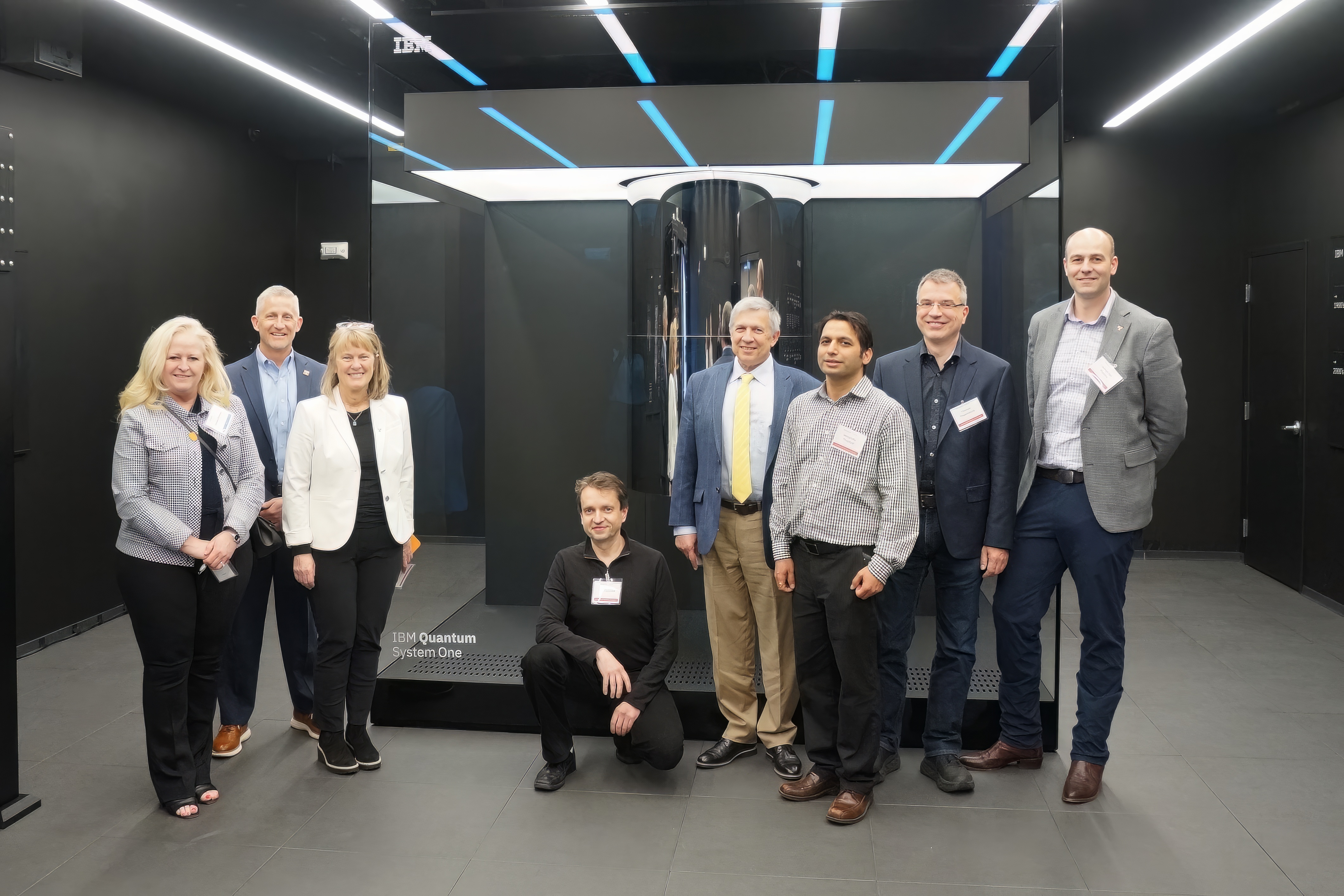
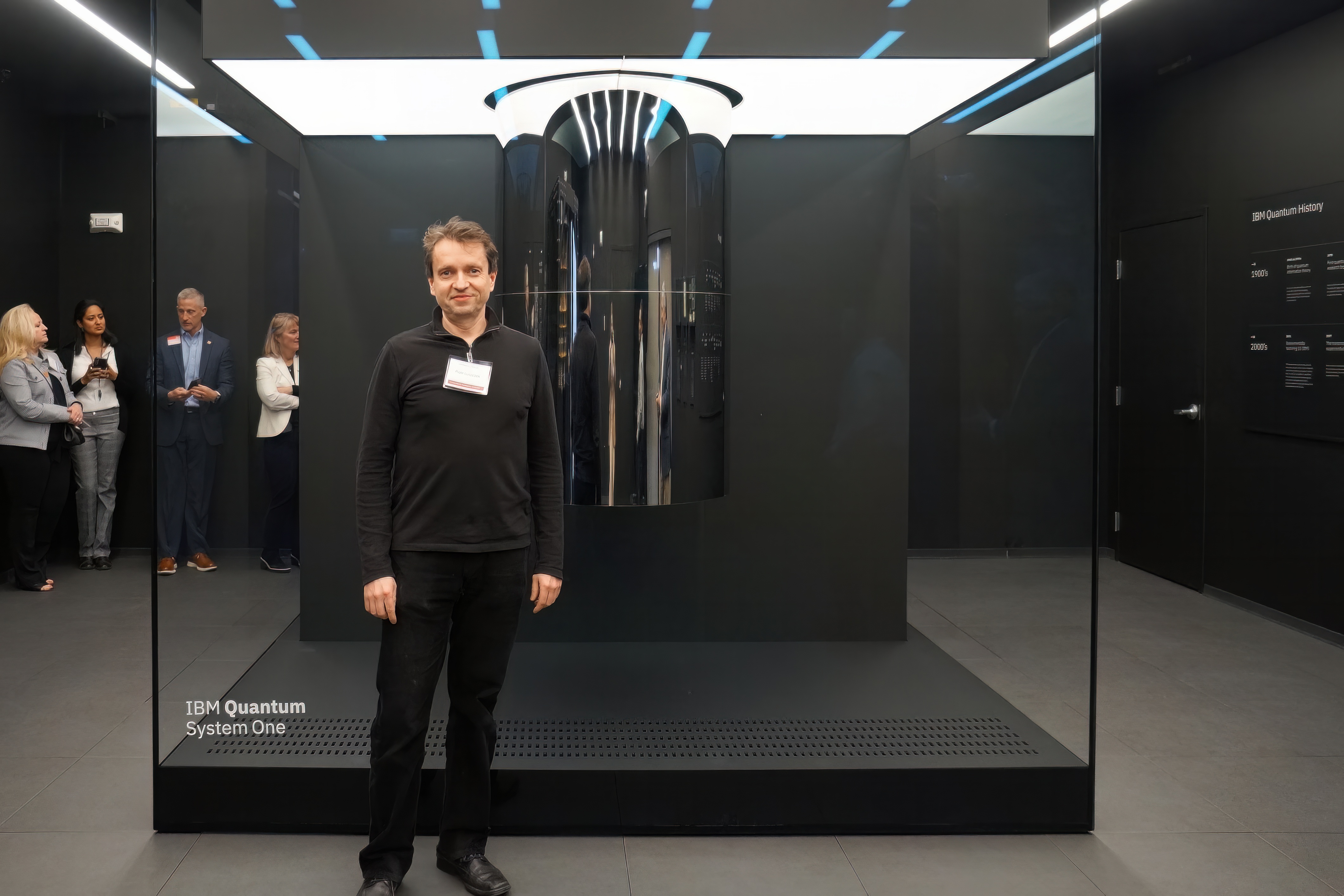


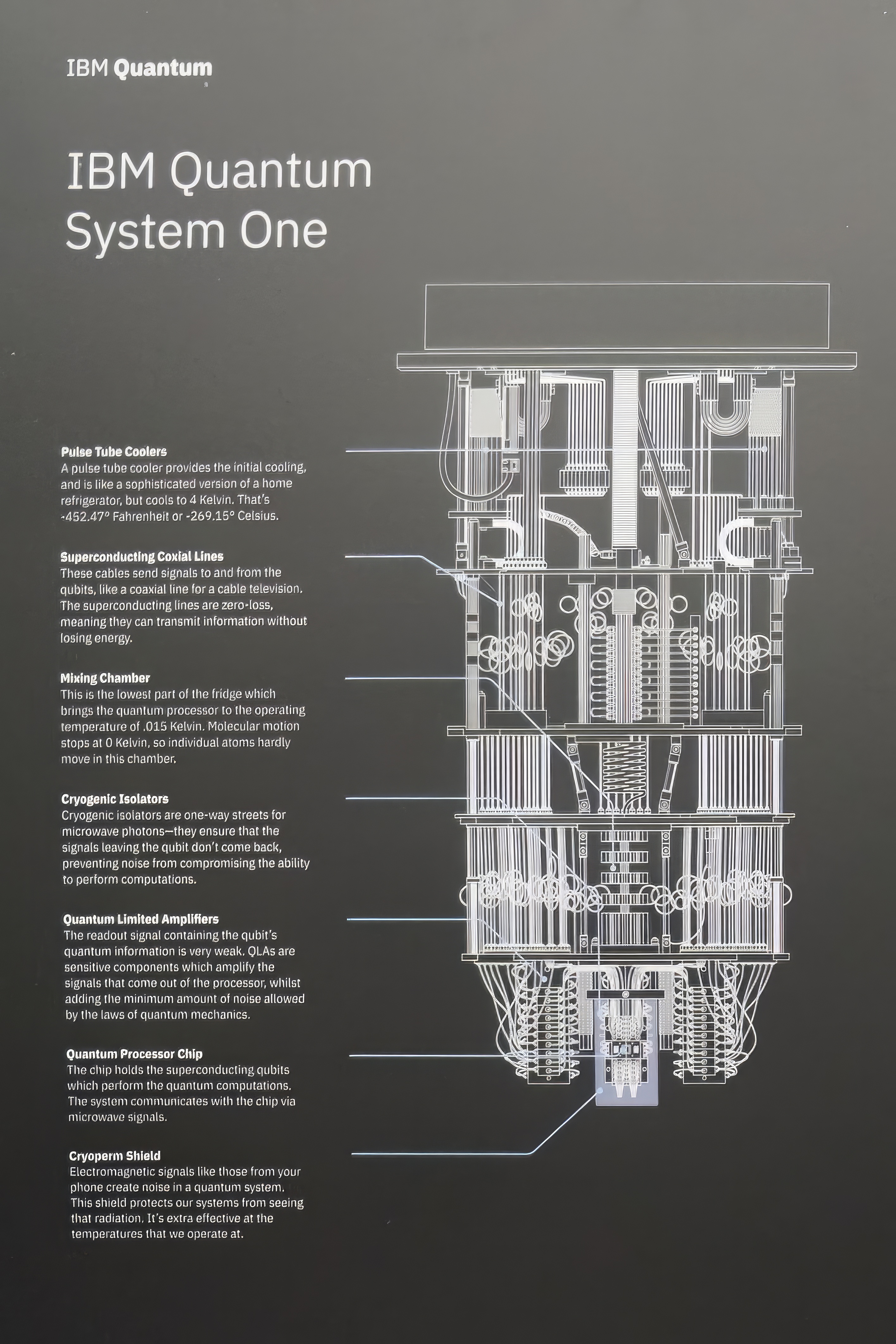

On April 10, ICL’s Piotr Luszczek was part of a group of researchers who visited IBM Quantum Headquarters at the T.J. Watson Research Center in Yorktown Heights, New York. The visit was organized by UTK’s Office of Research, Innovation, and Economic Development (OREID) and aimed to foster collaboration between IBM Quantum team members and researchers from UTK’s Physics and EECS departments, with hopes for tighter integration in the future between IBM Quantum team members and UTK researchers in Physics and EECS departments. In addition to Piotr, in attendance from UTK were Adrian del Maestro, Michela Taufer, Thomas Papenbrock, George Siopsis, Himanshu Tapliyan, Marc Gibson, and Deb Crawford. The group was briefed by various members of the IBM Quantum group lead by Jay Gambetta, who was also present at the meeting.
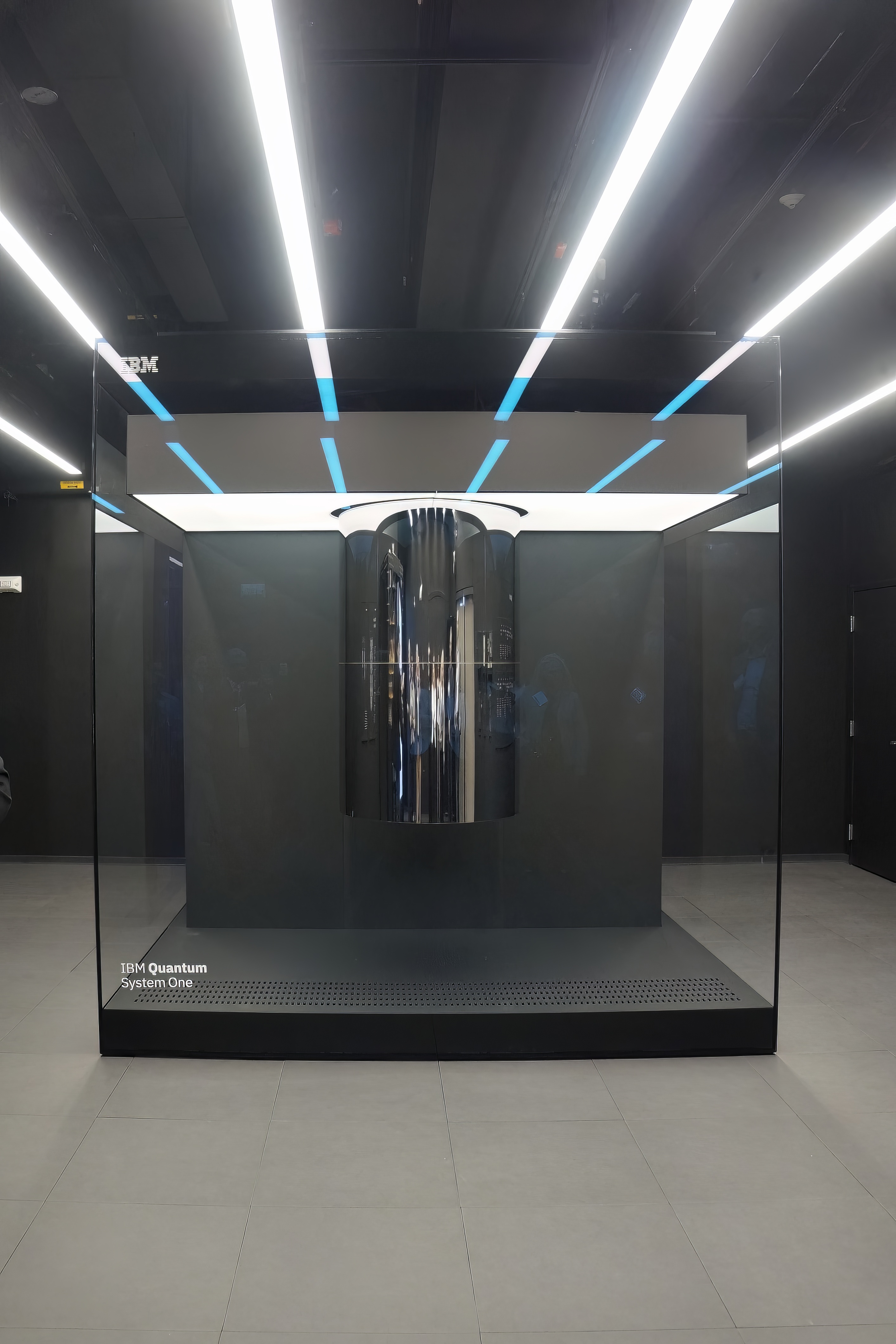
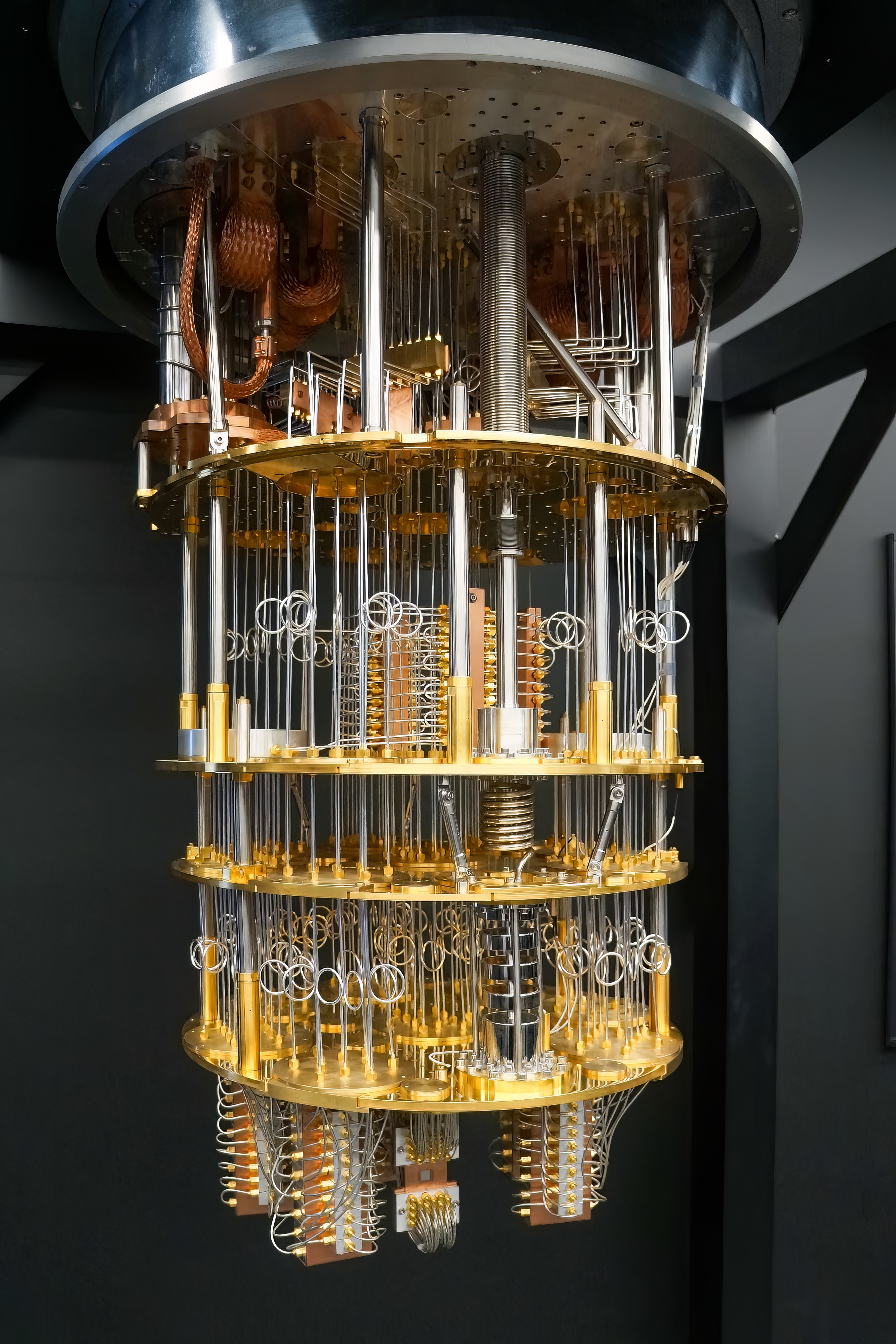
IBM is one of the leading companies in the quantum computing race. They use transmons as their hardware implementation of a quantum system that computes. In the photos you can see the group visiting hardware facilities including the room with System One quantum computer (Michela had to catch an early flight and missed the tour, hence she’s not on the pictures). The tour included the Jeopardy set where IBM’s Watson computer won against the then reigning champion.
HPC Highlighted at American Nuclear Society 2023 Student Conference


The American Nuclear Society’s University of Tennessee student chapter hosted the 2023 ANS Student Conference on campus April 13-15, 2023. As part of the conference, ICL’s Deborah Penchoff chaired a Panel Session on High Performance Computing in Nuclear Technology which featured ICL’s George Bosilca as part of the expert panel.
ICL hosts ORNL/ICL Collaboration Visit
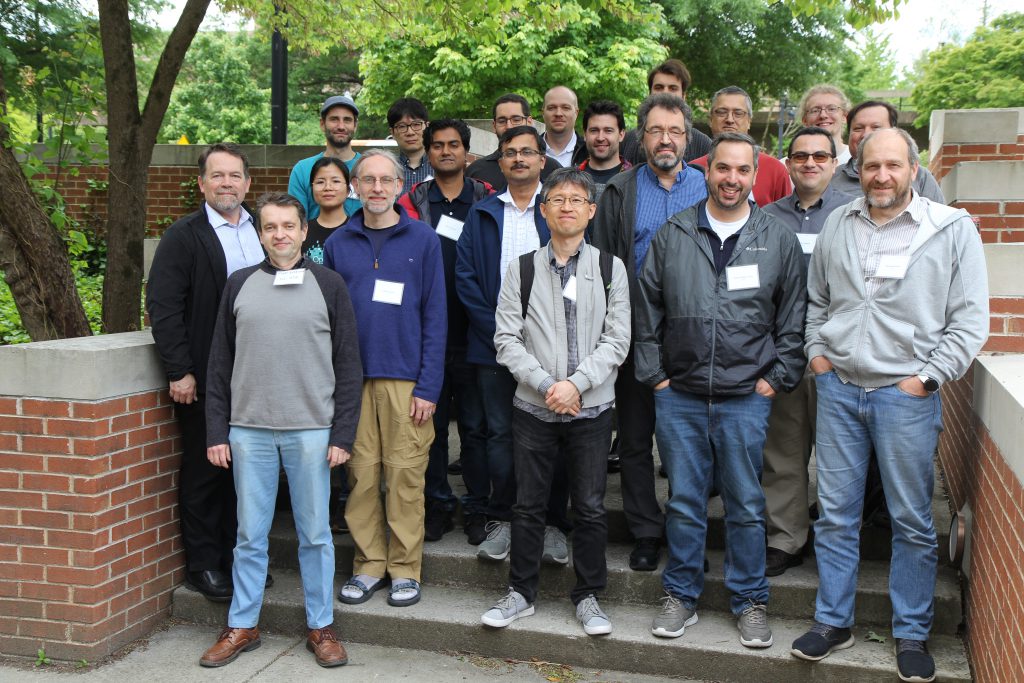
On May 1, ICL hosted a group of researchers from ORNL for a one-day workshop with ICL members. The guest attendees included Jeff Vetter, Pedro Valero-Lara, Keita Teranishi, Seyong Lee, Oscar Hernandez, Narasinga Miniskar, Monil Haque, Miroslav Stoyanov, and William Godoy. The event was organized by ICL’s George Bosilca as an effort to foster collaboration between the two East Tennessee area HPC research groups.
Leighanne Sisk Joins the Ranks of ICL Alumni
 Leighanne Sisk was an integral part of ICL’s admin team for over 16 years. April 28th marked her last Friday at ICL. At the Friday lunch talk, Hartwig Anzt presented Leighanne with a going-away gift and thanked her for her service to ICL. The group enjoyed cake in her honor. Of her new job, Leighanne writes:
On May 8, I will begin a new adventure in my UT Career. I’ll be working for the College of Social Work under a new program called SWORPS (Social Work Office of Research and Public Service) and their Relative Caregiver Program. This program helps children across the state of Tennessee who have been placed in their grandparents, or an aunt and uncle’s care due to their own parents not being able to take care of them at the time. The program helps those families improve the quality of the services they receive.
My job will be the same as it was in ICL. I’ll be taking care of paying invoices, reconciling the department’s procurement card, and taking care of travel in Concur. The newest job duty is learning about the 80 families that SWORPS takes care of within the East Tennessee Region.
I have truly enjoyed and appreciated the time I have spent working for ICL for 16.5 years. I will have 30 years service at UT come September, and I have spent the majority of my career at ICL. That really says a lot about who you work for and who you work with! My admin co-works aren’t just my co-workers. Teresa and Tracy are sisters of the heart, and I will miss them dearly.
Congratulations
Jack Dongarra Elected to the National Academy of Sciences
We are delighted to announce that Jack Dongarra, the founder of the Innovative Computing Laboratory (ICL) at the University of Tennessee, has been elected to the National Academy of Sciences (NAS) in 2023. This prestigious recognition is a testament to his contributions to the field of computer science and high-performance computing. Dongarra has been at the forefront of developing numerical algorithms, software libraries, and performance analysis tools that are widely used in scientific and engineering applications.
We are thrilled to announce the election of 120 members and 23 international members to the National Academy of Sciences in recognition of their distinguished and continued achievements in original research. https://t.co/Uei58ej6WI
Congratulations to our new #NASmembers! #NAS160 pic.twitter.com/hS5uePMNqh
— NatlAcad of Sciences (@theNASciences) May 2, 2023
Torsten Hoefler Earns First Jack Dongarra Early Career Award
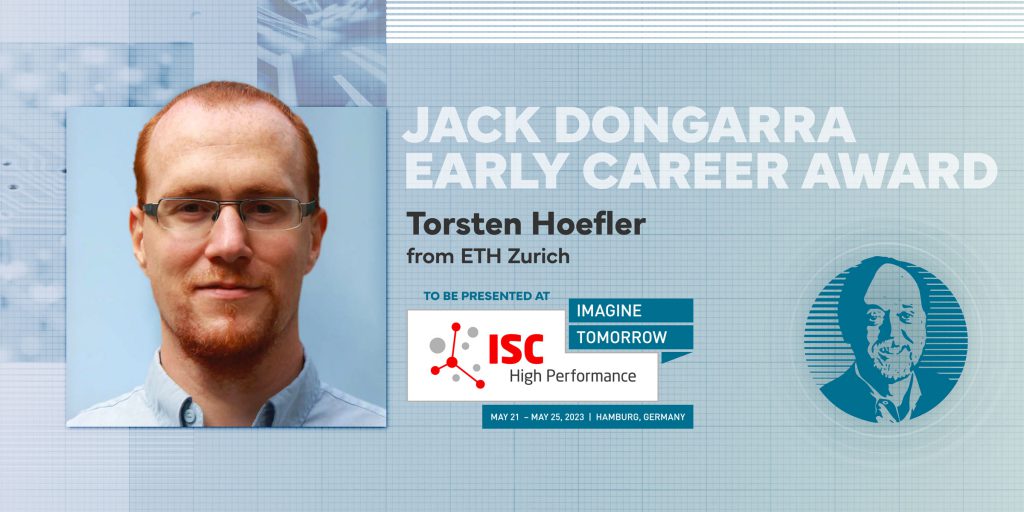 Congratulations to ETH Zurich’s Professor Torsten Hoefler, who is the recipient of the first-ever Jack Dongarra Early Career Award for his contributions to converging high-performance computing (HPC) and artificial intelligence (AI). This award recognizes early to mid-career researchers who have made significant contributions to scientific progress in areas such as numerical algorithms, computational sciences, mathematics, and machine learning. The award includes a 5,000 Euro monetary prize, sponsored by the ISC Group. The award ceremony will take place on Monday, May 22, at 11:25 a.m. in Hall Z, where Professor Dongarra will personally present the award to Hoefler, followed by a 30-minute lecture by Hoefler, which will be published in the International Journal of High-Performance Computer Applications.
ICL’s Deborah Penchoff Honored with TCE Commitment to Inclusive Community Award
 Congratulations to ICL Associate Director Deborah Penchoff, who was awarded with the 2023 Tickle College of Engineering Commitment to Inclusive Community Award. The award recognizes an individual within the college who has demonstrated a commitment to diversity and inclusion in consideration of affordability, ability, identity, and access. The Commitment to Inclusive Community Award recipient demonstrates an exceptional understanding of diversity and inclusiveness beyond the call of duty. The award was presented at this year’s TCE Honors Banquet, in which Eric Zeenah was honored as the recipient of the 2023 Nathan W. Dougherty Award.
ICL Alumni Spotlight
Dmitry Zaitsev
Dmitry Zaitsev, Visiting Professor at ICL in 2017 under a Fulbright Scholarship, recently authored a paper which he framed as a response to a challenge presented by Jack Dongarra in his Turing Award Talk. From the abstract, published in the International Journal of Parallel, Emergent and Distributed Systems:
In his Turing Award Lecture, Jack Dongarra revealed a drastic problem of modern HPC – low efficiency on real-life task mixture, 0.8% for the best supercomputer Frontier. Born in Ukraine paradigm of Sleptsov net computing resolves this problem with the computing memory hardware implementation of an entirely graphical language of concurrent programming supplied with framework of formal methods for verification of concurrent programs.
Interview
Anustuv Pal

Where are you from originally?
I am from Kolkata, a big city in India. Kolkata is also known as “The City of Joy”, a cultural hub and known for its gastronomy, great for fine dining as well as street food, great for meat lovers and vegetarians alike.
Can you summarize your educational and professional background prior to joining ICL?
I attended Don Bosco High School, then graduated from St. Xavier’s College, Kolkata in Physics. I went on to the University of Pune to pursue my master’s degree in physics with a specialization in laser technology and quantum mechanics. After that, I received my PhD in experimental low temperature physics from the Indian Institute of Science, Bangalore. During my PhD I was involved in building a cryostat, then performing experiments with electron bubbles in liquid Helium. During this time, I developed several simulations involving fluid dynamics and heat transport. This is what got me interested in computational physics. Before my thesis submission and for about two years, I taught physics at a school where the goal was competitive physics problem-solving for Olympiads and IIT entrance examinations.
How did you first hear about the lab, and what made you want to work here?
During the Covid pandemic lockdowns I was trapped at home, and I built a startup where I was teaching computer programming to high school science students. I developed a comprehensive course and started working on writing a book. As the lockdowns were lifting, I began looking for opportunities in computational physics, scientific software development, and high performance computing. This inquiry led me to discover that ICL was a historic place and was hiring for research scientists. I was extremely interested and was lucky to get an interview call from the PAPI group, and after the interview with Heike and Anthony I realized that the PAPI group would be an excellent fit for me.
What is your focus here at ICL? What are you working on?
In the PAPI group at ICL, I am currently concentrating on developing the CUDA component based in the PerfWorks profiler API, and on bringing multi-threaded profiling to this component. Apart from making it feature rich, I intend on using best practices and robust design to keep it readable, maintainable, and extendable. After this I have some ideas for improving other aspects of the PAPI library.
What are your interests/hobbies outside of work?
When I am not working, I try to write parts of the programming for science students’ book in delta increments. I learn and practice music and guitar and am always curious about the mathematics of music theory. I am an ardent chess fan, always playing chess and following live games. If anyone wants to play, I am always ready.
Tell us something about yourself that might surprise people.
Most people don’t know me, so anything I said would surprise them. Like if I said that I am building a supercomputer Dyson sphere, or planning to build infrastructure on most rocky planets in the galaxy. That would make some people laugh, but some would be surprised.
If you weren’t working at ICL, where would you like to be working and why?
In an ideal world, if I was not working at ICL, I would like to continue building my startup involving teaching programming to high school science students. I would be working on improving science education at the high school level, making it more pragmatic and application oriented. In the real world however, I would probably be working on some scientific software package in industry or academia.









 Daniel Barry has won a