Best Paper Finalist
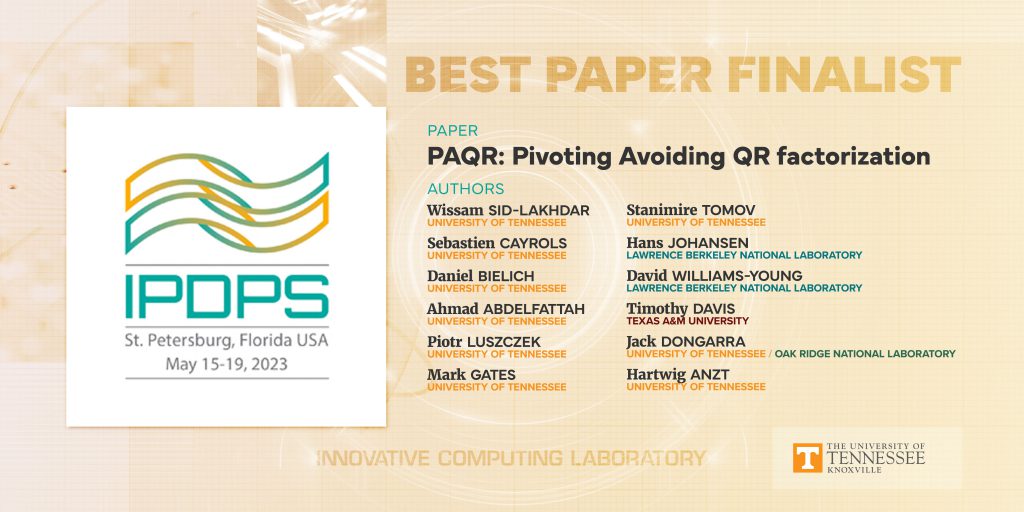
Congratulations to the team authors of “PAQR: Pivoting Avoiding QR factorization” which has been selected as one of four Best Paper Finalists at IPDPS 2023. Their paper will be presented at the conference during the Best Paper Nominees Plenary Session on Tuesday May 16th.
Early-career Panel at CSE23 Explores Strategies for Healthy Career Advancement

Lina Sorg of SIAM News recently authored a detailed recap of the Early Career Advancement panel at SIAM CSE23 which featured Hartwig Anzt:
Regardless of whether one is anticipating a future in academia, industry, or government, graduating students and early-career researchers typically focus all of their energy on the immediate next step of their professional journey: getting a job. But securing employment is only a small part of the larger process of navigating career responsibilities, preparing for strategic advancement, and maintaining a healthy work-life balance. During a panel discussion at the 2023 SIAM Conference on Computational Science and Engineering—which recently took place in Amsterdam, the Netherlands—Hartwig Anzt (University of Tennessee), Alicia Klinvex (U.S. Naval Nuclear Laboratory), and Pat Quillen (MathWorks) shared their personal experiences as junior scientists and offered advice to the forthcoming generation of applied mathematicians.
ICL Alumni Spotlight
Victor Eijkhout’s The Art of HPC
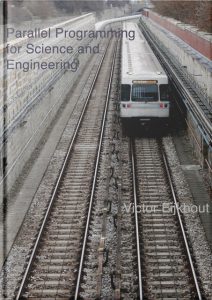
Victor Eijkhout worked at ICL from 1998 to 2005. Since that time Victor has been a research scientist at the Texas Advanced Computing Center of The University of Texas. While teaching various courses at The University of Texas at Austin, Victor authored a series of textbooks on HPC and has made these available online:
 |
 |
 |
 |
| Volume 1: The Science of Computing | Volume 2: Parallel Programming for Science and Engineering | Volume 3: Introduction to Scientific Programming | Volume 4: HPC Carpentry |
Conference Reports
VarSched 23


After JLESC, Piotr Luszczek had the opportunity to attend a workshop on Scheduling Variable Capacity Resources for Sustainability (VarSched) held March 29-31 at the Paris Center of the University of Chicago, situated on the river Seine near the Bercy neighborhood. At the workshop, Piotr presented ICL work on reducing power draw and saving energy for scientific compute kernels.
Piotr reported that one of the of the workshop dinners was hosted at the famous La Train Blue, an upscale restaurant located in Gare de Lyon (Lyon train station) with original decorations and its own chef, which made for a welcome reprieve from the train cancellations and agitated crowds swarming the station at the time.
15th JLESC Workshop
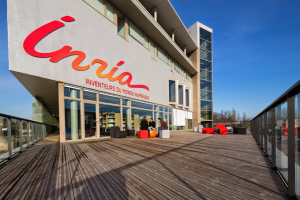 The 15th meeting of the Joint Laboratory for Extreme Scale Computing (JLESC) was held in Bordeaux, France March 21-23, 2023. JLESC is a collaboration of research institutions and supercomputing centers from five countries, including Spain, France, Japan, Germany, and the US. The main objective of JLESC is to facilitate the exchange of ideas and research among researchers with similar focus areas.
The JLESC meeting provides an excellent opportunity for networking, exchanging ideas for collaborations, and mentoring. Over 120 participants from across the globe attended the conference, including many PhD students who had the opportunity to present their research and receive valuable feedback from other experts in their fields.
Attendees who traveled to Bordeaux representing ICL for the JLESC meeting were Hartwig Anzt, Piotr Luszczek, and Joseph Schuchart. Joseph presented work on using C++ coroutines in task-based programming models, as well as a poster on cache simulation for task-based runtime systems for linear algebra libraries. Piotr presented ICL work on Batched Sparse Linear Algebra. Other sessions featured discussions on AI/ML, numerical methods, heterogeneous computing, applications, quantum computing for HPC, distributed architectures, and I/O.
In addition to the interesting research that was presented at JLESC, the social events held during the conference also provided opportunities for attendees to connect and exchange ideas over great food and drinks, and take part in special activities. A visit to the wine museum was a special highlight. Another notable, albeit less positive, experience were the return trips that for many were impacted by labor strikes in both France and Germany.
The next JLESC meeting is scheduled for 2024 in Kobe, Japan.
Interview
Phuong Nguyen
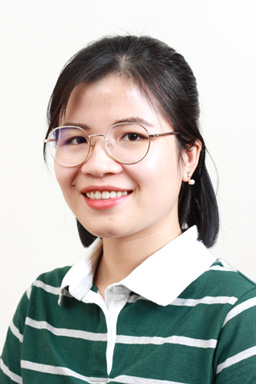
Where are you from, originally?
I am originally from Dong Nai, Vietnam. It is a province located in the southeastern region of the country, next to Ho Chi Minh city.
Can you summarize your educational and professional background prior to joining ICL?
Prior to joining ICL, I completed a Bachelor’s degree in Chemistry and Material Science at the University of Tartu, Estonia. During this time, I founded and led a team that participated successfully in several Student Cluster Competitions (SCC), including SCC at ISC19, SCC at SC19, and ASC19, while also completing a project in material simulation for my bachelor’s thesis.
Following this, I worked at CSC – IT Center for Science in Finland, where I started as a trainee and later became an HPC Application Engineer. In this role, I contributed to the setup software environment and benchmarking of Mahti, a new supercomputer at the center.
I then pursued a Master’s degree in Computational Science and Engineering at the Technical University Munich, Germany, where I participated in three academic projects focused on HPC research. I first, in a student project, explored innovative dynamic resource allocation strategies for the parallel-in-time library LibPFASST to enhance resource utilization at runtime at TUM. I later contributed to the benchmarking framework of the virtual human simulation under the CompBioMed project at the Leibniz Supercomputing Centre (LRZ), Germany. For my Master’s thesis, I worked at Intel Munich to conduct research on high performance implementation and optimization for a kernel in Lattice QCD with DPCPP.
How did you first hear about the lab, and what made you want to work here?
I became aware of the lab through its frequent and prominent presence at various HPC conferences that I attended. As I approached the completion of my Master’s degree in 2022, I began searching for opportunities to pursue a PhD in HPC. I met Hartwig at ISC22. We had a great discussion about the research directions and opportunities at the lab and here I am.
What is your focus here at ICL? What are you working on?
I’m interested in performance optimization and portability of scientific computing libraries. I am currently working on porting a part of GINKGO and MAGMA into DPCPP and optimizing them for Intel GPUs. For future work, I would like to explore the performance and portability of GINKGO on Arm-based processors.
What are your interests/hobbies outside of work?
Cooking and hiking.
I recently also started running and learning swimming. Next to-do thing to do will be a diving course. I may have missed the first 25 years of my life, but at least I’m making up for it now with a second childhood!
Tell us something about yourself that might surprise people.
Well, something that might surprise you is that I’m actually a master of disguise. In fact, I’ve lived in 5 different countries in just 5 years, but no one even noticed because I’m just that good at blending in! I went from Vietnam, to Estonia, to Finland, to Germany, and finally ended up in the USA. It’s like a game of Where’s Waldo, but with me instead! Honestly, I think I might be part chameleon or something.
P/s: the above answer is generated by ChatGPT with my provided information :D.
If you weren’t working at ICL, where would you like to be working and why?
I would ideally like to work remotely from a beautiful island with coconut drinks and sunbeds. However, in reality, I would likely return to CSC Finland and work on the LUMI project.