
News and Announcements
Top500: Japan Takes the Lead
Japan’s new K Computer became the world’s fastest supercomputer in the recent Top500 ranking. The supercomputer, built by Fujitsu and housed at the RIKEN Advanced Institute for Computational Science (AICS) in Kobe, managed 8.2 petaflops in the LINPACK benchmark—three times faster than China’s Tianhe-1A, the former champion.
In a recent interview with the New York Times, Jack Dongarra—keeper of the Top500—revealed that the K Computer is still undergoing upgrades and is expected to break the 10 petaflops barrier when all computing cores come online.
ISC ’11
Turnout at the 2011 International Supercomputing Conference (ISC ’11) was the largest in the conference’s history. From June 19th-23rd, some 2,194 registered participants and 152 of the world’s leading supercomputing vendors and research organizations descended upon Hamburg, Germany for the 26th conference in the series.
Below is a brief clip of Day 3—presented by Heike Jagode—featuring Jack Dongarra, Addison Snell, Michael Resch, and Rich Brückner.
PAPI-V Funded
The Performance API (PAPI) team is developing a system for hardware performance monitoring in virtualized environments. The aptly named PAPI-V (V for Virtual) was recently funded by the National Science Foundation. This three year grant will enable the PAPI team to address performance concerns in scientific computing in the cloud, by extending the widely used PAPI cross-platform library for accessing hardware performance counters.
In addition to the NSF funding, VMware also provided funding to the PAPI team to virtualize the API specifically for the VMware platform. The PAPI team consists of Jack Dongarra, Heike Jagode, Kiran Kumar Kasichayanula, Eric Meek, Shirley Moore, Phil Mucci, James Ralph, Dan Terpstra, and Vince Weaver.
LAWNs
LAPACK Working Notes, or LAWNs for short, are a collection of reports and papers submitted by the developers of LAPACK in an effort to share information about the linear algebra package and how it is used in research. These working notes date back as far as 1987, and are an integral part of LAPACK development and collaboration. They provide detailed information on the software and algorithm development in addition to providing a historic reference point for the ongoing efforts. The first LAWN lays out the roadmap for the LAPACK project.
LAWNs Facts:
- Total of 4 submitted in June of 2011
- Total of 15 submitted so far in 2011
- Total of 252 submitted since 1987
Conference Room Upgrade
 The ICL conference room received a much anticipated upgrade this month. New items include: 15 fully adjustable conference chairs, a massive 14′ x 5′ conference table with integrated power outlets, brand new white board, and new wall-to-wall carpet. Please help keep the room clean so everyone can enjoy these upgrades for a long time to come.
Kenneth Roche
ICL veteran Kenneth Roche has an article in the June 10th issue of Science. The article, Real-Time Dynamics of Quantized Vortices in a Unitary Fermi Superfluid, discusses the generation and dynamics of quantized vortices in fermionic systems. The framework developed in the paper can be used to study the highly nonlinear microscopic dynamics of a broad class of Fermi systems, from unitary gases to atomic nuclei.
NSF Data Management Plan
As of January 18, 2011, all proposals submitted to NSF require a supplementary document outlining how the proposal will conform to NSF policy on the dissemination and sharing of research results. This document, called the Data Management Plan (DMP), must not exceed two pages, and should be included during the submission of the proposal. ICL is currently developing a Data Management Plan to comply with these new NSF guidelines. For more information, please see the DMP frequently asked questions.
Recent Releases
PLASMA 2.4.0 Released
The Parallel Linear Algebra for Scalable Multi-core Architectures (PLASMA) 2.4.0 release is now available for download. This package contains several new important routines:
- LAPACK-compliant LU factorization,
- Symmetric eigenvalue problem routines (eigenvalues only, no eigenvectors yet),
- Singular value decomposition routines (singular values only, no singular vectors yet),
- Generalized eigenvalue problem routines (symmetric positive definite systems only),
- Tree-based QR and LQ routines supporting all input parameters Left/Right, NoTrans/Trans/ConjTrans.
See the software page to download the tarball.
Interview
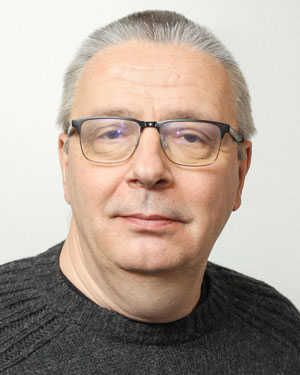
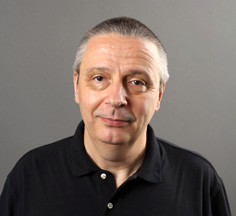
Yves Robert
Where are you from, originally?
I am from the French Alps, south of Grenoble. Look for Mens, Isere, France on Google maps, and you see some beautiful photos of the surrounding mountains.
Can you summarize your educational background?
My major was in Mathematics, and I obtained a Ph.D. in numerical analysis in 1982. I was hired as a permanent CNRS researcher in 1983. I gradually moved to Computer Science and got a CS Habilitation in 1986. Then I became a CS professor at ENS Lyon in 1988, yes, 23 years ago. I am 52, if you want to know!
How did you meet Jack?
I met Jack in Roma in 1986. We were both spending time at ECSEC, a European IBM research center that has closed since then. I was spending a one-year sabbatical there, implementing the first BLAS3 kernels on the IBM 3090 vector multiprocessor (a massive six-processor machine!), and also designing some parallel ILU preconditioners for GMRES. Jack was there for several weeks, and we discussed a lot, especially the BLAS3 algorithms. In the following years, I met Jack several times, in many conferences and workshops. Then Jack spent a summer at ENS Lyon in 1993. Long-term visits of Lyon people at ICL (Bernard Tourancheau, Frédéric Desprez, and others) started just after.
Could you tell us a little about your group at ENS and what they do?
We are in the CS lab of ENS Lyon, called LIP, which stands for Parallelism in Computer Science. We are in a group called ROMA, Ressource Optimization, Models, Algorithms and Scheduling. There are six permanent researchers in the group, for a total of 15 people, including Ph.D. students, post-docs, and staff. As you would expect from the acronym, we are mostly interested in algorithms (problem complexity, lower bounds, approximation schemes and heuristics), scheduling (multi-criteria, energy-aware, fault-tolerant, etc.), and combinatorial optimization. We are also one of the main contributors of the MUMPS software (a direct sparse solver). Please visit our webpage for more details.
Tell us a little about your first visit with ICL.
My first long-term visit (one year) was in 1996-97. I was with my wife and three kids, and we lived in the Cedar Bluff area. We stayed the full year without returning to France, and we visited several places in the US, either for conferences or for vacations. It was a great year!
What are you working on during this visit to ICL?
Many things: redistribution routines for ScaLAPACK, lookahead LU, tiled algorithms, and also my first theoretical studies and experiments on heterogeneous computing platforms.
You have visited ICL several times over the span of 15 years. How, if at all, have things changed at ICL throughout your visits?
Well, fifteen years ago, ICL was located in Ayres Hall, a beautiful building on top of The Hill. But Tracy Rafferty was already taking care of everything! Granted, ICL has increased in size, but it seems to operate mostly as before, and I hope it will continue for a long time, because I like the way things go here.
ICL has enjoyed a wonderful relationship with the French research community. What do you think has made that work so well?
This is a very good question! Many French students and researchers do a post-doc or sabbatical in the US. OK, but why so many at ICL? There are many elements; I guess the first one is Jack’s leadership and top-level recognition worldwide. I mean, you know you go to a great lab when going to ICL. Then, the scientific topics covered at ICL fit very well will the French education system, with both a solid mathematical background and a good knowledge of more CS theory-oriented stuff, algorithms, graphs, etc. And finally, once the process has started, the word spreads around that the place is nice and friendly with many interesting things to do! For instance, I do recommend to my former Ph.D. students that they apply for a position here.
If I may risk a comparison, maybe it’s like with the Brasilian players on the Lyon soccer team. One came, and two, and now there are many and they have organized themselves as a little community, and the other players like them a lot. I hope this is the same thing here, and that you don’t feel there are too many French, or French-speaking, people!
What are your interests/hobbies outside of work?
My wife and I hike a lot. Our kids are old enough to be mostly by their own now, so we bought a small camper and enjoy going away for a few days. We like spending evenings in some remote place in the mountains, and starting the hike in the early hours of the next day.
Tell us something about yourself that might surprise people.
I have made 100+ trips to the US, during which I have visited 45 states, including Alaska and Hawaii. When is the next conference in North Dakota?


